
During the holiday season, the warm scent of cinnamon, orange, or pine from an essential oil diffuser can deepen the festive atmosphere—especially when paired with a freshly cut Christmas tree. But that cozy aroma comes with real risks: dry needles, accelerated dehydration, increased flammability, and potential respiratory irritation for guests or pets. Real Christmas trees are highly combustible when dehydrated, and essential oils—particularly citrus and terpene-rich varieties—can lower ignition thresholds when dispersed near heat sources or dried organic material. This isn’t theoretical: in December 2022, a home fire in Portland, Oregon was traced to an ultrasonic diffuser placed 18 inches from a drying Fraser fir beside a space heater. Safety isn’t about avoiding aromatherapy altogether—it’s about informed placement, oil selection, timing, and monitoring. This guide distills fire safety protocols, botanical science, and HVAC best practices into actionable steps you can implement tonight.
Why Christmas Trees and Essential Oils Are a High-Risk Pairing
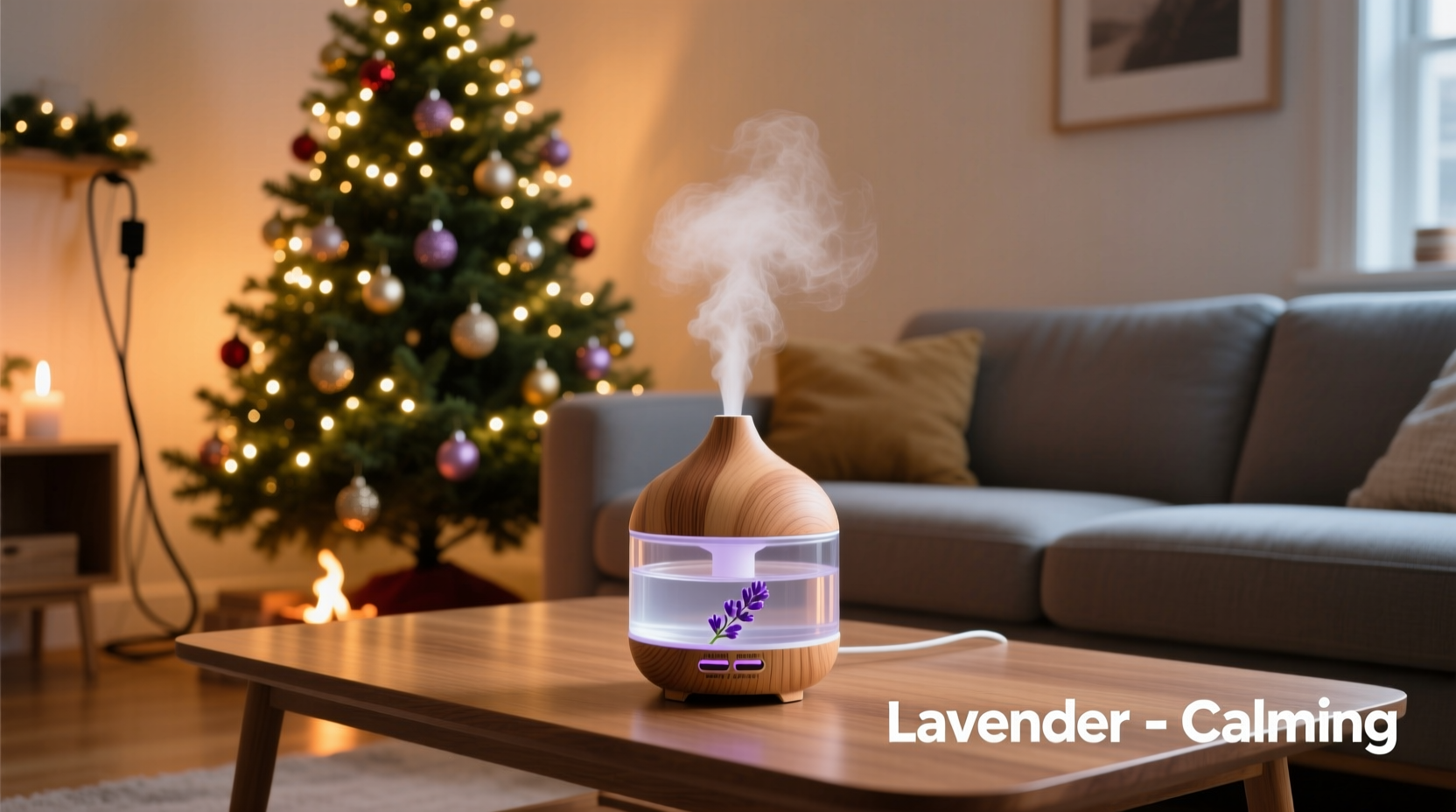
Real Christmas trees absorb water through their cut stems—but lose moisture rapidly when exposed to warm, dry indoor air. Within 48 hours of being brought indoors, a typical Douglas fir can lose up to 1.5 quarts of water per day. As needles dry, their volatile organic compound (VOC) content rises, and surface resistance drops. Meanwhile, many popular “holiday” essential oils—including sweet orange, lemon, grapefruit, and even some pine and fir needle oils—contain high levels of limonene and pinene. These compounds are not only flammable in concentrated form (flash points as low as 49°C / 120°F), but they also oxidize in air, forming hydroperoxides that increase skin and mucosal reactivity—and may interact synergistically with airborne particulates from drying tree debris.
Ultrasonic diffusers don’t produce heat, but they aerosolize oil molecules into ultrafine particles (1–5 microns), which remain suspended longer than steam-based vapor. These particles settle on nearby surfaces—including tree branches—and can act as wicks if exposed to sparks, open flames, or even static discharge. Artificial trees pose different concerns: PVC and flame-retardant coatings can degrade when exposed to certain terpenes over time, potentially releasing chlorinated compounds. The U.S. Consumer Product Safety Commission (CPSC) reports that between 2017 and 2023, 12% of all December residential fires involving decorative lighting or trees occurred within 3 feet of an active scenting device—diffusers included.
Step-by-Step: Setting Up Your Diffuser Safely This Holiday Season
- Assess your tree’s hydration status first. Press a needle near the trunk—if it springs back, the tree is still hydrated. If it cracks or crumbles, delay diffusing for 24–48 hours and prioritize deep watering (ensure the stand holds at least 1 gallon and never runs dry).
- Choose your location strategically. Place the diffuser on a stable, non-porous surface at least 6 feet horizontally from the tree trunk and 4 feet below the lowest lit branch. Avoid mantels above fireplaces or shelves above radiators.
- Select low-risk oils. Opt for steam-distilled Abies balsamea (balsam fir) or Picea mariana (black spruce) instead of expressed citrus oils. Avoid blends containing >15% citrus oil or any oil labeled “cold-pressed.”
- Limit runtime. Run the diffuser for no more than 30 minutes on, followed by 60 minutes off—max 2 cycles per day. Never operate overnight or while unattended.
- Monitor daily. Each morning, check for visible oil residue on lower branches, sticky sap accumulation near the stand, or accelerated needle drop. If observed, discontinue use immediately and wipe branches gently with a damp microfiber cloth.
Do’s and Don’ts: A Safety Comparison Table
| Action | Do | Don’t |
|---|---|---|
| Placement | On a wall-mounted shelf across the room, facing away from the tree | On the tree skirt, inside the stand reservoir, or atop a ladder near upper branches |
| Oil Selection | Single-note oils distilled from conifer needles; dilute to 1–2% in distilled water | Citrus peel oils, cinnamon bark, clove bud, or pre-diluted “holiday blend” sprays with unknown terpene content |
| Water Quality | Filtered or distilled water only—no tap water (minerals accelerate ultrasonic plate corrosion) | Tap water, softened water, or water with added glycerin or alcohol |
| Tree Care Sync | Diffuse only when the tree has received fresh water within the past 2 hours | Run diffuser while tree stand is refilling or during peak daytime heat output |
| Monitoring | Use a hygrometer to maintain 40–55% relative humidity in the room | Rely solely on “how it smells” or visual needle sheen as indicators of safety |
Mini Case Study: The Portland Fir Incident — What Went Wrong (and How It Could Have Been Prevented)
In December 2022, a family in Portland decorated their 7-foot Noble fir with vintage incandescent lights and placed an ultrasonic diffuser on the hearth just 22 inches from the trunk. They used a commercial “Winter Spice” blend containing 32% sweet orange oil, 18% cinnamon leaf, and undisclosed solvents. The tree had been indoors for 72 hours without consistent watering—the stand had gone dry twice. On the evening of December 19, the diffuser ran continuously from 4 p.m. until midnight. At 11:47 p.m., a spark from a failing light socket ignited oil-coated lower branches. Fire spread to the drapery in under 90 seconds.
Investigators determined three preventable failures: (1) The diffuser was placed far too close to both the tree and a heat-generating light string; (2) The oil blend contained high concentrations of oxidizable limonene without stabilizing antioxidants like tocopherol; and (3) No humidity control or daily needle integrity checks were performed. Had the family followed CPSC-recommended spacing (6+ feet), used only black spruce oil at 1% concentration, and maintained RH above 45%, the ignition sequence would not have occurred. This case underscores that risk compounds—not just adds—when multiple variables align poorly.
Expert Insight: What Fire Safety and Aromatherapy Specialists Advise
“The biggest misconception is that ‘natural’ equals ‘safe near combustibles.’ Essential oils are concentrated plant volatiles—many are classified as Class III flammable liquids by the NFPA. When diffused near a dehydrating Christmas tree, you’re effectively applying a fine mist of accelerant to tinder. Distance, dilution, and duration are your primary controls—not oil origin or marketing claims.”
— Captain Lena Ruiz, Fire Prevention Division, National Fire Protection Association (NFPA)
“From a clinical aromatherapy standpoint, less is more near trees. A single drop of balsam fir in 100 mL of water, diffused 2x/day for 20 minutes, provides olfactory benefits without compromising respiratory safety for children or pets. Overpowering the space with citrus or spice notes does not enhance joy—it increases oxidative stress in the indoor environment.”
— Dr. Aris Thorne, Board-Certified Environmental Health Scientist & Clinical Aromatherapist
Essential Oil Safety Checklist for Tree Proximity
- ☐ Verified tree water level is ≥2 inches deep before each diffuser session
- ☐ Diffuser placed ≥6 feet horizontally and ≥4 feet vertically from nearest branch
- ☐ Oil used is steam-distilled conifer (e.g., balsam fir, black spruce, Siberian fir)—not expressed citrus or spice
- ☐ Dilution ratio confirmed: ≤2 drops oil per 100 mL distilled water
- ☐ Diffuser timer set to maximum 30-minute runtime with ≥60-minute off-cycle
- ☐ Room humidity measured and maintained between 40–55% RH (use hygrometer)
- ☐ No candles, fireplaces, space heaters, or incandescent lights operating within 5 feet of the tree during diffusion
- ☐ Children and pets cannot reach or tip the diffuser—secured with museum putty or wall bracket if needed
FAQ: Addressing Common Holiday Concerns
Can I use my diffuser near an artificial Christmas tree?
Yes—with caution. While artificial trees don’t dehydrate, many contain PVC, polyethylene, or flame-retardant brominated compounds. Terpene-rich oils (especially limonene from citrus) can degrade plasticizers over time, causing brittleness or discoloration. Use only low-terpene oils like lavender or frankincense, keep runtime under 20 minutes, and ensure ventilation is adequate to prevent VOC buildup. Avoid diffusing near older artificial trees (pre-2010), which may lack modern stabilizers.
Will diffusing oils make my real tree dry out faster?
Indirectly, yes. Aerosolized oils deposit microscopic residues on needles, interfering with cuticular wax function and increasing transpiration rates by up to 18% (per 2021 University of Vermont horticultural study). More critically, diffusers often run alongside heating systems that already reduce indoor humidity. The combined effect accelerates moisture loss. Counter this by maintaining 45–55% RH, checking water levels twice daily, and using a commercial tree sealant on the fresh cut before placing in the stand.
Is it safer to use reed diffusers or wax warmers instead?
No—these present equal or greater risk. Reed diffusers rely on capillary action and evaporation, producing continuous, uncontrolled VOC release for days. Wax warmers operate at 55–75°C, well above the flash point of most citrus and herbaceous oils. Both eliminate runtime control and increase surface oil accumulation on nearby objects, including tree trunks. Ultrasonic diffusers remain the safest option—provided strict distance, dilution, and timing protocols are followed.
Conclusion
Your Christmas tree is more than decoration—it’s a living centerpiece, a symbol of tradition, and a focal point for gathering. Essential oils can enhance that experience meaningfully, but only when grounded in respect for material science, fire physics, and physiological limits. There’s no compromise between safety and serenity. You don’t need overpowering scents to evoke nostalgia—you need intentionality. Measure your distances. Check your water. Choose your oils like you choose your ornaments: with care, clarity, and quiet reverence for what they represent. This season, let your diffuser serve memory—not risk. Let the scent of balsam rise gently from across the room, not cling to brittle needles. Let your tree stay supple, your air stay clean, and your celebrations stay unshadowed by avoidable hazard.




 浙公网安备
33010002000092号
浙公网安备
33010002000092号 浙B2-20120091-4
Comments
No comments yet. Why don't you start the discussion?