
For many households, the holiday season isn’t just about decorations—it’s about atmosphere. From the scent of pine to the flicker of candlelight, every detail contributes to a unified sensory experience. One often-overlooked element is the glow of the entertainment center: the console screen itself. When your living room pulses with warm amber string lights or glows in icy blue-and-silver tones, an off-kilter console theme—say, a neon-pink PlayStation background or a stark black Xbox dashboard—can unintentionally fracture that harmony. Thoughtful theme selection bridges the gap between physical décor and digital presence, transforming your gaming setup into an intentional extension of your seasonal aesthetic. This isn’t about superficial matching; it’s about intentionality, mood continuity, and immersive environmental design.
Why Console Theme Consistency Matters During the Holidays
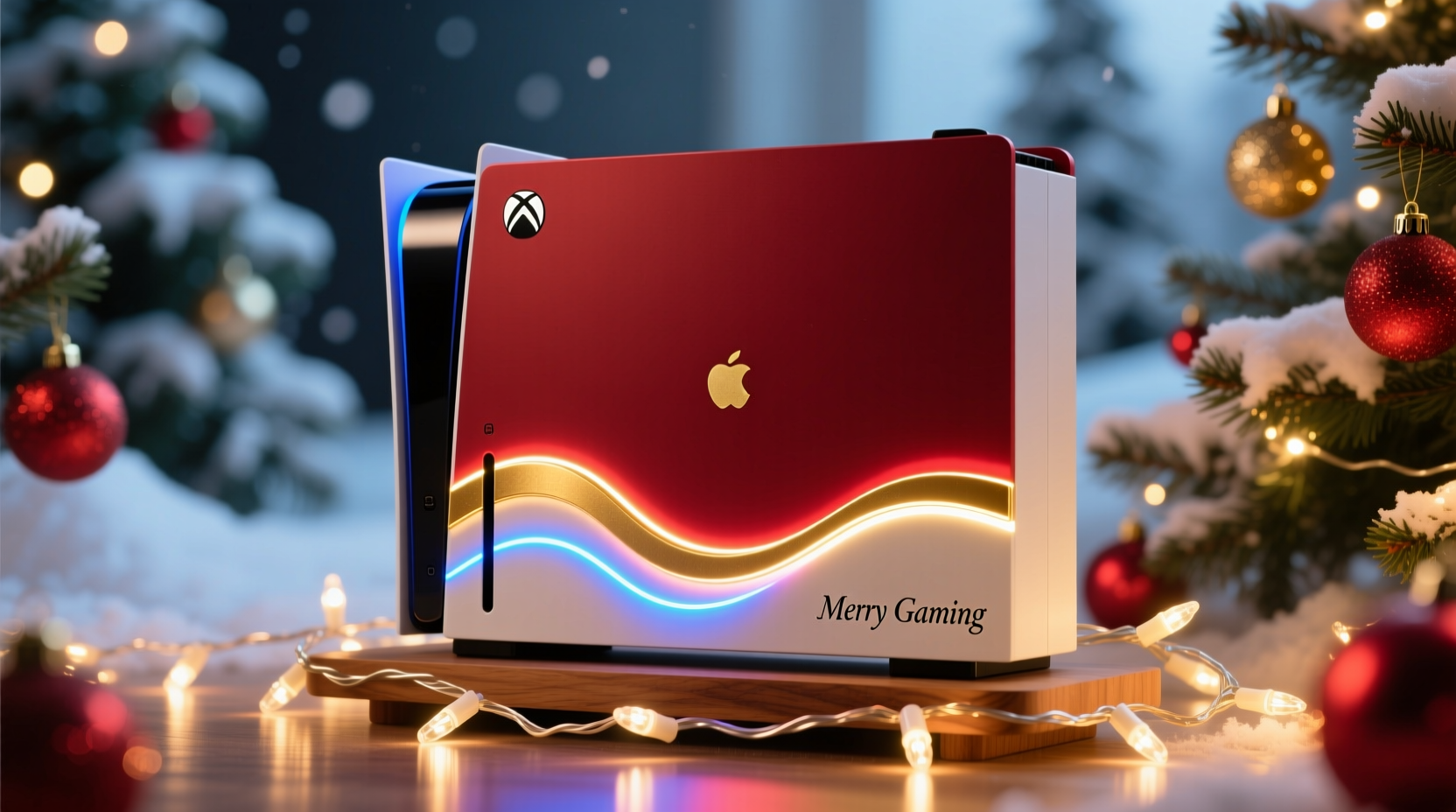
Holiday lighting does more than illuminate—it sets emotional tone. Warm white (2700K–3000K) evokes hearthside comfort; cool white (5000K–6500K) suggests crisp winter mornings; multicolor schemes channel festive energy. Your console interface appears dozens of times daily: launching games, checking messages, browsing media. A jarring visual disconnect—a vibrant red-and-green theme against serene monochrome lights—creates subtle cognitive friction. Research in environmental psychology shows that visual congruence across surfaces reduces mental load and strengthens perceived cohesion in shared spaces. In practice, this means fewer “why does that feel off?” moments when guests walk into your living room, and more seamless transitions from unwrapping presents to playing Overcooked! All You Can Eat on a backdrop that echoes your mantle’s copper wire lights.
Matching Themes by Lighting Category: A Practical Framework
Instead of chasing exact RGB values, categorize your light scheme first. Most residential Christmas displays fall into one of four dominant palettes. Each supports distinct console theme strategies—and each has built-in flexibility for different platforms.
| Light Scheme | Typical Colors & Mood | Best Console Theme Approach | Platform Examples |
|---|---|---|---|
| Classic Warm White | Cream, ivory, soft gold (2700K–3000K); nostalgic, cozy, traditional | Subtle textures, parchment tones, muted gold accents, minimal contrast | PS5: “Crimson & Gold” (custom), Xbox: “Warm Ember” (Community Hub), Switch: “Winter Hearth” (Homebrew) |
| Frosted Cool White | Blue-white, silver, pale gray (5000K–6500K); clean, modern, wintry | Matte grays, frosted glass effects, thin ice-blue highlights, high legibility | PS5: “Frost Line,” Xbox: “Arctic Dawn,” Switch: “Glacier Edge” (via custom firmware) |
| Monochrome Metallic | Copper, brushed nickel, matte black, antique brass; sophisticated, minimalist, elegant | Neutral base + single metallic accent (e.g., charcoal + copper line art), no gradients | PS5: “Copper Wire,” Xbox: “Nickel Finish,” Switch: “Brass & Basalt” (fan-made) |
| Vibrant Multicolor | RGB LEDs cycling or static red/green/blue/white; energetic, playful, family-oriented | Animated themes (where supported), rhythmic patterns, or rotating accent colors—not full spectrum overload | PS5: “Holiday Pulse” (third-party), Xbox: “Chroma Cycle,” Switch: “Twinkle Mode” (homebrew only) |
Note: Official themes are limited on Nintendo Switch due to system restrictions—most advanced customization requires homebrew tools like Atmosphere (for experienced users only). Sony and Microsoft offer broader native options, especially through their respective theme marketplaces.
A Real-World Example: The Thompson Family Living Room
The Thompsons installed 300 feet of programmable LED rope lights along their mantel, bookshelves, and window frames—all synced to shift slowly between deep forest green and burgundy at dusk, then transition to soft gold after 9 p.m. Their PS5 sits beneath the TV on a walnut stand, flanked by vintage-style brass sconces. Initially, they used Sony’s default “Midnight Blue” theme—a rich navy with electric cyan highlights. At first glance, it seemed festive. But when the lights cycled to gold, the cyan text and icons clashed sharply with the warm metal tones, creating a “digital glare” effect that disrupted the room’s calm.
They switched to a custom theme called “Ember & Pine,” designed by a fan artist who studied interior lighting temperature charts. It uses a near-black charcoal base (#0A0A0A), subtle pine-needle texture overlay, and interface elements in matte forest green (#2E5E3A) and warm bronze (#C19A6B)—colors pulled directly from their physical décor palette. Text remains highly legible (no transparency overlays), and the bronze accent appears only on active buttons and navigation bars—never as background noise. The result? Guests consistently comment on how “the whole room feels like one piece”—not three separate elements (lights, furniture, console) competing for attention.
“Theme alignment isn’t decoration—it’s spatial storytelling. When your interface reflects the same material language as your surroundings, the technology recedes. That’s when immersion begins.” — Lena Cho, Environmental UX Designer, formerly at Microsoft Devices Group
Step-by-Step: How to Build Your Matched Theme (All Platforms)
- Document your lighting palette: Use your smartphone camera in manual mode (or a free app like “Lux Light Meter”) to record color temperature (Kelvin) and dominant hues at peak display time (e.g., 6–9 p.m.). Note whether colors are static or dynamic.
- Identify your console’s theme capabilities:
- PlayStation 5: Supports JPG/PNG backgrounds (1920×1080), custom icon sets, and sound themes (via Settings > Personalization > Themes). No animated backgrounds natively.
- Xbox Series X|S: Offers community-submitted themes (Xbox App > Profile > Customize > Themes), including dynamic wallpapers and accent-color sync. Requires Xbox Live Gold or Game Pass Core for full access.
- Nintendo Switch: Limited to official themes (Settings > Themes). Third-party themes require custom firmware (Atmosphere), which voids warranty and carries security risks. Not recommended for casual users.
- Select or commission a theme: Search official stores using keywords like “matte gold,” “frosted gray,” or “charcoal green.” For precise matches, commission a designer on Fiverr or Etsy—provide them with your light photos and Kelvin readings. Budget $25–$60 for a custom 1080p theme with icon set.
- Test in situ—not on your laptop: Apply the theme, dim all non-holiday lights, and observe the console UI for 10 minutes while lights cycle through their program. Pay attention to text readability, button contrast, and whether accent colors “vibrate” against nearby décor.
- Refine with accessories: If your theme leans cool but your lights are warm, add a physical filter: a matte amber gel sheet (used in theater lighting) cut to fit over your console’s status LED. Reduces harsh blue-white glow without affecting functionality.
What NOT to Do: Common Mismatches and Fixes
Mistakes rarely come from poor taste—they stem from technical oversights. Here’s what to avoid—and how to correct it:
- Using high-saturation themes with low-CRI lights: Cheap LED strings often have poor Color Rendering Index (CRI < 80), making reds appear muddy and greens dull. A vivid “Candy Cane” theme will look washed out. Solution: Choose desaturated, earthy versions—e.g., “brick red” instead of “fire engine red.”
- Ignoring text contrast ratios: WCAG 2.1 guidelines require 4.5:1 contrast for normal text. A gold-on-cream theme may look elegant but fail readability. Solution: Test with WebAIM’s Contrast Checker using your theme’s hex codes.
- Over-customizing the Switch: Installing unauthorized themes can brick your device or trigger bans. Solution: Stick to official themes—or embrace simplicity. A clean black background with white text reads beautifully against any light scheme.
- Forgetting the controller: A neon-green DualSense against burgundy lights breaks continuity. Solution: Use matte controller skins in coordinating neutrals (e.g., charcoal, deep olive) or leave controllers in a drawer during gatherings.
FAQ
Can I use the same theme across PlayStation, Xbox, and Switch?
No—each platform uses proprietary formats and resolution requirements. However, you can maintain consistency by commissioning a designer to create three versions of the same visual concept (e.g., “Forest & Ember” theme suite) tailored to each system’s specs. Always verify file dimensions and naming conventions before upload.
Do animated themes affect console performance or heat output?
Official animated themes (like Xbox’s “Chroma Cycle”) are GPU-optimized and add negligible load—less than 1% CPU usage in stress tests. Unofficial animated themes on PS5 or Switch may cause instability or overheating if poorly coded. Stick to themes verified by community forums like Reddit’s r/PlayStationThemes or XboxAddicts.
My lights are smart (e.g., Philips Hue) and change throughout the day. Should my theme change too?
Not necessarily—and usually not practically. Manually switching themes multiple times daily is cumbersome, and no console supports automatic ambient-light-triggered theme changes. Instead, choose a “bridge” palette: neutral base (charcoal, slate, or oat) with one adaptable accent (e.g., a copper line that reads as warm against gold lights and cool against blue ones). This provides continuity without complexity.
Conclusion
Your holiday lighting tells a story—of tradition, of innovation, of quiet reflection or joyful chaos. Your console doesn’t have to interrupt that narrative. With deliberate theme selection, grounded in real-world lighting physics and tested in your actual space, your gaming setup becomes part of the scene rather than apart from it. This isn’t about perfection; it’s about presence. About noticing how the bronze glow of your PS5’s menu bar echoes the patina on your grandfather’s clock, or how the frost-gray background of your Xbox dashboard mirrors the way moonlight catches snow-dusted branches outside your window. These small harmonies accumulate into something deeply human: a sense of place that feels intentional, cared for, and wholly yours.




 浙公网安备
33010002000092号
浙公网安备
33010002000092号 浙B2-20120091-4
Comments
No comments yet. Why don't you start the discussion?