
The magic of a Christmas tree lies not just in its lights, ornaments, and scent—but in the way it transforms a room. A well-lit tree can become a radiant centerpiece, but even the most thoughtfully decorated evergreen may fall short if its glow doesn’t fully reach the corners of your space. The secret? Strategic mirror placement. Mirrors do more than reflect—they multiply light, expand visual space, and intensify sparkle. When used intentionally, they can turn a softly glowing tree into a luminous spectacle that dances across walls and ceilings. This guide explores the art and science of using mirrors to enhance your tree’s brilliance, offering practical strategies for every home.
Understanding Light Reflection and Tree Illumination
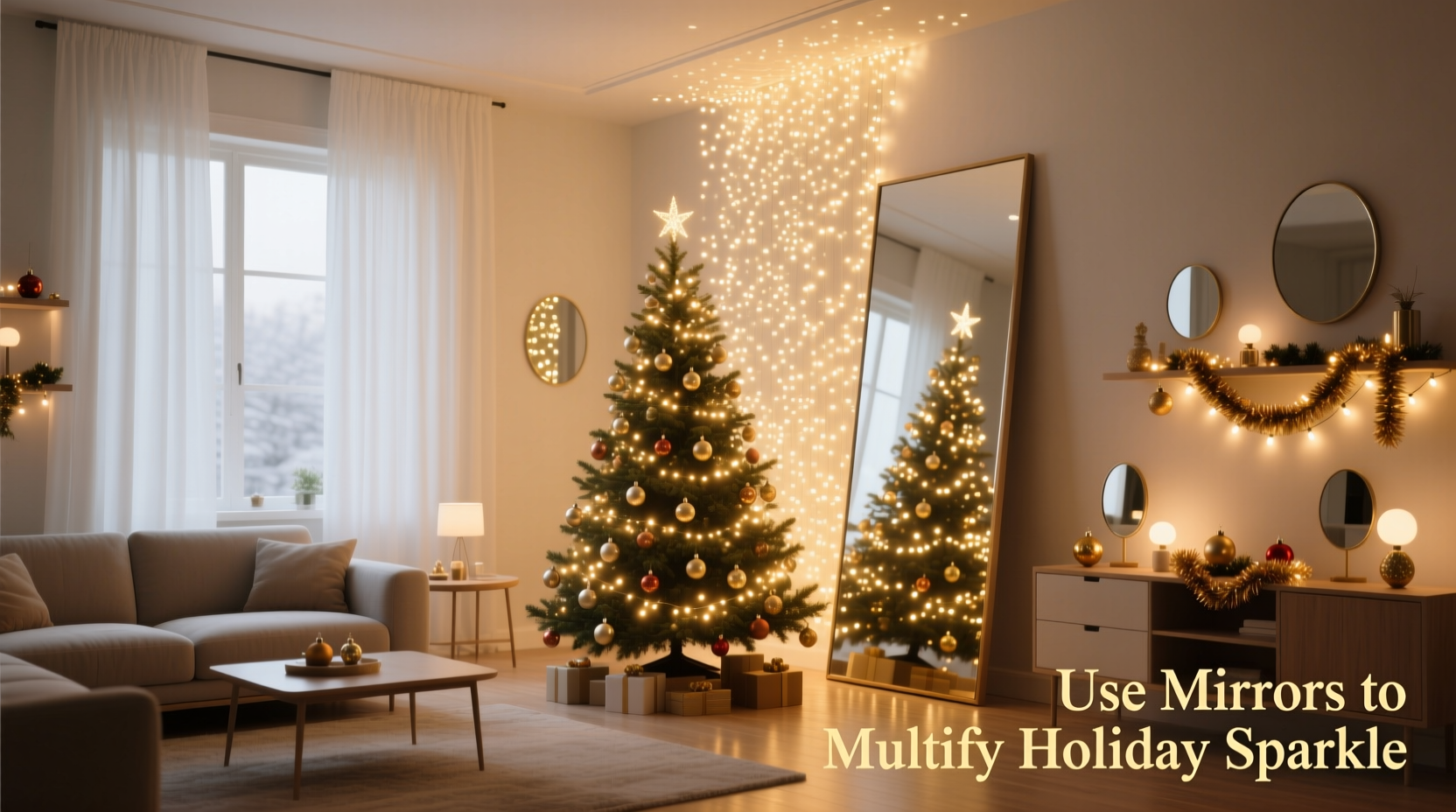
A Christmas tree's sparkle comes from layered light sources: string lights, reflective ornaments, tinsel, and sometimes spotlights or ambient room lighting. Each of these emits or reflects photons that travel in straight lines until they hit a surface. Hard, smooth surfaces like glass or polished metal redirect this light—this is reflection. Mirrors, being highly reflective, bounce back nearly all incident light, making them powerful tools for amplifying brightness.
When a mirror faces a lit tree, it doesn't just show a copy—it effectively doubles the visible light output in the room. More importantly, it redirects light into areas that might otherwise remain dim. This is especially useful in rooms with limited natural light or small windows. The illusion of depth created by the mirror also makes the tree appear larger and more immersive.
The quality of reflection depends on several factors:
- Mirror size: Larger mirrors capture and reflect more of the tree, increasing perceived brightness.
- Placement angle: Angling the mirror slightly upward can bounce light toward the ceiling, creating an indirect glow.
- Surface clarity: Smudges, fogging, or antique finishes reduce reflectivity and should be considered carefully.
- Distance from the tree: Closer placement increases intensity; too far reduces impact.
“Reflection isn’t decoration—it’s illumination engineering. A single well-placed mirror can transform a modest tree into a radiant focal point.” — Clara Mendez, Interior Lighting Designer
Optimal Mirror Placement Techniques
Effective mirror positioning requires both artistic vision and spatial awareness. The goal is to maximize light return without creating glare or visual clutter. Below are proven techniques based on room layout and tree location.
Opposite the Tree (Direct Reflection)
The simplest and often most effective method is placing a large mirror directly across from the tree. This creates a full frontal reflection, doubling the visual presence of the tree and bouncing light back through the room. Ideal locations include opposite a corner where the tree stands or on a wall facing a central living area.
Adjacent Wall (Side Bounce)
When direct opposition isn’t possible due to furniture layout, place the mirror on a side wall at a 30–45 degree angle to the tree. This setup captures one flank of the tree and redirects light diagonally across the space. It works particularly well in L-shaped rooms or open-plan areas.
Behind the Tree (Depth Enhancement)
Placing a smaller mirror behind the tree—either leaning against the wall or mounted just above the stand—creates a sense of infinite depth. As lights and ornaments reflect backward, the tree appears to extend into a glowing forest. Caution is needed: ensure cords and stands aren’t visible in the reflection, which can break the illusion.
Ceiling-Mounted (Upward Glow)
For dramatic effect, consider installing a mirror on the ceiling above or near the tree. This advanced technique scatters light upward, reflecting off the ceiling and upper walls to produce a soft, starry ambiance. Best suited for high-ceilinged rooms or lofts, it mimics the effect of snow-covered ground reflecting moonlight.
Choosing the Right Mirror Type and Style
Not all mirrors serve the same purpose. The frame, shape, and finish influence both aesthetics and performance. Consider these options based on your decor and lighting goals.
| Mirror Type | Best For | Light Amplification Effect |
|---|---|---|
| Floor Mirror (Full-length) | Living rooms, foyers | High – captures full tree height and broad light spread |
| Wall Mirror (Oversized) | Modern or minimalist spaces | High – clean reflection with minimal distortion |
| Decorative Ornate Frame | Traditional or vintage themes | Medium – frame may block edges but adds charm |
| Cluster of Small Mirrors | Tight spaces or eclectic decor | Medium-High – multiple reflections create dynamic sparkle |
| Vintage/Antique Mirror | Rustic or nostalgic settings | Low-Medium – patina reduces reflectivity but adds warmth |
Frameless mirrors offer maximum reflectivity, while ornate frames can complement holiday decor but may obstruct part of the reflection. For pure light amplification, prioritize size and clarity over decorative detail.
Step-by-Step Guide: Maximizing Tree Sparkle with Mirrors
Follow this sequence to achieve professional-level results in your own home.
- Assess your tree’s current lighting. Turn off overhead lights and observe how the tree glows in darkness. Note dark spots or weak reflection zones.
- Determine primary viewing angles. Identify where people most often see the tree—entryways, seating areas, dining zones.
- Select a mirror location. Choose one of the four techniques above based on your room’s layout. Prioritize unobstructed line-of-sight between tree and mirror.
- Test temporary placement. Lean the mirror in position before mounting. Use painter’s tape to mark ideal height and alignment.
- Adjust tree lighting if needed. Add string lights or replace dull bulbs to ensure strong source illumination.
- Position the mirror at eye level or slightly higher. This ensures reflected sparkle is visible from common sitting or standing positions.
- Eliminate competing reflections. Remove other shiny objects nearby that could scatter light unpredictably.
- Evaluate at night. View the setup in low ambient light to confirm the mirror enhances rather than distracts.
Real-World Example: The Corner Tree Transformation
In a Chicago apartment with limited natural light, interior decorator Lena Tran faced a challenge: her client’s pre-lit Fraser fir in the living room corner looked flat and underwhelming despite 700 warm-white LEDs. The room had only one window, and evening lighting came from a shaded floor lamp.
Lena installed a 36” x 60” arched floor mirror on the adjacent wall, angled at 40 degrees toward the tree. She also added six faceted crystal ornaments to increase point-source reflections. After dark, the mirror captured the left third of the tree and bounced it across the sofa area. The result was immediate—the perceived brightness increased by an estimated 60%, and guests reported feeling as though there were two trees.
“It wasn’t about adding more lights,” Lena said. “It was about making the existing ones work harder. The mirror turned a quiet corner into a glowing centerpiece.”
Common Mistakes and How to Avoid Them
Even experienced decorators can misjudge mirror effects. Watch for these pitfalls:
- Over-mirroring: Too many reflective surfaces create chaotic light patterns. Stick to one primary mirror unless layering small accent mirrors intentionally.
- Poor alignment: A mirror pointed slightly away from the tree loses up to 80% of its effectiveness. Use a laser level or smartphone app to verify direction.
- Ignoring safety: Large mirrors near high-traffic areas pose risks, especially with children or pets. Secure wall mounts and avoid low placements.
- Using dirty or fogged mirrors: Streaks and oxidation diffuse light instead of reflecting it cleanly. Clean weekly during the season.
- Blocking with furniture: Ensure sofas, shelves, or plants don’t cast shadows on the mirror surface.
Checklist: Mirror & Tree Optimization
Use this checklist before finalizing your holiday display:
- ✅ Tree has at least 100 lights per foot of height
- ✅ Mirror is positioned within 6–10 feet of the tree
- ✅ No major obstructions between tree and mirror
- ✅ Mirror surface is clean and scratch-free
- ✅ Reflection includes treetop and lower branches
- ✅ Mirror is securely mounted or stabilized
- ✅ Ambient room lights can be dimmed to highlight reflection
- ✅ Ornaments include reflective materials (glass, metallic, crystal)
Frequently Asked Questions
Can I use a mirrored tray or tabletop instead of a wall mirror?
Yes. A mirrored tray beneath the tree stand can reflect upward light and add subtle sparkle. However, its impact is limited compared to a wall or floor mirror. Use it as a supplement, not a primary reflector.
What if my tree is already against a window?
Windows can act as partial mirrors at night when indoor light exceeds outdoor darkness. But glass reflects less than 10% of light compared to a mirror’s 90%. If your tree faces a window, place a mirror on an adjacent wall to capture side glow. During the day, close curtains to prevent washout.
Are LED lights better for mirror reflection?
LEDs are ideal because they emit focused, bright light with minimal heat. Their consistent color temperature (especially warm white or cool white) ensures clean reflections without flicker. Older incandescent bulbs may create softer, yellower reflections but consume more energy and generate heat near ornaments.
Final Thoughts: Elevate Your Holiday Ambiance
The holiday season is defined by light—both literal and emotional. A Christmas tree is more than decoration; it’s a beacon of warmth and memory. By harnessing the power of mirrors, you’re not just enhancing sparkle—you’re multiplying joy. Thoughtful placement turns physics into poetry, transforming a simple reflection into an experience. Whether you live in a studio apartment or a sprawling home, the principles remain the same: aim precisely, reflect boldly, and let the light speak.




 浙公网安备
33010002000092号
浙公网安备
33010002000092号 浙B2-20120091-4
Comments
No comments yet. Why don't you start the discussion?