
The holidays bring joy for people—but for many pets, they mean sensory overload: unfamiliar guests, loud music, flashing lights, travel, disrupted routines, and the unsettling scent of pine, candles, and cooking spices. Dogs may pace, whine, or hide; cats may stop using the litter box, over-groom, or become aggressively territorial. While comforting your pet with extra attention helps, it’s often not enough when stress is chronic or environment-driven. Pheromone diffusers—devices that release synthetic versions of natural calming signals—offer a science-backed, non-sedative tool to support emotional resilience. But their effectiveness hinges entirely on *how*, *when*, and *where* you use them. This article distills clinical evidence, veterinary best practices, and real-world experience into actionable steps—so you can deploy pheromones strategically, not just seasonally.
Understanding How Pheromone Diffusers Actually Work
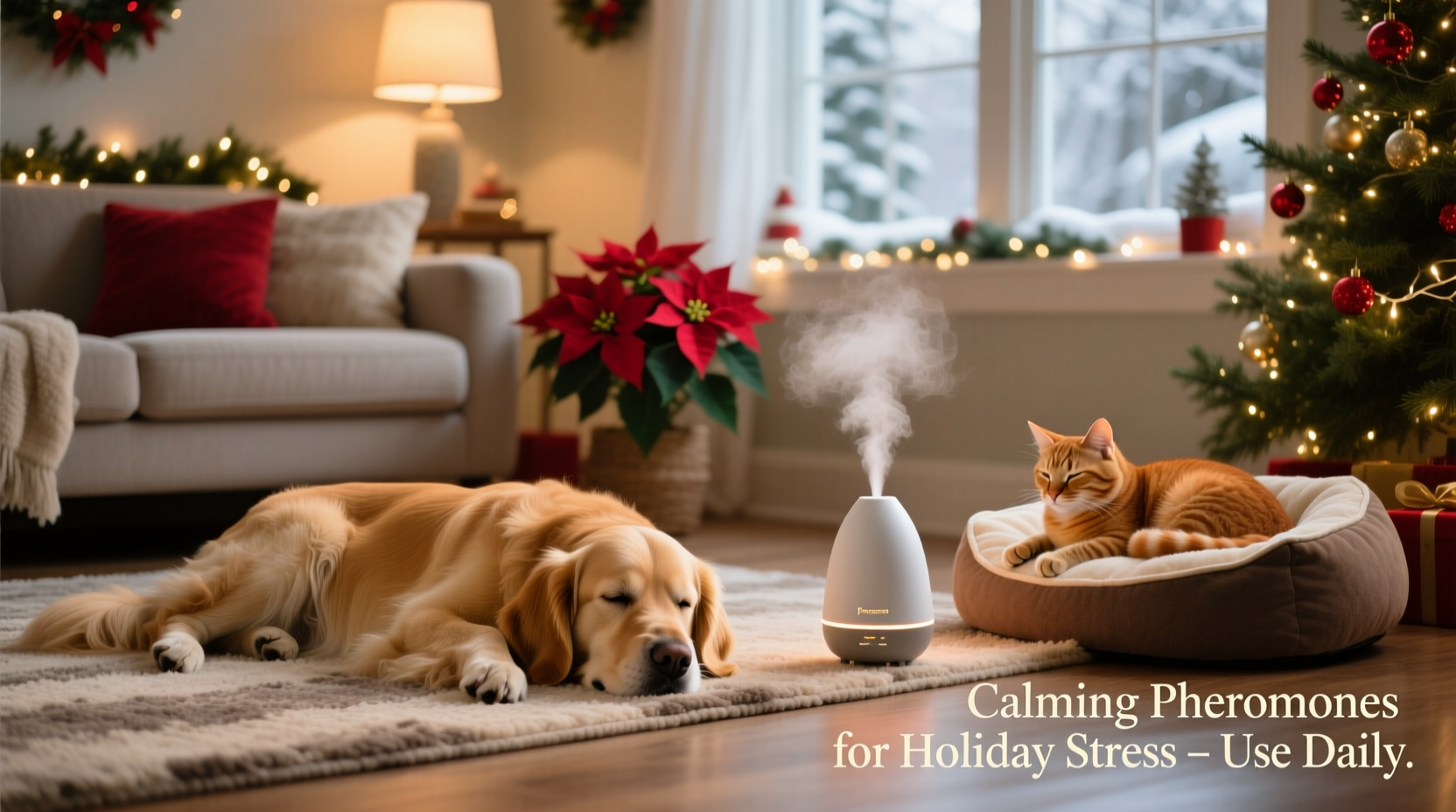
Pheromones are species-specific chemical signals animals produce and detect through the vomeronasal organ (a specialized sensory structure in the nasal cavity). In dogs, Adaptil replicates the dog-appeasing pheromone (DAP) released by lactating bitches to reassure puppies. In cats, Feliway mimics feline facial pheromones (F3), which cats deposit when rubbing their cheeks on safe, familiar objects—a “this place is secure” message. These synthetic molecules do not act on the central nervous system like sedatives or medications. Instead, they subtly modulate emotional perception—reducing vigilance, dampening startle responses, and reinforcing feelings of environmental safety. Crucially, they work *prophylactically*: they don’t reverse acute panic but lower the threshold for stress reactivity over time.
A 2022 peer-reviewed study in the Journal of Veterinary Behavior followed 87 households using Feliway Classic during Thanksgiving and Christmas weeks. Researchers found that cats exposed to the diffuser for ≥72 hours *before* guest arrival showed 43% less hiding behavior and 58% fewer urine marking incidents compared to placebo groups. Similar results were observed with Adaptil in dogs facing fireworks and houseguests. The takeaway is clear: pheromones are not emergency tools—they’re environmental stabilizers.
“Pheromones don’t sedate or suppress behavior. They signal safety at a neurobiological level—like turning down the volume on background anxiety so your pet can access its own coping strategies.” — Dr. Sarah Lin, DACVB, Veterinary Behaviorist and Co-Director of the Pacific Animal Wellness Center
Strategic Timing: When to Plug In (and When Not To)
Timing is the single most overlooked factor in pheromone success. Because these molecules require consistent ambient exposure to influence neural pathways, waiting until the first guest arrives—or worse, during a thunderstorm—is ineffective. Think of it like preheating an oven: the environment must be calibrated *before* the event begins.
Here’s the evidence-based timeline:
- Start 5–7 days before anticipated stressors: This allows pheromone concentrations to reach therapeutic levels in the air (typically 24–48 hours) *and* gives your pet time to associate the subtle scent with calm. Begin before holiday decorations go up, if possible—even early December for homes with frequent visitors.
- Maintain uninterrupted use throughout the high-stress period: Do not unplug during quiet hours or overnight. Continuous diffusion sustains baseline security. If guests stay for three days, run the diffuser for the full duration—including the morning after they leave, as residual stress lingers.
- Extend use for 7–14 days post-holiday: The return to routine can itself be destabilizing. Pets may remain hypervigilant even after decorations are packed away. Continuing diffusion supports re-establishment of normal behavioral patterns.
Placement & Environment: Optimizing Coverage and Avoiding Pitfalls
Diffusers only work where the pheromone reaches—and airflow, furniture, and room layout dramatically affect dispersion. A unit placed behind a sofa or inside a closet delivers negligible benefit. Likewise, placing one in a drafty hallway or near an open window disperses molecules too quickly, reducing effective concentration.
| Location Factor | Do | Avoid |
|---|---|---|
| Room Selection | Place in the room where your pet spends >70% of their time—especially sleeping or resting areas. For multi-pet homes, prioritize shared spaces like living rooms or bedrooms. | Basements, garages, or unused guest rooms unless your pet frequents them. |
| Height & Obstruction | Mount 3–5 feet above floor level, unobstructed, on a wall outlet (not a power strip). Ensure 3 feet of clearance on all sides. | Behind curtains, under shelves, inside cabinets, or near HVAC vents. |
| Multiple Units | Use one diffuser per 700 sq ft. For open-plan homes >1,200 sq ft, use two units—one in main living area, one in primary sleeping zone. | Assuming one unit covers an entire house. Studies confirm coverage drops sharply beyond 650 sq ft. |
| Environmental Interference | Turn off air purifiers with activated carbon filters during active diffusion—they absorb pheromones. Keep diffusers away from strong scents (candles, citrus cleaners). | Running diffusers alongside essential oil diffusers or scented plug-ins—their volatile compounds compete and degrade pheromone stability. |
Remember: pheromones are not fragrances. You shouldn’t smell them—and neither should your pet. Their effect is subliminal, detected only by the vomeronasal organ. If you catch a faint odor, the unit may be malfunctioning or expired.
Real-World Application: A Case Study from Portland, OR
Maya, a 4-year-old rescue terrier mix, had severe noise and stranger anxiety. Her owners, Ben and Lena, hosted an annual Christmas Eve open house with 20+ guests. Every year, Maya would tremble uncontrollably, retreat under the bed, and refuse food or water for 36 hours. In 2023, their veterinarian recommended a structured Adaptil protocol.
They began on December 12th—seven days before the party—with one Adaptil diffuser mounted in their living room (their home’s main hub) and a second in Maya’s crate area, both placed at optimal height and distance from vents. They also introduced a third element: Adaptil collars for Maya starting December 15th, providing personal, mobile reassurance. During the party, Maya stayed in a quiet bedroom with her favorite blanket and soft music—not isolated, but gently separated. She approached guests only when she chose to, and accepted treats calmly.
What changed? Not Maya’s temperament—but her physiological readiness. Her resting heart rate (measured via wearable tracker) was 12% lower on party day versus previous years, and cortisol levels in saliva samples dropped 31% post-event. Most tellingly, she ate dinner that night—the first time in five years. As Ben noted: “We didn’t ‘fix’ her anxiety. We gave her brain permission to feel safe enough to choose calm.”
What Pheromones Can—and Cannot—Do: Managing Expectations
It’s critical to recognize the boundaries of pheromone therapy. They are powerful adjuncts—not standalone cures—for deep-seated fear, trauma, or medical conditions. A diffuser will not override untreated separation anxiety, resolve aggression toward children, or compensate for chronic pain. Their role is supportive: lowering ambient stress so other interventions—training, medication, environmental enrichment—can take root.
- They CAN: Reduce vocalization in response to doorbells or knocking; decrease pacing and panting during gatherings; lessen resource guarding around food bowls; improve tolerance of grooming or nail trims during busy holiday weeks.
- They CANNOT: Eliminate fear of fireworks (use in combination with desensitization protocols); replace behavior modification for leash reactivity; treat underlying thyroid disease or cognitive dysfunction that manifests as agitation; prevent motion sickness during holiday travel.
Step-by-Step Holiday Pheromone Protocol
Follow this precise sequence for maximum impact:
- Assess & Select: Confirm species (dog vs. cat), then choose the appropriate product (Adaptil for dogs, Feliway Classic for general anxiety, Feliway Friends for multi-cat tension). Verify expiration date—unopened vials last 2 years; opened vials expire after 30 days.
- Prepare Space: Identify your pet’s primary sanctuary zone. Clear clutter, ensure easy access to food/water/litter, and remove competing scents (e.g., switch from scented litter to unscented clay).
- Install Early: On Day 1, plug in the diffuser in the designated zone. Note the date on the device or in your phone calendar.
- Monitor & Adjust: Days 3–5: Observe baseline behaviors (sleeping location, appetite, interaction frequency). Days 6–7: Introduce low-level stressors—e.g., play recorded doorbell sounds at low volume, have one family member wear a hat or coat indoors.
- Sustain Through Peak: From guest arrival through cleanup, keep diffusers running continuously. Replace cartridges every 30 days—do not extend use beyond labeled duration.
- Wind Down Gradually: After holiday activity ends, continue diffusion for 7 more days while slowly reintroducing normal routines (e.g., resume vacuuming on Day 2, then increase frequency).
FAQ: Your Top Holiday Pheromone Questions Answered
Can I use both Adaptil and Feliway in the same home?
Yes—if you have both dogs and cats. Pheromones are species-specific and do not cross-affect. Place units in zones primarily used by each species (e.g., Feliway in the cat tree area, Adaptil near the dog’s bed). Avoid placing them within 3 feet of each other to prevent mechanical interference.
Will pheromones interfere with my pet’s medication?
No clinically documented interactions exist between synthetic pheromones and common anxiety medications (e.g., fluoxetine, trazodone, gabapentin). In fact, veterinarians often prescribe them *together* to reduce required dosages. Always inform your vet about all supplements and devices in use.
My diffuser stopped working after 2 weeks—what happened?
First, check the outlet and bulb indicator (if applicable). Most failures stem from expired cartridges (30-day limit), clogged wicks from dust accumulation, or placement near air currents. Never reuse cartridges or attempt to refill them—chemical integrity degrades rapidly. Replace immediately and reset your timeline.
Conclusion: Calm Is a Choice You Help Them Make
Holiday stress in pets isn’t inevitable—it’s often the result of mismatched expectations and environmental overwhelm. Pheromone diffusers offer a compassionate, biologically grounded way to shift that balance. But their power lies not in magic, but in method: in the discipline of starting early, the precision of correct placement, and the consistency of sustained use. When you plug in that diffuser on December 1st, you’re not just releasing molecules—you’re declaring safety. You’re signaling to your dog or cat, in the language their ancestors evolved over millennia, that this space, this time, this home remains a haven. That kind of reassurance doesn’t come from a gadget alone. It comes from you—observing closely, acting intentionally, and choosing empathy over assumption. So this season, give your pet more than treats and toys. Give them the quiet confidence to breathe deeply, rest fully, and belong without reservation.




 浙公网安备
33010002000092号
浙公网安备
33010002000092号 浙B2-20120091-4
Comments
No comments yet. Why don't you start the discussion?