
Decorating the exterior of your home for Christmas has long meant hours on ladders, tangled cords, and the inevitable frustration of burned-out bulbs. But a modern alternative is gaining popularity among homeowners who want dazzling holiday displays without the hassle: projector Christmas lights. These compact devices project thousands of glowing points of light onto walls, roofs, and trees, simulating the look of traditional string lights—but with none of the installation complexity. Whether you're short on time, concerned about safety, or simply want a more flexible lighting solution, projector lights offer a compelling upgrade.
Why Projector Lights Are Gaining Popularity
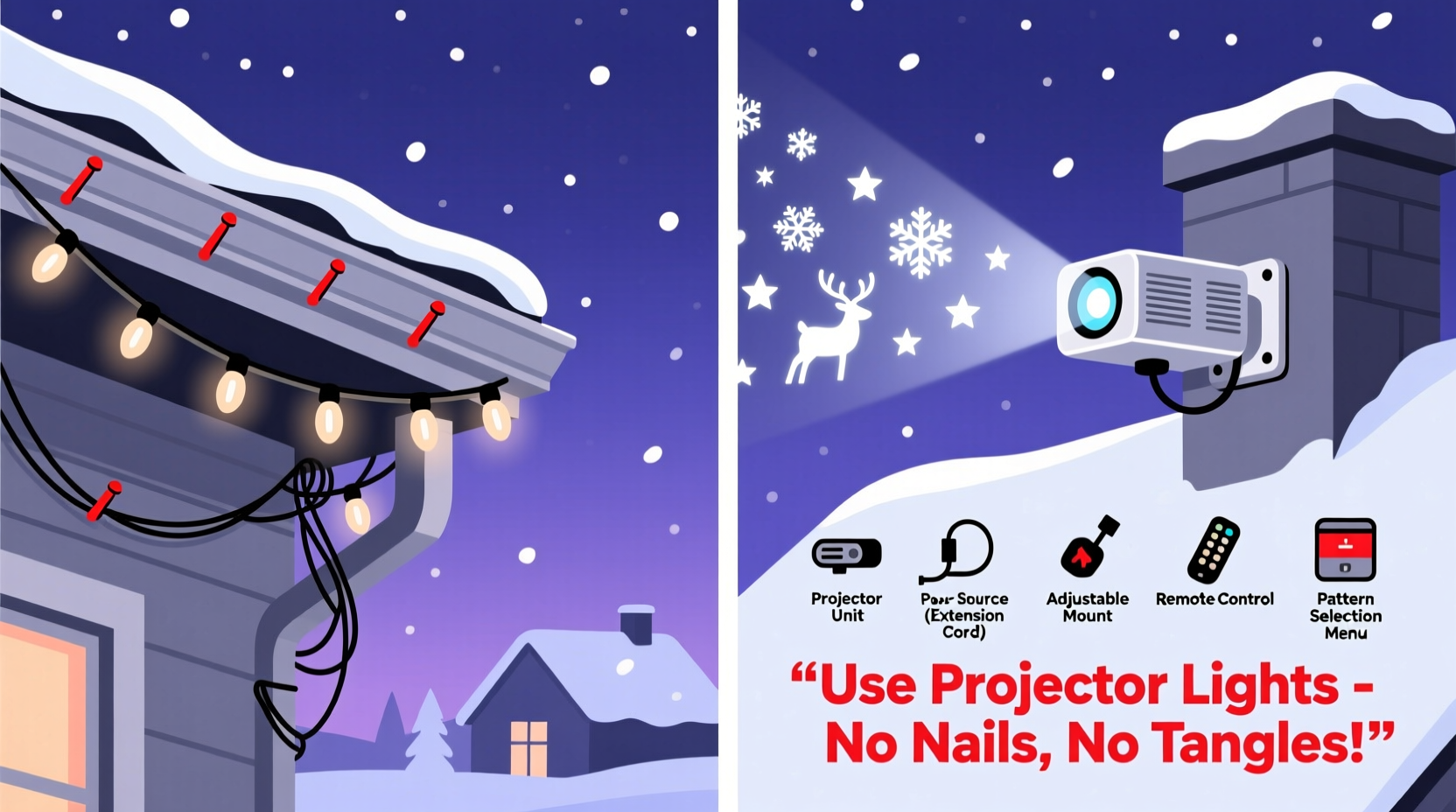
Traditional string lights require meticulous placement along rooflines, gutters, and eaves. They demand extension cords, secure fasteners, and often multiple trips up and down a ladder. In contrast, projector Christmas lights can be set up in minutes. Plug them in, aim them at your house, and instantly transform your façade into a winter wonderland.
The appeal goes beyond convenience. Many users appreciate the versatility—projectors can change colors, patterns, and even animation speeds with the press of a button. Some models include remote controls or smartphone apps, allowing real-time adjustments from inside the warmth of your home. Additionally, because there are no physical strings, there’s less risk of damage during storms or from animals chewing through wires.
“Projector lights are revolutionizing holiday decorating by making it accessible, safe, and customizable for everyone—from renters to seniors.” — Daniel Reeves, Holiday Lighting Designer & Home Automation Consultant
How Projector Christmas Lights Work
At their core, projector Christmas lights use high-intensity LED arrays combined with precision lenses and rotating pattern discs (or digital displays) to cast beams of light over large surfaces. Most units operate on standard 120V household power and are designed for outdoor use with weather-resistant casings.
The projected effect typically mimics the appearance of classic C6 or C9 bulb spacing, creating evenly spaced dots of light that resemble traditional string lights when viewed from a distance. Depending on the model, you can achieve:
- Solid white or multi-color displays
- Pulsing, twinkling, or chasing effects
- Static patterns like snowflakes, stars, or icicles
- Coverage ranging from 300 to over 1,000 square feet
Placement is key. The projector must be positioned at an optimal distance and angle to maximize coverage and uniformity. Most manufacturers recommend placing the unit between 15 and 30 feet from the target surface, elevated slightly off the ground (e.g., on a tripod, deck railing, or step stool) for best results.
Step-by-Step Guide to Setting Up Projector Christmas Lights
Switching from string lights to projector-based illumination doesn’t require specialized skills, but following a structured setup process ensures maximum impact and reliability.
- Choose the Right Model: Select a projector based on your home’s size and desired effect. Larger homes may need multiple units or higher-lumen models (3,000 lumens or more).
- Inspect the Unit: Before use, check the cord, plug, and housing for damage. Ensure lenses are clean and free of debris.
- Determine Placement: Walk around your yard to identify potential locations—driveways, patios, flower beds, or near windows. Avoid areas prone to flooding or heavy foot traffic.
- Elevate the Projector: Use a stable base such as a weighted stand, tripod, or furniture piece. Even a small elevation improves projection spread and reduces shadowing.
- Aim Carefully: Point the projector toward the center of your roofline or upper wall. Tilt slightly upward if targeting eaves specifically. Avoid aiming directly at windows to prevent interior glare.
- Adjust Focus and Pattern: Use built-in knobs or digital menus to sharpen the image and select preferred modes (e.g., steady glow vs. twinkle).
- Secure Power Supply: Connect to a grounded outdoor outlet using a surge protector. Never daisy-chain multiple projectors unless specified by the manufacturer.
- Test After Dark: Observe the display once full darkness sets in. Make fine adjustments to angle or brightness as needed.
- Monitor Weather Conditions: While most units are rated IP44 or higher (splash-resistant), cover or bring indoors during heavy rain, ice storms, or high winds.
Comparing Projector Lights vs. Traditional String Lights
| Feature | Projector Christmas Lights | Traditional String Lights |
|---|---|---|
| Installation Time | 5–15 minutes | 1–4+ hours |
| Safety Risk | Low (no ladders, minimal electrical exposure) | High (fall hazards, electrical overload risks) |
| Storage Space | Compact (one small unit) | Bulky (multiple strands, reels, stakes) |
| Customization | High (color, speed, pattern changes) | Limited (requires rewiring or new strings) |
| Lifespan | 5–7 years (LED components) | 3–5 years (bulb burnout common) |
| Energy Use | 15–40 watts per unit | 40–200+ watts per 100-light strand |
| Renter-Friendly | Yes (no nails, hooks, or modifications) | No (often violates lease terms) |
This comparison highlights why projector lights are increasingly favored by urban dwellers, older adults, and those seeking low-maintenance seasonal décor. While they don’t completely replace the three-dimensional depth of physical lights, advancements in optics and brightness have narrowed the gap significantly.
Real-World Example: A Suburban Home Transformed
In suburban Columbus, Ohio, homeowner Maria Thompson had always admired her neighbors’ elaborate light displays but avoided joining in due to mobility issues and fear of falling from a ladder. Last year, she purchased two red-and-green projector lights after seeing an advertisement online. She placed one on her front porch railing facing the gable end of her two-story home and another in the side garden aimed at the garage.
Within ten minutes, her entire front elevation was covered in shimmering green dots that pulsed rhythmically. Her children helped adjust the angles until the peaks of both roofs were evenly lit. Neighbors commented within days, and several asked where she bought the projectors. “I got more compliments this year than any other Christmas combined,” Maria said. “And I didn’t hang a single bulb.”
Her experience reflects a growing trend: people who previously opted out of holiday decorating are now participating thanks to accessible technology.
Tips for Maximizing Impact and Efficiency
To get the most out of your projector Christmas lights, consider these expert-backed strategies:
- Use multiple projectors with different colors or effects to highlight architectural features.
- Avoid aiming at highly textured or uneven surfaces, which can distort the light pattern.
- Keep lenses clean—wipe gently with a microfiber cloth weekly during the season.
- Store in original packaging or a padded container to protect lenses and controls.
Common Mistakes to Avoid
Even simple setups can go wrong without attention to detail. Watch out for these frequent errors:
- Placing too close to the house: Results in oversaturated spots and gaps at the edges.
- Ignoring beam spread specs: Leads to incomplete coverage or wasted lumens.
- Using indoor-rated projectors outdoors: Causes premature failure due to moisture ingress.
- Overlooking power source location: Forces unsafe extension cord runs across walkways.
- Leaving on continuously: Reduces LED lifespan and increases electricity costs.
Frequently Asked Questions
Can projector Christmas lights work on two-story homes?
Yes, many high-lumen models (3,000+ lumens) are designed specifically for multi-story houses. Position the projector farther back—25 to 30 feet—and elevate it to ensure the beam reaches upper eaves. Some users employ two units: one for the first floor and another angled upward for the second.
Do projector lights use less electricity than string lights?
Generally, yes. A typical projector uses 20–40 watts, whereas 100 incandescent mini lights consume about 40 watts, and larger C9 strings can exceed 100 watts per strand. With LED string lights becoming more efficient, the gap narrows—but projectors still offer lower total wattage for comparable coverage.
Are projector Christmas lights suitable for renters?
Absolutely. Since they require no drilling, tacks, or permanent fixtures, projector lights are ideal for apartment balconies, townhouse patios, or leased properties. Just ensure your outdoor outlet is accessible and approved for seasonal use.
Checklist: Getting Started with Projector Christmas Lights
- ☐ Measure the height and width of the area you want to illuminate
- ☐ Research projector models with adequate lumen output and beam angle
- ☐ Confirm outdoor electrical access near intended placement
- ☐ Choose a stable, elevated surface for mounting
- ☐ Check weather rating (look for IP44 or higher)
- ☐ Test placement at twilight to fine-tune angle and focus
- ☐ Set timer or smart plug for automatic operation
- ☐ Inspect weekly for debris, misalignment, or moisture buildup
Conclusion: Embrace a Smarter Way to Light Up the Holidays
Switching from traditional string lights to projector Christmas lights isn’t just about saving time—it’s about redefining what holiday decorating can be. It’s safer, more adaptable, and surprisingly effective at creating festive ambiance. Whether you live in a high-rise condo, a sprawling ranch, or somewhere in between, projector lights offer a realistic, renter-friendly, and energy-efficient way to celebrate the season.
With a single evening’s effort, you can achieve a display that rivals months of meticulous stringing. And when January arrives, packing up takes seconds instead of hours. As lighting technology continues to improve, the line between projected and physical lights will only blur further—making now the perfect time to make the switch.




 浙公网安备
33010002000092号
浙公网安备
33010002000092号 浙B2-20120091-4
Comments
No comments yet. Why don't you start the discussion?