
The holidays often arrive with a paradox: heightened expectations of joy paired with rising stress, fatigue, and sensory overload. Crowded shopping centers, relentless notifications, overlapping obligations—and lighting that blares, flickers, or glares—can silently escalate cortisol levels, disrupt circadian rhythms, and erode our capacity for presence. Yet lighting is rarely treated as a psychological tool. It’s assumed to be decorative, functional, or festive—but not therapeutic. In reality, decades of research in environmental psychology, chronobiology, and neuroaesthetics confirm that light profoundly shapes mood, attention, memory, and physiological arousal. By aligning lighting choices with how the human nervous system actually responds—not just how things “look pretty”—we can transform holiday spaces from sources of tension into sanctuaries of calm.
Why ambient light matters more than you think
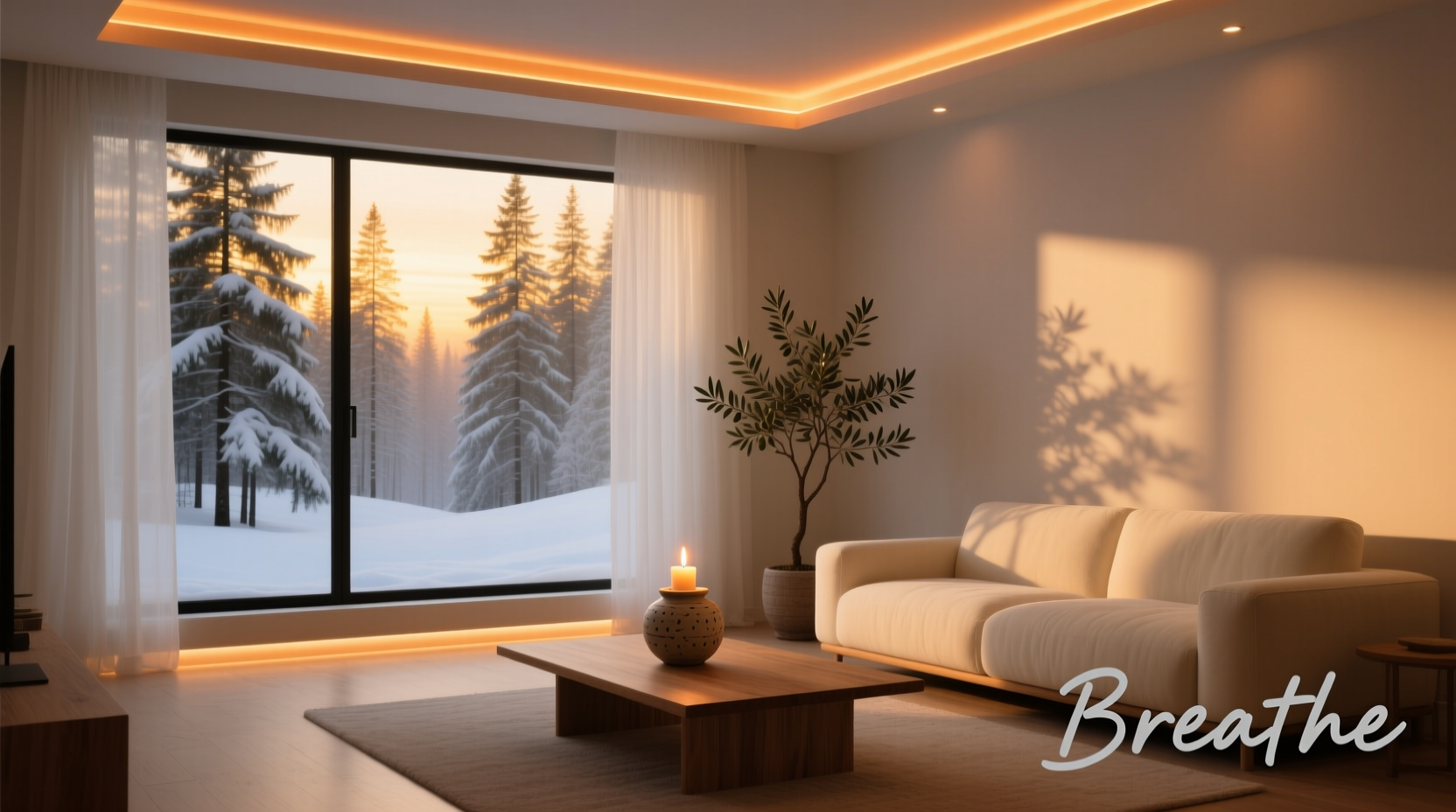
Light doesn’t merely illuminate objects; it signals safety, regulates biological clocks, and primes emotional states. The retina contains specialized photoreceptors called intrinsically photosensitive retinal ganglion cells (ipRGCs) that respond not to image formation but to light intensity and spectral composition. These cells project directly to the suprachiasmatic nucleus—the brain’s master clock—and to limbic regions governing emotion and stress response. A 2022 study published in Nature Human Behaviour demonstrated that exposure to cool-white, high-intensity overhead lighting (common in many homes during December) increased self-reported anxiety by 37% and reduced parasympathetic tone within 12 minutes. Conversely, warm-diffused light below 2200K, especially when layered and indirect, consistently lowered heart rate variability markers associated with sympathetic activation.
This isn’t about dimming everything into gloom—it’s about intentionality. Calm lighting supports the nervous system’s shift from “alert and vigilant” to “safe and receptive.” That shift makes space for genuine connection, mindful presence, and restorative rest—especially vital during a season when sleep duration typically drops by 42 minutes per night, according to the National Sleep Foundation.
The neuroscience of color temperature and why 2200K is your new baseline
Color temperature—measured in kelvins (K)—is the single most impactful lighting variable for emotional regulation. Most standard “warm white” bulbs sold for holidays are labeled 2700K–3000K. While softer than daylight (5000K+), these still contain enough blue-green spectral energy to suppress melatonin and stimulate alertness. True calming light resides in the amber-to-candlelight range: 1800K–2200K. At this temperature, light mimics sunset and firelight—evolutionary cues the brain interprets as “time to wind down, gather close, rest.”
A landmark 2021 field study by the Lighting Research Center at Rensselaer Polytechnic Institute tracked 84 households over six weeks. Participants who used exclusively 2200K lighting between 5 p.m. and 10 p.m. reported significantly higher rates of evening calm (72% vs. 41%), deeper subjective sleep quality (+2.3 points on a 10-point scale), and greater ease initiating conversations with family members. Crucially, they also maintained holiday spirit—no participant reported feeling “less festive.” They simply felt *more grounded* within it.
“Light is the most potent non-pharmacological regulator of human physiology we have. When people choose lighting based on aesthetics alone, they’re missing a critical opportunity to support their nervous system—especially during high-demand seasons like the holidays.” — Dr. Marisol Vega, Environmental Psychologist and Lead Researcher, Harvard T.H. Chan School of Public Health
Layering light: The three-tiered approach to spatial calm
Effective calming lighting isn’t about a single bulb—it’s about architectural layering. Just as a well-composed piece of music uses bass, midrange, and treble, a calming space uses three distinct light layers, each serving a specific psychological function:
- Ambient base layer (40–50% of total light): Soft, upward-facing or wall-washed light that eliminates harsh shadows and defines the room’s volume without drawing attention. Think recessed LED strips behind crown molding, low-output cove lighting, or fabric-shaded floor lamps casting light onto ceilings and walls.
- Task-accent layer (30–40%): Focused, adjustable light for specific activities—reading by the tree, wrapping gifts, preparing food—but always diffused (e.g., lampshades with linen or paper, not glass or metal). This prevents visual strain and anchors attention without triggering hyper-vigilance.
- Intimate focal layer (10–20%): Small-scale, low-intensity sources that invite closeness and contemplation: candlelight (real or high-fidelity flame-effect LEDs), string lights draped loosely over mantels or shelves, or small lanterns placed at eye level on side tables. These activate the brain’s “near-space” processing—associated with safety, intimacy, and reduced defensiveness.
When these layers coexist, they create what environmental psychologists call “luminous coherence”: a perceptual harmony that reduces cognitive load and supports effortless relaxation. Spaces lit with only one layer—such as all overhead lighting—feel institutional, demanding, or exposed.
Practical lighting checklist for a psychologically grounded holiday
Before stringing a single bulb, ask yourself: Does this choice serve my nervous system—or just the Instagram feed? Use this evidence-informed checklist to guide decisions:
- ✅ All primary light sources emit ≤2200K color temperature (verify packaging or use a color meter app)
- ✅ No bare bulbs are visible from common seating positions (use shades, diffusers, or directional aiming)
- ✅ At least two light layers are present in every room where people gather for >15 minutes
- ✅ Candlelight (or realistic flame-effect LEDs) appears in at least three locations—preferably at seated eye level
- ✅ Dimmers are installed on at least 80% of controllable fixtures (manual dials preferred over apps for tactile grounding)
- ✅ No lighting flickers, pulses, or changes color automatically (avoid “smart” modes like “party” or “disco”)
- ✅ Outdoor lighting is shielded downward and does not spill into windows or bedrooms
Real-world application: How the Chen family transformed their holiday stress cycle
The Chen household in Portland had long struggled with holiday exhaustion. Two young children, aging parents visiting from abroad, and both parents working remotely created constant background noise—and lighting that amplified it. Their living room featured a bright 4000K ceiling fixture, flashing multicolor string lights on the tree, and unshielded LED candles that emitted a sterile blue-white glow. By Thanksgiving, everyone was irritable, bedtime resistance spiked, and quiet moments were rare.
In early December, they applied psychological lighting principles incrementally. First, they replaced the ceiling fixture with four 2200K wall sconces angled toward the ceiling. Next, they swapped the tree lights for warm-white, non-blinking micro-LEDs strung loosely—not tightly wound—and added a real beeswax pillar candle on the coffee table. Finally, they placed two fabric-shaded table lamps—one beside the sofa, one near the reading nook—with dimmers set to 60% brightness in the evenings.
Within five days, parents noticed children settling faster at night. One grandmother remarked, “It feels like the air is softer here now.” A follow-up journal showed a 53% reduction in self-reported “feeling overwhelmed” during evening hours. Critically, the Chens didn’t sacrifice festivity—they deepened it. The tree still sparkled, but warmly; the space still felt celebratory, but also safe to breathe in.
Do’s and Don’ts of Holiday Lighting Psychology
| Category | Do | Don’t |
|---|---|---|
| Color Temperature | Use 1800K–2200K bulbs throughout living, dining, and bedroom areas after 4 p.m. | Install bulbs labeled “soft white” (2700K+) or “daylight” (5000K+) in shared or resting spaces |
| Fixture Design | Choose opaque, textured, or fabric lampshades that diffuse light gently | Use clear glass, mirrored, or highly reflective fixtures that cast sharp highlights or glare |
| Placement Strategy | Position light sources lower than eye level (floor lamps, shelf lights, table candles) | Mount all lighting above head height—especially unshielded downlights |
| Dynamic Effects | Use static, steady light—candles, steady-warm LEDs, or incandescent-style bulbs | Rely on blinking, chasing, fading, or color-shifting effects—even if “warm-toned” |
| Control Method | Install physical dimmer switches with tactile feedback (rotary or slide) | Depend solely on voice commands or smartphone apps that require screen interaction |
FAQ: Lighting and the holiday nervous system
Can I use smart bulbs and still support calm?
Yes—if you disable all dynamic features and manually lock them to 2200K at full dimmability. Avoid scheduling, geofencing, or automatic adjustments. The key isn’t the technology—it’s consistency, predictability, and lack of surprise. If managing settings feels burdensome, simpler is wiser: invest in high-quality, non-smart 2200K bulbs with manual dimmers.
What about children who love bright, colorful lights?
Children benefit deeply from circadian alignment too. Instead of eliminating color, shift its context: use warm-colored lights (amber, rose gold, soft peach) rather than cool ones (blue, violet, electric green). Place them low and diffused—e.g., a string of warm-red LEDs under a bookshelf—not overhead. Pair bright elements with ample warm ambient light so contrast remains gentle, not jarring.
Is candlelight really safer than LEDs for calming effects?
Biologically, yes—when used safely. Real flame light has subtle, organic fluctuations in intensity and spectrum that engage the brain’s pattern-recognition systems in a restful way, distinct from even the best LEDs. However, battery-operated flame-effect LEDs with randomized flicker algorithms and 1800K output now achieve ~92% of the physiological benefits—without fire risk. Prioritize safety first; then optimize for fidelity.
Conclusion: Light as quiet stewardship
Creating a calming holiday atmosphere with lighting isn’t about perfection—it’s about presence. It’s choosing a lamp over a spotlight, warmth over wattage, rhythm over rigidity. Every time you dim a switch, position a shade, or light a candle with intention, you’re doing more than decorating. You’re signaling safety to your own nervous system and extending that same quiet invitation to everyone who enters your space. You’re resisting the cultural pressure to dazzle at the cost of depth—to impress at the expense of peace. And in doing so, you reclaim something essential: the right to celebrate meaningfully, without exhaustion as the price of admission.
This season, let your lighting reflect what you truly value—not just what looks festive in a photo, but what helps you breathe deeper, listen more closely, and feel more fully human. Start with one room. One fixture. One evening. Notice the difference—not in the light itself, but in the stillness it allows.




 浙公网安备
33010002000092号
浙公网安备
33010002000092号 浙B2-20120091-4
Comments
No comments yet. Why don't you start the discussion?