
For decades, holiday lighting meant wrestling with timers, extension cords, and the annual ritual of manually flipping switches at dusk—and forgetting to turn them off at dawn. Today’s smart plugs eliminate that friction entirely. They transform basic string lights, inflatable displays, and even vintage incandescent sets into intelligent, schedule-driven, voice-responsive elements of your seasonal decor. More than convenience, smart plug automation delivers measurable benefits: up to 30% lower electricity use compared to all-night operation, consistent on/off timing across multiple zones, remote troubleshooting during power fluctuations, and seamless integration with broader home ecosystems. This isn’t about flashy gimmicks—it’s about reliability, safety, and reclaiming time during one of the busiest seasons of the year.
Why Smart Plugs Outperform Traditional Timers
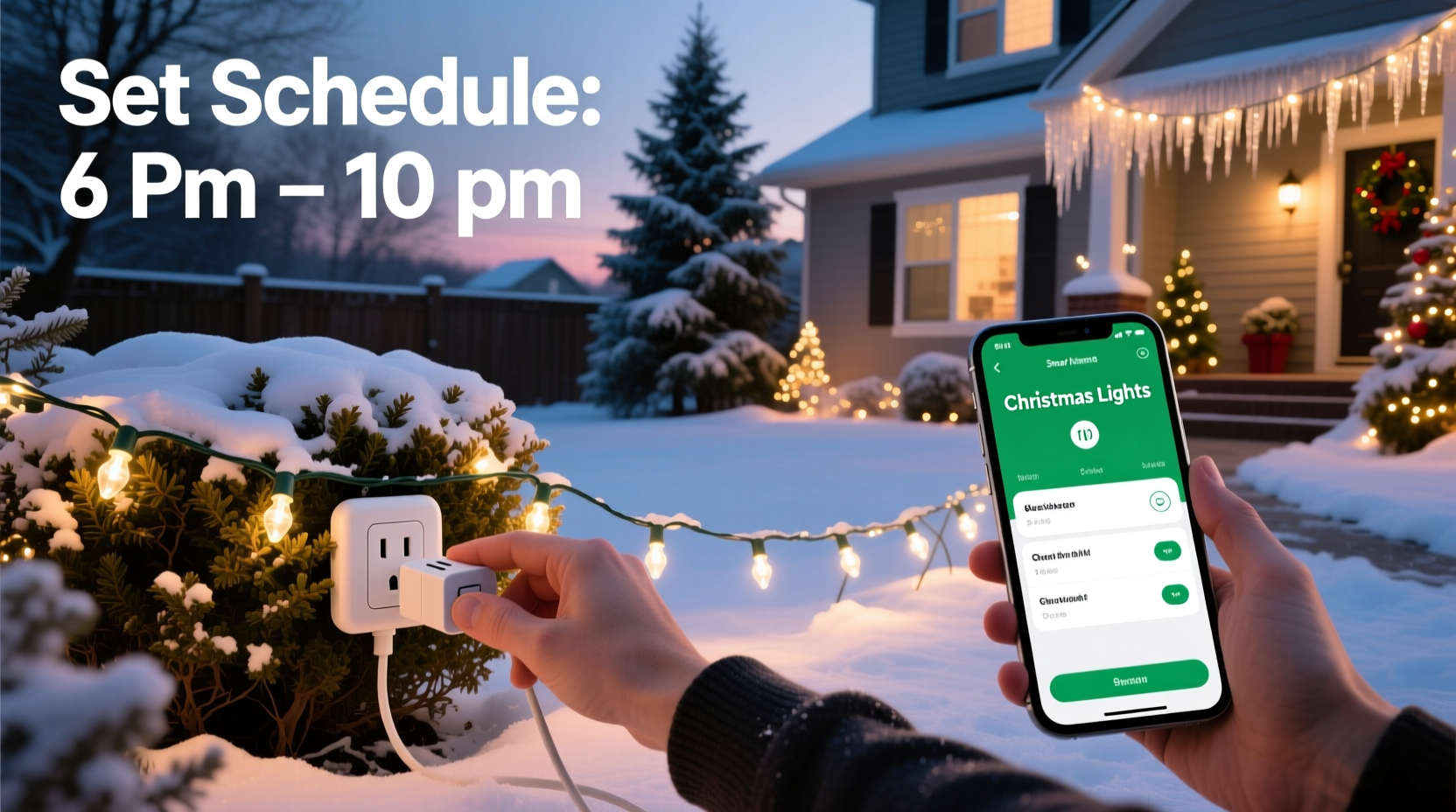
Traditional mechanical or digital plug-in timers suffer from three persistent limitations: inflexible scheduling (most can’t adjust for changing sunset times), no remote access (a power outage or travel means lights stay off—or worse, stay on), and zero feedback (you can’t confirm if the circuit actually energized). Smart plugs solve each of these problems by connecting to your home Wi-Fi and communicating with cloud-based or local apps. Crucially, they require no additional hub—unlike many smart bulbs or proprietary lighting systems—making them the most accessible entry point into holiday automation.
Modern smart plugs also offer real-time energy monitoring, overload protection, and scheduling based on astronomical events (e.g., “turn on 20 minutes after sunset”). That means your display activates precisely when ambient light fades—not at a fixed 5:00 p.m. regardless of season—and shuts down before midnight, conserving energy without sacrificing curb appeal.
Selecting the Right Smart Plug for Holiday Use
Not all smart plugs are built for seasonal outdoor deployment—or for handling the unique electrical profile of holiday lighting. Below is a comparison of key features to prioritize when selecting hardware:
| Feature | Why It Matters | Recommended Minimum |
|---|---|---|
| Outdoor-Rated Enclosure (IP64 or higher) | Protects against rain, snow, dust, and temperature swings. Indoor-only plugs fail quickly when exposed to winter conditions—even under eaves. | IP64 (splash-resistant) or IP66 (jet-spray resistant) |
| Wattage Capacity | Most LED light strings draw 4–10W per 100 bulbs; older incandescent sets can exceed 200W per strand. Multiply total strands per plug. | 1800W continuous (15A @ 120V) for most residential setups |
| Scheduling Precision | Fixed time schedules become inaccurate as sunset shifts. Astronomical scheduling adapts automatically. | Support for “Sunset/Sunrise” triggers + manual override |
| Local Control (No Cloud Required) | Ensures functionality during internet outages—a common issue during winter storms. | Works via local Wi-Fi or Matter/Thread protocols |
| Energy Monitoring | Identifies inefficient strands, estimates monthly costs, and verifies power delivery to each zone. | Real-time wattage + daily kWh tracking |
Avoid budget plugs marketed solely for “smart home beginners.” Many lack weather resistance, have unreliable firmware, or omit critical safety certifications (UL 498, ETL, or CSA). Instead, choose models certified for outdoor use and explicitly rated for continuous seasonal operation—such as the TP-Link Tapo P115, Kasa KP303, or Eve Energy (EU version). All three support Apple HomeKit, Google Home, and Amazon Alexa, and include physical buttons for emergency manual control.
Step-by-Step Setup: From Unboxing to Fully Automated Display
- Map Your Lighting Zones: Group lights by location and function (e.g., “front porch”, “garage roof”, “backyard tree”). Assign one smart plug per zone. Avoid daisy-chaining multiple plugs—each should connect directly to a GFCI-protected outdoor outlet.
- Install Weatherproof Protection: Place each plug inside a UL-listed outdoor-rated junction box or heavy-duty weatherproof enclosure. Seal cable entries with silicone caulk or rubber grommets. Never leave plugs exposed—even under an overhang.
- Connect & Name Devices: Power on the plug, follow the app instructions (Kasa, Tuya, or Home app) to join your 2.4 GHz Wi-Fi network (5 GHz is incompatible with most smart plugs), and assign descriptive names: “Porch Lights”, “Garage Roof”, “Tree Topper”.
- Create Sunset-Based Schedules: In your app, set “On” to “20 minutes after sunset” and “Off” to “11:30 p.m.” Add a second “Off” rule for “30 minutes before sunrise” as a failsafe. Enable “Repeat Daily”.
- Test & Refine: Observe activation for three consecutive evenings. Adjust offset minutes if lights come on too early or late. Check energy logs to confirm each plug draws expected wattage—abnormal spikes indicate faulty wiring or bulb shorts.
This process takes under 45 minutes for a typical 3-zone setup. Once complete, your system runs autonomously—no daily interaction needed. Firmware updates occur silently overnight, and scheduling adjusts seamlessly as daylight hours change from November through January.
Real-World Application: The Henderson Family’s Neighborhood-Wide Display
In Portland, Oregon, the Henderson family manages a 1,200-foot light display spanning their front yard, driveway, and two-story garage façade. For years, they used four mechanical timers—but inconsistent winter sunsets caused lights to activate mid-afternoon in December, draining batteries and drawing complaints. After switching to four outdoor-rated Kasa KP303 plugs, they segmented the display into zones: warm-white roofline, blue-and-white driveway accents, animated tree lights, and a synchronized projector on the garage door.
Using the Kasa app’s “Group” feature, they created a single “Holiday Mode” toggle that activates all zones simultaneously. They added voice commands (“Alexa, turn on Holiday Mode”) for guests and scheduled weekly “off” days (Tuesdays and Thursdays) to reduce energy use. Most importantly, when a December ice storm knocked out their internet for 36 hours, local Wi-Fi control kept the schedule running uninterrupted. Neighbors began asking how they achieved such consistency—prompting the Hendersons to start a neighborhood workshop on smart plug automation.
“Smart plugs are the unsung heroes of modern holiday lighting. They deliver enterprise-grade reliability at consumer price points—and they scale effortlessly from a single wreath to a municipal-level display.” — Carlos Mendez, Lighting Systems Engineer, HolidayPro Solutions
Advanced Automation: Beyond Basic Scheduling
Once core scheduling is stable, leverage deeper integrations to enhance interactivity and efficiency:
- Weather-Triggered Dimming: Connect your smart plug to a weather service (via IFTTT or Home Assistant) to dim lights by 30% during high-wind warnings—reducing strain on mounting hardware and minimizing flicker.
- Guest Mode Activation: Use geofencing to trigger lights 15 minutes before household members arrive home—creating a welcoming glow without manual intervention.
- Music-Synchronized Flashing: Pair with a compatible audio analyzer (e.g., Shelly Plug S + ESPHome firmware) to pulse lights gently to bass frequencies—ideal for porch speakers during holiday parties.
- Energy-Saving Overrides: Set automatic shutoff if energy draw exceeds 110% of baseline for >5 minutes—indicating a short circuit or failing transformer.
These features require minimal technical effort. Most are configured in under five minutes using drag-and-drop interfaces in apps like Home Assistant or Apple Shortcuts. No programming knowledge is needed—only an understanding of your household rhythms and priorities.
Frequently Asked Questions
Can I use smart plugs with old incandescent Christmas lights?
Yes—if the total wattage stays within the plug’s rated capacity. A standard 100-bulb incandescent set draws ~400W. Two such sets on a 1800W plug is safe; three would exceed limits. Always measure actual draw with a Kill-A-Watt meter before finalizing connections. Note: Incandescents generate significant heat—ensure plugs are installed in ventilated enclosures, not buried under mulch or snow.
What happens if my Wi-Fi goes down during the holidays?
Reputable smart plugs retain locally stored schedules and will continue operating normally. You’ll lose remote access and voice control until connectivity resumes, but sunset-based timing remains intact. Some models (e.g., Eve Energy) store schedules directly on-device, making them fully functional without any cloud dependency.
Do I need a separate smart plug for each light string?
Not necessarily. Use a heavy-duty outdoor power strip (rated for 15A/1875W) plugged into a single smart plug to control multiple low-wattage LED strings. However, avoid mixing high-draw items (e.g., inflatables with built-in fans) on the same circuit as delicate light strings—differences in startup surge can cause flickering or premature failure.
Optimizing Safety, Efficiency, and Longevity
Automation adds convenience—but only when grounded in sound electrical practice. Begin every season by inspecting all cords for cracks, fraying, or exposed wire. Discard any strand with damaged insulation, even if bulbs still illuminate. Replace pre-2017 C7/C9 sockets with newer shatter-resistant models—they’re less prone to moisture ingress and short-circuiting.
Use GFCI outlets exclusively for outdoor smart plug connections. Test each GFCI monthly using its “Test” button. If it doesn’t trip, replace the outlet immediately—GFCIs degrade over time, especially in humid or salty-air environments.
Finally, unplug and store smart plugs indoors after New Year’s Day. While rated for seasonal use, prolonged exposure to UV radiation and freeze-thaw cycles accelerates plastic brittleness. Clean contacts with isopropyl alcohol before storage, and keep units in anti-static bags with silica gel packets to prevent condensation damage.
Conclusion: Your Display, Smarter—Not Harder
Automating your Christmas light display with smart plugs isn’t about chasing novelty—it’s about honoring tradition with modern tools that respect your time, energy budget, and peace of mind. You gain precise control without complexity, resilience without redundancy, and festive joy without the daily grind of manual management. Whether you light up a single window box or coordinate a neighborhood-wide spectacle, the foundation remains the same: thoughtful selection, weather-aware installation, and intentional scheduling. The technology fades into the background, leaving only the warmth, rhythm, and quiet satisfaction of lights that glow exactly when—and only when—they should.
Start small this season: automate one zone. Observe how much mental bandwidth it frees. Then expand. You’ll discover that the most meaningful holiday upgrades aren’t always visible—they’re felt in the absence of worry, the consistency of welcome, and the reclaimed moments spent with loved ones instead of fumbling with timers in the cold.




 浙公网安备
33010002000092号
浙公网安备
33010002000092号 浙B2-20120091-4
Comments
No comments yet. Why don't you start the discussion?