
Vintage Christmas lamps carry a warmth that modern lighting often fails to replicate. Their soft glow, intricate designs, and nostalgic appeal make them cherished decorations in homes during the holiday season. However, managing their operation—especially when balancing ambiance, energy use, and safety—can be challenging. Many owners leave these lamps on too long, risking overheating or excessive electricity consumption. The solution? Smart plugs. By integrating these small but powerful devices into your holiday lighting routine, you can automate, control, and protect your vintage lamps with precision and ease.
Smart plugs bridge the gap between analog charm and digital convenience. They allow you to schedule on/off times, monitor power usage, and even control lights remotely—all without modifying the original wiring of your vintage fixtures. This guide walks through practical strategies, setup steps, and real-world applications to help you preserve your treasured lamps while enjoying a smarter, safer holiday season.
Why automate vintage Christmas lamps?
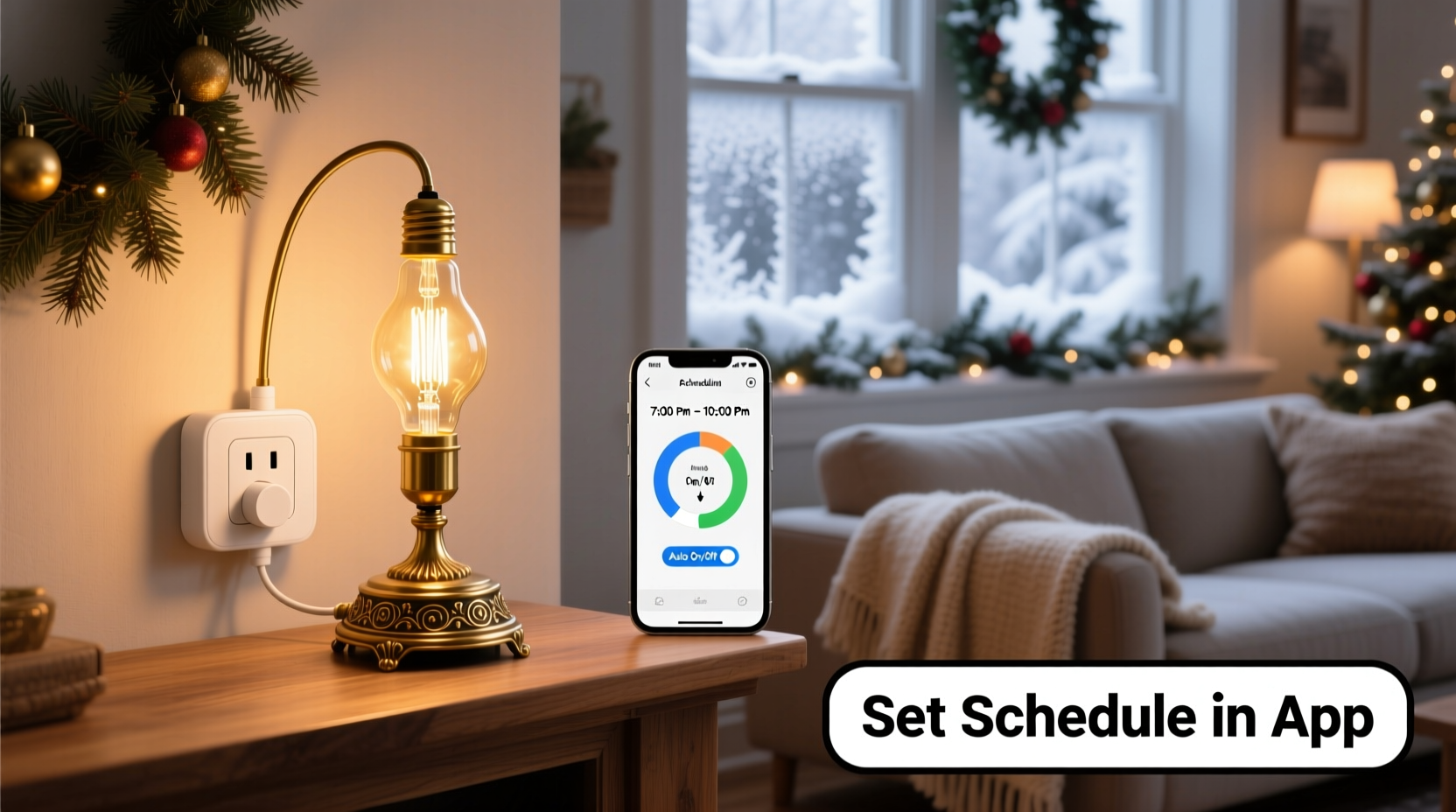
Vintage lamps were not designed with modern energy standards or automation in mind. Most operate on simple mechanical switches and lack timers or low-voltage safeguards. When left unattended or used for extended periods, they can overheat, especially if they still use incandescent bulbs. Additionally, manually turning them on and off every day is inconvenient and often forgotten, leading to wasted energy or missed moments of festive ambiance.
Automation addresses these concerns by introducing consistency and control. With a smart plug, you ensure the lamps are only on during desired hours—such as from dusk until bedtime—and eliminate the risk of being left on overnight. This not only conserves energy but also reduces wear on aging sockets and wiring.
“Integrating smart technology with vintage decor isn’t about replacing tradition—it’s about preserving it safely and sustainably.” — Daniel Reyes, Home Automation Specialist at EcoHoliday Labs
Step-by-step: Setting up a smart plug for your vintage lamp
Setting up a smart plug is straightforward, but attention to detail ensures both functionality and safety—especially when dealing with older electrical systems and vintage fixtures. Follow this sequence to integrate automation seamlessly.
- Choose a compatible smart plug: Select one that works with your home Wi-Fi (2.4 GHz network), supports scheduling, and has an app for iOS or Android. Popular options include TP-Link Kasa, Amazon Smart Plug, and Wemo Mini.
- Inspect the lamp and cord: Before plugging anything in, examine the lamp’s cord, plug, and socket. Look for fraying, cracked insulation, or loose connections. If damage is present, consult an electrician or consider rewiring before use.
- Use appropriate bulbs: Replace any outdated or high-wattage incandescent bulbs with LED equivalents that mimic the warm glow but run cooler and use less power. Ensure the bulb wattage does not exceed the socket rating.
- Plug in the smart device: Insert the smart plug into a grounded wall outlet. Avoid using extension cords or power strips unless they are heavy-duty and surge-protected.
- Connect the lamp: Plug the vintage lamp into the smart plug. Do not daisy-chain multiple lamps unless the total load is within the smart plug’s capacity (typically 15 amps or 1800 watts).
- Download and set up the app: Install the manufacturer’s app, create an account, and follow the instructions to connect the plug to your Wi-Fi network. <7> Create a daily schedule: Use the app to set on and off times. For example, program the lamp to turn on at 5:00 PM and off at 11:00 PM during the week, with extended hours on weekends.
- Test the automation: Manually trigger the plug via the app to confirm it controls the lamp. Then wait for the scheduled time to verify automatic operation.
Optimizing schedules for ambiance and efficiency
The magic of vintage lamps lies in their timing—illuminating spaces when natural light fades and creating cozy atmospheres during evening gatherings. A well-designed schedule enhances this effect without unnecessary runtime.
Consider aligning your lamp’s operation with sunset and sunrise times. Since these vary throughout December, use smart plug features that support geofencing or dynamic scheduling based on local daylight. Some apps allow you to set “Sunset to Sunrise” modes, automatically adjusting daily.
If your lamp is visible from outside, program it to turn on earlier during darker winter days. Conversely, indoor display lamps may only need activation during family time—say, 6:00 PM to 10:00 PM.
| Scenario | Recommended On Time | Recommended Off Time | Notes |
|---|---|---|---|
| Indoor accent lighting | 6:00 PM | 10:30 PM | Ideal for living rooms or dining areas during meals and relaxation. |
| Outdoor curb appeal | Sunset (~4:45 PM) | 11:00 PM | Maximize visibility; avoid late-night glare for neighbors. |
| Child-friendly display | 5:00 PM | 8:00 PM | Coincides with younger children’s waking hours. |
| All-day nostalgic effect | 8:00 AM | 11:00 PM | Only use with LED bulbs and temperature-safe fixtures. |
For special occasions—like Christmas Eve or holiday parties—you can create temporary overrides or one-time schedules. Most apps allow you to manually turn the plug on or off without disrupting the regular automation.
Real example: Preserving a 1950s tree lamp in a modern home
Maria Thompson inherited a 1958 aluminum Christmas tree with matching colored bubble lights from her grandmother. The piece was a centerpiece of her childhood holidays but had been stored for decades. After restoration, she wanted to use it regularly—but worried about fire risk and inconsistent use.
She installed a TP-Link Kasa smart plug and paired it with vintage-style LED bulbs rated at 4 watts each (replacing the original 25-watt incandescents). Using the app, she created a schedule starting one hour before sunset and ending at 10:30 PM. She also enabled the “Away Mode” feature occasionally, which randomizes on/off times to simulate presence when traveling.
Within weeks, Maria noticed reduced anxiety about leaving the lamp on. Her electricity bill showed minimal impact despite daily use, and her children enjoyed the predictable glow each evening. The blend of heritage and technology made the tradition feel both safe and special.
Safety and maintenance checklist
Using smart plugs adds a layer of protection, but it doesn’t replace basic electrical safety—especially with vintage items. Follow this checklist to minimize risks and extend the life of your lamps.
- ✅ Inspect cords and plugs for cracks, brittleness, or exposed wires before each season.
- ✅ Use only UL-listed or ETL-certified smart plugs with surge protection.
- ✅ Replace original incandescent bulbs with cool-running LEDs that match the aesthetic.
- ✅ Plug directly into wall outlets—avoid multi-plug adapters unless rated for continuous use.
- ✅ Clean dust from sockets and shades before installation to prevent overheating.
- ✅ Monitor the first few days of operation for unusual heat, buzzing, or flickering.
- ✅ Keep flammable materials (curtains, paper decorations) at least 12 inches away.
- ✅ Reset the smart plug monthly by unplugging for 30 seconds to clear connectivity glitches.
“Older lamps weren’t built for 12-hour daily cycles. Even with automation, limit continuous use to 8–10 hours max to reduce thermal stress.” — Lila Chen, Electrical Safety Consultant, National Decorative Lighting Association
Frequently asked questions
Can I use a smart plug with any vintage lamp?
Most vintage lamps can use a smart plug as long as the lamp itself is electrically sound and the total wattage stays within the plug’s limit. Always inspect the fixture first. Lamps with damaged wiring, non-polarized plugs, or two-prong outlets should be professionally evaluated before automation.
Will scheduling reduce bulb lifespan?
No—in fact, it extends it. Frequent on/off cycling has minimal impact on modern LED bulbs, and reducing total operating time decreases wear. Incandescent bulbs are more sensitive to cycling, which is another reason to upgrade to LEDs for vintage displays.
What if I lose Wi-Fi or power?
Most smart plugs restore their schedule once power returns. If Wi-Fi is down, remote control and scheduling may pause, but locally programmed routines (if supported) or manual override via the physical button usually remain functional. Consider keeping a backup plan, such as a traditional timer, during outages.
Conclusion: Honor the past, empower the present
Vintage Christmas lamps are more than decorations—they’re heirlooms, storytellers, and emotional anchors to our past. Automating them with smart plugs isn’t a compromise of tradition; it’s an act of care. It allows you to enjoy their glow without worry, share their beauty consistently, and pass them on to future generations in working condition.
By combining thoughtful scheduling, modern safety practices, and a respect for craftsmanship, you create a holiday environment that honors nostalgia while embracing progress. Whether it’s a mid-century tree, a retro marquee sign, or a hand-crafted menorah-style display, smart plugs give you control without sacrificing charm.




 浙公网安备
33010002000092号
浙公网安备
33010002000092号 浙B2-20120091-4
Comments
No comments yet. Why don't you start the discussion?