
As holiday traditions evolve, so do the tools we use to protect them. One of the most overlooked yet critical aspects of a joyful Christmas season is maintaining the right environment for your tree—especially if it’s a real one. A dry, overheated room can turn a lush evergreen into a fire hazard within days. Smart thermostats, originally designed for comfort and energy savings, have emerged as powerful allies in preserving your tree’s health and ensuring household safety. By leveraging precise temperature control, remote monitoring, and intelligent scheduling, these devices help create an optimal microclimate around your tree without compromising comfort elsewhere in the home.
Why Temperature Matters for Christmas Trees
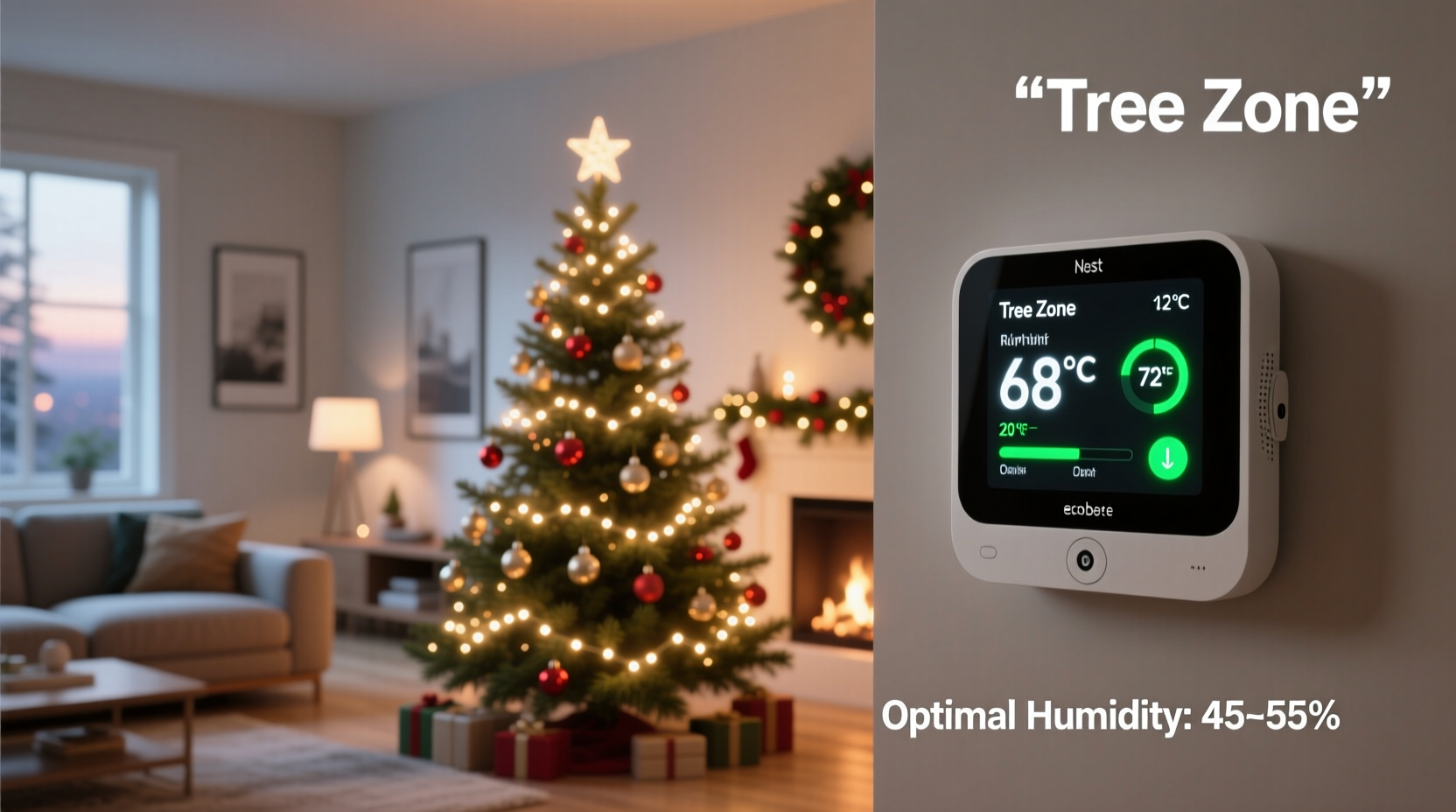
A freshly cut Christmas tree can lose up to a quart of water per day, especially in warm indoor environments. The rate of moisture loss accelerates when ambient temperatures exceed 70°F (21°C), causing needles to dry out, branches to become brittle, and flammability to increase significantly. According to the National Fire Protection Association (NFPA), between 2016 and 2020, U.S. fire departments responded to an average of 160 home fires per year that started with a Christmas tree—many due to improper placement near heat sources or inadequate environmental control.
Maintaining a cooler zone around the tree helps slow dehydration and reduces fire risk. However, lowering the thermostat for the entire house just to protect a single room isn’t practical or energy-efficient. This is where smart thermostats offer a balanced solution: targeted climate management with minimal disruption.
How Smart Thermostats Work With Holiday Environments
Modern smart thermostats like the Nest Learning Thermostat, Ecobee SmartThermostat, or Honeywell Home T9 go beyond basic temperature regulation. They learn your habits, adapt to occupancy patterns, and allow zonal control when paired with room sensors. This means you can keep living areas warm during gatherings while slightly cooling less-used spaces—or specifically managing conditions near your tree.
For homes with forced-air heating systems, supply vents can blast hot, dry air directly onto trees, accelerating drying. A smart thermostat equipped with remote room sensors lets you monitor temperature and humidity levels near the tree in real time. If readings spike, the system can adjust heating output—even shutting off nearby zones temporarily—to prevent overheating.
Some models integrate with smart home ecosystems (e.g., Alexa, Google Home, Apple HomeKit), enabling voice commands and automation routines. For example, you could set a rule: “If the temperature near the tree exceeds 72°F after 9 PM, reduce main floor heating by 3 degrees.” These automations run silently in the background, protecting your tree without manual intervention.
Step-by-Step Guide: Optimizing Your Smart Thermostat for Tree Safety
- Install Room Sensors Near the Tree
Place a remote sensor on the same floor as your tree, ideally within three feet but not touching it. Avoid direct sunlight or airflow from vents that could skew readings. - Set Up a Separate Climate Zone (if applicable)
If your HVAC system supports zoning or your thermostat allows virtual zones via sensors, designate the tree area as a monitored zone. This enables more granular control. - Adjust Daytime and Nighttime Settings
Program your thermostat to maintain 65–68°F (18–20°C) during occupied hours and lower to 62–65°F (16–18°C) at night. Cooler nighttime temps slow evaporation and extend needle retention. - Enable Humidity Monitoring (if available)
Dry air worsens tree dehydration. Pair your thermostat with a smart hygrometer or use built-in humidity tracking (available on select Ecobee models). Aim for 40–50% relative humidity near the tree. - Create Alerts and Automations
Use your thermostat’s app to set high-temperature alerts. For instance: “Notify me if temperature near the tree rises above 72°F.” You can also automate humidifiers or fans based on thresholds. - Use Geofencing to Adjust When Away
When everyone leaves the house, geofencing detects departure and automatically cools common areas. This prevents unnecessary heating near the tree during unoccupied periods.
“Smart thermostats give homeowners unprecedented control over indoor climates. During the holidays, this precision can literally prevent disasters.” — Dr. Laura Bennett, Indoor Environmental Quality Specialist, Building Science Institute
Best Practices: Do’s and Don’ts for Smart Thermostat Use Around Trees
| Do | Don't |
|---|---|
| Use remote sensors to monitor actual tree-level conditions | Rely solely on central thermostat readings located far from the tree |
| Set cooling setbacks during sleeping or absence hours | Allow temperatures to climb above 72°F near the tree |
| Pair with a smart plug to control nearby space heaters or humidifiers | Place the tree directly over a heating vent or radiator |
| Check water levels daily, even with climate control | Assume temperature management replaces the need for watering |
| Leverage app notifications for early warnings | Ignore humidity levels—dry air accelerates needle drop |
Real Example: How One Family Prevented a Holiday Hazard
The Rivera family in Portland, Oregon, installed an Ecobee SmartThermostat with two room sensors before setting up their 8-foot Douglas fir. They placed one sensor in the living room near the tree and another in the hallway. On the third night after setup, while the family was asleep, the furnace cycled on after a cold spell. The living room sensor detected a rapid rise in temperature—reaching 74°F—due to proximity to a floor vent.
The Ecobee, recognizing the anomaly against its programmed max of 68°F for that zone, triggered an alert to Mr. Rivera’s phone. He remotely adjusted the settings through the app, reducing heat delivery to the main floor. Upon waking, he repositioned a vent deflector to redirect airflow away from the tree. More importantly, he discovered that the tree stand had only half a gallon of water left—nearly depleted due to increased evaporation from the heat spike. After refilling and adjusting the thermostat schedule, the tree remained fresh for five additional weeks, well past New Year’s.
This incident underscored how automated monitoring doesn’t just improve comfort—it provides early warnings that prevent potential emergencies.
Maximizing Freshness: Beyond Temperature Control
While temperature is crucial, it’s only one factor in tree longevity. Smart thermostats work best when integrated into a broader care strategy:
- Cut the Base Before Installing: Re-cutting the trunk by ½ inch opens blocked water channels, improving uptake.
- Use Additive-Free Water: Despite popular belief, additives like sugar, aspirin, or commercial preservatives show little benefit over plain water. Clean water is best.
- Limit Light Exposure Duration: LED lights generate minimal heat, but leaving them on 24/7 increases ambient temperature. Use smart plugs to schedule lighting hours (e.g., 4 PM to 11 PM).
- Monitor Airflow: Stagnant air promotes mold; excessive draft dries needles. A smart thermostat with fan-circulation features can gently circulate air without creating wind chill near the tree.
Energy Efficiency and Cost Considerations
One concern families have is whether lowering temperatures for tree safety will increase heating bills. In reality, strategic cooling around the tree often leads to net energy savings. Most smart thermostats claim 10–12% savings on heating costs annually by eliminating waste. During the holidays, these efficiencies are amplified:
- Avoid overheating rooms that are only intermittently used.
- Use occupancy sensing to reduce heating in vacant areas.
- Take advantage of learning algorithms that optimize recovery times—warming spaces just before people wake or return.
For example, if your thermostat learns that guests arrive at 6 PM on weekends, it won’t overheat the house all afternoon. Instead, it starts warming the space efficiently in the final hour, keeping the tree cool longer while ensuring comfort upon arrival.
FAQ
Can I use a smart thermostat with an older HVAC system?
Yes, most modern smart thermostats are compatible with conventional gas furnaces, electric baseboard systems (with limitations), and heat pumps. Check compatibility using the manufacturer’s online tool before purchasing. Some models require a C-wire for continuous power, but adapters are often available.
Should I turn down the heat if I have an artificial tree?
While artificial trees don’t dry out, extreme heat can degrade plastic and PVC materials over time, making limbs brittle and increasing dust accumulation. Keeping temperatures moderate preserves the tree’s appearance and reduces off-gassing of synthetic materials. A stable climate benefits both real and fake trees.
What’s the ideal humidity level near a Christmas tree?
Aim for 40–50% relative humidity. Below 30%, needles dehydrate rapidly; above 60%, mold risk increases—especially on organic debris like fallen needles. Use a standalone hygrometer or a thermostat with built-in humidity sensing to track levels.
Final Checklist: Smart Thermostat Holiday Setup
- ✅ Install and calibrate room sensors near the Christmas tree
- ✅ Set maximum temperature threshold at or below 68°F (20°C) for the tree area
- ✅ Program nighttime setback to 62–65°F (16–18°C)
- ✅ Enable geofencing to adjust temperature when house is empty
- ✅ Set up mobile alerts for high temperature or low humidity
- ✅ Integrate with smart plugs to control lights or humidifiers
- ✅ Test system response before peak holiday usage
- ✅ Check tree water daily regardless of automation
Conclusion
Using a smart thermostat to manage conditions around your Christmas tree isn’t just a tech-savvy trick—it’s a meaningful step toward a safer, greener, and more sustainable holiday season. By combining intelligent automation with simple care practices, you protect your investment, reduce fire risks, and keep your tree looking vibrant throughout December and beyond. Whether you’re hosting large gatherings or enjoying quiet nights by the lights, knowing your environment is under smart control brings peace of mind. As smart home technology becomes more accessible, integrating it into seasonal routines proves that innovation and tradition can coexist beautifully.




 浙公网安备
33010002000092号
浙公网安备
33010002000092号 浙B2-20120091-4
Comments
No comments yet. Why don't you start the discussion?