
In an era defined by rapid change and increasing demands, the ability to use available resources—time, energy, money, tools, and people—wisely is not just a competitive advantage; it’s a necessity. Whether you're managing a team, running a small business, or organizing your personal workflow, inefficiency drains momentum and inflates costs. True resource optimization isn’t about doing more with less—it’s about doing what matters most with clarity and precision.
Effective resource utilization hinges on intentionality. It requires a clear understanding of goals, a realistic assessment of assets, and systems that align effort with outcomes. This guide outlines actionable strategies to help you eliminate waste, boost productivity, and achieve sustainable results across any domain.
Assess Your Current Resource Landscape
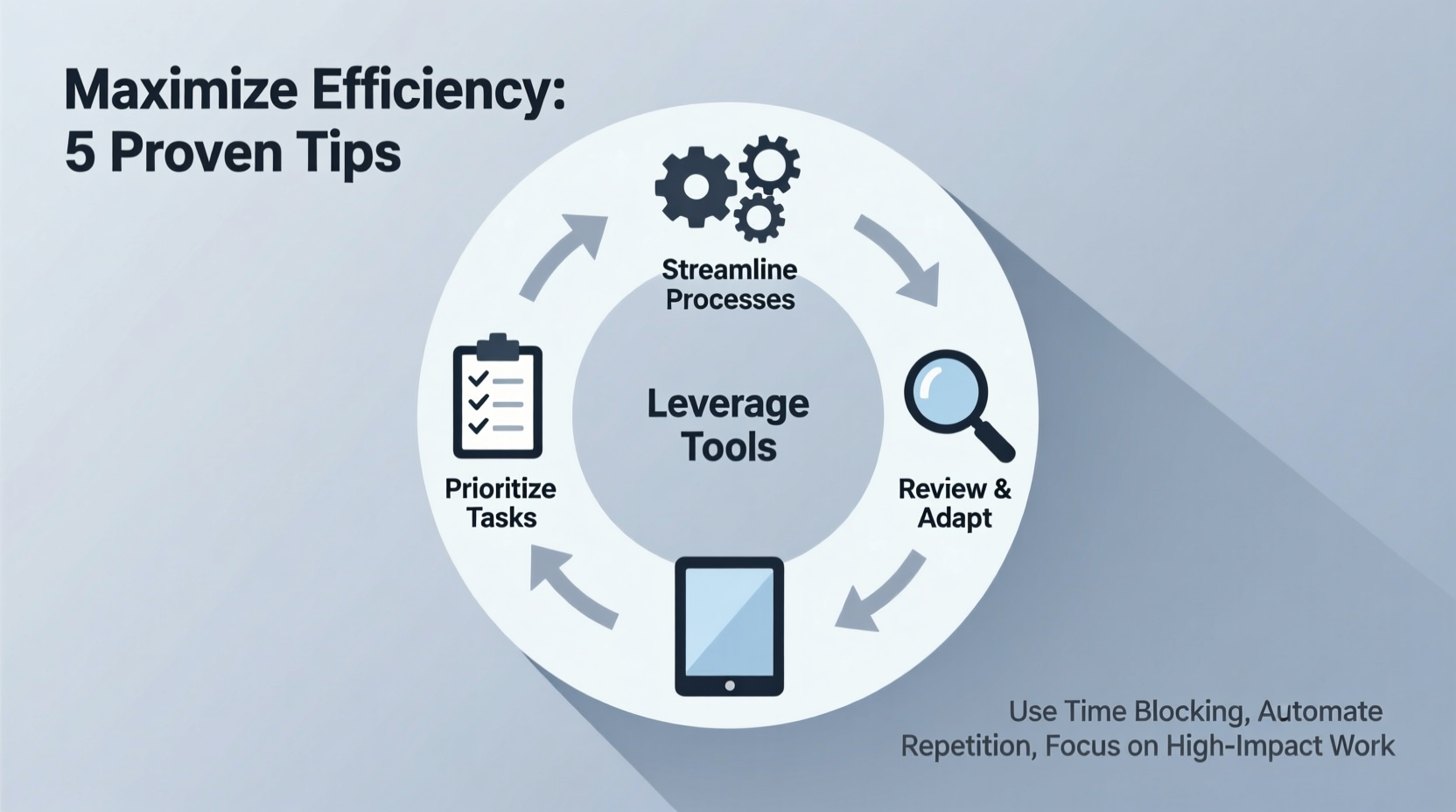
Before improving how you use resources, you must understand what you have and how they’re currently being deployed. Many inefficiencies stem from poor visibility into existing assets—both tangible and intangible.
Begin with a comprehensive audit:
- Time: Track how hours are spent over a week using time-blocking or digital tools like Toggl or Clockify.
- Human Capital: Evaluate team members’ skills, workload distribution, and alignment with responsibilities.
- Financial Resources: Review budgets, recurring expenses, and ROI on major investments.
- Tools & Technology: List software subscriptions, equipment usage rates, and redundancies.
This diagnostic phase often reveals surprising insights—such as paying for three project management tools when one would suffice, or assigning high-level staff to low-impact tasks.
Prioritize Ruthlessly Using the 80/20 Principle
The Pareto Principle suggests that 80% of results come from 20% of efforts. Applying this lens allows you to focus on high-leverage activities that yield disproportionate returns.
Ask: Which tasks, clients, or processes generate the most value? Then reallocate time and resources accordingly.
“We wasted months training everyone on advanced reporting features nobody used. After analyzing usage data, we simplified training to the top five functions—and completion rates jumped 70%.” — Lena Torres, Operations Manager at NexaFlow Solutions
To implement this principle:
- Identify your top-performing 20% of activities.
- Analyze why they succeed (speed, impact, demand).
- Scale those methods across other areas.
- Delegate, automate, or eliminate the remaining 80% if they contribute minimally.
This doesn’t mean ignoring lower-impact work entirely—but rather ensuring it doesn’t consume disproportionate attention.
Optimize Workflow Through Strategic Delegation
One of the most common resource misuses is over-centralization—when too much responsibility rests on a single person. Delegation isn’t just about offloading work; it’s about matching tasks to the right skill sets and freeing up critical capacity.
| Task Type | Best Assigned To | Risks of Poor Delegation |
|---|---|---|
| Data entry, scheduling | Administrative support | Leadership time wasted on routine work |
| Client communication | Frontline staff with interpersonal strengths | Misalignment due to lack of context |
| Strategic planning | Senior leaders with big-picture vision | Directionless execution without oversight |
| Troubleshooting technical issues | IT or specialist roles | Delays caused by knowledge bottlenecks |
Effective delegation includes clear expectations, access to necessary tools, and feedback loops. Use frameworks like RACI (Responsible, Accountable, Consulted, Informed) to clarify ownership and prevent overlap.
Implement Automation and Systemization
Repetitive tasks erode efficiency over time. Automating even small processes compounds gains across weeks and months. Consider:
- Email filters and templates for routine inquiries
- Automated invoicing and payroll systems
- CRM workflows that trigger follow-ups based on client behavior
- Calendar auto-scheduling tools like Calendly
Systemization goes beyond automation. It means documenting standard operating procedures (SOPs) so anyone can step in seamlessly. This reduces dependency on individuals and ensures continuity during absences or growth.
Mini Case Study: Streamlining Client Onboarding
A boutique marketing agency was spending 10–15 hours per new client manually gathering information, setting up accounts, and sending welcome materials. By creating a standardized onboarding system—including a branded intake form, automated email sequences, and pre-designed contract templates—they reduced setup time to under 3 hours. The saved 12 hours per client were redirected toward campaign development, increasing client satisfaction and retention by 25% within six months.
Maximize Energy, Not Just Time
Efficiency isn’t solely about clock hours. Human energy fluctuates throughout the day, and ignoring biological rhythms leads to burnout and subpar output.
Align tasks with natural energy levels:
- Peak energy (morning for most): Deep work, strategic decisions, creative projects
- Mid-level energy (afternoon): Meetings, collaboration, moderate-focus tasks
- Low energy (late afternoon/evening): Administrative work, emails, planning next day
“Productivity isn't measured in hours logged but in focused, meaningful output. Protect your peak energy like it's your most valuable currency.” — Dr. Rajiv Mehta, Organizational Psychologist
Encourage teams to track their personal energy patterns and schedule accordingly. Flexible start times or core-hour policies can significantly improve engagement and reduce fatigue-related errors.
Checklist: 7 Daily Habits for Resource Efficiency
Integrate these practices into your routine to maintain consistent optimization:
- Start the day by identifying your top 3 priority tasks.
- Review all meetings: Is your presence essential? Can it be shortened?
- Batch similar tasks (e.g., emails, calls) to reduce context switching.
- Use downtime (commutes, waiting periods) for light reading or reflection.
- End the day with a 5-minute log: What worked? What was wasted?
- Verify that tools and subscriptions are actively used and cost-effective.
- Delegate at least one task that doesn’t require your unique expertise.
Frequently Asked Questions
How do I know if I'm underutilizing a resource?
If a tool, team member, or budget line isn’t contributing to key objectives—or is used inconsistently despite availability—it may be underutilized. Track usage metrics and gather feedback to uncover hidden potential.
What’s the difference between efficiency and effectiveness?
Efficiency is doing things right (minimizing waste), while effectiveness is doing the right things (achieving desired outcomes). You can be efficient at something ineffective. Aim for both: effective goals executed efficiently.
Can small teams benefit from these strategies?
Absolutely. In fact, smaller teams often feel resource constraints more acutely. Lean operations depend on smart allocation. Even solo entrepreneurs can apply these principles to time, finances, and digital tools.
Conclusion: Turn Awareness Into Action
Utilizing resources effectively isn’t a one-time fix—it’s a mindset of continuous improvement. The most successful individuals and organizations don’t necessarily have more resources; they simply use what they have with greater intention and discipline.
Begin today. Audit one area of your workflow. Eliminate one redundant task. Delegate one responsibility. Small shifts compound into transformative gains. Efficiency isn’t austerity; it’s empowerment through focus.




 浙公网安备
33010002000092号
浙公网安备
33010002000092号 浙B2-20120091-4
Comments
No comments yet. Why don't you start the discussion?