
Checks may seem like a traditional payment method, but they remain a common tool in personal and business transactions. Unfortunately, their widespread use also makes them a favorite target for fraudsters. Every year, millions of dollars are lost due to counterfeit or altered checks. The good news is that with the right knowledge and verification techniques, you can significantly reduce your risk. Whether you're accepting a check from a customer, receiving a refund, or depositing an inheritance, knowing how to verify its authenticity is essential to protecting your finances.
Understand the Anatomy of a Genuine Check
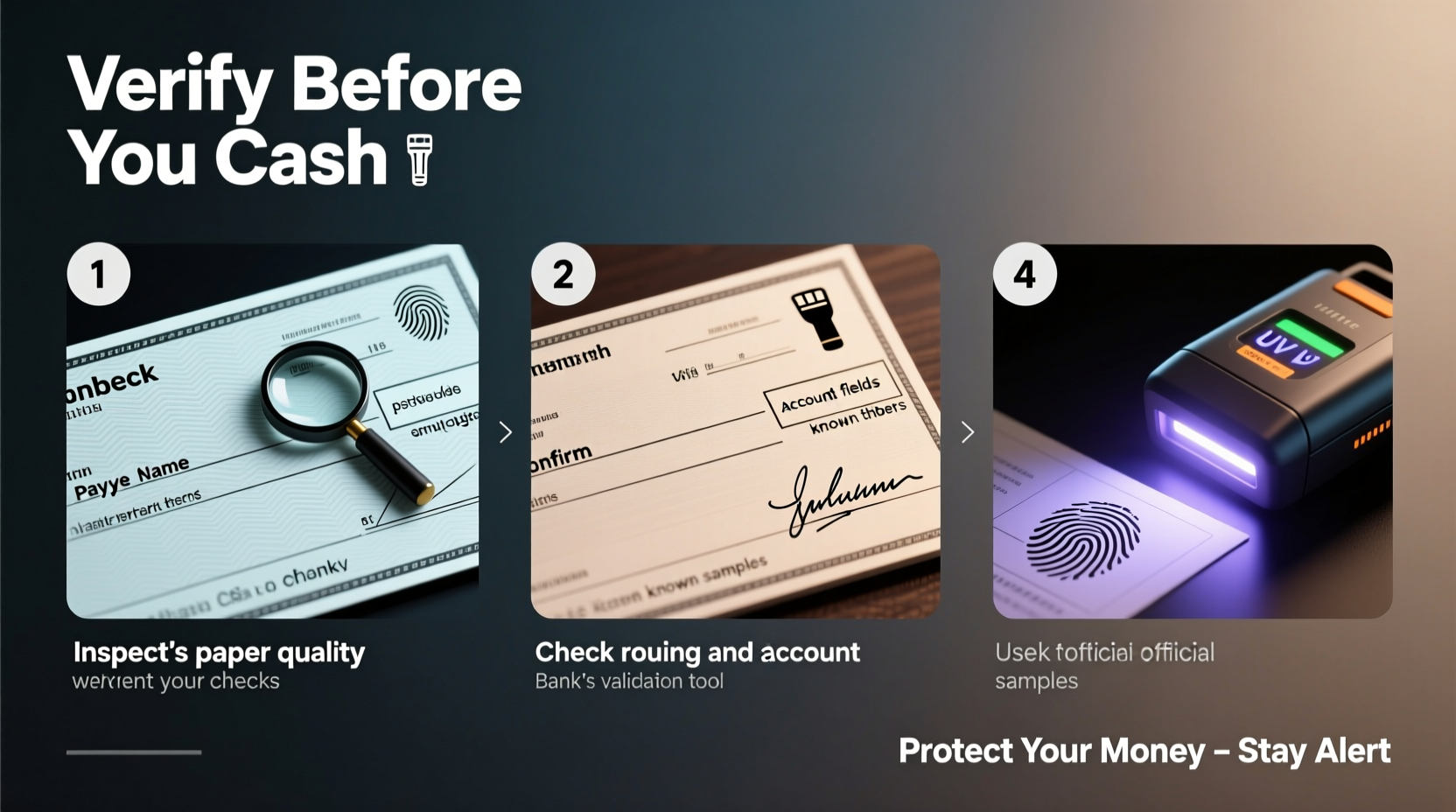
A legitimate check contains several security features designed to prevent forgery and tampering. Familiarizing yourself with these elements is the first step toward detecting fakes.
- MICR Line: At the bottom of every authentic check is a magnetic ink character recognition (MICR) line. This includes your bank’s routing number, your account number, and the check number, printed in a special font with magnetic ink. Counterfeiters often fail to replicate this correctly—either using standard ink or misaligning the numbers.
- Watermarks: Many banks embed subtle watermarks into their check stock. These are visible when held up to light and usually feature the bank’s logo or name.
- Security Threads and Color-Shifting Ink: Higher-end checks include embedded security threads or ink that changes color when tilted. While not universal, their presence adds credibility.
- Void Pantographs: These are faint background patterns that reveal the word “VOID” if someone tries to photocopy the check. They’re difficult to reproduce without specialized paper.
- Perforated Edges: Pre-printed checks often have clean, uniform perforations on the sides. Handmade or printed versions may lack this precision.
Step-by-Step Guide to Verifying a Check
Verification isn’t just about visual inspection—it requires a systematic approach. Follow these steps before cashing or depositing any check:
- Confirm the Bank’s Existence: Look up the issuing bank using the routing number. You can use online tools like the American Bankers Association’s routing number lookup or visit the bank’s official website directly—never rely on links provided by the check writer.
- Call the Bank (Through Verified Channels): Contact the bank using a phone number from their official website—not one listed on the check or provided by the sender. Ask if the account is active and whether the check number falls within a valid range.
- Check for Alterations: Inspect the payee name, amount in figures and words, date, and signature. Any signs of erasure, smudging, or mismatched handwriting could indicate tampering.
- Verify the Account Holder: If possible, confirm the name on the check matches the account holder. A mismatch might signal stolen check stock.
- Use Mobile Deposit Features: Many banking apps now use AI-powered image analysis to flag suspicious checks during mobile deposits. While not foolproof, they add an extra layer of scrutiny.
- Wait for Full Clearance: Even if a bank allows immediate access to funds, full clearance can take 5–10 business days. Avoid spending the money until then, especially for large amounts.
Common Red Flags of a Fraudulent Check
Fraudulent checks often come with behavioral and physical warning signs. Being alert to these can save you from financial loss.
| Red Flag | Description | Action to Take |
|---|---|---|
| Overpayment Scam | Someone sends a check for more than owed and asks for the excess to be wired back. | Reject immediately—this is a classic scam. |
| Poor-Quality Paper | Check feels flimsy, glossy, or lacks texture typical of professional check stock. | Compare with a known genuine check. |
| Missing or Faint MICR Line | Numbers at the bottom aren’t magnetic or appear digitally printed. | Do not accept—request alternative payment. |
| Vague or Generic Bank Name | Says “National Bank” instead of a real institution like “Wells Fargo National Bank.” | Verify the bank independently. |
| Urgency or Pressure | The sender insists you cash it quickly or face penalties. | Pause and investigate further. |
Real Example: The Rental Deposit Scam
A landlord in Austin received a $3,500 check from a prospective tenant who claimed to be relocating for work. The check was drawn on a major U.S. bank and included proper formatting. Excited by the prompt payment, the landlord deposited it and wired $1,200 to cover \"relocation fees\" as requested. Ten days later, the bank reversed the deposit—the check had been counterfeit. The account linked to the routing number didn’t exist.
This case highlights two critical failures: the landlord didn’t call the bank using an official number, and he sent money before the check fully cleared. By following verification protocols, this loss could have been avoided.
“Never assume a check is good just because it looks authentic or the bank appears legitimate. Verification through independent channels is non-negotiable.” — Sarah Lin, Senior Fraud Analyst at Federal Financial Protection Bureau
Essential Checklist for Safe Check Handling
Before accepting or depositing any check, go through this checklist to minimize risk:
- ✅ Hold the check up to light to check for watermarks
- ✅ Examine the MICR line for correct font and magnetic properties
- ✅ Confirm the bank’s routing number via official sources
- ✅ Call the bank using a verified phone number to validate the account
- ✅ Ensure the payee name, amount, and signature match and show no signs of alteration
- ✅ Wait at least 7–10 business days before treating funds as secure
- ✅ Avoid wiring money or providing goods/services until the check has fully cleared
- ✅ Report suspicious checks to your bank and the FTC
Frequently Asked Questions
Can I trust a check that clears initially?
No. Banks often make funds available within one or two business days for customer convenience, but this doesn’t mean the check is legitimate. It only means the bank is allowing temporary access. The check can still bounce or be flagged as fraudulent weeks later, leading to chargebacks and fees.
Are handwritten checks more likely to be fake?
Not necessarily. While some scams use poorly printed checks, many counterfeiters use high-quality templates that mimic real checks. The key is not the format but the verification process. Even a perfectly printed check can be fraudulent if drawn on a closed account or created with stolen information.
What should I do if I’ve already deposited a fake check?
Contact your bank immediately and report the incident. Provide all details, including communication with the check issuer. File a report with the Federal Trade Commission (FTC) at ReportFraud.ftc.gov. You may also need to file a police report, especially if significant money was lost. Be prepared to repay any funds withdrawn based on the fraudulent deposit.
Protect Yourself with Smart Habits
The best defense against check fraud is proactive verification and cautious behavior. Treat every unfamiliar check as potentially risky, regardless of how convincing it appears. Develop a routine: inspect the physical features, confirm the bank and account independently, and never rush the process. When in doubt, decline the check and request payment via safer methods like electronic transfer, certified checks, or digital payment platforms.
Technology continues to evolve, but so do scammers. Staying informed and vigilant is your most effective protection. Financial institutions recommend that consumers treat checks with the same level of caution as cash—once it’s gone, recovery is difficult.




 浙公网安备
33010002000092号
浙公网安备
33010002000092号 浙B2-20120091-4
Comments
No comments yet. Why don't you start the discussion?