
Purchasing designer clothing is an investment in style, quality, and longevity. Hugo Boss has long stood as a symbol of refined menswear and contemporary fashion. However, its popularity has made it a prime target for counterfeiters. Fake Hugo Boss garments flood online marketplaces and even some physical stores, often indistinguishable to the untrained eye. Knowing how to verify authenticity isn’t just about protecting your wallet—it’s about ensuring you receive the craftsmanship and prestige that come with genuine designer wear.
This guide equips you with practical, field-tested methods to identify real Hugo Boss clothing. From inspecting stitching to decoding care labels and verifying purchase sources, every detail matters when distinguishing between authentic pieces and convincing replicas.
1. Examine the Labeling and Branding Details
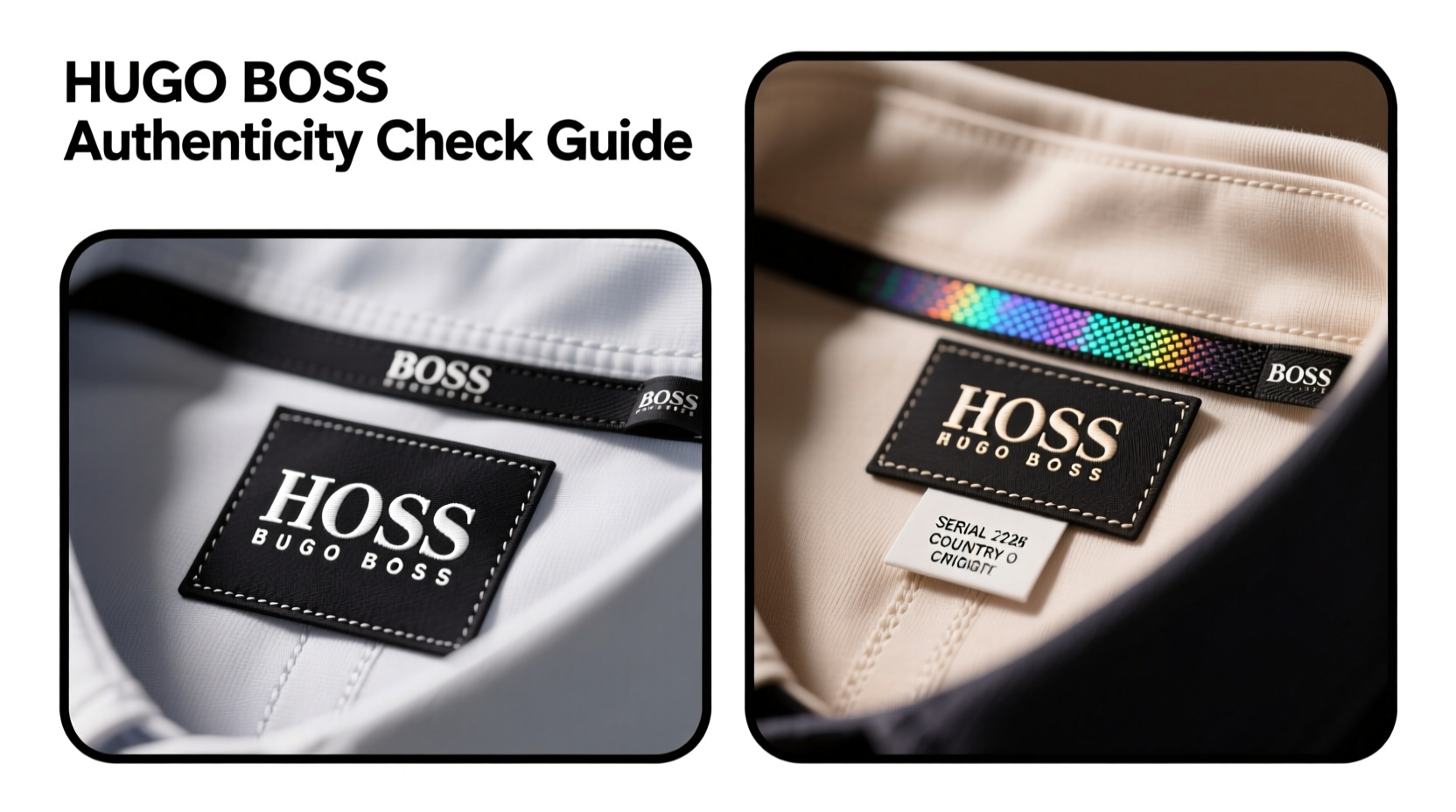
The first place to inspect any Hugo Boss garment is the label. Authentic items feature precise typography, consistent font weight, and correct spacing. The brand name “HUGO BOSS” is always printed in uppercase letters without variations. Look closely at the logo placement—on shirts, suits, and jackets, it's typically embroidered or woven directly into the fabric near the collar or side seam.
Care labels should include:
- Country of manufacture (commonly Germany, Portugal, Turkey, or China)
- Fabric composition in standardized format (e.g., “100% Cotton”)
- Washing and care instructions using international symbols
- A unique style number and size code
Counterfeit labels often use incorrect fonts, inconsistent capitalization (like “Hugo boss”), or omit critical information such as fiber content. Some fake garments have sewn-on tags instead of integrated woven labels—a red flag for lower production standards.
2. Assess Fabric Quality and Construction
Genuine Hugo Boss clothing uses premium materials selected for durability, drape, and comfort. Whether it’s a tailored suit, a cotton polo, or a lightweight jacket, the fabric should feel substantial and smooth, not thin or plasticky.
Check for these hallmarks of authentic construction:
- Even stitching: Stitches are tight, uniform, and typically range from 8 to 12 per inch.
- No loose threads: High-end manufacturers trim excess threads; their presence suggests rushed finishing.
- Lining quality: Suits and blazers feature full or half-silk linings with clean seams and no puckering.
- Reinforced stress points: Areas like shoulders, cuffs, and pockets are double-stitched or bar-tacked.
“Authentic tailoring shows in the details—inside and out. A single crooked seam can reveal a counterfeit.” — Daniel Meier, Menswear Tailor & Authentication Consultant
Spotting Red Flags in Fabric and Fit
Fake Hugo Boss clothes often use polyester blends that mimic the look but lack breathability and structure. When worn, they may appear shiny, wrinkle easily, or stretch out of shape after minimal use. Additionally, poor tailoring leads to asymmetrical collars, uneven hems, or misaligned buttons.
3. Verify Packaging and Accessories
Original Hugo Boss garments come with branded packaging that reflects the brand’s minimalist elegance. This includes:
- White or black branded garment bags (for suits and formalwear)
- Hugo Boss-branded tissue paper
- Hangtags with security holograms or serial numbers
- Sturdy cardboard shirt stays inside dress shirts
Hangtags on authentic items display:
- The full product name and SKU number
- Size, color, and price (often covered by a scratch-off sticker)
- An official barcode linked to Hugo Boss’s inventory system
- A holographic anti-counterfeit seal on select high-end lines
| Feature | Authentic Hugo Boss | Common Counterfeit Trait |
|---|---|---|
| Packaging Bag | Thick, reusable fabric with embossed logo | Flimsy plastic with printed logo |
| Hangtag Material | Durable cardstock with sharp print | Thin paper, blurry text |
| Security Hologram | Present on premium items, shifts under light | Absent or static image |
| Tissue Paper | Branded with subtle logo watermark | Generic white paper |
4. Step-by-Step Guide to Authenticating a Hugo Boss Garment
Follow this systematic process whenever evaluating a new or secondhand Hugo Boss piece:
- Inspect the tag location: On shirts and polos, the main label should be on the left side of the hem. On suits, internal neck labels display the brand and model line (e.g., “HUGO BOSS – BOSS Orange”).
- Compare the logo: Use the official Hugo Boss website or app to compare the exact font and proportions.
- Feel the fabric: Run your fingers over the material. Genuine cotton should feel soft yet firm; wool suits should have a natural sheen and slight resilience.
- Check stitching density: Count stitches per inch along seams. Less than 7 indicates mass-produced imitation.
- Scan the barcode: Use a barcode scanner app to see if it links to Hugo Boss’s product database (note: not all retailers enable public scanning).
- Verify purchase source: Confirm the seller is authorized via Hugo Boss’s official store locator.
Mini Case Study: The Online Bargain That Was Too Good to Be True
Mark, a professional based in Chicago, found a Hugo Boss slim-fit suit listed online for 70% off retail. Excited by the deal, he purchased it from a third-party marketplace. Upon arrival, he noticed the lining felt synthetic and peeled slightly at the edges. The inner label used a lowercase “boss,” and the stitching around the lapel was uneven. He contacted Hugo Boss customer service with photos and received confirmation: the suit was counterfeit. Mark learned that verified retailers never offer deep discounts on current-line suits—and now only buys from flagship stores or authorized partners.
5. Know Where to Buy Authentic Hugo Boss Clothing
Even perfect attention to detail won’t help if the purchase source is unreliable. Stick to trusted channels to minimize risk:
- Official Hugo Boss stores (physical and online: www.hugoboss.com)
- Authorized department stores (e.g., Nordstrom, Bloomingdale’s, Selfridges)
- Certified online retailers like Saks Fifth Avenue, Mr Porter, or Yoox
Avoid:
- Unverified third-party sellers on eBay, Amazon, or social media
- Marketplace listings with stock photos only
- Deals significantly below MSRP (especially on new collections)
“Over 60% of ‘discounted’ Hugo Boss items reported to us are counterfeit. If the price seems too good to be true, it almost certainly is.” — Hugo Boss Anti-Counterfeiting Team, Official Statement (2023)
Authentication Checklist
- ✅ Logo is uppercase \"HUGO BOSS\" with correct font
- ✅ Fabric feels premium and matches description
- ✅ Stitches are tight, even, and free of loose ends
- ✅ Care label includes country of origin and composition
- ✅ Hangtag has barcode and holographic seal (if applicable)
- ✅ Purchased from an authorized retailer
- ✅ Packaging is branded and high-quality
Frequently Asked Questions
Can I authenticate Hugo Boss clothing using the serial number?
Yes, many Hugo Boss garments—especially suits and outerwear—include a unique style number and batch code on the inside label. You can contact Hugo Boss customer support with these details to confirm authenticity. Note that individual item tracking is limited, but they can verify whether the model and production region match.
Are Hugo Boss outlet items different from retail ones?
Outlet versions may use slightly different fabrics or simplified designs, but they still carry the same quality control and branding standards. They will have correct labeling, proper stitching, and official packaging. Avoid assuming an item is fake just because it’s from an outlet—verify through construction, not stigma.
What should I do if I suspect I bought a fake?
Contact the seller immediately for a refund. If they refuse, file a dispute through the payment platform (e.g., PayPal, credit card). You can also report the listing to Hugo Boss via their official website’s fraud reporting portal. Provide photos of the item, tags, and purchase receipt.
Final Thoughts: Confidence Starts with Authenticity
Wearing Hugo Boss means embracing precision, elegance, and confidence. But those qualities extend beyond appearance—they begin with knowing your garment is genuine. By mastering the signs of authentic construction, packaging, and sourcing, you protect both your investment and your reputation.
Don’t rush a purchase. Take time to examine labels, feel the fabric, and verify the seller. When in doubt, reach out to Hugo Boss directly. A few extra minutes of scrutiny can save you from disappointment and deception.




 浙公网安备
33010002000092号
浙公网安备
33010002000092号 浙B2-20120091-4
Comments
No comments yet. Why don't you start the discussion?