
Pendants featuring moissanite have gained popularity for their brilliance, durability, and affordability compared to diamonds. However, as demand rises, so does the risk of counterfeit or misrepresented stones. Whether you’ve inherited a piece, received it as a gift, or made a recent purchase, confirming the authenticity of your moissanite is essential. Unlike diamonds, moissanite has distinct optical and physical properties that can be leveraged to identify it accurately—even without professional tools. This guide walks you through practical, reliable methods to determine whether the stone in your pendant is genuine moissanite.
Why Authenticity Matters
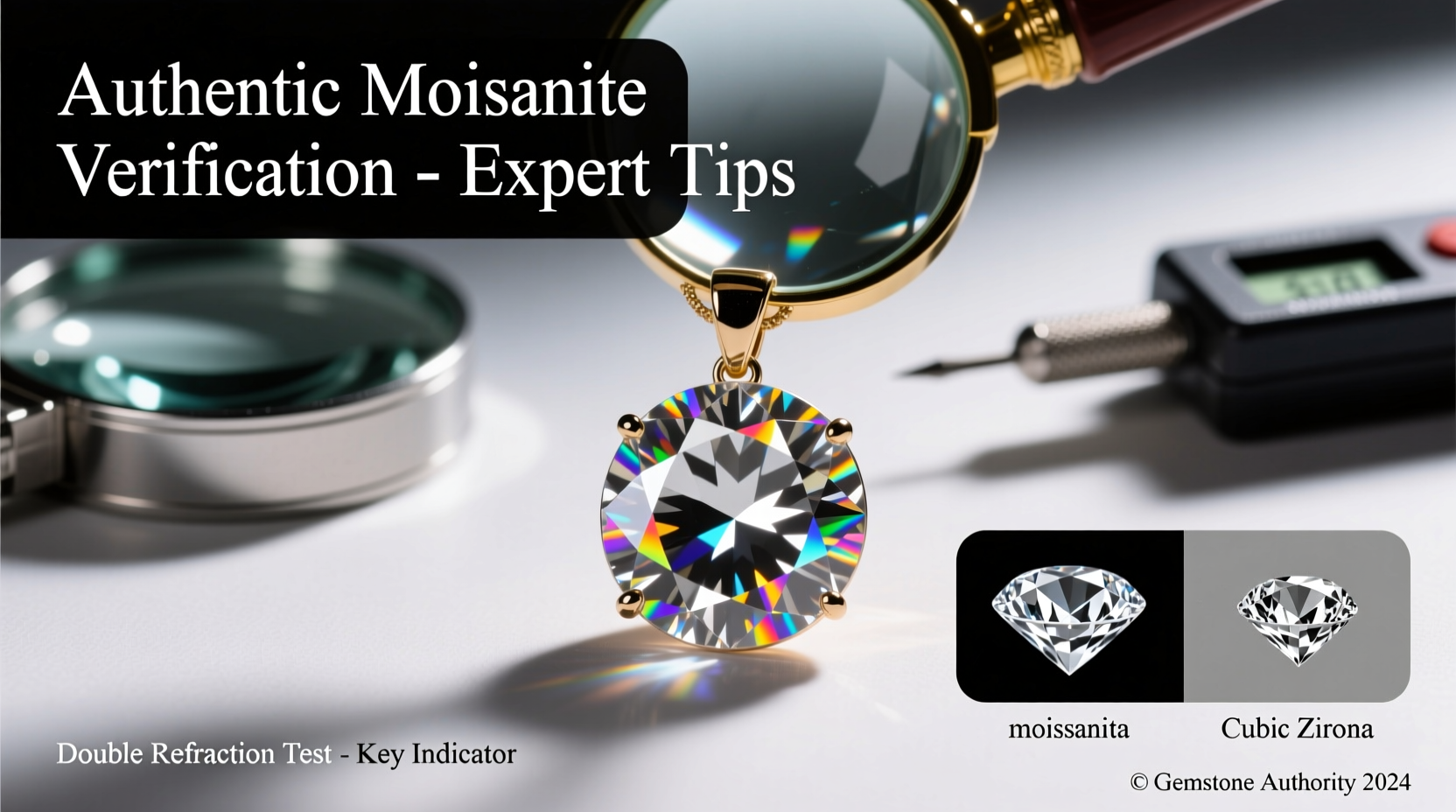
Moissanite is a lab-created gemstone composed of silicon carbide, first discovered in meteorites by Dr. Henri Moissan in 1893. Today’s commercial moissanite is grown in controlled environments and offers fire and brilliance exceeding that of diamonds. But because it closely resembles diamonds to the untrained eye, some sellers may misrepresent cubic zirconia or glass as moissanite—or even pass off moissanite as a diamond. Knowing what you own protects your investment and ensures ethical transparency.
“Consumers have the right to know exactly what gemstone they’re purchasing. Mislabeling undermines trust in the jewelry market.” — Dr. Laura Simmons, Gemologist & Director, American Gem Society Labs
Step-by-Step Guide: How to Test Moissanite at Home
You don’t need a jeweler’s loupe or expensive equipment to begin verifying your stone. These five steps use accessible tools and observations to help confirm authenticity.
- Check for Double Refraction: Moissanite is doubly refractive, meaning light passing through it splits into two rays. Place the stone table-down over a straight line drawn on paper. If you see two parallel lines through the stone, it’s likely moissanite. Diamonds and glass show only one line.
- Use a Diamond Tester: Most handheld diamond testers detect thermal conductivity. Moissanite conducts heat similarly to diamonds, so many basic testers will register it as a diamond. However, advanced testers distinguish between the two using electrical conductivity—moissanite is electrically conductive; diamonds (except blue type IIb) are not.
- Observe Brilliance and Fire: Under natural light, moissanite displays more colored sparkle (fire) than a diamond. While subtle in smaller stones, this becomes pronounced under sunlight or bright indoor lighting. Excessive rainbow flashes may indicate moissanite rather than a diamond.
- Perform the Fog Test: Breathe on the stone to fog it. A real gemstone will clear almost instantly due to high thermal conductivity. If the fog lingers for more than a second or two, the stone is likely glass or cubic zirconia.
- Inspect Under Magnification: Use a 10x loupe to examine the girdle and facets. Moissanite often shows minor surface irregularities from cutting due to its hardness. Also look for internal characteristics—moissanite typically has fewer inclusions than natural diamonds but may show needle-like inclusions or growth patterns.
Do’s and Don’ts When Verifying Moissanite
| Action | Recommended? | Reason |
|---|---|---|
| Use a dual-mode tester (thermal + electrical) | ✅ Yes | Distinguishes moissanite from diamond reliably |
| Clean the stone before testing | ✅ Yes | Dirt or oil can affect conductivity and clarity |
| Rely solely on visual sparkle | ❌ No | Other simulants like CZ can also appear flashy |
| Scratch test with another material | ❌ No | Risks damaging both the stone and setting |
| Compare side-by-side with a known diamond | ✅ Yes | Helps spot differences in fire and scintillation |
Real Example: A Cautionary Purchase
Sophie purchased a vintage-style pendant online advertised as a “diamond solitaire.” Priced significantly below market value, she suspected something was off. After receiving it, she used a basic diamond tester—which indicated “diamond.” Skeptical, she borrowed a professional dual-tester from a local jeweler. The device detected electrical conductivity, signaling moissanite. Further inspection revealed double refraction when placed over text. Though not a diamond, the moissanite was high quality and well-cut. Sophie contacted the seller for clarification and received an apology and partial refund for misleading labeling. Her experience underscores the importance of verification—even when initial results seem favorable.
Expert Tools and Professional Verification
While home tests provide strong indicators, definitive identification requires professional analysis. Reputable jewelers use:
- Refractometers: Moissanite has a refractive index of 2.65–2.69, higher than most gemstones except diamond (2.42). Only trained professionals should operate these devices.
- Spectroscopes: Can reveal absorption lines unique to moissanite’s composition.
- Microscopic Inclusion Analysis: Lab-grown moissanite often shows distinctive growth patterns invisible to the naked eye.
If you're uncertain, request a certificate from the original vendor. Reputable moissanite brands like Charles & Colvard or Harro Gem provide serialized warranty cards with QR codes linking to verification databases.
Frequently Asked Questions
Can a jeweler tell the difference between moissanite and diamond?
Yes, experienced jewelers can usually differentiate them using proper tools. While visually similar, moissanite’s double refraction, higher dispersion, and electrical conductivity are telltale signs under examination.
Is moissanite worth less than a diamond?
In terms of resale value, yes—moissanite typically costs 80–90% less than a comparable diamond. However, its durability (9.25 on the Mohs scale) and brilliance make it a valuable alternative for everyday wear, especially in pendants where visibility is high.
Does moissanite lose its sparkle over time?
No, moissanite does not dull or cloud with age. However, like any gemstone, it can accumulate oils and dirt. Regular cleaning with mild soap and water maintains its luster.
Essential Checklist for Buyers and Owners
- ✔️ Perform a double refraction test using a printed line
- ✔️ Use a dual-mode (thermal + electrical) gem tester
- ✔️ Observe fire and brilliance under natural and artificial light
- ✔️ Conduct the fog test to assess thermal conductivity
- ✔️ Inspect for inclusions or growth patterns with a 10x loupe
- ✔️ Verify certification from a recognized moissanite brand
- ✔️ Consult a certified gemologist if results are inconclusive
Conclusion: Confidence Starts with Clarity
Verifying the authenticity of your pendant’s moissanite doesn’t require a degree in gemology—just attention to detail and the right approach. By combining simple home tests with awareness of moissanite’s unique traits, you can confidently confirm what’s around your neck. Whether you cherish it for its ethical origins, radiant beauty, or sentimental value, knowing your gemstone is genuine enhances its worth far beyond carats and clarity. Take the time to inspect, verify, and appreciate your jewelry with informed eyes.




 浙公网安备
33010002000092号
浙公网安备
33010002000092号 浙B2-20120091-4
Comments
No comments yet. Why don't you start the discussion?