
Authenticating a luxury handbag requires more than just recognizing a logo or checking the price tag. With counterfeiters becoming increasingly sophisticated, even seasoned shoppers can be fooled. The true indicators of authenticity lie in the craftsmanship—specifically in the stitching and hardware. These elements are harder to replicate with precision and often reveal inconsistencies that betray a fake. By learning what to look for, you can confidently assess whether a designer bag is genuine or a clever imitation.
The Importance of Stitching in Luxury Bag Authentication
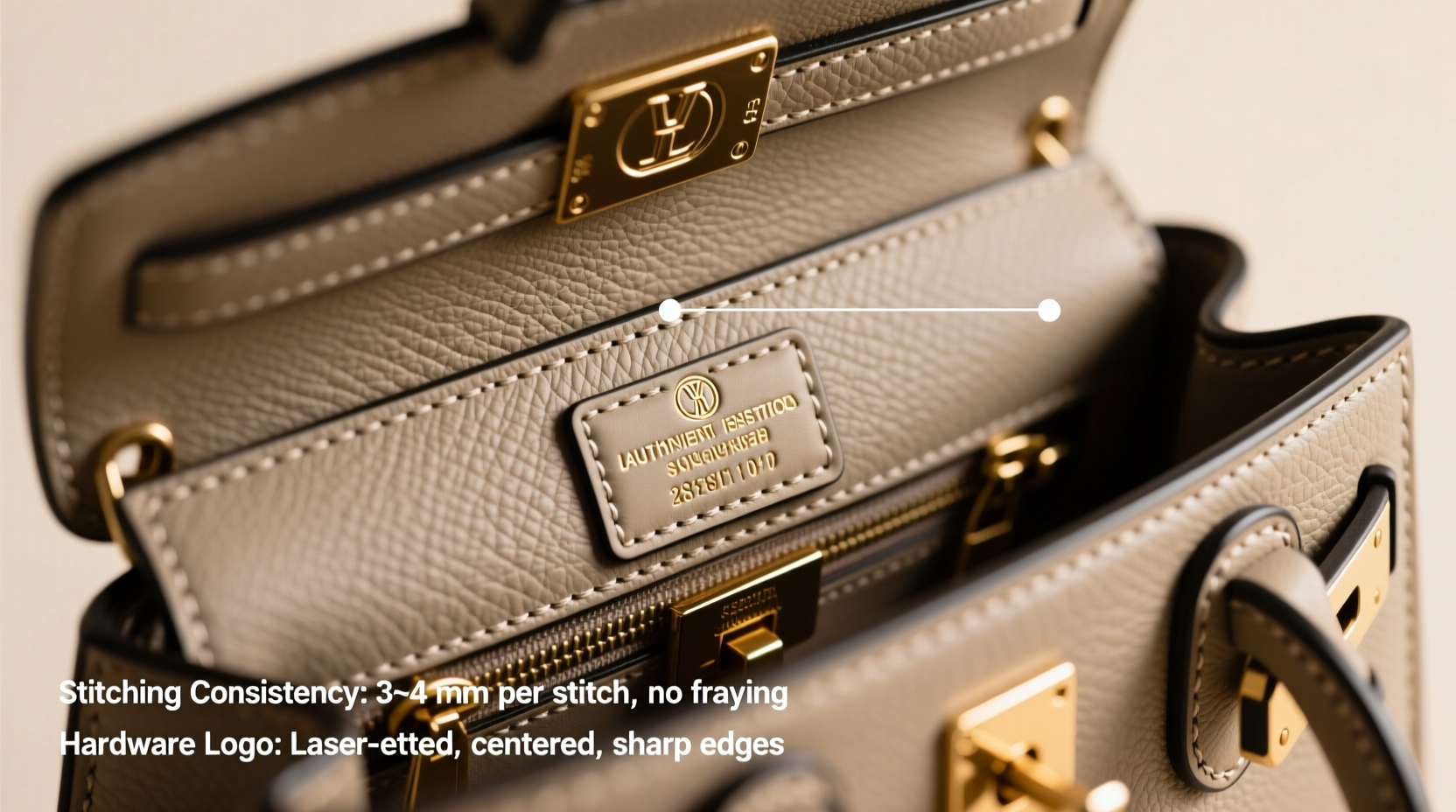
Stitching is one of the most telling signs of a bag’s authenticity. High-end brands like Chanel, Hermès, Louis Vuitton, and Gucci invest heavily in skilled artisans who hand-stitch or use precision machinery to ensure every seam meets exacting standards. Counterfeit manufacturers, on the other hand, often use automated machines that lack finesse, resulting in visible flaws.
Genuine luxury bags feature consistent, tight, and evenly spaced stitches. The thread used is typically waxed or reinforced to prevent fraying and enhance durability. On average, authentic bags have 7–12 stitches per inch (SPI), depending on the brand and model. A lower count or irregular spacing is a red flag.
Another critical detail is the color of the thread. Authentic bags use thread that matches the leather or lining precisely. For example, a black leather bag will have black thread, not beige or gray. Mismatched thread colors suggest poor quality control and point toward counterfeits.
Look closely at the corners and handles, where stress is highest. Inauthentic bags frequently show puckering, loose threads, or skipped stitches in these areas. Genuine pieces maintain structural integrity and clean finishes throughout.
Common Stitching Red Flags in Fake Bags
- Uneven stitch length or spacing
- Thread that pulls away from the leather
- Excess glue residue around seams
- Stitches that cross over logos or brand emblems
- Puckered fabric due to rushed assembly
Hardware: The Hidden Identifier of Authenticity
If stitching is the first clue, hardware is the second. Zippers, clasps, buckles, and metal logos are meticulously engineered in authentic bags. Brands often use proprietary alloys and engraving techniques that are difficult to duplicate.
Start by examining the weight. Authentic hardware feels substantial—not flimsy or hollow. For example, YKK zippers may appear on some luxury brands, but they are customized with brand-specific engravings and finish. A zipper pull that feels light or has blurry etching is likely fake.
Check for brand stamping on all metal components. This includes the interior zippers, turn locks, and chain links. The font, size, and depth of engraving must match the brand’s specifications. Many fakes use shallow or misaligned stamps. Compare the lettering to verified examples online or from an official store.
“Hardware is where most counterfeiters cut corners. A single mismatched font or uneven polish can expose a fake.” — Marcus Lin, Luxury Authentication Specialist
Pay attention to the finish. Authentic bags use high-grade plating—often gold, palladium, or ruthenium—that resists tarnishing. If the hardware shows chipping, discoloration, or a plastic-like sheen after minimal use, it’s likely not genuine. Also, the color should be uniform across all pieces. One buckle shouldn’t be darker or shinier than another.
Chain Straps and Link Quality
For brands like Chanel or Dior, the chain strap is a signature element. Authentic chains are made with interlocking metal rings of consistent size and weight. Each link is polished smoothly and moves fluidly without catching. Fakes often use thinner metal, resulting in a lighter feel and rough movement.
Inspect the shoulder pad or leather wrap on the chain. It should be securely attached with no gaps or uneven stitching. On real Chanel bags, the pad is always centered and stitched with perfect symmetry.
Detailed Comparison: Real vs. Fake Hardware and Stitching
| Feature | Authentic Bag | Fake Bag |
|---|---|---|
| Stitch Density | 7–12 stitches per inch, consistent | 5–6 stitches per inch, uneven |
| Thread Color | Matches leather exactly | Off-color or inconsistent |
| Hardware Weight | Heavy, solid metal | Light, hollow feel |
| Engraving Clarity | Sharp, deep, consistent font | Blurry, shallow, inconsistent |
| Zipper Function | Smooth glide, branded pull | Stiff or sticky, generic pull |
| Edge Painting | Even, sealed, no cracking | Bubbled, peeling, or missing |
Step-by-Step Guide to Verifying a Luxury Bag at Home
You don’t need professional tools to begin authenticating a luxury bag. Follow this practical sequence to examine stitching and hardware with confidence.
- Start with natural lighting. Avoid shadows or glare by inspecting the bag near a window during daylight.
- Examine the overall symmetry. Hold the bag at eye level. Are the flaps aligned? Do the straps hang evenly?
- Inspect the topstitching. Run your finger along the seams. Are the stitches raised uniformly? Are there any loose ends?
- Count the stitches per inch. Use a ruler and magnifier to measure SPI on multiple panels. Compare to known authentic models.
- Check the interior stitching. Open the bag and look at the lining seams. Authentic bags have clean, hidden stitches or French seams.
- Test the hardware. Open and close zippers, clasps, and turn locks. Do they operate smoothly? Is there resistance or grinding?
- Verify engravings. Look for brand names, serial numbers, or model codes on zippers, plaques, and feet. Cross-reference fonts and placement.
- Weigh the bag. While not definitive, genuine bags feel heavier due to quality materials and hardware.
- Smell the leather. Real leather has a distinct, rich scent. Fakes often smell like chemicals or plastic.
- Compare with official product images. Visit the brand’s website and compare details side by side.
Real Example: Spotting a Fake Chanel Classic Flap
A client once brought in a “Chanel” Classic Flap bag purchased online for $1,200—far below retail. At first glance, the quilted pattern and CC turn lock looked convincing. But upon closer inspection, several issues emerged.
The stitching between the quilting diamonds was inconsistent—some were tighter than others, and the thread color was slightly off. The SPI measured only 6, whereas authentic versions consistently have 9–10.
The chain strap felt unusually light. When examined under a loupe, the interlocking rings showed visible solder marks—something never present on real Chanel chains, which are precision-cast. The leather wrap was also misaligned by nearly half an inch.
The final giveaway was the back of the CC turn lock. Instead of the deep, crisp engraving found on genuine pieces, the logo had a flat, stamped appearance with uneven depth. Combined, these flaws confirmed it was a high-quality replica—but still a fake.
Essential Authentication Checklist
Use this checklist before purchasing or accepting a luxury bag as a gift:
- ✅ Stitching is even, tight, and consistent in color and spacing
- ✅ Hardware feels heavy and operates smoothly
- ✅ All metal parts have clear, deep, and correctly sized engravings
- ✅ Thread does not overlap logos or brand markings
- ✅ Interior lining is flawlessly stitched with no loose threads
- ✅ Edge painting is smooth and sealed, not cracked or bubbled
- ✅ Zipper pulls and feet have correct branding and finish
- ✅ Chain links are uniform and move freely without snagging
- ✅ Leather smells natural, not synthetic
- ✅ Overall construction shows no signs of rushing or poor alignment
Frequently Asked Questions
Can a fake bag have good stitching?
Yes, some counterfeit bags now use better machinery and mimic higher stitch counts. However, even high-end fakes often fail under close scrutiny—especially in complex areas like handle attachments or curved edges. Consistency across the entire bag is rare in replicas.
Do all authentic bags have a serial number?
No. Not all luxury brands include serial numbers. For example, Chanel stopped using paper cards with serials in 2020, though they still engrave authenticity cards inside many bags. Hermès uses date stamps instead. Always research the specific brand’s current authentication methods.
Is it safe to buy a luxury bag online without seeing it in person?
It can be, but only through trusted platforms with authentication guarantees—such as Rebag, Fashionphile, or The RealReal. Avoid private sellers on social media unless they provide detailed, high-resolution photos of stitching and hardware, and allow third-party verification.
Final Thoughts: Trust Craftsmanship, Not Just Branding
Logos can be copied. Prices can be misleading. But craftsmanship tells the truth. The way a bag is stitched, the weight of its hardware, and the precision of its finishing details are the fingerprints of authenticity. These elements take time, skill, and investment—qualities counterfeiters cannot easily replicate.
Whether you're investing in your first designer piece or expanding a curated collection, take the time to inspect each bag thoroughly. Learn the standards of the brands you love. Study authentic examples in stores or through trusted resellers. Over time, you’ll develop an eye for what feels right—and what doesn’t.




 浙公网安备
33010002000092号
浙公网安备
33010002000092号 浙B2-20120091-4
Comments
No comments yet. Why don't you start the discussion?