
In an era where digital communication dominates, unsolicited calls and messages have become routine. Scammers often use fake or spoofed phone numbers to trick individuals into revealing personal information or making payments. Recognizing whether a phone number is legitimate can save time, money, and emotional stress. While no method guarantees 100% accuracy, combining practical verification techniques with trusted tools significantly improves your ability to detect fraud. This guide walks through proven strategies, real-world examples, and reliable resources to help you assess the authenticity of any unknown number.
Why Fake Phone Numbers Are a Growing Concern
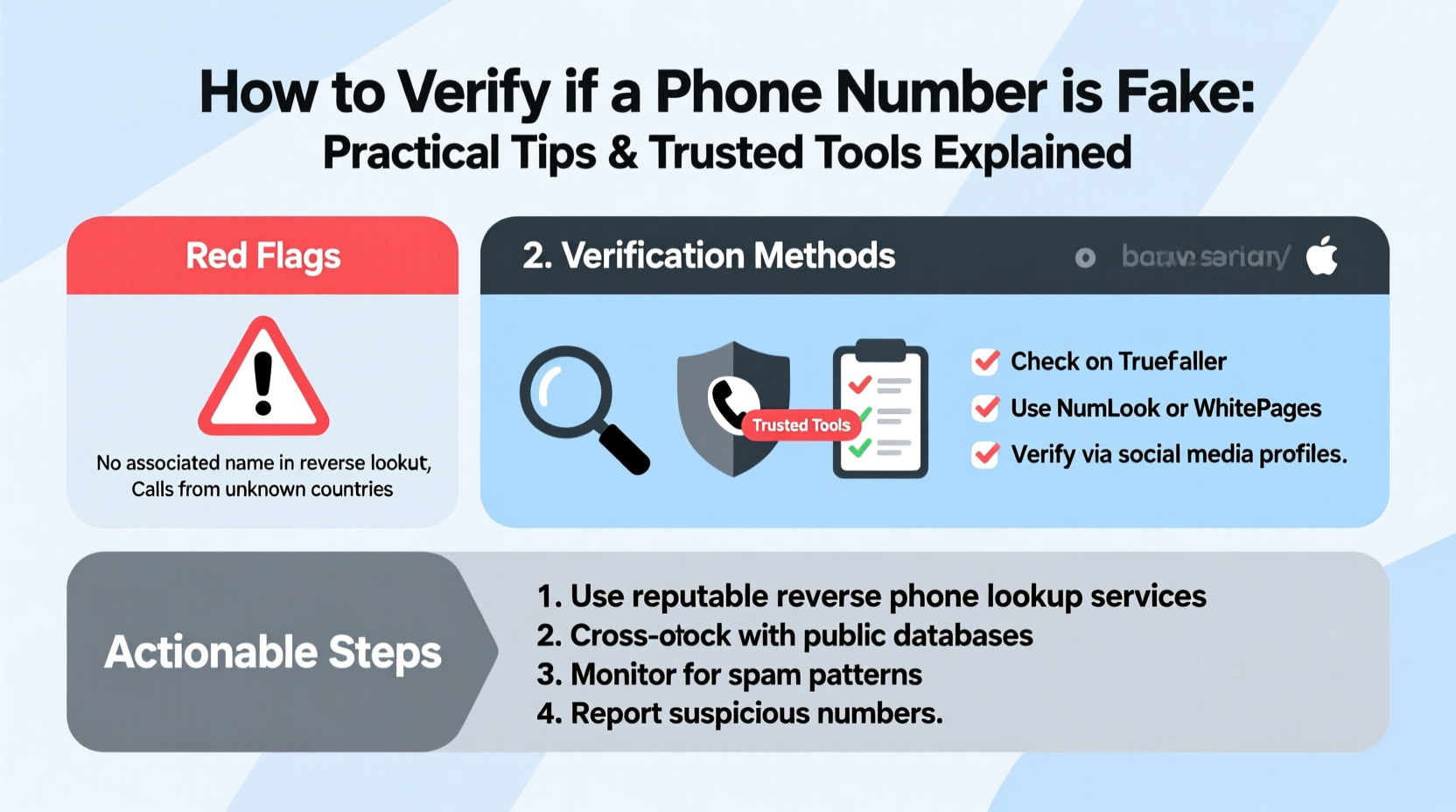
Fake phone numbers are commonly used in phishing scams, robocalls, identity theft, and social engineering attacks. These numbers may appear local (via area code spoofing), mimic official institutions like banks or government agencies, or be entirely untraceable. The rise of Voice over IP (VoIP) technology has made it easier for malicious actors to generate disposable numbers at low cost. According to the Federal Trade Commission (FTC), millions of consumers report receiving scam calls each year—many originating from falsified contact details.
Verifying a number isn’t just about avoiding spam; it's a critical step in protecting your privacy and financial security. Whether you're screening a job offer, checking a delivery notification, or assessing a romantic interest online, confirming legitimacy matters.
Step-by-Step Guide to Verify a Phone Number
Follow this structured approach to investigate a suspicious number systematically:
- Check the Area Code and Format: Look for inconsistencies such as non-existent area codes, unusually long digits, or international prefixes that don’t match the claimed location.
- Perform a Reverse Phone Lookup: Use reputable reverse lookup services to see if the number is associated with a name, address, or carrier.
- Search Online Publicly: Enter the number into search engines using quotes (e.g., “+1-555-123-4567”) to find matches on forums, scam databases, or social media.
- Use Carrier Identification Tools: Confirm which telecom provider owns the number. Legitimate mobile carriers usually register their blocks publicly.
- Listen for Red Flags During Calls: If you answer, note robotic voices, refusal to provide verifiable information, or pressure tactics—all signs of fraud.
- Cross-Reference with Known Databases: Compare the number against national Do Not Call registries or scam reporting platforms.
Trusted Tools for Phone Number Verification
Not all online tools are created equal. Many free sites offer limited data or display misleading results to drive ad revenue. The following platforms are widely recognized for accuracy and transparency:
| Tool | Best For | Free Tier? | Key Features |
|---|---|---|---|
| Truecaller | Mobile caller ID & spam detection | Yes | Global database, crowd-sourced reports, SMS filtering |
| Whitepages | U.S.-based residential lookups | Limited | Reverse phone search, background checks, public records |
| SpyDialer | Voice mail-based identification | Yes | Leaves voicemail to retrieve owner name (if set) |
| NumLookup | Quick carrier and location info | Yes | No sign-up needed, shows carrier and city |
| OpenPhone Lookup | Business and VoIP tracing | Yes | Detects virtual/VoIP numbers often used by scammers |
While these tools vary in depth, combining multiple sources increases confidence in your findings. For example, Truecaller excels at identifying spam patterns, while Whitepages provides more detailed demographic context for U.S. landlines.
Mini Case Study: Spotting a Job Scam
Sarah, a recent graduate, received a text message offering a remote customer service position. The sender included a phone number and urged her to call within 24 hours. Suspicious of the vague job description, Sarah decided to verify the number before responding.
She started by Googling the number in quotes and found several forum posts labeling it as part of a “work-from-home” scam. Next, she used NumLookup, which revealed the number was registered to a VoIP provider in another country—not typical for a local company. Finally, she checked Truecaller, where the number had over 200 spam reports. Confident it was fraudulent, Sarah reported the number to the FTC and avoided potential identity theft.
“Many scam operations rely on volume—sending thousands of messages hoping one person responds. A quick five-minute check can prevent irreversible damage.” — Mark Rivera, Cybersecurity Analyst at TrustNet Security
Common Red Flags of a Fake Phone Number
Even without specialized tools, certain indicators suggest a number may not be genuine:
- Repeated calls or texts with no voicemail or message content
- Numbers that ring once then disconnect (a tactic to prompt callbacks)
- International prefixes from high-risk regions (e.g., Caribbean +1-876, parts of Africa)
- Mismatch between the caller’s claimed location and the number’s area code
- Use of sequential digits (e.g., 555-555-5555) or repeated patterns (e.g., 123-123-1234)
- Originating from known VoIP services when a physical business line is expected
Do’s and Don’ts When Handling Suspicious Numbers
| Do’s | Don’ts |
|---|---|
| Use reverse lookup tools before engaging | Call back unknown international numbers |
| Report spam numbers to your carrier and FTC | Share personal or financial details over unverified lines |
| Enable built-in spam protection on smartphones | Assume a local area code means the caller is trustworthy |
| Document interactions for potential legal action | Engage with aggressive or threatening callers |
| Verify through independent channels (e.g., official website) | Rely solely on caller ID—spoofing is common |
FAQ
Can I verify a phone number without revealing my identity?
Yes. Most reverse lookup tools allow anonymous searches. Avoid entering your own number or personal details unless absolutely necessary. Stick to read-only platforms like NumLookup or Google searches.
Are fake numbers illegal?
In many countries, including the U.S., intentionally spoofing caller ID with intent to defraud is illegal under laws like the Truth in Caller ID Act. However, enforcement remains challenging due to cross-border operations and encrypted VoIP networks.
What should I do if I’ve already responded to a fake number?
If you shared sensitive information, act quickly: change passwords, contact your bank, freeze credit reports, and file a report with the FTC at reportfraud.ftc.gov. Monitor accounts closely for unauthorized activity.
Conclusion
Identifying fake phone numbers requires vigilance, the right tools, and a healthy dose of skepticism. By applying reverse lookups, analyzing behavioral red flags, and leveraging community-powered databases, you can significantly reduce your risk of falling victim to scams. Technology continues to evolve, but so do protective measures—staying informed is your strongest defense.




 浙公网安备
33010002000092号
浙公网安备
33010002000092号 浙B2-20120091-4
Comments
No comments yet. Why don't you start the discussion?