
Possessing a designer leather keychain is more than just a functional accessory—it's a statement of taste, status, and attention to detail. From brands like Hermès, Gucci, and Bottega Veneta, these small luxury items command high prices and attract counterfeiters. Unfortunately, the market is flooded with convincing replicas that can fool even seasoned shoppers. Knowing how to distinguish a genuine piece from a fake isn’t just about protecting your wallet; it’s about preserving the value and integrity of your collection.
This guide walks you through a systematic approach to verifying authenticity, covering everything from material inspection to brand-specific details. Whether you're buying secondhand, gifting, or simply curious about your existing item, these steps will give you confidence in your assessment.
Step 1: Examine the Leather Quality and Texture
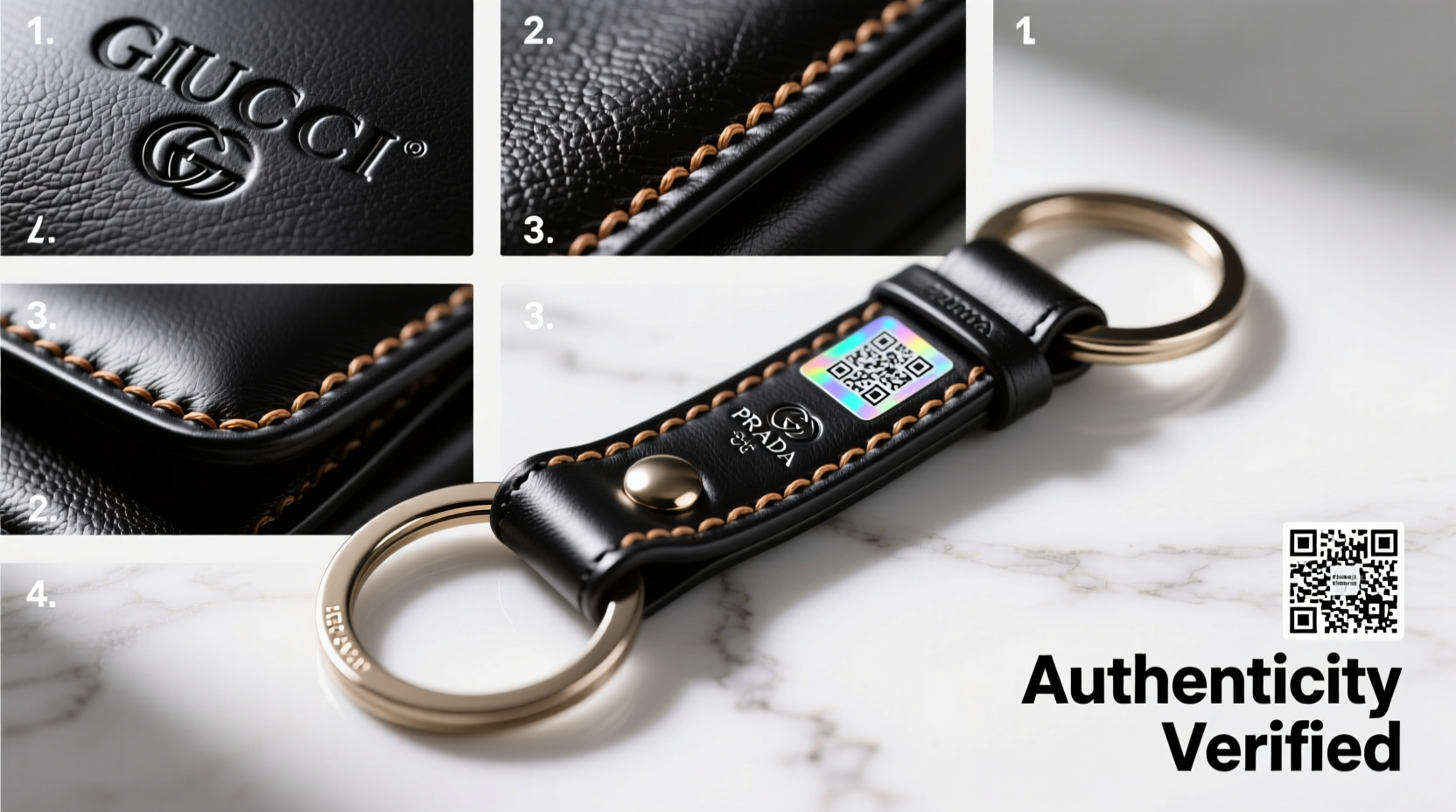
Genuine designer leather is unmistakable upon close inspection. Luxury brands use full-grain or top-grain hides, which are durable, naturally textured, and develop a rich patina over time. Counterfeit versions often rely on bonded leather, synthetic materials, or lower-grade splits that feel stiff, overly smooth, or plasticky.
Run your fingers across the surface. Authentic leather should feel supple yet firm, with subtle variations in grain—no two areas look exactly alike. If the texture appears too uniform or glossy, it may be embossed or printed faux leather.
Check for edge finishing. High-end keychains have neatly painted or burnished edges that are smooth to the touch. Sloppy, uneven, or thickly applied edge paint is a red flag.
Step 2: Inspect Stitching and Craftsmanship
Stitching is one of the most reliable indicators of authenticity. Designer pieces feature hand-stitched or precision machine stitching with consistent tension and spacing. The thread used is typically waxed linen or heavy-duty polyester, resistant to fraying.
Count the stitches per inch. Most luxury brands maintain between 8 to 12 stitches per inch. Fewer than six suggests mass production and lower quality. Also, look at the stitch alignment—each stitch should sit perfectly parallel without skipping or wavering.
Inspect corners and curves. These are difficult areas to stitch evenly, and counterfeiters often cut corners here. Gaps, puckering, or loose threads indicate poor craftsmanship.
“Stitching tells the story of a product’s origin. Inconsistencies are rarely found in authentic luxury goods.” — Luca Moretti, Master Artisan & Leather Goods Consultant
Step 3: Verify Brand-Specific Hardware and Logos
Hardware such as buckles, rivets, and engraved tags must match the brand’s standards. For example:
- Hermès: Engravings are crisp and deep, with no smudging. The “H” logo on hardware is symmetrical and finely detailed.
- Gucci: Double-G logos are precisely aligned. On real pieces, the interlocking Gs have a specific weight and curvature that fakes often misrepresent.
- Balenciaga: Metal components are heavy, not hollow or lightweight. Magnetic clasps snap firmly into place.
Use a magnifying glass if necessary. Authentic engravings are clean and sharp. Blurry, shallow, or misaligned logos are telltale signs of counterfeits.
| Brand | Authentic Feature | Common Fake Mistake |
|---|---|---|
| Prada | Triangle logo has exact proportions and depth | Logo appears flat or too wide |
| Loewe | Anagram logo is perfectly symmetrical | Letters overlap incorrectly or are misaligned |
| Bottega Veneta | Intrecciato weave is tight and consistent | Weave pattern wobbles or gaps appear |
Step 4: Check Serial Numbers, Date Codes, and Certificates
Many designer keychains come with authenticity cards, serial numbers, or date codes etched discreetly on the leather or hardware. While not all small accessories carry them, higher-end models do—especially those made in Italy or France.
For example, Hermès uses a blind stamp (a letter inside a shape) indicating the year of production and artisan. A square might mean 2023, while a circle could denote 2022. Familiarize yourself with the brand’s coding system before purchasing.
If a certificate of authenticity is included, examine its paper quality, font, and holograms. Photocopied or pixelated documents are immediate red flags.
Step 5: Compare Against Official Product Images and Dimensions
Visit the brand’s official website and pull up the exact model. Compare dimensions, color, shape, and design elements side by side. Even minor deviations—such as a slightly longer strap or different clasp angle—can signal a replica.
Pay attention to:
- Proportions of the logo placement
- Exact shade of leather (brands use proprietary dyes)
- Shape and thickness of the keyring attachment
If purchasing online, request multiple high-resolution photos from the seller, including close-ups of stitching, hardware, and interior markings. Ask for a video showing the item in motion—light reflection on metal and leather flex can reveal inconsistencies invisible in still images.
Mini Case Study: Identifying a Fake Gucci Keychain
Sophie, a collector based in London, purchased a Gucci Dionysus leather keychain from a third-party reseller. At first glance, it looked perfect—the GG logo shone brightly, and the price was only slightly discounted. But upon closer inspection, she noticed three issues: the stitching had seven stitches per inch (below Gucci’s standard), the leather smelled strongly of chemicals, and the gold-tone hardware felt unnaturally light.
She compared her piece to an official product image and realized the double-G logo was slightly wider than the authentic version. After consulting a luxury authentication service, she confirmed it was a counterfeit. Her diligence saved her from future disappointment and reinforced the importance of cross-checking every detail.
Authentication Checklist
Before finalizing any purchase, go through this checklist:
- ✅ Smell the leather – does it have a natural, earthy aroma?
- ✅ Feel the texture – is it soft with natural grain variation?
- ✅ Count the stitches – are there 8–12 per inch, evenly spaced?
- ✅ Examine the hardware – is it heavy, polished, and deeply engraved?
- ✅ Match the logo – does it align exactly with brand specifications?
- ✅ Check for date codes or serial numbers – are they present and legible?
- ✅ Compare dimensions – does it match the official product specs?
- ✅ Review packaging and documentation – are they professionally produced?
Frequently Asked Questions
Can I authenticate a keychain using only photos?
Yes, high-resolution photos of key areas—stitching, hardware, leather grain, and engravings—can provide strong evidence. However, tactile inspection enhances accuracy. When in doubt, consult a professional authenticator.
Do all designer keychains have serial numbers?
No. Unlike handbags, smaller accessories like keychains may not include serials or date codes, especially older or limited-run models. Authentication then relies more heavily on craftsmanship and material analysis.
Is it safe to buy vintage designer keychains online?
Vintage pieces can be authentic and valuable, but they require extra scrutiny. Look for reputable sellers with return policies and consider using third-party verification services like Entrupy or Authenticate First.
Final Thoughts
Verifying the authenticity of a designer leather keychain demands patience, knowledge, and attention to detail. Each element—from the scent of the leather to the precision of a single stitch—contributes to the bigger picture. While counterfeits grow increasingly sophisticated, the hallmarks of true craftsmanship remain consistent and identifiable.
Don’t rush the process. Take your time to inspect, compare, and question. When in doubt, seek expert help. Your discernment protects not only your financial investment but also your reputation as a thoughtful consumer of luxury goods.




 浙公网安备
33010002000092号
浙公网安备
33010002000092号 浙B2-20120091-4
Comments
No comments yet. Why don't you start the discussion?