
Purchasing a diamond bowknot ring is more than just a transaction—it’s an investment in sentiment, style, and lasting value. The bowknot design, symbolizing eternal love and connection, adds emotional weight to the piece. However, with rising demand comes increased risk of counterfeit or misrepresented jewelry. Whether you're buying for an anniversary, engagement, or as a personal indulgence, knowing how to verify the authenticity of your diamond bowknot ring is essential. This guide walks you through proven methods—from certification checks to microscopic analysis—to ensure you’re getting what you pay for.
Understand the Hallmarks of Authenticity
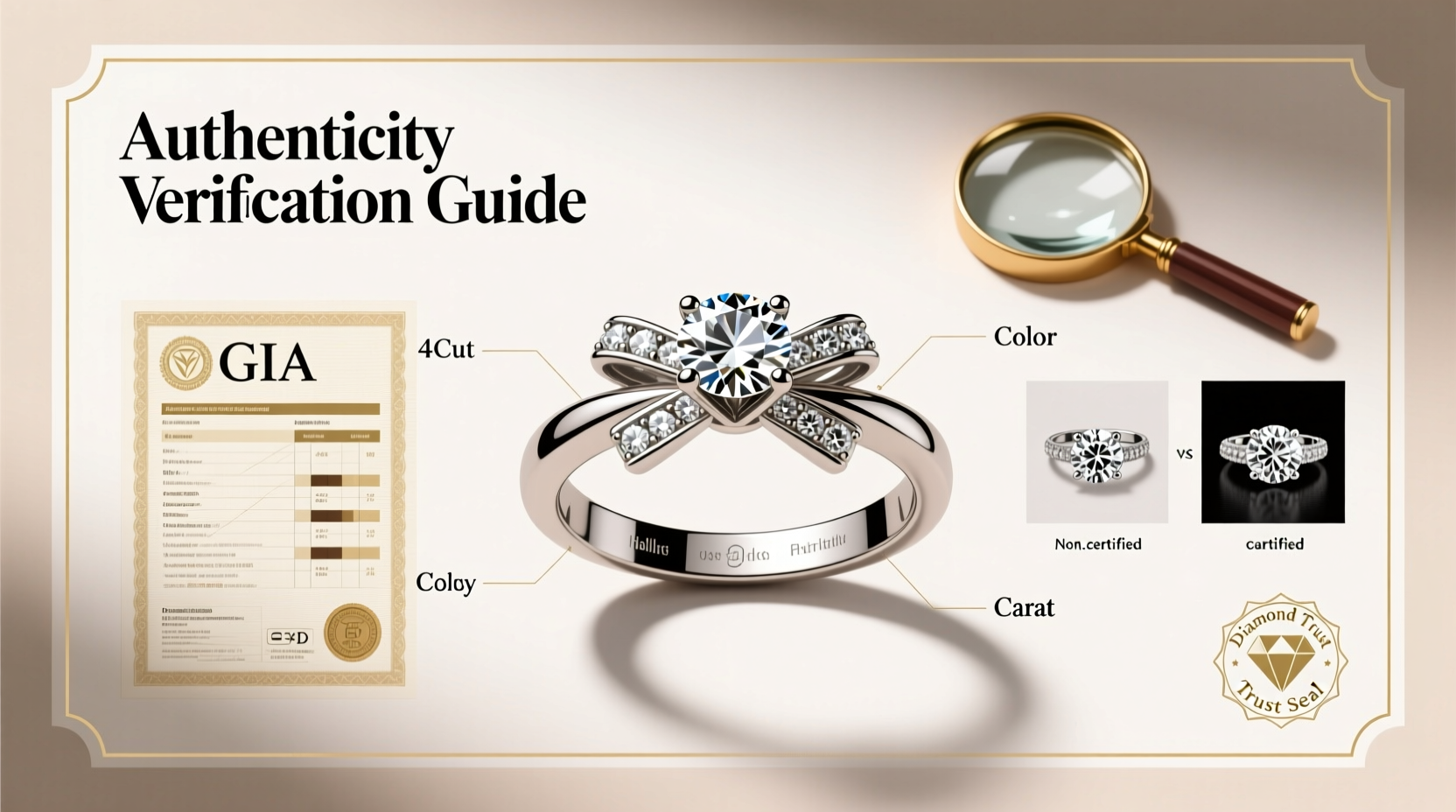
Every genuine fine jewelry piece carries identifying marks that signal its legitimacy. For diamond rings, especially intricate designs like the bowknot, these markers are crucial first clues. Look for:
- Stamps or hallmarks: These include metal purity stamps such as “14K,” “18K,” or “PT950” (for platinum). These should be clearly etched inside the band.
- Diamond quality indicators: While not always visible, some high-end manufacturers engrave micro-laser inscriptions on the girdle of the diamond, often matching the grading report number.
- Brand engravings: Reputable jewelers like Tiffany & Co., Cartier, or independent designers may include signature engravings that can be cross-referenced with official records.
Review the Diamond Grading Report
The most reliable way to confirm authenticity is through a certified grading report from an independent gemological laboratory. The two most respected institutions are the Gemological Institute of America (GIA) and the International Gemological Institute (IGI).
A legitimate report includes:
- Diamond shape, carat weight, color grade, and clarity
- Cut quality assessment (especially important for brilliance in a bowknot setting)
- Plot diagram showing natural inclusions and blemishes unique to the stone
- Laser inscription number linked to the physical diamond
“Never accept a verbal assurance about diamond quality. A GIA or IGI certificate is non-negotiable for high-value purchases.” — Dr. Lena Patel, Certified Gemologist and Director at American Gem Society Lab
Always request the original report, not a photocopy. Verify it online using the lab’s official portal by entering the report number. Cross-check the carat weight and measurements with the actual ring. Even a 0.05-carat discrepancy can indicate substitution.
Conduct a Visual and Physical Inspection
Beyond paperwork, hands-on evaluation reveals much about a ring’s authenticity. Follow this step-by-step inspection process:
- Examine sparkle under natural light: Real diamonds refract light sharply, creating intense fire (color flashes) and brilliance (white light return). Moissanite or cubic zirconia often show excessive rainbow sparkle.
- Check for fog test reaction: Breathe on the diamond. A real diamond disperses heat instantly, so fog clears in 1–2 seconds. Fake stones stay foggy longer.
- Inspect symmetry and craftsmanship: In a bowknot design, the loops should mirror each other precisely. Misaligned prongs or asymmetrical curves suggest poor craftsmanship or counterfeit origin.
- Test for magnetism: Genuine gold and platinum are non-magnetic. If a small magnet attracts the band, it may be base metal plated to look valuable.
| Feature | Genuine Diamond | Common Imitation (e.g., CZ, Moissanite) |
|---|---|---|
| Heat Conductivity | Excellent – passes thermal conductivity tests | Poor (except moissanite, which conducts well but differently) |
| Surface Luster | Adamantine (glass-like), sharp reflection | Duller or overly \"glassy\" |
| Inclusions | Natural imperfections visible under magnification | Perfect clarity or artificial bubbles |
| Weight | Heavier per carat than most simulants | Lighter (e.g., CZ is ~10% lighter) |
Mini Case Study: The Online Bargain That Wasn’t
Sophia purchased a 1.2-carat diamond bowknot ring online for 40% below market price. It came with a “certification” from an unknown lab. Upon taking it to a local GIA-accredited appraiser, she discovered the diamond was actually 0.98 carats and graded I color, SI2 clarity—far below the advertised D color, VVS1. The band was stamped 14K but tested as 10K gold. The seller had falsified documents. After filing a dispute, Sophia recovered her funds—but only because she acted quickly and had the piece inspected before wearing it daily. Her experience underscores why third-party verification is non-negotiable.
Use Professional Tools and Services
While home tests offer preliminary insights, definitive verification requires professional tools. Consider these options:
- Diamond tester: Measures thermal or electrical conductivity. Modern devices distinguish between diamonds and moissanite, which behaves similarly.
- Jeweler’s loupe (10x magnification): Reveals facet junctions, inclusion patterns, and engraving precision.
- Microscope examination: A trained gemologist can identify laser drill holes, fracture fillings, or synthetic growth patterns invisible to the naked eye.
If the ring lacks documentation, consider getting it appraised by a GIA-graduate gemologist. They’ll issue a formal evaluation detailing metal type, diamond characteristics, and estimated market value.
Buyer’s Checklist: Ensuring Authenticity Before Purchase
Before finalizing any purchase—online or in-store—run through this checklist:
- ✅ Request a GIA, IGI, or AGS grading report and verify it online
- ✅ Inspect the ring under bright light and magnification
- ✅ Confirm metal stamp matches description (e.g., “18K” for 18-karat gold)
- ✅ Ask if the diamond is natural or lab-grown (both are valid, but must be disclosed)
- ✅ Avoid deals that seem too good to be true—discounts over 30% often signal issues
- ✅ Buy from retailers with return policies and third-party certifications
- ✅ Get a written appraisal for insurance purposes within 30 days of purchase
Frequently Asked Questions
Can a lab-grown diamond be used in a bowknot ring?
Yes. Lab-grown diamonds are chemically identical to mined diamonds and are increasingly used in fine jewelry. The key is disclosure. Ensure the seller clearly states whether the diamond is lab-created and provides a grading report specifying its origin.
What if my ring doesn’t have a hallmark?
A missing hallmark is a serious concern, especially in countries where marking precious metals is legally required. Antique or handmade pieces may lack standard stamps, but they should come with provenance or a professional authentication letter. When in doubt, get it tested.
Is a bowknot design harder to authenticate?
The complexity of the bowknot setting doesn’t affect diamond verification, but it can make inspection more challenging. Multiple prongs and twisted bands may obstruct views of the girdle or hallmark. Ask the jeweler to temporarily remove the stone for full assessment if necessary.
Final Thoughts: Confidence Starts with Verification
A diamond bowknot ring is more than a beautiful accessory—it’s a symbol of enduring affection and personal taste. Protecting its value means protecting its truth. By demanding proper certification, conducting careful inspections, and consulting qualified professionals, you safeguard both your investment and peace of mind. Whether you’re proposing, celebrating, or treating yourself, take the time to verify every detail. Authenticity isn’t just about the diamond—it’s about trust, transparency, and the legacy you build with every thoughtful choice.




 浙公网安备
33010002000092号
浙公网安备
33010002000092号 浙B2-20120091-4
Comments
No comments yet. Why don't you start the discussion?