
Purchasing a 925 silver chain is an investment in both style and value. Sterling silver, marked as \"925,\" contains 92.5% pure silver and 7.5% alloy metals, usually copper, to enhance durability. However, counterfeit jewelry is widespread, and many pieces sold as genuine sterling are little more than plated base metal. Fortunately, you don’t need a lab or expensive equipment to verify authenticity. With a few household items and careful observation, you can confidently test your silver chain at home.
Understanding the 925 Stamp: What It Means and Why It Matters
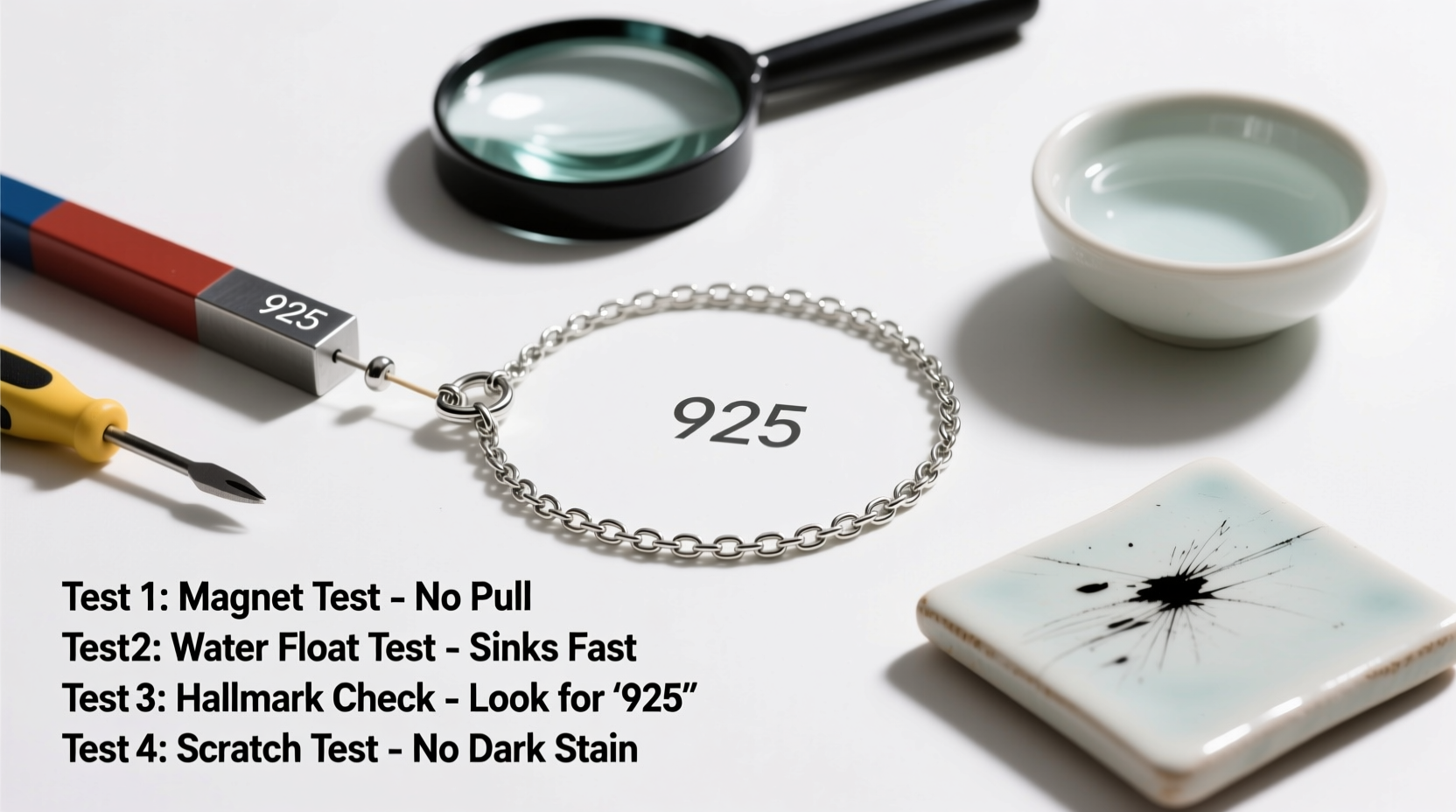
The “925” hallmark is internationally recognized as proof that a piece is made from sterling silver. This stamp should be clearly visible on authentic chains, typically near the clasp or on a small tag. But not all stamped items are genuine—some counterfeiters laser-engrave fake hallmarks to mimic real ones.
A legitimate 925 mark is usually crisp, uniform, and deeply engraved. If the stamp looks shallow, uneven, or smudged, it may be a red flag. Also, smaller chains might have micro-stamps requiring a magnifying glass to read accurately.
“Always check for the 925 stamp first—but remember, it’s only the starting point. A real stamp supports authenticity; a missing or poorly made one raises suspicion.” — Daniel Reeves, Jewelry Appraiser & Gemologist
Step-by-Step Guide: Five Reliable Home Tests for Sterling Silver
You can perform several practical tests at home to determine whether your chain is truly 925 silver. These methods rely on basic chemistry, magnetism, and physical properties unique to real silver.
- Magnet Test: Silver is non-magnetic. Hold a strong neodymium magnet near your chain. If it attracts or pulls toward the magnet, the chain likely contains iron, nickel, or steel—a clear sign it’s not genuine sterling silver.
- Ice Test: Silver has the highest thermal conductivity of any common metal. Place an ice cube directly on the chain. On real silver, the ice will melt significantly faster than on other metals or alloys. This is a quick, non-destructive way to observe silver’s unique heat transfer property.
- Smell Test: Genuine silver is odorless. Rub the chain between clean fingers for 10–15 seconds. If you detect a metallic or sulfur-like smell, it may be plated copper or another reactive alloy.
- Polish Test with a Soft Cloth: Use a non-abrasive silver polishing cloth (tarnish-resistant type). Gently rub a small section. Real silver may leave gray-black residue due to oxidation, while fake metals often show no change or smear differently.
- Vinegar or Baking Soda Reaction Test (Use with Caution): Mix equal parts white vinegar and baking soda into a paste. Apply a small amount to an inconspicuous area using a cotton swab. Genuine silver will brighten slightly and react minimally. If the area turns green or black rapidly, or if bubbling occurs aggressively, the piece may be plated over a reactive base metal.
Comparison Table: Real vs. Fake Silver Characteristics
| Characteristic | Genuine 925 Silver | Fake or Plated Metal |
|---|---|---|
| Magnet Response | No attraction | May attract strongly |
| Tarnish Over Time | Develops soft black or gray patina | May turn green, peel, or flake |
| Weight | Dense and relatively heavy | Often lighter than expected |
| Surface Feel | Cool to touch, smooth finish | Warm quickly, sometimes rough or grainy |
| Reaction to Acid (if tested professionally) | Matches 925 grade color change | Incorrect reaction or no reaction |
Real Example: How Sarah Discovered Her “Sterling” Chain Was Fake
Sarah bought what she thought was a high-quality 925 silver chain online during a flash sale. The price seemed too good to pass up—just $35 for a 20-inch rope link. At first glance, it looked convincing: shiny, stamped with “925,” and packaged in a velvet box. But within two weeks, the chain began turning her neck green, and the luster faded dramatically after showering.
Curious, she performed the magnet test using a fridge magnet. To her surprise, the clasp was slightly magnetic. She then placed an ice cube on the chain; it melted slowly, unlike her friend’s known silver necklace where ice vanished in seconds. Finally, she rubbed it with a silver polishing cloth—no tarnish came off, but the shine didn’t improve either.
After consulting a local jeweler, she learned the chain was made of stainless steel with a thin silver wash. The lesson? Price alone isn't always a clue, but behavior over time and simple home tests can reveal the truth.
Essential Checklist: Verify Your 925 Silver Chain at Home
- 🔍 Locate and inspect the “925” stamp under magnification
- 🧲 Perform the magnet test—ensure no attraction
- 🧊 Conduct the ice test: watch for rapid melting
- 👃 Do the smell test after rubbing—real silver won’t stink
- 🧽 Use a silver polishing cloth to check for tarnish removal
- 🧴 Try the vinegar-baking soda swab test cautiously
- ⚖️ Compare weight to similar-known silver pieces
- 👁️ Observe long-term wear: discoloration or skin reactions indicate plating
Frequently Asked Questions
Can a 925 silver chain be magnetic?
No, pure sterling silver is not magnetic. If your chain is attracted to a magnet, it likely contains ferromagnetic metals like iron or nickel, meaning it's either fake or only silver-plated over a base metal.
Why does my silver chain turn black after wearing it?
Tarnishing is normal for 925 silver. The copper in the alloy reacts with sulfur compounds in air, sweat, and pollution, forming a dark layer. This actually confirms authenticity—plastic or heavily coated fakes won’t tarnish in the same way.
Is there a way to test silver without damaging it?
Yes. The magnet, ice, smell, and visual inspection tests are completely non-destructive. Avoid filing or acid testing unless done by a professional, as these can harm the piece.
Final Thoughts: Confidence Comes from Knowledge
Verifying your 925 silver chain doesn’t require expertise—just attention to detail and a willingness to question appearances. While nothing replaces a professional assay when in doubt, these home tests offer powerful insights. They empower you to protect your investment, avoid scams, and wear your jewelry with confidence.
Many people assume that if a piece looks right and carries a stamp, it must be real. But in today’s market, that assumption can cost you. By applying even two or three of these tests, you drastically reduce the risk of being misled.




 浙公网安备
33010002000092号
浙公网安备
33010002000092号 浙B2-20120091-4
Comments
No comments yet. Why don't you start the discussion?