
The U.S. Department of the Treasury’s Financial Crimes Enforcement Network (FinCEN) now requires most small businesses to file a Beneficial Ownership Information (BOI) report under the Corporate Transparency Act. This regulation aims to combat financial crime by increasing transparency around business ownership. Once you’ve submitted your BOI report, it’s essential to confirm its status—whether accepted, pending, or rejected. Failing to verify can lead to compliance risks, especially if corrections are needed. This guide walks through the exact steps to check your BOI filing status, what to do if issues arise, and how to maintain long-term compliance.
Understanding BOI Filing and Why Verification Matters
As of January 1, 2024, corporations, LLCs, and other entities formed in the United States must report identifying information about their beneficial owners—individuals who own or control 25% or more of the company or exercise substantial control—to FinCEN. This requirement applies regardless of revenue or operational scale.
Filing is done exclusively through the FinCEN Electronic Submission System. After submission, your report enters a processing queue. Unlike traditional IRS filings, there is no automatic confirmation email. You must proactively verify your filing status to ensure it was received and accepted.
“Verification isn’t just a formality—it’s a legal safeguard. An unverified or incomplete BOI filing carries civil and criminal penalties.” — James R. Delgado, Senior Advisor at the National Compliance Institute
Penalties for non-compliance can reach $591 per day for willful violations, making timely verification critical.
Step-by-Step: How to Check Your BOI Filing Status
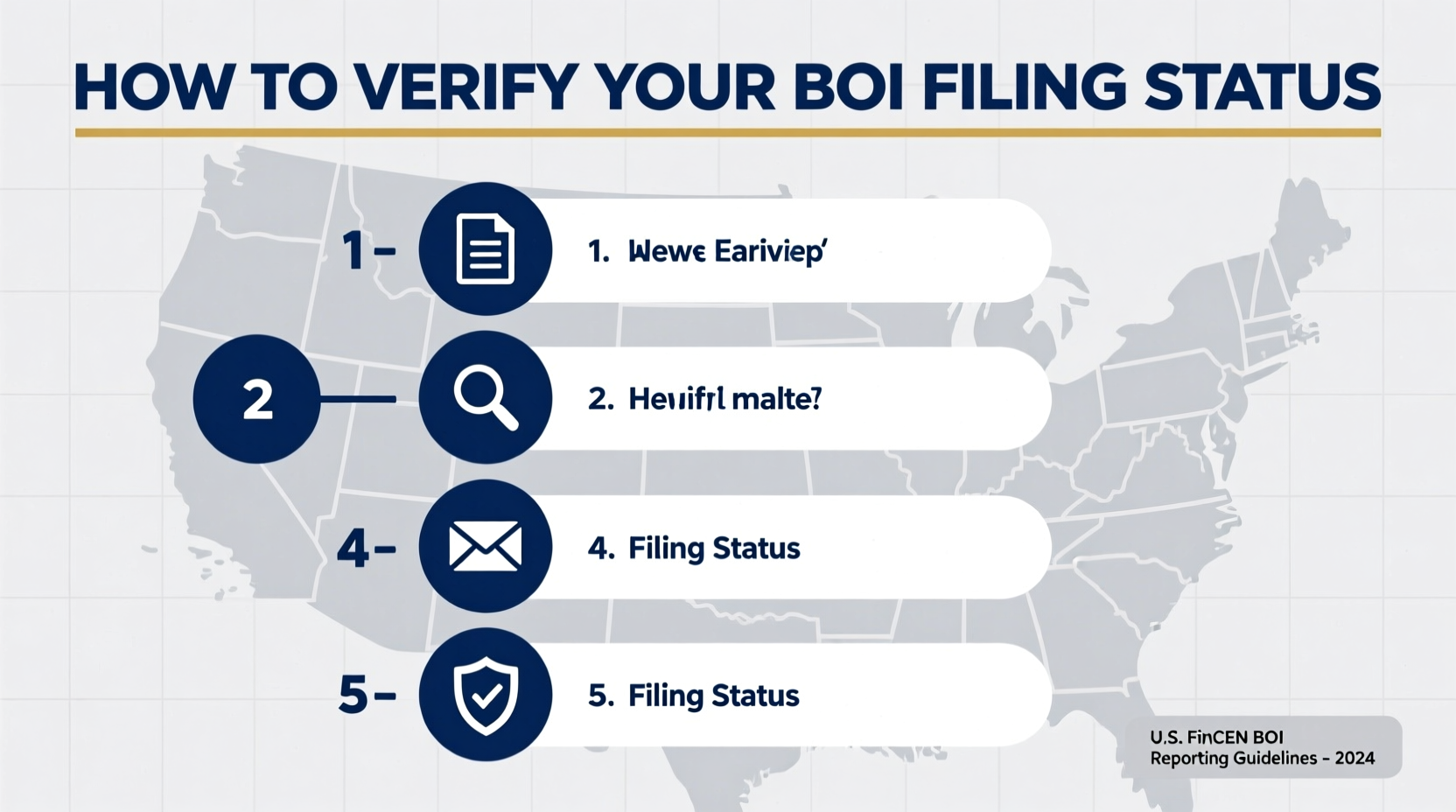
Follow these steps to access and verify your BOI report status through the official FinCEN portal:
- Visit the FinCEN BOI E-Filing Website: Go to https://boiefiling.fincen.treas.gov. Always use the official .gov domain to avoid phishing scams.
- Select “File a BOI Report” or “Manage Existing Report”: If you’re checking status, click “Manage Existing Report.” You’ll need your FinCEN ID or the unique filing access number provided during submission.
- Enter Your Access Credentials: Input either:
- Your 12-digit FinCEN ID (if assigned), or
- The 29-character filing access token sent to your registered email after initial submission.
- Authenticate Your Identity: Complete multi-factor authentication (MFA). A one-time code will be sent to the primary contact’s email and phone number on file.
- View Filing Status Dashboard: Once logged in, you’ll see all submissions associated with your credentials. Each report displays one of three statuses:
- Pending: The system has received your report but hasn’t processed it.
- Accepted: Your report is complete and compliant.
- Rejected: Errors were detected; corrections are required.
- Download Confirmation: If accepted, download and save the PDF receipt. It includes your FinCEN tracking number and timestamp.
What to Do If Your BOI Report Is Rejected or Pending
A rejection doesn’t mean failure—it means correction is possible. Common reasons include mismatched identity documents, incomplete owner details, or technical errors during upload.
Handling a Rejected Filing
- Review the error message carefully. FinCEN provides specific feedback (e.g., “SSN format invalid” or “Missing control person identifier”).
- Log back into the system using your access token.
- Edit the report directly—no need to file anew unless instructed.
- Resubmit and recheck status within 24–48 hours.
Dealing With Long Pending Periods
Most reports are processed within 72 hours. If your status remains “Pending” beyond five business days:
- Double-check that MFA was completed successfully.
- Ensure your internet connection didn’t interrupt submission.
- Contact FinCEN’s dedicated support line at 1-855-812-6829 or submit a help request via the portal’s “Contact Us” tab.
BOI Verification Checklist
Use this checklist to ensure your BOI filing is not only submitted but verified and secured:
- ✅ Submitted report via official FinCEN portal
- ✅ Saved the 29-character access token in a secure location
- ✅ Completed multi-factor authentication during submission
- ✅ Logged back in to confirm “Accepted” status
- ✅ Downloaded and stored the official confirmation receipt
- ✅ Verified all beneficial owner details match government IDs
- ✅ Updated records promptly if ownership changes occur
Common Mistakes and How to Avoid Them
Many businesses assume “submitting” equals “completing.” But without verification, they remain exposed. Below are frequent pitfalls and solutions:
| Mistake | Consequence | How to Avoid |
|---|---|---|
| Not saving the access token | Inability to log back in or verify status | Store the token in encrypted password manager or physical safe |
| Using personal email for filing | Risk of lost access if employee leaves | Use a shared company inbox (e.g., compliance@yourcompany.com) |
| Assuming automatic approval | Unnoticed rejections leading to non-compliance | Always manually verify status within 72 hours |
| Ignoring updates post-filing | Outdated ownership info = violation | Re-file within 30 days of any ownership change |
Real Example: A Small Business Learns the Hard Way
Samantha runs a boutique marketing agency incorporated in Delaware. In March 2024, she filed her BOI report using her personal email and phone. She assumed it went through because she saw a “Submission Successful” screen. Six weeks later, she received a notice from her bank that her business account was under review due to suspected non-compliance.
When Samantha returned to the FinCEN portal, she realized she hadn’t saved her access token. After resetting her credentials through customer support, she discovered her report had been rejected due to an expired driver’s license uploaded for her co-owner. She corrected the document, resubmitted, and finally received an “Accepted” status—but not before spending hours resolving the issue and delaying a client contract.
Her takeaway: “Submitting isn’t enough. I now treat BOI verification like tax filing—complete, confirm, and keep proof forever.”
Frequently Asked Questions
Do I need to verify my BOI filing every year?
No, but you must file updated reports within 30 days of any change in beneficial ownership or company control. After each update, you must verify the new submission status just like the original.
Can I verify my BOI status without the access token?
If you have a FinCEN ID, yes. Otherwise, the access token is mandatory. If lost, contact FinCEN support with your entity’s legal name, EIN, and formation date to recover access.
Is there a public database to check someone else’s BOI status?
No. BOI data is strictly confidential and accessible only to authorized federal, state, and law enforcement agencies—or the filer with proper credentials. There is no public lookup tool.
Final Steps: Secure and Monitor Your Compliance
Verifying your BOI filing status is not a one-time chore—it’s part of ongoing corporate responsibility. Treat it with the same diligence as annual tax filings or payroll compliance. Save your confirmation receipt alongside other formation documents. Assign a team member to monitor for ownership changes and set calendar reminders for potential updates.
Remember: FinCEN does not send unsolicited emails or texts about your BOI report. All communication comes through the official portal or verified phone lines. Stay alert, stay verified, and protect your business from avoidable legal exposure.




 浙公网安备
33010002000092号
浙公网安备
33010002000092号 浙B2-20120091-4
Comments
No comments yet. Why don't you start the discussion?