
In an era where identity verification is more critical than ever, the REAL ID Act has become central to accessing federal facilities, boarding domestic flights, and proving identity at government agencies. Since its phased enforcement began in 2020 and culminates in full implementation by May 7, 2025, millions of Americans are turning their attention to whether their driver’s license or state ID meets federal standards. But simply having a card labeled “REAL ID” isn’t enough—knowing how to verify its authenticity and ensure it's valid for intended use is essential.
This comprehensive guide walks you through every stage of REAL ID verification: from checking physical security features to confirming digital validity and preparing for TSA checkpoints. Whether you’ve just received a new card or are reviewing an older one, this article equips you with actionable knowledge to avoid travel delays and identity issues.
Understanding What a REAL ID Is—and Isn’t
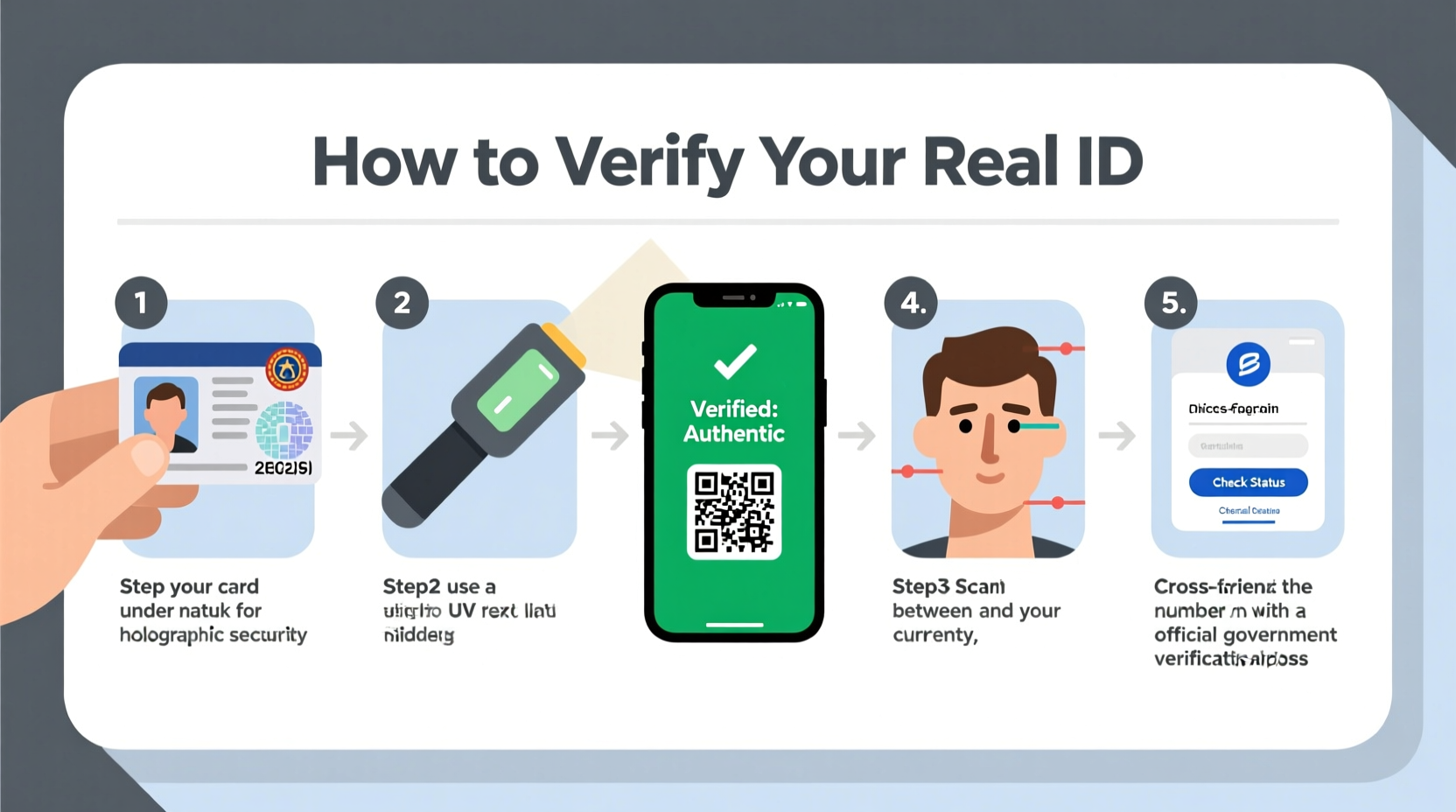
The REAL ID Act was passed by Congress in 2005 in response to recommendations from the 9/11 Commission. It established minimum security standards for state-issued driver’s licenses and identification cards. The Department of Homeland Security (DHS) oversees compliance, and only IDs that meet these federal guidelines can be used for specific purposes after May 7, 2025.
A REAL ID-compliant card does not replace your standard driver’s license—it enhances it with added security and federal recognition. However, not all states issue REAL IDs by default; some provide them as optional upgrades. That means even if your license looks updated, it may not be compliant unless explicitly marked.
“The goal of REAL ID is not to create a national ID card, but to ensure that all state-issued IDs meet consistent, tamper-resistant standards.” — U.S. Department of Homeland Security
Step-by-Step Guide to Verifying Your REAL ID
Verifying your REAL ID involves both visual inspection and administrative confirmation. Follow these steps carefully to ensure your card is legitimate and accepted for federal use.
- Check for the Gold or Black Star Symbol
The most immediate indicator of a REAL ID-compliant card is a star in the top right corner. Depending on your state, this star may be gold, black, or white within a circle or star-shaped background. No star? Your ID likely isn’t compliant. - Examine Holograms and Raised Elements
REAL IDs include advanced security features such as holographic overlays, microprinting, and tactile elements. Run your finger over the photo and personal information area—many states use laser-engraved text or raised printing that cannot be easily duplicated. - Confirm Issue and Expiration Dates Are Valid
An expired ID, even if compliant, will not be accepted at TSA checkpoints. Ensure your card is current and hasn't surpassed its expiration date. - Cross-Reference with State DMV Records
Visit your state’s Department of Motor Vehicles (DMV) website and log into your account. Most states allow users to view digital versions of issued IDs and confirm compliance status. Some even offer a “REAL ID Eligibility” dashboard. - Scan the Barcode or Magnetic Strip (If Available)
Law enforcement and TSA agents use barcode scanners to validate IDs. While consumers typically can’t access professional scanners, certain third-party apps (used cautiously) can read basic encoded data like name and expiration to cross-check against the printed info. - Contact Your State DMV Directly
If in doubt, call your local DMV office with your license number ready. They can confirm whether your ID was issued under REAL ID specifications and advise on renewal procedures if needed.
Do’s and Don’ts When Using Your REAL ID
| Do’s | Don’ts |
|---|---|
| Carry your REAL ID when flying domestically after May 2025 | Assume your passport is required for domestic flights (it’s not, but non-compliant IDs won’t work) |
| Store your ID in a protective sleeve to prevent wear on magnetic strips | Expose your ID to extreme heat or moisture, which can damage embedded chips |
| Renew early if expiration is near—processing times vary by state | Wait until the last minute to upgrade; backlogs occur during peak seasons |
| Report loss or theft immediately to prevent identity fraud | Share photos of your ID on social media—even partially redacted images pose risks |
Real Example: Sarah’s Airport Experience
Sarah, a frequent traveler from Colorado, assumed her standard driver’s license would suffice for her flight to Washington, D.C. She had upgraded her license two years prior but skipped the REAL ID option, thinking it was optional for air travel. At the TSA checkpoint, she was pulled aside and informed her ID wasn’t compliant.
After presenting her passport as a backup, she was allowed to proceed—but missed her original boarding group due to the delay. That evening, she visited the Colorado DMV website, scheduled an appointment, and submitted documents including her birth certificate, Social Security card, and utility bill. Within three weeks, she received her REAL ID with the gold star emblem. Now, she carries it exclusively for travel and keeps a digital copy stored securely in her password manager.
Sarah’s story highlights a common misconception: many people believe any state-issued ID works for domestic flights. After May 7, 2025, only compliant IDs or alternative acceptable documents will be permitted.
What Documents Do You Need to Obtain or Verify a REAL ID?
If you're applying for a REAL ID or re-verifying eligibility, you'll need to present original or certified copies of the following (specific requirements vary slightly by state):
- Proof of Identity: U.S. birth certificate, valid passport, or permanent resident card
- Proof of Social Security Number: SSN card, W-2 form, or pay stub with full SSN
- Proof of Residency: Two documents showing your current address (e.g., utility bills, bank statements, lease agreements)
- Legal Name Change Documentation (if applicable): Marriage certificate, court order, or divorce decree
Frequently Asked Questions
Can I use my passport instead of a REAL ID?
Yes. A valid U.S. passport, passport card, or military ID is always acceptable for domestic air travel and federal facility access. However, a REAL ID offers greater convenience for everyday use since most people don’t carry passports regularly.
Is a REAL ID required to drive or vote?
No. REAL ID is not necessary for driving, voting, entering federal buildings that don’t require ID, or accessing healthcare services. Its primary purpose is for boarding federally regulated flights and entering secure federal areas like military bases or nuclear power plants.
What happens if my state doesn’t issue REAL IDs?
All 50 states and U.S. territories now issue REAL ID-compliant licenses. If you live in American Samoa, you may be subject to different rules. Otherwise, every state has been certified as compliant by DHS.
Final Checklist Before Travel or Federal Access
- ✅ Confirm your ID displays the gold/black star in the top right corner
- ✅ Ensure the card is not expired
- ✅ Verify your name matches exactly with your airline reservation
- ✅ Carry a backup ID (passport or military ID) in case of scanner errors
- ✅ Arrive at the airport 15–30 minutes earlier than usual during initial REAL ID enforcement phases
Take Action Now to Avoid Future Hassles
The shift toward mandatory REAL ID compliance isn’t a distant policy—it’s already affecting travelers across the country. Waiting until the final weeks before May 7, 2025, could mean facing long DMV lines, document shortages, or unexpected travel disruptions. By verifying your ID today, gathering necessary paperwork, and upgrading if needed, you ensure seamless access to air travel and secure facilities without last-minute stress.




 浙公网安备
33010002000092号
浙公网安备
33010002000092号 浙B2-20120091-4
Comments
No comments yet. Why don't you start the discussion?