
Every time you unlock your phone, open a map, or check the weather, your Android device may be recording where you’ve been. Location History is a powerful feature that enhances personalization—powering smarter navigation, better recommendations, and timely reminders—but it also raises valid concerns about digital privacy. The good news? You’re in control. Understanding how to view, manage, and fine-tune your Location History settings ensures you benefit from convenience without sacrificing security.
With growing awareness around data collection, users are rightfully asking: Who has access to my movements? How long is this data stored? Can I delete it permanently? This guide walks through every aspect of managing Location History on Android, offering actionable steps to safeguard your privacy while maintaining service accuracy.
Understanding Location History: What It Is and Why It Matters
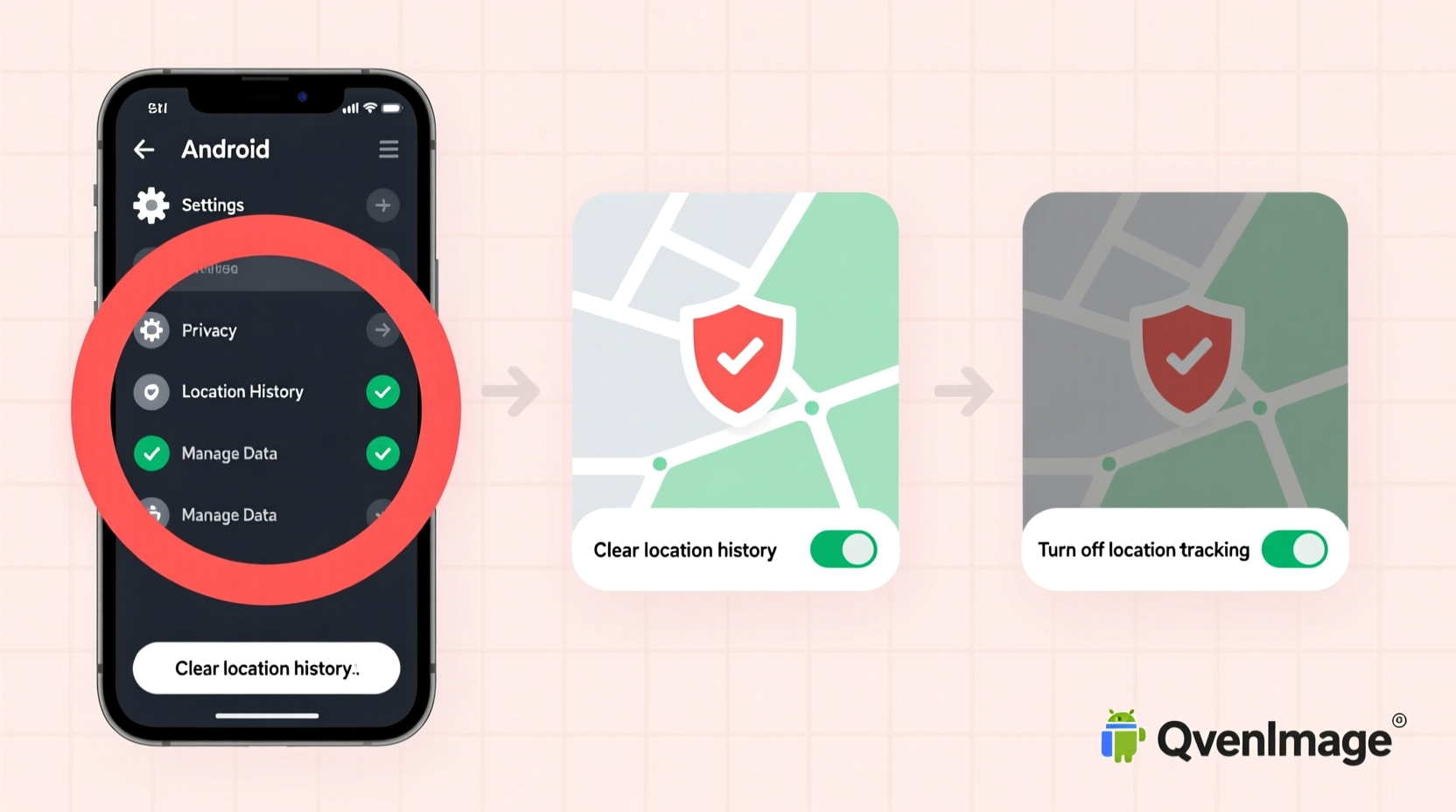
Location History is a Google service that logs your device’s GPS coordinates over time when location services are enabled. It syncs across your Google account and powers features like Timeline (formerly My Maps), predictive traffic routes, and location-based alerts. While useful, continuous tracking can feel intrusive if left unchecked.
The data collected includes:
- GPS coordinates from your device
- Wi-Fi and Bluetooth signal triangulation
- Timestamped movement patterns
- Visited places inferred by machine learning
This information is stored securely under your Google Account but can be accessed via web or mobile apps. Importantly, Location History is separate from device-level location permissions—meaning even if an app doesn’t request location access, Google may still log your whereabouts if the setting is active.
“Location data is among the most sensitive types of personal information. Users should know not only what’s being collected but how to revoke access at any time.” — Dr. Lena Patel, Digital Privacy Researcher at Stanford Cyber Initiative
How to View Your Location History on Android
Before adjusting settings, it’s helpful to see exactly what Google has recorded. Viewing your timeline gives insight into how accurately your device tracks movement and which locations appear most frequently.
Step-by-Step: Accessing Your Location Timeline
- Open the Google Maps app on your Android device.
- Tap your profile picture or initial in the top-right corner.
- Select Your Timeline.
- Browse daily summaries, specific dates, or locations visited.
- Zoom in on maps to see precise routes taken throughout the day.
If prompted, sign in with the Google account linked to your device. Note: If Location History is turned off, your timeline will show “No trips found” or limited data.
Controlling Location History Settings for Enhanced Privacy
Full control begins in your Google Account settings—not within the Android OS alone. Adjusting these options determines whether your movements are logged, how long they’re kept, and who can see them.
Turning Location History On or Off
- Go to myaccount.google.com on your phone or computer.
- Navigate to Data & Personalization.
- Scroll to “Activity controls” and select Location History.
- Toggle the switch to turn Location History on or off.
Disabling Location History stops future logging but does not automatically erase existing data. To remove prior records, you must manually delete them (see next section).
Pausing vs. Permanently Disabling
There’s a difference between pausing and deleting:
- Pause: Temporarily halts new entries; easy to re-enable later.
- Delete + Disable: Removes stored history and prevents future tracking unless reactivated.
Deleting and Managing Stored Location Data
Even if you disable Location History, old data may remain unless explicitly removed. Google allows granular deletion—from single points to entire date ranges.
How to Delete Specific Location Points
- In Google Maps, go to Your Timeline.
- Select a day and tap a specific place pin.
- Choose Delete to remove that entry.
Clear All Location History at Once
- Visit myaccount.google.com.
- Under “Data & Personalization,” click Manage your activity controls.
- Next to Location History, click Manage Activity.
- Select Delete activity by.
- Choose a timeframe (e.g., “All time”) and confirm deletion.
| Action | Effect | Reversible? |
|---|---|---|
| Pause Location History | Stops new data collection | Yes, toggle back on anytime |
| Delete by Date Range | Removes selected historical entries | No – permanent once deleted |
| Auto-delete after 3/18 months | Automatically purges old data | Can be changed or disabled |
Optimizing Accuracy Without Compromising Security
Some users worry that disabling Location History reduces GPS accuracy. In reality, device-level location services (used by maps, ride-sharing apps, etc.) operate independently and can remain active for functionality while Google’s broader tracking is paused.
Check Device-Level Location Settings
- Open Settings on your Android phone.
- Tap Location (or “Security & Location” on older models).
- Ensure Location is toggled on.
- Tap App Permissions to control which apps access location data.
You can allow precise location only while using an app (e.g., Waze), deny access entirely, or grant approximate location to minimize exposure.
Improve Tracking Precision When Needed
- Enable Wi-Fi scanning and Bluetooth scanning in Location settings for better indoor positioning.
- Keep Google Location Accuracy (in Settings > Location) turned on if you use Maps regularly.
- Calibrate your compass in Google Maps for improved directional accuracy.
“My clients often assume turning off Location History breaks navigation. That’s a myth. App-specific location access handles real-time needs—you just stop feeding long-term behavioral profiles.” — Marcus Tran, Mobile Security Consultant
Real-World Example: Taking Back Control After Unwanted Tracking
Sophie, a freelance designer in Portland, noticed her phone was suggesting gas stations near her boyfriend’s house—a place she’d visited only twice. Concerned, she reviewed her Timeline and discovered detailed logs of both trips, including timestamps and walking routes. Though she trusted Google’s encryption, she didn’t want a record of personal visits stored indefinitely.
She followed these steps:
- Deleted all Location History from the past six months.
- Enabled auto-delete after three months going forward.
- Turned off Web & App Activity for her secondary Google account.
- Reviewed app permissions, revoking location access from games and social media apps.
Within minutes, her Timeline reset. Future suggestions became less invasive, and she regained confidence in her digital boundaries.
Frequently Asked Questions
Does turning off Location History affect Google Maps navigation?
No. Real-time GPS navigation uses device-level location services, which remain functional even when Location History is disabled. You’ll still get turn-by-turn directions and traffic updates.
Can someone else see my Location History?
Only if you’ve shared your location via Google’s “Share Location” feature. Otherwise, your history is private and accessible only through your Google Account with proper authentication.
Is Location History backed up if I factory reset my phone?
Yes—if Location History was enabled, the data resides in your Google Account, not the device. A factory reset won’t delete it. Always clear activity online before resetting hardware.
Final Checklist: Secure Your Location Privacy in 5 Steps
- Review your current Location History in Google Maps > Your Timeline.
- Delete outdated or unwanted entries or clear all history.
- Turn off Location History or enable auto-delete (3 or 18 months).
- Adjust app-level location permissions in Android Settings.
- Disable Web & App Activity if comprehensive tracking isn’t needed.
Take Charge of Your Digital Footprint Today
Your location tells a story—one that should be yours to share or keep private. By understanding how Android and Google handle Location History, you gain the power to shape that narrative. Whether you're minimizing data retention, improving GPS precision, or simply auditing what's been collected, the tools are built into your device. Privacy isn't about disconnecting; it's about choosing when, where, and how your data moves through the digital world.




 浙公网安备
33010002000092号
浙公网安备
33010002000092号 浙B2-20120091-4
Comments
No comments yet. Why don't you start the discussion?