
Washing a down comforter can feel intimidating. These delicate bedding items are designed for warmth, softness, and longevity—but only if cared for properly. The biggest fear? Clumping. When down clusters separate and fail to redistribute after washing, the comforter loses its loft, insulation, and comfort. Fortunately, with the right method, tools, and patience, you can safely clean your down comforter at home and preserve its plush texture for years.
The key lies in understanding the nature of down: it’s lightweight, highly absorbent, and sensitive to improper agitation and drying. Unlike synthetic fills, real goose or duck down requires gentle handling, thorough rinsing, and complete drying to prevent mold, odor, and permanent clumping. This guide walks through every step—from pre-wash inspection to post-dry fluffing—with practical advice from textile care experts and real-world tested techniques.
Why Down Comforters Clump After Washing
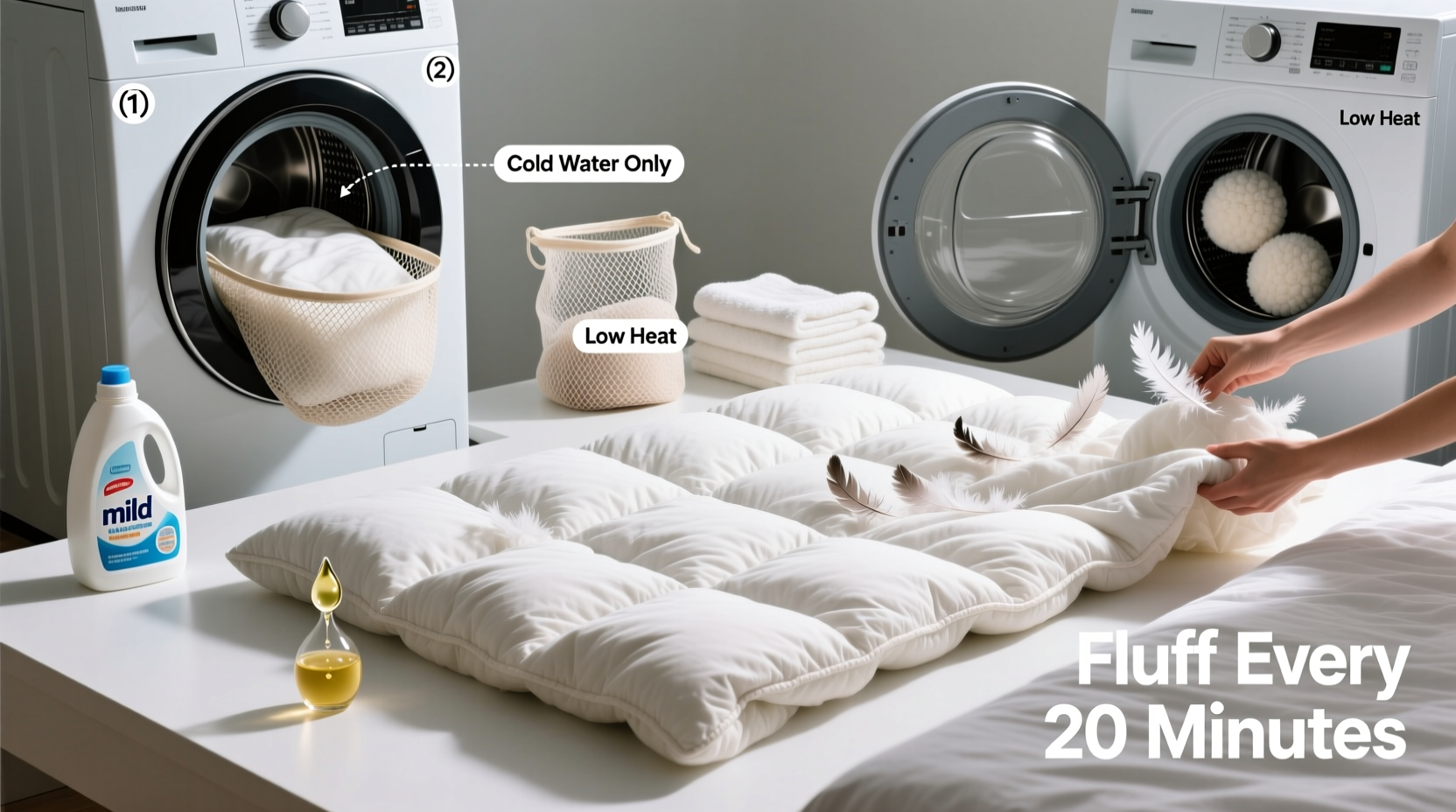
Clumping occurs when down clusters become wet, heavy, and matted during the wash cycle. If not agitated gently and dried thoroughly, the natural oils in the feathers bind together, forming hard lumps that resist redistribution. Several factors contribute to this issue:
- Overloading the machine: Too much weight prevents even water distribution and causes uneven tumbling.
- Insufficient detergent removal: Residual soap attracts moisture and encourages clumping.
- Incomplete drying: Even slight dampness leads to clumping and mildew growth.
- Poor drum balance: Front-loading machines work best; top-loaders with central agitators can tear fabric and damage fill distribution.
Understanding these risks allows you to adjust your approach and avoid common pitfalls.
Step-by-Step Guide to Washing a Down Comforter at Home
Follow this detailed process to wash your down comforter safely and effectively, minimizing stress on the fabric and maintaining feather integrity.
- Inspect and Prep the Comforter
Examine the exterior for tears, loose seams, or stains. Repair any damage with a needle and thread or fabric patch. Spot-treat visible stains with a small amount of enzyme-based cleaner diluted in water. Gently dab—don’t rub—to avoid spreading the stain. - Choose the Right Machine
Use a large-capacity, front-loading washer (at least 4.5 cubic feet). Top-loading machines with central agitators are too harsh and can trap the comforter, leading to imbalance and tearing. If your home machine isn’t large enough, visit a laundromat with commercial-sized units. - Use a Mild Detergent
Select a detergent specifically formulated for down or delicate fabrics. Avoid bleach, fabric softeners, and regular detergents—they strip natural oils from feathers and leave residues that cause stiffness and clumping. Two ounces of down-specific soap (like Nikwax Down Wash Direct) is sufficient. - Load the Machine Properly
Place the comforter loosely in the drum. Do not force it in. Add 2–3 clean tennis balls or wool dryer balls wrapped in clean socks to help break up clumps during the wash and rinse cycles. These act as gentle agitators. - Set the Wash Cycle
Choose a delicate or hand-wash setting with cold water and an extra rinse cycle. Warm water can degrade down clusters over time. The extra rinse ensures all detergent is removed, which is critical for preventing residue buildup. - Monitor the Spin Cycle
Ensure the comforter is evenly distributed in the drum before spinning. An unbalanced load can damage both the machine and the comforter. Pause and reposition if you hear loud thumping. - Transfer Carefully
Once the cycle ends, remove the comforter immediately. It will be extremely heavy when wet. Support it fully as you carry it to the dryer—never drag it—to prevent seam stress.
Drying Your Down Comforter Without Clumping
Drying is the most crucial phase. Incomplete or rushed drying is the primary cause of clumping and mildew. Patience is essential.
- Use a large-capacity dryer on low heat. High heat damages down proteins and melts stitching threads.
- Add 2–3 clean tennis balls or wool dryer balls. They bounce around, breaking up wet clusters and restoring loft.
- Pause the cycle every 30 minutes to manually fluff and redistribute the fill. Reach into corners and gently pull apart any dense areas.
- Dry for 3–6 hours, depending on thickness and humidity. Do not assume it’s dry just because the outer fabric feels warm. Internal dampness can linger.
- To test dryness, break apart a seam area gently and feel the fill. It should be completely dry, light, and springy. If it feels cool or damp, continue drying.
Once dry, remove the comforter and shake it vigorously outdoors or in a well-ventilated room. Hang it over a clothesline or lay it flat on a clean surface for several hours to air out and regain full loft.
“Down is incredibly resilient when treated with care. The combination of gentle washing and thorough drying preserves its insulating power for decades.” — Dr. Lena Peterson, Textile Scientist & Feather Preservation Specialist
Do’s and Don’ts: A Quick Reference Table
| Do’s | Don’ts |
|---|---|
| Do use a front-loading washer | Don’t use a top-loader with an agitator |
| Do add wool dryer balls | Don’t skip the drying balls |
| Do run an extra rinse cycle | Don’t use fabric softener |
| Do dry on low heat for several hours | Don’t rush drying with high heat |
| Do check internal dryness before stopping | Don’t store while even slightly damp |
Real Example: Recovering a Clumped Comforter
Sarah, a homeowner in Vermont, washed her heirloom goose-down comforter in a standard home washer after years of spot cleaning. She used warm water and regular detergent, then dried it on medium heat for two hours. The result was disastrous: large, rock-hard clumps formed in the center, and the comforter lost nearly all its loft.
Instead of discarding it, she followed restoration steps: rewashing with a down-specific detergent on cold, adding tennis balls, and drying on low heat for five hours with manual fluffing every 30 minutes. By the end, the clumps had broken apart, and after a full day of airing, the comforter regained 90% of its original fluffiness. Sarah now washes it only once every three years—and always with the correct method.
This case shows that even severely clumped down can often be revived with patience and the right technique.
Checklist: How to Wash a Down Comforter Without Clumping
Keep this checklist handy before starting:
- ✅ Check the care label for washing instructions
- ✅ Repair any tears or loose seams
- ✅ Use a large-capacity front-loading washer
- ✅ Use a mild, down-safe detergent (no bleach or softener)
- ✅ Add 2–3 wool dryer balls or tennis balls in socks
- ✅ Set cycle to cold water, delicate mode, with extra rinse
- ✅ Balance the load before spinning
- ✅ Transfer carefully to dryer—support the full weight
- ✅ Dry on low heat with frequent manual fluffing
- ✅ Confirm internal dryness before removing
- ✅ Air out fully before storing or using
Frequently Asked Questions
Can I hand-wash a down comforter in a bathtub?
Yes, but it’s labor-intensive. Fill a clean bathtub with cold water and a small amount of down detergent. Submerge the comforter and gently press it down to saturate. Let it soak for 30 minutes, then drain and refill for two rinse cycles. Press out water without wringing. Transfer to the dryer immediately and follow the same drying protocol.
What if my comforter still has clumps after drying?
If minor clumps remain, place the comforter back in the dryer with damp towels and wool balls for 20-minute intervals on low heat. The added moisture helps loosen clusters. Alternatively, hang it outside on a dry, breezy day and shake it vigorously every hour.
Is it safe to use a steam dryer or professional service?
Steam dryers can be effective if they offer low-heat settings, but monitor closely to avoid overheating. Professional laundry services with commercial equipment are often the safest option for oversized or vintage comforters. Ask if they specialize in down care before proceeding.
Final Tips for Long-Term Down Care
Maintaining a down comforter goes beyond washing. To extend its life and prevent future clumping:
- Always use a duvet cover to create a protective barrier against body oils, sweat, and dust.
- Shake and fluff the comforter daily to maintain even fill distribution.
- Air it weekly by hanging it over a clothesline or laying it flat in a sunlit room (avoid direct UV exposure).
- Store it in a breathable cotton bag or pillowcase—never in plastic, which traps moisture and degrades fibers.
- Rotate its position in the bed monthly to prevent consistent compression in one area.
With thoughtful maintenance, a high-quality down comforter can last 15–20 years or more. The investment in proper care pays off in sustained comfort, warmth, and performance.
Conclusion
Washing a down comforter at home doesn’t have to lead to clumping. By choosing the right machine, using gentle products, and committing to slow, thorough drying, you can keep your comforter light, fluffy, and functional for many seasons. The process demands attention and time, but the results speak for themselves: restored loft, fresh scent, and renewed warmth without the cost of professional cleaning.




 浙公网安备
33010002000092号
浙公网安备
33010002000092号 浙B2-20120091-4
Comments
No comments yet. Why don't you start the discussion?