
Wool hats are timeless accessories—warm, stylish, and durable when cared for properly. But one wrong move in the sink or washing machine can turn a favorite beanie into a shrunken keepsake. The culprit? Heat, agitation, and improper handling during cleaning. The good news is that with the right approach, you can safely clean your wool hat at home using only cold water and a few smart techniques. This guide walks you through the science behind wool shrinkage, step-by-step cleaning methods, and expert-backed tricks to keep your hat looking new for years.
Why Wool Shrinks—and How Cold Water Prevents It
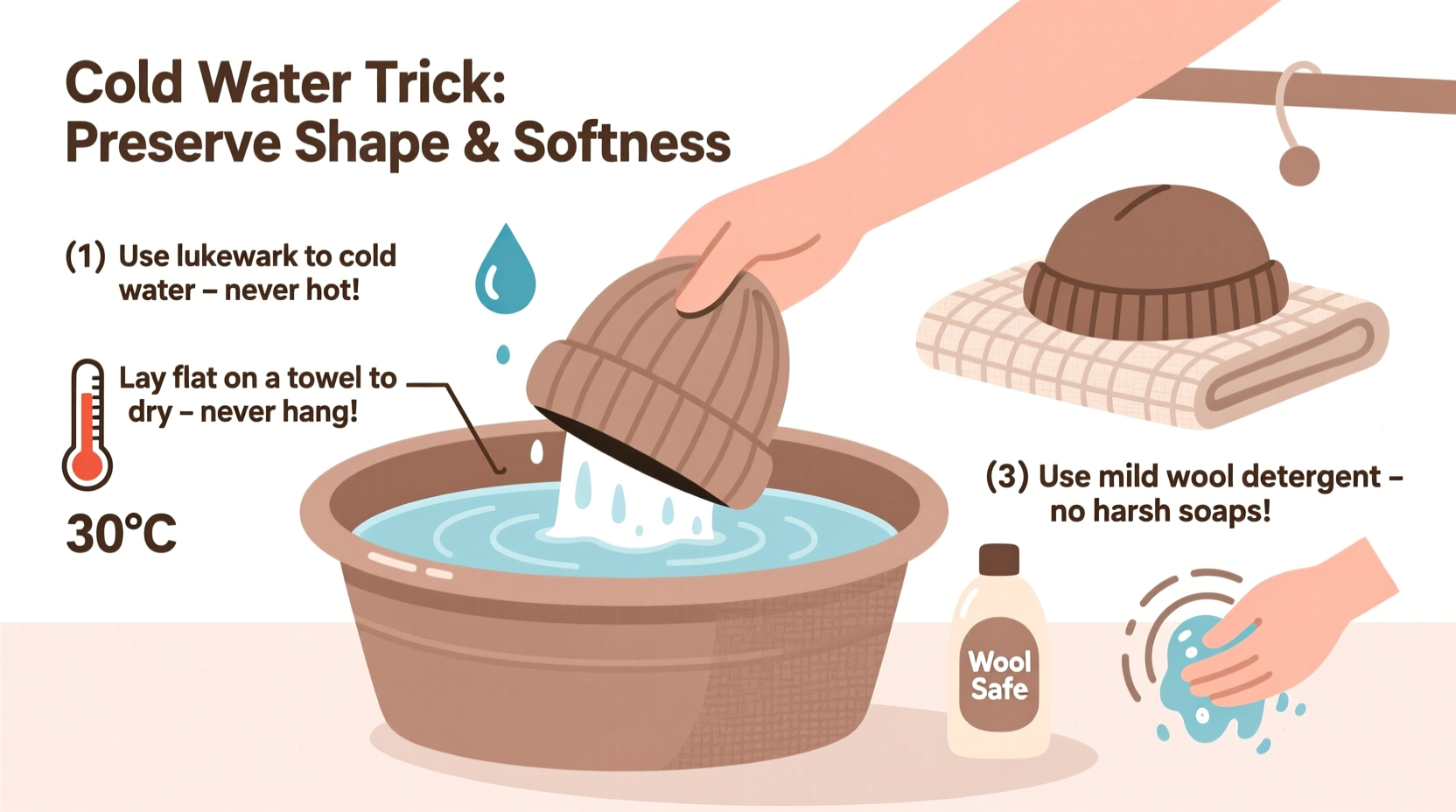
Wool fibers are made of keratin, the same protein found in human hair. These fibers have microscopic overlapping scales on their surface. When exposed to heat, moisture, and mechanical movement (like rubbing or tumbling), these scales lift and interlock, causing the fabric to tighten and shrink—a process known as felting.
Cold water plays a critical role in preventing this reaction. At low temperatures, the scales remain closed and stable, minimizing friction between fibers. Without heat to activate the shrinking mechanism, wool maintains its original structure even when wet. That’s why avoiding warm or hot water isn’t just a suggestion—it’s essential.
“Cold water is non-negotiable when washing wool. Even lukewarm temperatures can trigger fiber migration and irreversible shrinkage.” — Dr. Lena Patel, Textile Scientist at the Institute for Sustainable Apparel
Step-by-Step Guide: Hand-Washing Your Wool Hat Safely
Hand-washing gives you full control over temperature, pressure, and detergent use—key factors in preserving delicate wool. Follow this detailed process to clean your hat without risking damage.
- Check the care label first. Some wool hats are blended with synthetic fibers or treated for water resistance. If the tag says “dry clean only,” consider professional service instead.
- Fill a clean basin with cold water. Use enough water to fully submerge the hat. Test the temperature with your wrist—it should feel distinctly cool, not icy or tepid.
- Add a wool-safe detergent. Regular laundry detergents contain enzymes and alkaline agents that can degrade wool proteins. Choose a pH-neutral product like Eucalan, Woolite Delicates, or Soak Wash.
- Submerge the hat gently. Press it down slowly to saturate all areas. Avoid twisting, wringing, or scrubbing, which creates friction and encourages felting.
- Soak for 10–15 minutes. Let the detergent work passively. Gently swirl the water every few minutes to help loosen dirt, but do not agitate the fabric.
- Rinse thoroughly in fresh cold water. Drain the soapy water and refill the basin. Repeat rinsing until no suds remain. Residual detergent attracts dirt and weakens fibers over time.
- Remove excess water carefully. Lift the hat without pulling or stretching. Place it on a clean towel, roll the towel up like a burrito, and press lightly to absorb moisture. Never twist or wring.
- Reshape and dry flat. Lay the hat on a second dry towel in its natural form. Smooth out the brim and crown. Allow it to air-dry away from direct sunlight, radiators, or vents.
Common Mistakes That Cause Shrinkage (and How to Avoid Them)
Even experienced cleaners sometimes make errors that compromise wool integrity. Below are the most frequent missteps—and how to prevent them.
| Mistake | Why It’s Harmful | Better Alternative |
|---|---|---|
| Using warm or hot water | Opens fiber scales, leading to felting and shrinkage | Always use cold water below 30°C (86°F) |
| Agitating or scrubbing the fabric | Causes fibers to rub and lock together | Gentle soaking and minimal handling only |
| Machine washing or drying | Tumbling and spinning create intense friction and heat | Avoid machines entirely unless explicitly labeled safe |
| Hanging the hat to dry | Stretches the fibers under gravity, distorting shape | Dry flat on a towel to retain original form |
| Using regular detergent | Alkaline formulas strip natural oils and weaken fibers | Use wool-specific, pH-balanced cleansers |
Real Example: Saving a Family Heirloom Beanie
Mark, a vintage clothing collector in Portland, inherited a hand-knit Shetland wool beanie from his grandfather. After decades in storage, the hat had developed musty odors and visible stains around the inner band. Fearing damage, he avoided washing it for months—until mildew spots appeared.
He followed the cold-water method outlined above: pre-spotting the inner band with diluted wool wash, soaking in a porcelain sink filled with icy water, and drying flat on a mesh rack. The result? A refreshed hat with no shrinkage, restored softness, and preserved stitching. “I was ready to give up on it,” Mark said. “But treating it like a textile artifact—not laundry—made all the difference.”
When You Can (and Can’t) Use a Washing Machine
Not all wool hats are created equal. Some modern blends are designed for machine washing—but only under strict conditions. Always verify the care label before proceeding.
If the label states “machine washable wool” or includes a bucket symbol with water and a number like “30,” you may proceed—with caution:
- Use a front-loading machine (top loaders are too aggressive).
- Set the cycle to “delicate” or “hand wash” with cold water only.
- Place the hat inside a mesh laundry bag for added protection.
- Use half the recommended amount of wool-safe detergent.
- Never use the spin cycle at high speed; opt for low RPM if possible.
However, if the hat is hand-knit, felted, or labeled “dry clean only,” skip the machine entirely. The risks far outweigh any convenience.
Drying and Reshaping: The Final Step to Success
Drying is where many wool hat owners lose their shape. As fibers relax when wet, they’re vulnerable to distortion. Proper drying ensures your hat returns to wear exactly as it left it.
After removing excess moisture via towel rolling, reshape the hat by hand. Smooth the brim evenly and adjust the crown symmetry. For structured hats like fedoras or berets, use a rounded object (a bowl or canister) covered in a cotton cloth to support the dome while drying.
Avoid placing the hat near heaters, vents, or windowsills with direct sun exposure. UV rays degrade wool proteins, and heat accelerates uneven drying, which leads to warping. Ideal drying conditions are a room with moderate humidity and steady airflow—typically 24 hours for full recovery.
FAQ: Common Questions About Washing Wool Hats
Can I wash a wool hat that has sweat stains?
Yes, but treat stains before soaking. Mix a few drops of wool detergent with cold water and dab gently on stained areas using a microfiber cloth. Avoid vigorous rubbing. Then proceed with full immersion washing.
How often should I wash my wool hat?
Every 4–6 wears is sufficient for most people. Over-washing strips natural lanolin from wool, reducing its water-resistant and antimicrobial properties. Spot-clean between washes and air out after each use to extend cleaning intervals.
Is it safe to use vinegar when washing wool?
In very small amounts, yes. One tablespoon of white vinegar per basin can help neutralize odors and restore pH balance. However, never use undiluted vinegar or apply it directly to fabric—it can degrade protein fibers over time.
Essential Checklist: Washing Your Wool Hat Without Shrinkage
Keep this checklist handy before starting your next wash:
- ✅ Confirm the hat is washable (check care label)
- ✅ Prepare a clean basin or sink
- ✅ Fill with cold water (below 30°C / 86°F)
- ✅ Use wool-specific detergent (no enzymes or bleach)
- ✅ Submerge and soak for 10–15 minutes—no scrubbing
- ✅ Rinse thoroughly in fresh cold water
- ✅ Remove water by pressing in a towel (never wring)
- ✅ Reshape and dry flat away from heat and light
- ✅ Allow 24 hours to fully dry before wearing
“Wool is resilient but unforgiving. Respect its biology, and it will last generations.” — Clara Mendez, Heritage Textile Conservator
Conclusion: Care That Honors Craftsmanship
A wool hat is more than an accessory—it’s a blend of craftsmanship, material science, and personal style. Treating it with care isn’t just about cleanliness; it’s about preserving quality, fit, and longevity. By using cold water, gentle detergents, and mindful handling, you protect against shrinkage while keeping your hat fresh and wearable season after season.
Now that you know the right way to wash a wool hat without shrinking it, take a moment to inspect your current collection. Are there hats tucked away due to minor stains or odors? With confidence and the right technique, you can revive them safely. Share your own wool care tips or ask questions in the comments—let’s build a community that values thoughtful garment care.




 浙公网安备
33010002000092号
浙公网安备
33010002000092号 浙B2-20120091-4
Comments
No comments yet. Why don't you start the discussion?