
The trench coat is a timeless outerwear staple—versatile, elegant, and functional. Paired with the right scarf, it can elevate your look from classic to effortlessly chic. But one common styling challenge persists: how to incorporate a scarf without creating a bulky, unflattering silhouette around the neck and shoulders. The key lies not in avoiding scarves altogether, but in selecting the right fabric, size, knot style, and layering technique. When done well, a scarf enhances the trench coat’s structure rather than competing with it.
Whether you're braving a windy city commute or attending a mid-season outdoor event, mastering this balance ensures warmth, style, and comfort—all without sacrificing the clean lines that make trench coats so enduringly popular.
Choose the Right Scarf Material and Weight
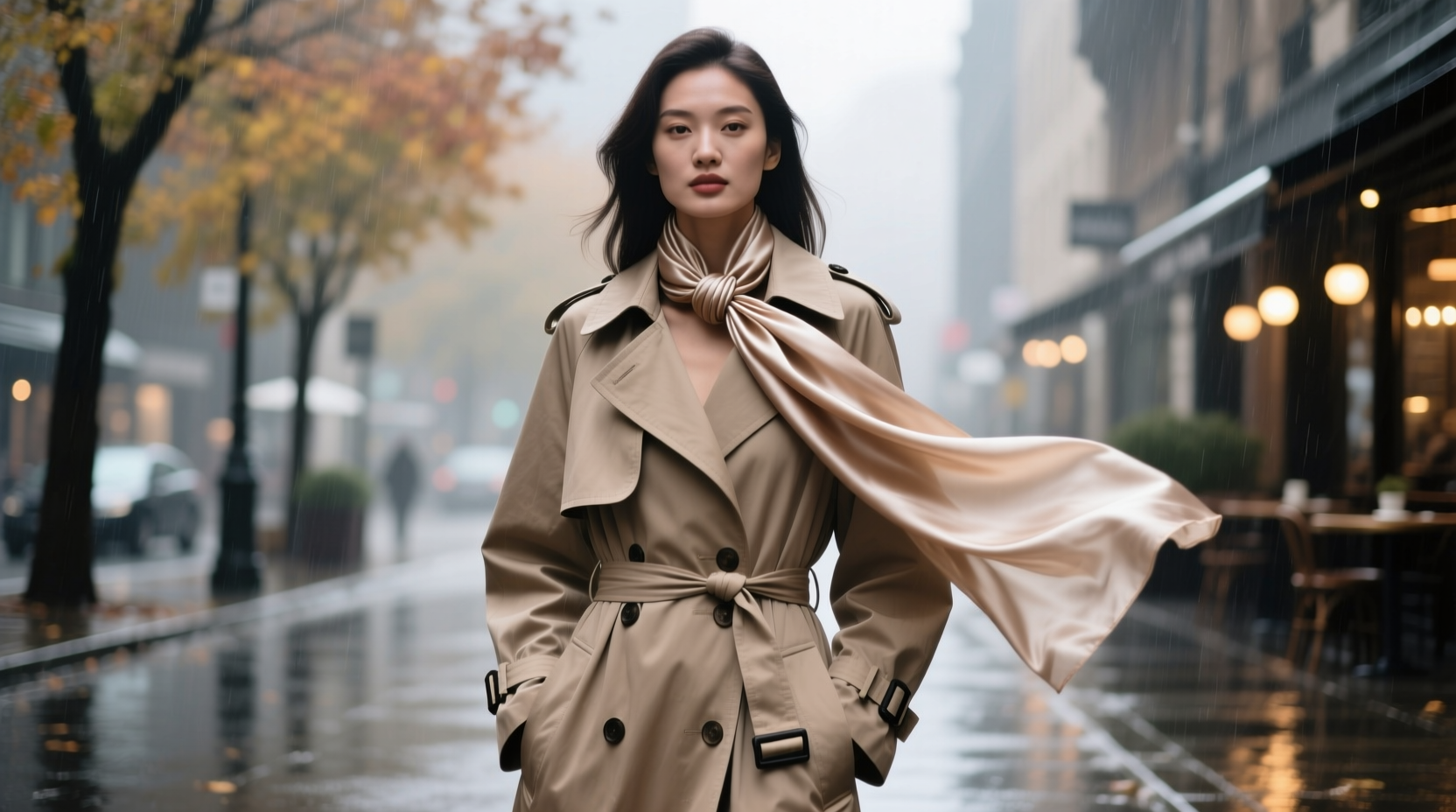
Not all scarves are created equal. The material significantly affects both comfort and visual impact. A heavy wool or chunky knit may be ideal for sub-zero temperatures, but it will overwhelm the tailored cut of a trench coat. Instead, opt for lightweight, drape-friendly fabrics that complement—not contradict—the coat’s refined aesthetic.
Materials like silk, viscose, fine merino wool, and cotton blends offer warmth without volume. These textiles flow smoothly over the collar and shoulders, preserving the trench’s sharp lines. Silk scarves, in particular, add a touch of sophistication and catch light beautifully, making them excellent choices for professional or evening wear.
Avoid overly textured weaves such as cable knits, oversized loops, or fleece-lined scarves when wearing a trench. While cozy, they distort the coat’s silhouette and create an unbalanced, top-heavy appearance.
Size Matters: Optimal Scarf Dimensions for Trench Coats
The dimensions of your scarf play a crucial role in achieving a streamlined look. Oversized scarves may seem luxurious, but their excess fabric often leads to unnecessary layering and puffiness around the neck.
For a trench coat, consider the following guidelines:
- Width: 8–12 inches (20–30 cm). Narrower scarves lie flat and integrate cleanly into the coat’s neckline.
- Length: 55–70 inches (140–178 cm). Long enough to tie or drape, but not so long that it requires multiple wraps.
- Shape: Rectangular or oblong styles work best. Avoid circular or infinity scarves, which tend to bunch up under collars.
A square silk scarf (around 35x35 inches) can also be folded diagonally into a triangle and tied at the front for a vintage-inspired, low-profile accent. This method keeps volume minimal while adding visual interest.
Master the Art of Minimalist Knots and Drapes
How you wear the scarf is just as important as what you wear. Bulky knots or loose, haphazard draping defeat the purpose of a tailored trench. Instead, focus on techniques that secure the scarf neatly and maintain a clean profile.
1. The Single Loop Drape
Fold the scarf in half lengthwise, drape it around your neck, and pull the loose ends through the loop. Adjust gently so the knot sits centered and snug—but not tight—at the base of the throat. This creates a subtle, structured frame for the face without adding width.
2. The Parisian Knot
Lay the scarf flat around your shoulders with one end slightly longer than the other. Cross the longer end over the shorter, wrap it once around the neck, and let both ends fall forward. This relaxed yet intentional style prevents puffiness and allows the trench collar to remain partially visible.
3. The Under-Collar Tuck
Place the scarf beneath the trench coat’s collar, letting it rest directly on your shoulders. Tie a small knot at the front or leave it loose. This hides the bulk under structured fabric and gives the impression of effortless layering.
“Less is more when pairing accessories with structured outerwear. A scarf should whisper elegance, not shout for attention.” — Clara Nguyen, Fashion Stylist & Wardrobe Consultant
Layering Strategy: What to Wear Underneath
Your base layers influence how the entire ensemble reads. A thick sweater or high turtleneck combined with a scarf will inevitably create congestion at the neckline—even if the scarf itself is lightweight.
To avoid this, follow a strategic layering approach:
- Base Layer: Start with a slim-fitting crew or mock neck in merino wool or cotton. Avoid bulky knits.
- Middle Layer (optional): Add a fitted blazer, vest, or lightweight cardigan only if needed. Ensure it zips or buttons fully to maintain smooth lines.
- Outer Layer: The trench coat. Button or belt it securely to define the waist and prevent fabric from flaring out.
- Final Touch: Apply the scarf last, ensuring it integrates seamlessly with the existing layers.
If you’re wearing a double-breasted trench, keep the scarf even simpler—often, a folded silk square tucked into the top button is sufficient. The overlapping front panels already provide structure, so additional volume defeats the design intent.
Do’s and Don’ts: Quick Reference Table
| Do | Don’t |
|---|---|
| Choose lightweight, drapey fabrics like silk or fine wool | Use thick, chunky knits or fleece scarves |
| Keep knots small and centered | Tie large, loose knots that sit high on the neck |
| Let the trench collar peek above the scarf | Completely bury the collar under scarf fabric |
| Wear a slim turtleneck instead of a bulky one | Double up on high-neck layers under the scarf |
| Adjust the scarf after fastening the coat | Leave the scarf loose or twisted awkwardly |
Real-World Example: Olivia’s Workweek Ensemble
Olivia, a marketing executive based in London, wears her beige trench coat nearly every spring and fall. She initially struggled with looking “stuffy” when adding scarves for early-morning chill. Her first attempts included wide cable-knit scarves wrapped twice around her neck—resulting in a puffy, disproportionate look that obscured her coat’s lapels.
After consulting a personal stylist, she switched to a narrow, navy silk-blend scarf (9 inches wide, 68 inches long). She uses the single loop drape method, positioning the knot just below her chin. She pairs it with a charcoal merino crewneck and keeps her trench belted. The result? A polished, elongated silhouette that maintains professionalism and warmth without compromising style.
“I used to think more layers meant more warmth,” she says. “But now I realize precision beats volume. My trench finally looks like it’s supposed to.”
Step-by-Step Guide: How to Wear a Scarf with a Trench Coat (Sleek Version)
- Prepare your base: Put on a slim-fitting top or sweater. Avoid high, thick collars unless they’re designed to lie flat.
- Put on the trench coat: Fasten the buttons or belt loosely at first—don’t close it completely yet.
- Select your scarf: Use a lightweight rectangular scarf (ideally 8–12 inches wide).
- Drape the scarf: Fold it lengthwise and place it around your neck so both ends hang evenly in front.
- Create a single knot: Tie a simple loop knot (like the first step of tying shoelaces), keeping it snug but not tight.
- Adjust the coat: Close the trench fully, ensuring the scarf lies smoothly beneath or just above the collar.
- Final check: Look in the mirror from the side. Your neck and shoulder line should appear clean and uninterrupted. If the scarf pushes up the collar or causes bunching, re-tie it lower or use a thinner fabric.
Frequently Asked Questions
Can I wear a scarf with a belted trench coat?
Yes, absolutely. In fact, a belted trench provides a defined waist that helps balance the upper body. Just ensure the scarf doesn’t interfere with the belt’s placement. Keep the knot low and centered so it doesn’t ride up when the coat is cinched.
Is it okay to leave the scarf loose instead of tying it?
Yes, a loose drape can work beautifully—if done intentionally. Let both ends hang straight down in front, ensuring they’re even and smooth. Avoid letting the scarf flap in the wind; pin it subtly at the chest with a minimalist brooch if needed.
What color scarf works best with a classic beige trench?
Neutral tones like camel, taupe, or gray create a monochromatic elegance. For contrast, deep burgundy, navy, or forest green add richness without clashing. Avoid overly bright patterns unless they include one of the coat’s accent colors (like black buttons or lining).
Final Thoughts: Elegance Lies in Simplicity
Wearing a scarf with a trench coat doesn’t have to mean sacrificing style for warmth. By choosing the right materials, mastering minimalist tying techniques, and respecting the coat’s architectural design, you can achieve a look that’s both functional and fashion-forward. The goal isn’t to hide the trench coat under layers, but to enhance its presence with thoughtful, understated accessories.
Remember: a well-worn scarf doesn’t draw attention to itself—it draws attention to you. With these strategies, you’ll step out in confidence, whether navigating rainy sidewalks or walking into a meeting, knowing your outerwear works for you, not against you.




 浙公网安备
33010002000092号
浙公网安备
33010002000092号 浙B2-20120091-4
Comments
No comments yet. Why don't you start the discussion?