
Layered necklaces are a timeless fashion statement—elegant, versatile, and expressive. Whether you're dressing up for an evening out or adding subtle flair to your daily look, stacking delicate chains or mixing bold pendants can elevate any outfit. But there's one universal frustration: the inevitable tangle. Wires knotted beyond recognition, wasted time untangling, and the fear of damaging precious pieces can make layering feel more like a chore than a joy.
The good news? With the right techniques, habits, and small adjustments in how you store, choose, and wear your jewelry, tangled necklaces can become a thing of the past. This guide offers practical, field-tested strategies that go beyond quick fixes—giving you a sustainable way to enjoy layered elegance every single day.
Choose the Right Necklace Lengths and Styles
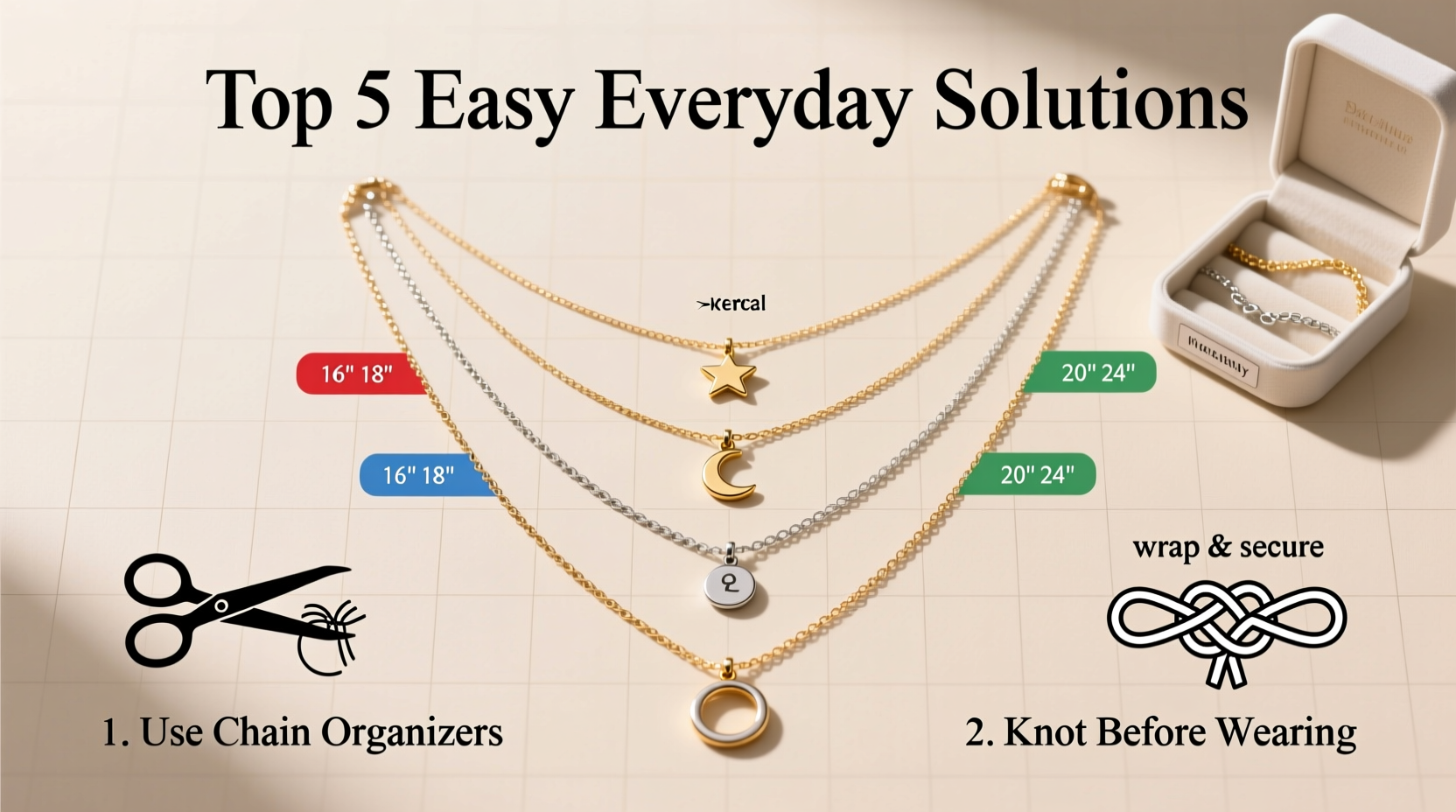
The foundation of tangle-free layering starts with thoughtful selection. Not all necklaces are designed to be worn together, and mismatched lengths or clasp types increase friction and entanglement risk.
When building a stack, aim for a gradual progression in length—typically 1–2 inches apart. This prevents chains from overlapping too much during movement. A classic combination includes:
- Choker: 14–16 inches (rests at the base of the neck)
- Princess: 17–19 inches (falls just below the collarbone)
- Matinee: 20–24 inches (drapes mid-chest)
- Opera: 28–30 inches (reaches the breastbone or lower)
Spacing these lengths ensures each necklace has its own visual zone, reducing contact points. Avoid wearing three or more very close-length chains unless they’re connected via a multi-strand pendant or fixed connector.
Use Strategic Fastening Techniques
How you fasten your necklaces matters more than most realize. The clasp is often the first point of contact—and entanglement.
Always fasten longer necklaces first. This allows gravity to naturally drape them lower, minimizing overlap with shorter pieces. If you put on a choker first, the longer chain may catch on it as you loop it around your neck, increasing tangle risk.
- Begin with the longest necklace (e.g., 20+ inches).
- Secure the clasp gently but firmly.
- Move to medium length (17–19 inches).
- Finish with the shortest (14–16 inches).
This sequence reduces friction and keeps chains separated during application. For added safety, use your fingers to hold upper layers aside while fastening lower ones.
Another pro tip: opt for lobster clasps over spring rings when possible. Lobster clasps are sturdier, easier to handle, and less likely to accidentally open or hook onto adjacent chains.
Prevent Tangling During Storage
Most tangles begin not during wear—but in storage. Jewelry tossed into drawers, piled in boxes, or left hanging haphazardly will inevitably knot overnight.
Dedicated organization is key. Consider these storage methods:
- Jewelry trays with compartments: Keep individual chains separated and visible.
- Travel rolls with padded slots: Ideal for maintaining order on the go.
- Velvet-lined boxes with dividers: Prevent metal-on-metal abrasion and shifting.
- Necklace stands: Display frequently worn pieces while keeping them tangle-free.
Avoid storing multiple loose necklaces in the same pouch. Even slight movement can cause fine chains to wrap around each other.
| Storage Method | Best For | Tangle Risk |
|---|---|---|
| Individual velvet pouches | Fine chains, sentimental pieces | Low |
| Compartmentalized tray | Daily wear collection | Low-Medium |
| Hanging rack with hooks | Bolder, thicker chains | Medium |
| Loose drawer dump | Not recommended | Very High |
“Over 70% of jewelry damage comes from improper storage, not wear. Separation is the simplest form of preservation.” — Lena Torres, Jewelry Designer & Conservator
Everyday Habits That Reduce Tangles
Your routine movements—bending, turning, reaching—can subtly pull chains together. But small behavioral tweaks can dramatically reduce this effect.
Be mindful when removing sweaters or high-neck tops. Pull garments straight up rather than tugging sideways, which drags necklaces across your shoulders and increases knotting chances. Similarly, avoid resting your chin in your hand while wearing layered jewelry; the pressure pushes chains together and encourages twisting.
At night, always remove your necklaces before sleeping. Movement during sleep causes prolonged friction between metals, leading to kinks and micro-damage even if no full tangle forms.
If you must wear necklaces overnight (e.g., sentimental lockets), secure them with a soft ribbon tied loosely at the back to minimize shifting.
Quick Fix: How to Untangle Necklaces Safely
Even with precautions, tangles happen. When they do, patience and the right method prevent breakage.
Never pull or yank at knots. Fine chains can snap, and soldered joints may weaken. Instead, follow this step-by-step process:
- Lay the necklace flat on a well-lit surface.
- Identify the main knot and surrounding loops.
- Use a pin or needle to gently loosen the outermost loop of the knot.
- Work incrementally, pushing wire outward—not pulling inward.
- Apply a drop of baby oil or Johnson’s® No More Tears shampoo to lubricate stubborn areas (wipe clean afterward).
- Once free, inspect the chain for weak links or stress points.
For complex tangles involving multiple necklaces, separate them first by unclasping each piece before attempting disentanglement.
Mini Case Study: Sarah’s Morning Routine Overhaul
Sarah, a marketing executive in Chicago, loved wearing layered gold necklaces to work but dreaded the five-minute struggle each morning to detangle her favorite trio. After reading about strategic fastening, she adjusted her routine: she began laying out her necklaces the night before in order of length, placed on a velvet tray. In the morning, she started with the longest (an 18-inch pendant), then added the 16-inch initial charm, and finally the 14-inch choker. She also switched from spring ring to lobster clasps on two pieces.
Result? No tangles for over six weeks. “It feels like I’ve reclaimed part of my morning,” she said. “And my chains look newer because I’m not stressing the metal every day.”
Essential Checklist for Tangle-Free Layering
To make adoption easy, here’s a concise checklist you can follow daily and weekly:
- ✅ Choose necklaces with staggered lengths (at least 1 inch apart)
- ✅ Fasten longest necklace first, shortest last
- ✅ Store each necklace separately in pouches or compartments
- ✅ Use lobster clasps for better security and reduced snagging
- ✅ Remove necklaces before sleeping or vigorous activity
- ✅ Inspect chains weekly for signs of wear or weak links
- ✅ Clean gently with a polishing cloth monthly to maintain smooth glide
FAQ: Common Questions About Layered Necklace Care
Can I wear different metal tones together without causing more tangles?
Yes, mixing metals doesn’t increase tangle risk—it’s purely aesthetic. However, ensure the thickness and flexibility of the chains are similar. A thick gold rope chain paired with a delicate silver box chain may pull unevenly and create friction.
How do I keep thin chains from slipping under thicker ones?
Position the thickest or most rigid chain on the bottom (longest length) and lighter chains above. You can also add a small bead or spacer to the shorter chain to give it more presence and prevent it from disappearing beneath others.
Is it safe to use hair conditioner to untangle necklaces?
In a pinch, yes—but only sparingly. Hair conditioner can lubricate knots, but residue may attract dirt or dull metal over time. Baby oil or diluted dish soap is safer. Always rinse and dry thoroughly after cleaning.
Conclusion: Style Shouldn’t Come at the Cost of Sanity
Wearing layered necklaces shouldn’t mean sacrificing time, peace of mind, or the longevity of your favorite pieces. With intentional choices in length, clasp type, and storage—and consistent habits in how you put them on and take them off—you can enjoy intricate, beautiful stacks without the daily battle against knots.
The secret isn’t complexity; it’s consistency. Small actions compound: fastening in order, storing with care, and handling with attention preserve both appearance and function. These practices don’t just prevent tangles—they extend the life of your jewelry, protect your investment, and make getting dressed a smoother, more joyful experience.




 浙公网安备
33010002000092号
浙公网安备
33010002000092号 浙B2-20120091-4
Comments
No comments yet. Why don't you start the discussion?