
Layered necklaces add depth, elegance, and personality to any outfit. Whether you're dressing up for an evening out or elevating your everyday look, stacking delicate chains or combining bold pendants can create a striking visual effect. But there's one persistent problem: tangling. A knotted mess not only ruins the aesthetic but can also damage delicate chains over time. The good news is that with smart styling techniques and thoughtful organization, you can wear multiple necklaces effortlessly—without a single knot in sight.
The key lies in understanding both how to style layers effectively and how to store and maintain them properly. This guide walks through practical, field-tested strategies to keep your layered necklaces tangle-free from wardrobe to wear, ensuring they stay beautiful and functional for years.
Choose the Right Chain Lengths Strategically
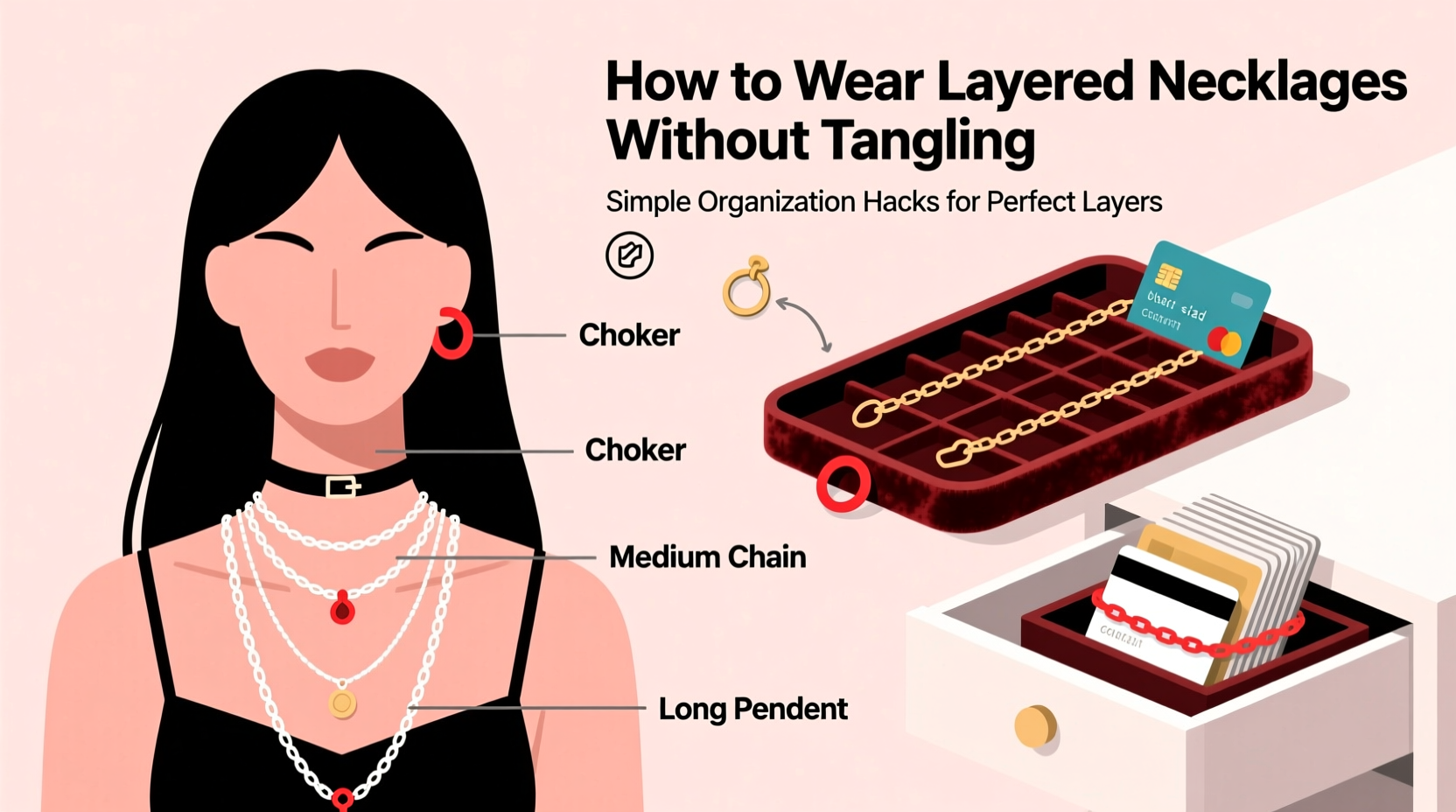
One of the most effective ways to prevent tangling is by selecting necklace lengths that naturally separate from each other when worn. When all chains are too close in length, they tend to overlap and twist together throughout the day. By spacing them out intentionally, you reduce contact and friction between pieces.
A well-balanced layering setup typically includes at least three distinct lengths. Here’s a standard approach:
- Choker: 14–16 inches – sits snugly at the base of the neck.
- Princess: 17–19 inches – rests just below the collarbone.
- Matinee: 20–24 inches – falls mid-chest, ideal as a longer anchor piece.
Spacing each necklace by at least 2–3 inches minimizes overlap. For example, pairing a 16-inch choker with an 18-inch pendant and a 22-inch chain allows each piece to occupy its own visual plane. This separation reduces physical contact, which in turn prevents knots from forming during movement.
Use Necklaces with Different Textures and Weights
Another smart way to avoid tangling is to vary the thickness and texture of your chains. Mixing delicate, fine chains with bolder, heavier styles creates natural resistance between layers. Thicker chains act as gentle barriers, preventing thinner ones from sliding into tangled positions.
Consider combining:
- A thin cable chain (1–1.5mm)
- A medium curb or box chain (2–3mm)
- A substantial rope or Figaro chain (4mm+)
Different textures also influence how chains interact. Smooth, flexible chains like snake or wheat weaves glide easily and may tangle more if not spaced properly. In contrast, rigid styles like herringbone or wide link chains resist twisting and help maintain separation.
“Mixing chain types isn’t just about aesthetics—it’s functional design. Heavier pieces stabilize lighter ones and reduce chaotic movement.” — Lena Torres, Jewelry Stylist & Consultant
Secure Pendants and Charms to Prevent Snagging
Pendants and charms are often the culprits behind unexpected snags. When two pendants catch on each other or a chain loop, it starts a chain reaction (literally) that leads to knots. To minimize this risk, position pendants thoughtfully and consider their weight and shape.
Follow these guidelines:
- Place heavier pendants on longer chains so they hang lower and away from shorter layers.
- Avoid clustering multiple dangling charms near the same area.
- Opt for flat, streamlined pendants on shorter necklaces to reduce surface area for catching.
- If wearing multiple pendants, ensure they face outward or alternate directions to prevent interlocking.
You can also use small silicone stoppers—tiny beads designed to slide onto chains—to limit pendant movement. Place one just above the clasp to restrict how far a pendant can travel up the chain, keeping it centered and stable.
Prevent Tangling During Wear: Smart Layering Techniques
Even with careful selection, daily motion—bending, turning, reaching—can cause chains to shift and tangle. However, a few real-time techniques can help maintain order while you’re on the go.
Step-by-Step Guide: How to Put On Layered Necklaces Without Tangles
- Start with the longest necklace. Put it on first and let it settle comfortably around your neck. Longer chains are less likely to interfere with others once positioned.
- Thread shorter necklaces through the longest chain. Before fastening a shorter piece, gently pass it through the bottom loop of the already-worn longer chain. This anchors it slightly and keeps it from slipping underneath.
- Adjust each layer individually. After securing all necklaces, smooth them down one at a time, starting from the back of the neck and moving forward. This aligns links and releases any accidental twists.
- Check alignment in the mirror. Turn side-to-side to ensure no chains are crossing unnaturally. Make micro-adjustments as needed.
- Apply a light hold hairspray (optional). From 12 inches away, mist a *very* light coat over the front of the necklaces. It adds temporary stiffness that reduces shifting. Never spray near gemstones or porous materials.
Store Necklaces Properly to Prevent Future Tangles
How you store your necklaces when not in use plays a huge role in whether they’ll tangle the next time you wear them. Tossing multiple chains into a drawer or pile invites knots and weakens metal over time due to constant rubbing.
Effective storage solutions include:
- Necklace stands or display trees: Hang each chain on individual hooks or arms to keep them separated.
- Velvet-lined jewelry trays with compartments: Ideal for short-term storage; prevents chains from rolling into each other.
- Travel rolls with secured loops: Fabric rolls with stitched-in rings hold each necklace in place during transit.
- DIY button card method: Thread each chain through a large buttonhole or cardboard slot before closing the clasp—this immobilizes the loop.
| Storage Method | Best For | Tangle Prevention Level |
|---|---|---|
| Jewelry Stand | Daily wear, visible collection | ★★★★★ |
| Compartment Tray | Small spaces, delicate chains | ★★★★☆ |
| Hanging Organizer | Large collections, travel | ★★★★☆ |
| Drawer Dump | Not recommended | ★☆☆☆☆ |
“Improper storage accounts for over 70% of necklace damage I see in repairs. A few seconds of careful hanging saves hours of untangling.” — Rafael Kim, Master Goldsmith
Real-Life Example: Olivia’s Morning Routine Overhaul
Olivia, a marketing executive in Chicago, loved wearing layered necklaces to work—but dreaded the morning struggle of untangling her favorite gold chains. She often arrived late because she’d spend 10–15 minutes carefully picking apart knots with a pin, sometimes damaging a link in the process.
After reading about strategic layering, she reorganized her routine. She invested in a small wooden necklace stand for her vanity and assigned each of her three go-to chains a dedicated hook. She also replaced her 17-inch and 18-inch pieces with a 16-inch choker and a 20-inch pendant, creating clearer spacing.
The result? She now puts on her layered set in under a minute, with no tangles. “It feels like I’ve reclaimed my mornings,” she said. “And my necklaces look better than ever because they’re not constantly being pulled apart.”
Essential Checklist: Keep Your Layered Necklaces Tangle-Free
Follow this checklist every time you style or store your necklaces:
- ✅ Choose chain lengths at least 2 inches apart
- ✅ Mix chain weights and textures for natural separation
- ✅ Position heavier pendants on longer chains
- ✅ Put on the longest necklace first, then thread others through
- ✅ Store each necklace separately using hooks or dividers
- ✅ Inspect chains weekly for signs of wear or weak links
- ✅ Clean gently with a polishing cloth after frequent use
Frequently Asked Questions
Can I wear three delicate chains together without tangling?
Yes, but only if they are spaced properly in length and not left loose in storage. Use a necklace stand to keep them separated when not worn, and consider adding a tiny silicone spacer on one chain to limit movement. Avoid wearing three ultra-thin chains of similar length—they’ll behave like strands of hair and inevitably knot.
What should I do if my necklaces are already tangled?
Stay calm and work slowly. Lay the necklaces flat on a well-lit surface. Use a fine needle or toothpick to gently loosen loops. Apply a drop of baby oil or sewing thread conditioner to reduce friction. Never pull hard—this can break solder joints. If the knot is severe, take it to a professional jeweler to avoid damage.
Is it safe to sleep in layered necklaces?
It’s not recommended. Movement during sleep increases friction and twisting, leading to tangles and potential breakage. Additionally, lotions, sweat, and oils from your skin can tarnish metals over time. Remove your necklaces before bed and store them properly to extend their lifespan.
Final Thoughts: Style With Confidence, Not Frustration
Wearing layered necklaces shouldn’t come with the stress of constant untangling. With intentional selection, mindful styling, and proper storage, you can enjoy the beauty of stacked jewelry without the hassle. The right combination of length, weight, and organization turns what was once a daily annoyance into a seamless part of your routine.
These small habits compound over time—not only protecting your investment but enhancing your confidence. When your jewelry works *with* you instead of against you, getting dressed becomes more joyful, more expressive, and far more efficient.




 浙公网安备
33010002000092号
浙公网安备
33010002000092号 浙B2-20120091-4
Comments
No comments yet. Why don't you start the discussion?