
Stacking multiple rings on a single finger has evolved from a bohemian trend into a mainstream fashion statement. Whether it’s delicate bands on the ring finger or bold combinations on the index, layered rings offer a unique way to express personality, commemorate milestones, or simply elevate an everyday look. But while the aesthetic appeal is undeniable, wearing several rings on one finger can quickly become uncomfortable—or even damaging—if not done with care. The key lies in understanding fit, proportion, material compatibility, and anatomical limits. With the right approach, you can enjoy intricate ring stacks that feel as good as they look.
The Anatomy of Comfort: Why Ring Stacking Can Cause Discomfort
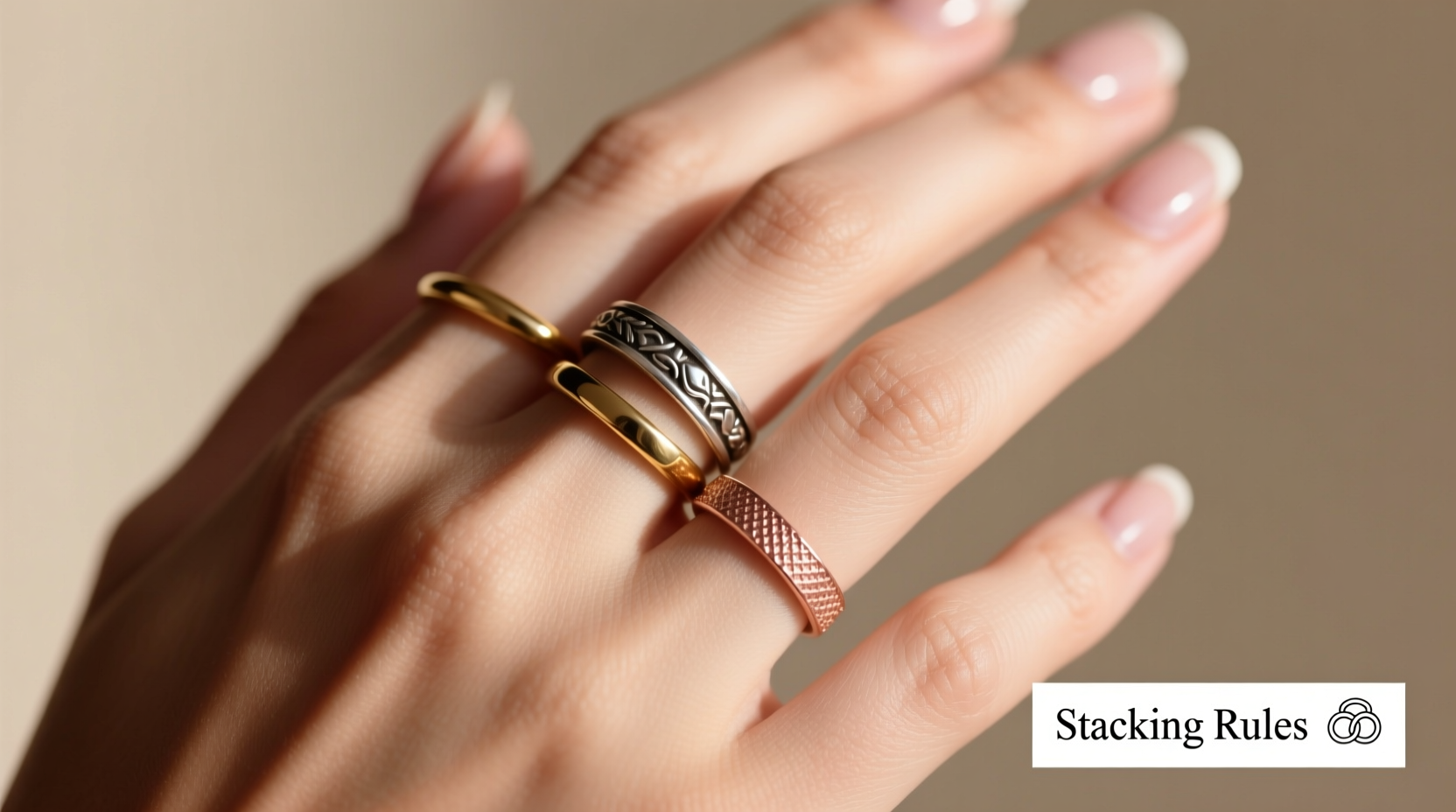
Before diving into styling techniques, it's essential to understand why stacking rings often leads to discomfort. Each finger has a limited surface area, and adding multiple metal bands increases pressure, friction, and heat retention. When rings are too tight, too thick, or improperly spaced, they can restrict blood flow, cause skin irritation, or lead to swelling—especially in warmer climates or during physical activity.
Fingers also change size throughout the day due to temperature, hydration, and hormonal fluctuations. A stack that feels comfortable in the morning may pinch by afternoon. Moreover, different metals expand and contract at varying rates, which means mismatched materials can shift against each other and create micro-abrasions over time.
“Many clients come to us with redness or indentations from stacked rings. The issue isn’t the number of rings—it’s poor planning around sizing, shape, and daily wearability.” — Lena Torres, Jewelry Designer & Fit Consultant
To prevent these issues, treat ring stacking like engineering: balance form, function, and biology.
Five Essential Stacking Rules for Comfort and Style
Successful ring stacking isn’t about piling on as many bands as possible. It’s about thoughtful layering that respects your anatomy and enhances your hand’s natural lines. Follow these five foundational rules to build stacks that last all day.
1. Limit the Number of Rings per Finger
While there’s no universal rule, most experts recommend a maximum of three to four rings per finger for daily wear. Beyond that, the risk of pinching, chafing, or misalignment increases significantly.
2. Mind the Total Band Width
The combined width of your stack should not exceed 70% of your finger’s circumference at the knuckle. For example, if your finger measures 20mm around, avoid stacking rings that total more than 14mm in width.
Use this general guide:
| Finger Size (US) | Max Recommended Stack Width |
|---|---|
| 4–5 | 10–12mm |
| 6–7 | 12–14mm |
| 8–9 | 14–16mm |
Wider fingers can support bolder stacks, but proportion matters. A petite hand with oversized stacks will appear unbalanced and feel cumbersome.
3. Choose Complementary Profiles
Rings with high-profile settings (like solitaires or domed tops) should never be sandwiched between flush-fitting bands unless specifically designed for stacking. The raised center can dig into adjacent rings or rub against the skin.
Instead, follow this stacking order:
- Place low-profile or flat bands closest to the knuckle and fingertip.
- Position the tallest ring in the middle.
- Avoid placing two high-set rings directly next to each other.
4. Match Metals Strategically
Different metals have different hardness levels on the Mohs scale. Softer metals like gold (2.5–3) can scratch easily when worn against harder ones like platinum (4–4.5) or stainless steel (5.5–6).
If mixing metals, consider protective plating or spacing softer pieces apart with cushioning bands made from silicone or resin inserts—though the latter are less visible in fine jewelry contexts.
5. Prioritize Adjustable or Flexible Bands
Some rings are designed with slight flexibility or open backs, allowing them to conform gently to finger movement. These are ideal for stacking because they reduce pressure points. Look for bands labeled “comfort fit” or those with contoured interiors.
Step-by-Step Guide to Building a Comfortable Stack
Creating a wearable ring stack involves more than just selecting pretty pieces. It requires testing, adjusting, and refining. Follow this timeline to develop a personalized combination that feels effortless.
- Day 1: Assess Your Finger Shape
Observe your fingers at different times of day. Are they slender? Tapered? Do knuckles flare noticeably? Take note of where swelling occurs. This helps determine safe stacking zones. - Day 2: Select Base Rings
Choose one or two thin, smooth bands (under 2mm wide) in a durable metal like 14k gold or palladium. These act as anchors and reduce friction between heavier pieces. - Day 3: Add a Focal Point
Introduce a centerpiece—a signet, birthstone, or engraved band—no wider than 4mm. Position it centrally among the base rings. Wear this trio for 4–6 hours to test comfort. - Day 4: Introduce Texture or Height
Add one textured or slightly elevated band (e.g., milgrain, twisted wire). Place it away from joints to minimize rubbing. Wear for half a day; remove if any warmth or tightness develops. - Day 5: Finalize and Rotate
Once the full stack passes a full-day trial, document the configuration. Create two variations so you can rotate wears and give fingers rest.
This gradual process prevents overloading your fingers and allows you to catch problems early—before blisters or long-term indentations occur.
Material Matters: Choosing the Right Metals and Finishes
The choice of metal affects not only durability but also comfort. Here’s how common options compare:
| Metal | Pros | Cons | Best For Stacks? |
|---|---|---|---|
| Platinum | Hypoallergenic, dense, retains polish | Heavy, expensive | Yes – excellent for base bands |
| 14k Gold | Balanced strength, warm luster | Can scratch over time | Yes – ideal for accent pieces |
| Titanium | Lightweight, corrosion-resistant | Difficult to resize | Limited – best for casual stacks |
| Sterling Silver | Affordable, versatile | Tarnishes, soft | Careful – prone to deformation |
| Palladium | Lighter than platinum, durable | Less common, fewer designs | Excellent – underused gem |
Finishes also play a role. Brushed or matte surfaces generate less friction than high-polish finishes, making them better suited for internal layers. Meanwhile, polished rings work well as top layers where light reflection enhances visibility.
Real Example: Maya’s Wedding Ring Stack Transformation
Maya wore her engagement ring with two wedding bands every day since her marriage. After five years, she noticed deep grooves on her finger and frequent swelling by evening. She consulted a jeweler who explained that her 6mm diamond ring was being compressed between two thick platinum bands, creating constant pressure.
The solution? Redesigning her stack with a curved wedding band that nestled perfectly under the engagement ring’s setting, replacing the second rigid band with a flexible eternity ring, and adding a slim titanium spacer for breathability. The new configuration eliminated indentations, reduced heat buildup, and restored comfort—without sacrificing sentimentality.
Her experience underscores a critical point: sentimental value doesn't have to come at the cost of physical well-being.
Checklist: Build a Safe, Stylish Ring Stack
Before finalizing your multi-ring look, go through this checklist:
- ✅ Measured finger size at peak swelling time (usually late afternoon)
- ✅ Selected no more than four rings per finger
- ✅ Ensured total width stays under 70% of finger circumference
- ✅ Verified that high-set rings aren’t touching each other
- ✅ Tested the stack for at least 4 hours before committing
- ✅ Chosen hypoallergenic metals if prone to skin sensitivity
- ✅ Included at least one smooth, low-friction band as buffer
- ✅ Created a rotation plan to let fingers recover
Skipping even one item can compromise comfort and longevity.
Frequently Asked Questions
Can I sleep with stacked rings on?
It’s not recommended. During sleep, fluid redistribution can cause fingers to swell, increasing the risk of rings becoming stuck. Additionally, tossing and turning may bend delicate settings. Remove stacks before bed to protect both your skin and jewelry.
How do I clean between stacked rings?
Gently separate bands when possible and use a soft-bristled toothbrush dipped in mild soap and warm water. Focus on areas touching the skin. Avoid harsh chemicals or ultrasonic cleaners unless all pieces are compatible. Dry thoroughly before re-stacking.
What if my rings keep rotating or slipping?
Rotation often indicates poor sizing or mismatched inner diameters. Consider having a jeweler add small grip beads inside the band or switch to comfort-fit styles. Alternatively, use a silicone ring liner beneath the stack to stabilize positioning—especially useful for active lifestyles.
Final Thoughts: Beauty Meets Balance
Wearing multiple rings on one finger is an art form rooted in precision. The most striking stacks aren’t those with the most pieces, but the ones where every element serves a purpose—whether structural, emotional, or aesthetic. By respecting your body’s limits and choosing quality over quantity, you create looks that endure beyond fleeting trends.
Remember: jewelry should enhance your life, not hinder it. A ring that causes pain defeats its own purpose, no matter how meaningful or expensive. Apply these stacking rules consistently, listen to your body, and refine your combinations over time. In doing so, you’ll craft a signature style that’s as comfortable as it is captivating.




 浙公网安备
33010002000092号
浙公网安备
33010002000092号 浙B2-20120091-4
Comments
No comments yet. Why don't you start the discussion?