
Wearing sunglasses at night has long been associated with celebrities, musicians, and fashion icons who use them as a tool of mystique, confidence, and controlled self-presentation. While functionally unnecessary after dark, the aesthetic power of sunglasses in low light is undeniable. However, the line between effortlessly cool and unintentionally comical is thin. Done poorly, it can appear arrogant or out of touch. Done well, it becomes an extension of personal style—a signature move that commands attention.
The key isn't just wearing shades after sunset; it's understanding context, proportion, and intent. Whether you're stepping into a dimly lit lounge, attending a rooftop party, or walking through city streets under neon glow, this guide breaks down how to pull off nighttime sunglasses with authenticity and flair—without inviting side-eye.
Why Wear Sunglasses at Night? Beyond the Obvious
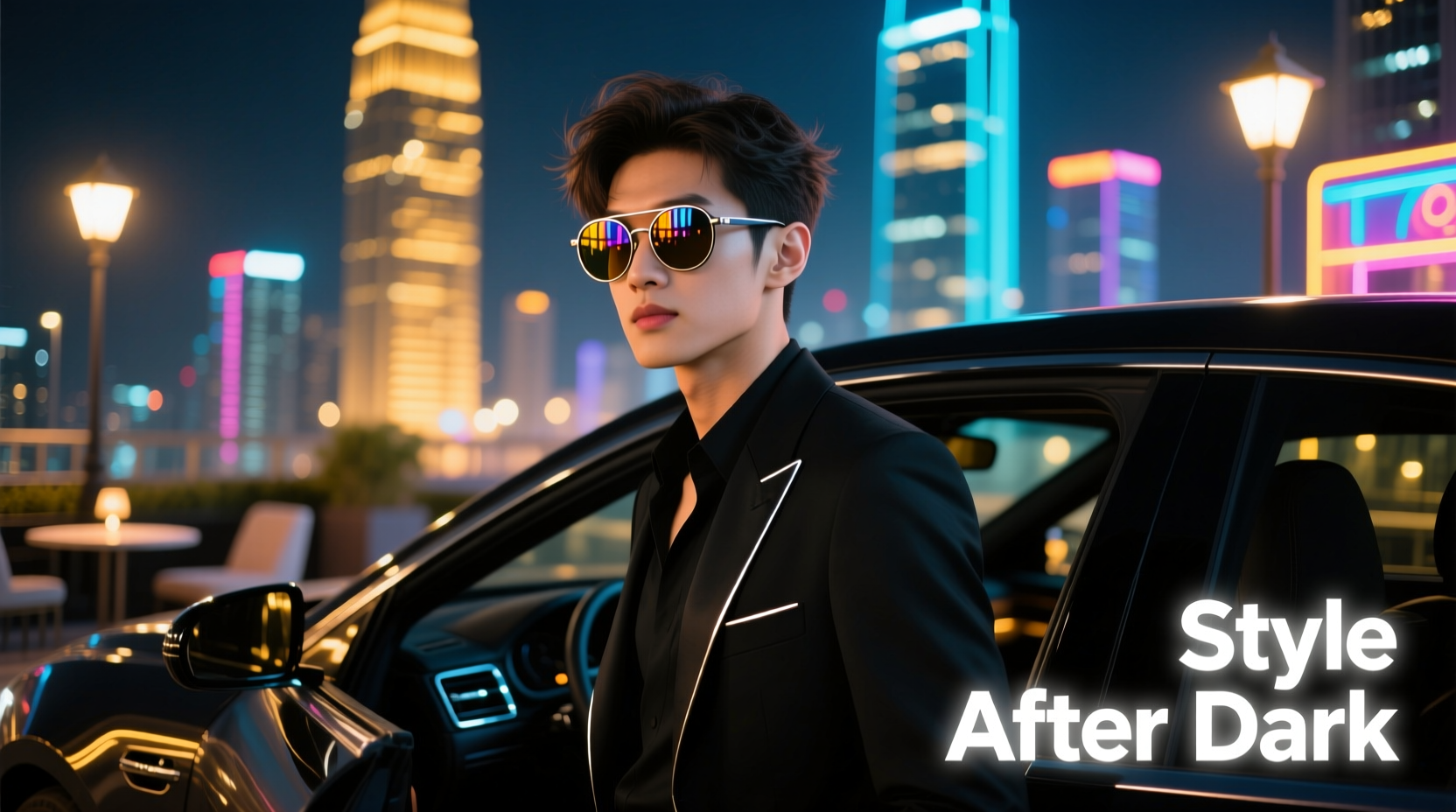
The practical reason for sunglasses ends when daylight does. Yet people continue to wear them at night for psychological, social, and stylistic reasons:
- Confidence projection: Dark lenses create a barrier between you and others, allowing you to observe without being observed. This perceived control often translates into a stronger presence.
- Fashion statement: Like jewelry or tailored shoes, sunglasses are accessories. Certain frames—oversized cat-eyes, angular aviators, retro futurists—are designed more for impact than UV protection.
- Celebrity influence: From Tom Cruise in *Risky Business* to Rihanna on red carpets, iconic figures have normalized (and glamorized) the look.
- Situational necessity: Bright artificial lighting—stage lights, strobes, headlights—can still cause glare. In these cases, tinted lenses serve a real purpose even at night.
“Sunglasses at night aren’t about vision—they’re about identity. They say, ‘I’m not here to be fully known.’ That’s powerful in performance and persona.” — Marcus Lin, Fashion Psychologist & Style Consultant
Choosing the Right Frames for Nighttime Wear
Not all sunglasses work after dark. The wrong shape, size, or color can make the look feel costumey rather than curated. Prioritize frames that balance boldness with sophistication.
Frame Styles That Work at Night
| Style | Best For | Nighttime Suitability | Why It Works |
|---|---|---|---|
| Oversized Square | Strong jawlines, editorial looks | ★★★★☆ | Dominant silhouette adds drama without obstructing facial harmony. |
| Retro Round | Vintage-inspired outfits | ★★★★★ | John Lennon made them timeless; they read as artistic, not arrogant. |
| Thin-Metal Aviators | Minimalist or modern attire | ★★★★☆ | Delicate frame maintains visibility of eyes while adding polish. |
| Shield Lenses (non-wrap) | High-fashion events | ★★★☆☆ | Works only in stylized settings—too extreme for casual nights. |
| Clear or Light-Tinted Lenses | Indoor venues, photoshoots | ★★★★★ | Lens transparency keeps connection with others while maintaining the accessory effect. |
Avoid heavily mirrored or extremely dark lenses indoors unless you're performing. These reduce eye visibility drastically and can come across as evasive or theatrical in everyday interactions.
When and Where It’s Acceptable (and Effective)
Context determines credibility. Wearing sunglasses at night during a concert is expected. Doing so at a dinner meeting may raise eyebrows. Know the setting before committing.
Appropriate Occasions
- Live music performances: Artists wear them to manage stage lights and maintain persona. Fans emulate the look as part of the culture.
- Red carpet events: Celebrities use them for dramatic entrances or to shield from flashes—even if momentarily.
- Nightclubs and lounges: Low lighting makes sunglasses less disruptive; paired with sharp attire, they elevate the vibe.
- Photography sessions: Stylists often include nighttime sunglasses for editorial shots.
- Urban streetwear scenes: In fashion-forward cities like Tokyo, Milan, or Brooklyn, it's part of curated expression.
Occasions to Avoid
- Business meetings: Impedes trust-building. Eye contact is crucial in professional negotiation.
- Funerals or solemn gatherings: Seen as disrespectful or emotionally detached.
- First dates: Can signal disinterest or lack of openness.
- Driving at night: Even lightly tinted lenses reduce clarity and reaction time. Illegal in many jurisdictions.
Step-by-Step Guide: How to Wear Sunglasses at Night Without Looking Silly
Success lies in execution. Follow this sequence to integrate sunglasses naturally into your nighttime presence.
- Assess the environment: Is it brightly lit with artificial sources? Are others dressed formally or casually? Match your choice to the energy of the space.
- Select appropriate lenses: Opt for smoke-gray, rose, or amber tints instead of pitch black. Better yet, choose clear lenses with a subtle gradient for indoor wear.
- Time your entrance: Put them on just before arriving—say, stepping out of a car or approaching a venue door. This creates a moment of impact.
- Maintain posture and confidence: Stand tall, move deliberately. Hesitation amplifies doubt; assurance sells the look.
- Remove them strategically: After initial greetings or once settled, take them off gracefully. Leave them perched atop your head or in a jacket pocket—not dangling from fingers.
- Use sparingly: One appearance per evening is enough. Repeated use dilutes effect and risks caricature.
“The most stylish people wear sunglasses at night like they forget they’re on—not like they’re trying to prove something.” — Lena Cho, Editorial Stylist at *Vogue Mode*
Real Example: The Rooftop Premiere
Jamal, a 32-year-old creative director, attended a film premiere on a downtown rooftop. The event began at 8 PM, lit by string lights, torches, and ambient LEDs. He wore a tailored black suit with a satin lapel and chose matte-black rectangular frames with light gray lenses—just enough tint to reflect mood lighting.
As he exited the elevator, he adjusted his glasses with one hand, pausing briefly for recognition. Within moments, two photographers snapped shots. Over the next 20 minutes, he engaged in conversation, occasionally tilting his head back slightly to allow eye contact when needed. By the time drinks were served, he had removed the sunglasses and placed them in his inner pocket.
No one questioned his choice. Instead, several guests commented on his “cinematic” arrival. His success came from timing, subtlety, and knowing when to transition out of the look.
Fashion Do’s and Don’ts: Quick Reference Table
| Do | Don’t |
|---|---|
| Match frame size to face proportions | Wear oversized lenses if you have a small face |
| Pair with clean, structured clothing | Combine with sloppy or overly casual wear |
| Use for short bursts of presence | Keep them on throughout conversations |
| Choose frames with slight lens transparency | Wear pitch-black lenses indoors |
| Remove them when sitting down socially | Gesture or point while adjusting them repeatedly |
Checklist: Your Nighttime Sunglasses Readiness
Before slipping on shades after dark, run through this checklist:
- ✅ Is the occasion fashion-forward or performance-oriented?
- ✅ Are my lenses lightly tinted or clear?
- ✅ Do my clothes support a bold accessory choice?
- ✅ Am I prepared to remove them within 10–15 minutes?
- ✅ Do I feel confident—not forced—in this look?
- ✅ Is driving involved later? (If yes, avoid altogether.)
Frequently Asked Questions
Can I wear sunglasses at night if I have sensitive eyes?
Absolutely—and this is one of the few functional justifications. Some people experience discomfort from LED lighting, strobes, or screen glare. In such cases, lightly tinted lenses (not fully dark) can provide relief without appearing ostentatious. Consider amber or yellow-tinted lenses designed for night driving sensitivity.
Are there legal restrictions on wearing sunglasses at night?
While it’s generally not illegal to wear sunglasses socially at night, doing so while operating a vehicle is prohibited in many U.S. states and countries due to reduced visibility. Always prioritize safety. Even non-driving movement in crowded areas can be hazardous with impaired vision.
How do I know if I “pull it off”?
If people react with curiosity rather than confusion, you’re likely succeeding. A genuine compliment like “You looked amazing when you walked in” suggests impact. Conversely, laughter, double-takes, or questions like “Can you even see?” indicate misjudgment. Feedback—both verbal and nonverbal—is your best gauge.
Final Thoughts: Style Is Intent, Not Habit
Wearing sunglasses at night isn’t inherently silly. What makes it so is lack of purpose. When used thoughtfully—as punctuation in a larger style sentence, not the entire paragraph—it becomes a tool of distinction. The most memorable looks in fashion history weren’t born from rules, but from calculated risks grounded in self-awareness.
It’s not about copying a celebrity pose. It’s about understanding what the gesture communicates and whether that aligns with who you are and where you are. Confidence doesn’t come from the accessory itself, but from the quiet certainty that you belong in it.




 浙公网安备
33010002000092号
浙公网安备
33010002000092号 浙B2-20120091-4
Comments
No comments yet. Why don't you start the discussion?