
Wrapping a column with lights can transform an ordinary architectural feature into a striking focal point—especially during holidays or special events. Whether it’s a porch pillar, lamppost, or interior support column, achieving a clean, gap-free wrap requires more than just draping string lights haphazardly. Done poorly, the result is uneven spacing, tangled wires, or visible bare spots that detract from the intended effect. But with proper planning, tools, and technique, you can achieve a seamless, professional-quality finish every time.
This guide breaks down the entire process—from measuring and selecting materials to executing a flawless wrap—so your lighting enhances rather than overwhelms the structure.
Why Even Spacing Matters in Column Lighting
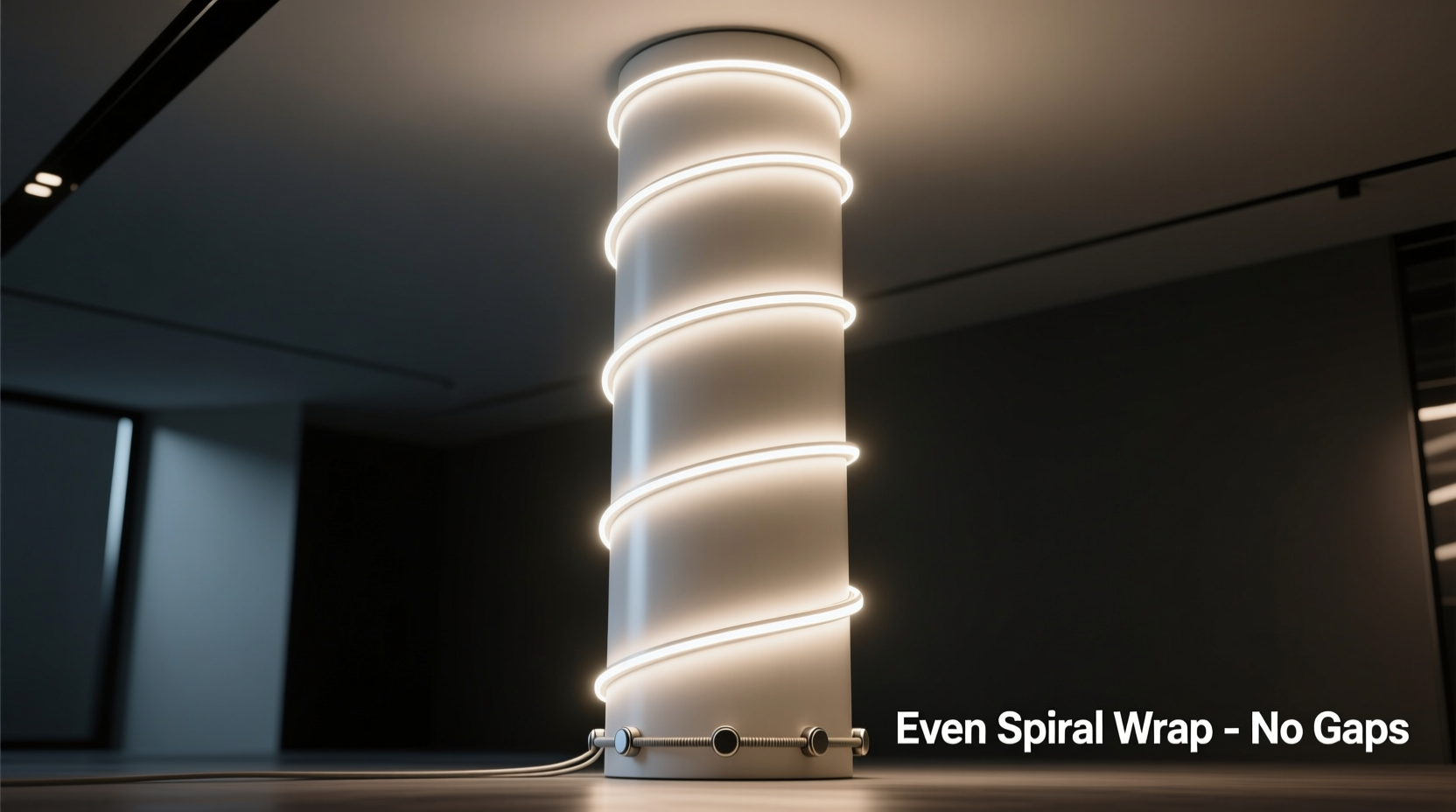
Even wrapping isn’t just about aesthetics—it impacts safety, energy efficiency, and longevity. Gaps in coverage create visual inconsistencies, especially at night when shadows and hotspots become more pronounced. Overlapping sections can lead to heat buildup in incandescent bulbs or strain on LED circuits. Moreover, uneven tension increases the risk of sagging or detachment over time due to weather exposure or vibration.
A well-wrapped column appears intentional and polished. It guides the eye upward, emphasizing height and symmetry. In commercial or event settings, this attention to detail communicates professionalism. For homeowners, it elevates curb appeal and creates ambiance without appearing cluttered.
“Precision in holiday lighting installation starts with consistency. One missed measurement can throw off an entire facade.” — Derek Langston, Professional Lighting Installer & Owner of LuminaCrest Designs
Essential Tools and Materials
Before beginning, gather all necessary supplies. Having everything on hand prevents interruptions and ensures continuity in your wrapping pattern.
- String lights: Preferably pre-lit spools with consistent bulb spacing (e.g., 6\", 12\")
- Tape measure: For accurate column dimensions
- Painter’s tape: To mark starting points and alignment guides
- Ladder or lift: Stable access to full column height
- Cable ties or insulated twist ties: For securing ends and mid-span fastening
- Gloves: Protect hands from sharp wire edges
- Notepad and pen: Record measurements and calculations
- Extension cord (if needed): Rated for outdoor use if applicable
Step-by-Step Guide to Wrapping a Column Without Gaps
Follow this detailed sequence to ensure precision and eliminate gaps throughout the wrap.
- Measure the column circumference. Wrap a tape measure around the widest part of the column at eye level. Record this number in inches.
- Determine vertical height. Measure from base to top where lights will begin and end. Include any cap or decorative element you plan to highlight.
- Check bulb spacing on your light string. Most commercial strings have bulbs every 6\", 12\", or 18\". Note this interval—it determines horizontal overlap per wrap.
- Calculate number of wraps needed. Divide total height by bulb spacing. For example, a 96-inch tall column with 6-inch spaced bulbs needs 16 wraps (96 ÷ 6 = 16).
- Mark starting point with painter’s tape. Choose a discreet side (e.g., back or shadowed face). Place a small strip to indicate where the first wrap begins.
- Secure the plug end. Leave extra cord at the bottom for connection. Use a cable tie through a drainage hole or behind trim—never nail or staple directly into wire.
- Begin wrapping clockwise or counterclockwise consistently. Maintain firm but gentle tension. Avoid stretching the string, which distorts spacing.
- Align each new wrap directly above the previous one. Use the bulb itself as a vertical guide—each should sit flush over the one below it.
- Use temporary tape markers every few wraps. Recheck alignment halfway up to correct minor drift before it compounds.
- Finish at the top with secure fastening. Tuck excess wire neatly under the final loop and fasten with a zip tie. Conceal connections inside caps or behind molding if possible.
Pro Technique: The Spiral Overlay Method for Wide Columns
For columns wider than 24 inches, a single spiral may leave diagonal gaps between rows. To fix this, use the **double-helix method**:
- Wrap the first string with standard spacing (e.g., 6\" apart).
- Start a second identical string offset by half the bulb spacing (3\"), beginning midway between the first set.
- Weave both strands together so bulbs interlock like zipper teeth.
- This fills perceived gaps and doubles light density without doubling power draw if using LEDs.
Common Mistakes and How to Avoid Them
Even experienced decorators make errors that compromise the final look. Below are frequent pitfalls and their solutions.
| Mistake | Why It Happens | Solution |
|---|---|---|
| Diagonal spirals instead of straight wraps | Starting angle drifts due to lack of vertical guide | Use painter’s tape to create a faint vertical line as reference |
| Bulbs pointing outward at odd angles | Twisting the string during application | Keep connector faces inward toward the column throughout |
| Visible gaps near top or base | Inconsistent start/end spacing or miscalculated wraps | Recalculate based on exact height; adjust last wrap spacing slightly if needed |
| Frayed wires or broken sockets | Over-tightening or using metal staples | Use plastic cable ties and apply only snug tension |
| Uneven brightness | Using mixed brands or bulb types | Stick to one product line with matching lumen output |
Real Example: Wrapping a Historic Porch Column
In Charleston, SC, homeowner Maria Delgado undertook restoring her 1920s home’s front porch. Each of the four Doric columns stood 10 feet tall with a 22-inch diameter. She wanted soft white lighting for evening ambiance without modern intrusion.
Maria measured carefully and selected 100-count LED string lights with 12-inch spacing. With a height of 120 inches, she calculated 10 full wraps per column. Using green painter’s tape, she marked a vertical guide on the rear of each column. Starting at the base, she wrapped clockwise, checking alignment after every two turns.
Halfway through, she noticed slight upward drift on the third column. She paused, re-leveled with the tape, and adjusted tension. By maintaining consistent orientation—bulb connectors always facing inward—the finished result looked machine-perfect. Neighbors assumed she hired professionals. Her secret? “I treated it like painting a wall—prep was 80% of the job.”
Checklist: Gap-Free Column Wrap in 7 Steps
- ✅ Measure column circumference and height accurately
- ✅ Select lights with consistent bulb spacing and adequate length
- ✅ Mark vertical starting line and wrap direction with tape
- ✅ Secure the plug end safely at the base
- ✅ Wrap with steady tension, aligning each row directly above the last
- ✅ Fasten top end securely; hide excess cord
- ✅ Test lights before finalizing and inspect for gaps in low light
Frequently Asked Questions
How do I prevent lights from sagging over time?
Sagging usually occurs due to thermal expansion, wind movement, or insufficient anchoring. Prevent it by using UV-resistant cable ties every 2–3 wraps, especially on outdoor columns. Avoid natural fiber twine, which degrades. Also, don’t stretch the string during installation—allow slight give for material flexibility.
Can I mix different lengths of light strings on one column?
It’s not recommended. Mixing lengths often leads to mismatched bulb spacing and voltage drops, especially with older incandescent sets. If additional length is needed, connect multiple identical strings end-to-end, ensuring they’re rated for series operation. Better yet, calculate total required length upfront and buy matching reels.
What’s the best way to remove lights without damaging them?
Unwrap slowly in reverse order, supporting the weight as you go. Never yank or pull aggressively. Remove cable ties with scissors by cutting close to the head—don’t pry them off, which can damage insulation. Coil each string loosely around your hand (12–18 inch loops), then secure with a fabric tie or reusable strap. Store in a ventilated container away from rodents and temperature extremes.
Expert Insight: The Role of Planning in Flawless Execution
“The difference between amateur and professional lighting isn’t the gear—it’s the math. Spend 15 minutes measuring and mapping, and you’ll save hours of correction later.” — Lena Pruitt, Architectural Lighting Consultant, Illumineer Group
Pruitt emphasizes that most failed installations stem from skipping foundational steps. “People see a column and think, ‘I’ll just wrap it.’ But without knowing the exact number of revolutions or testing alignment, they end up with a corkscrew effect. Take the time to simulate the path with yarn first. It costs nothing and prevents costly mistakes.”
Final Tips for Long-Term Success
Once installed, your wrapped column should require minimal maintenance—but smart practices extend both appearance and function.
- Inspect connections seasonally for corrosion or wear.
- Use a surge protector for outdoor installations to guard against voltage spikes.
- Consider timers or smart plugs to automate on/off cycles, reducing wear and energy use.
- If the column is exposed to rain or snow, ensure all electrical components are rated for wet locations.
- For painted columns, avoid adhesives that could peel finish—use non-residue ties only.
Conclusion: Shine Bright with Precision
Wrapping a column with lights evenly without gaps is a blend of craftsmanship and calculation. It rewards patience, preparation, and attention to detail. By measuring accurately, choosing the right materials, and following a disciplined wrapping technique, you can achieve results that look professionally installed—even if it’s your first time.
Don’t underestimate the impact of a perfectly lit column. It draws attention, enhances architecture, and creates warmth. Whether for seasonal celebration or permanent ambiance, your effort will be noticed and appreciated.




 浙公网安备
33010002000092号
浙公网安备
33010002000092号 浙B2-20120091-4
Comments
No comments yet. Why don't you start the discussion?