
Every holiday season brings the familiar ritual of gift-giving—and with it, the scramble for wrapping supplies. But what happens when you're ready to wrap, only to realize the scissors are missing? Rather than abandoning your festive plans or making a last-minute store run, consider this: you don’t actually need scissors to wrap a present beautifully. With a bit of ingenuity and everyday household objects, you can create polished, thoughtful packages that look professionally done—all without ever touching a blade.
This guide walks you through practical, tested methods for wrapping Christmas presents using only items commonly found around the house. From kitchen utensils to office supplies, we’ll show you how to turn ordinary tools into wrapping solutions, all while saving time, reducing waste, and embracing resourcefulness during the busiest time of year.
Why Skip the Scissors?
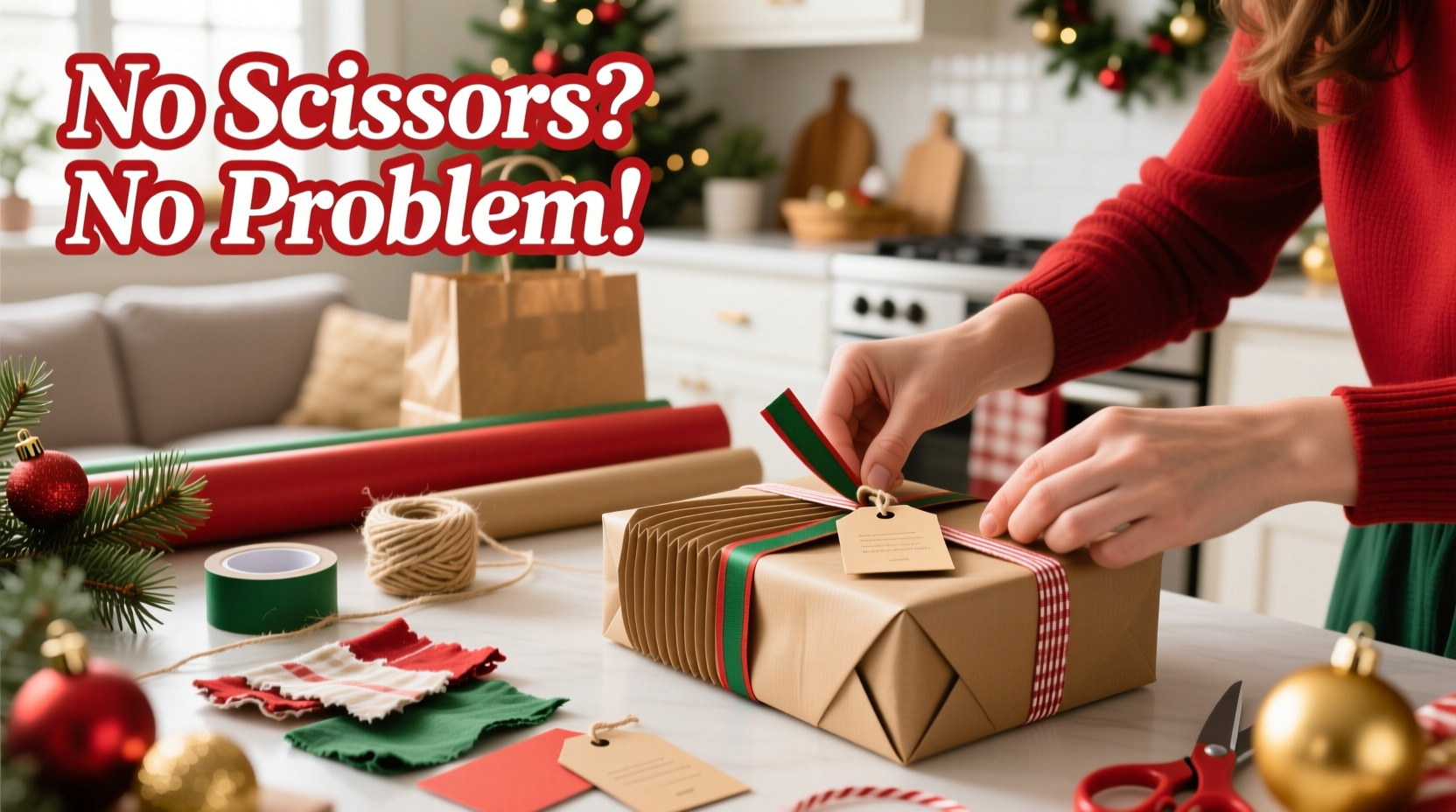
The idea of wrapping gifts without scissors may seem like a party trick, but it’s more practical than it sounds. Scissors go missing, batteries die in electric cutters, and sometimes—especially during hectic holiday prep—you simply don’t have access to traditional tools. Learning alternative methods builds self-reliance and encourages creative problem-solving.
Moreover, minimizing tool dependency reduces plastic waste from disposable tape dispensers and supports sustainable gifting practices. According to Martha Stewart Living, “The best gift wrappers aren’t those with the fanciest tools—they’re the ones who adapt.”
“Resourcefulness is the hallmark of great holiday preparation. The ability to improvise elevates gifting from routine to art.” — Daniel Park, Home Organization Specialist and Holiday Stylist
Essential Household Alternatives to Scissors
You likely already own several effective substitutes for cutting paper. These tools won’t slice like a sharp blade, but they can tear, crease, or separate paper cleanly when used correctly.
| Household Item | How It Works | Best For |
|---|---|---|
| Butter Knife | Use the blunt edge to score and tear paper along a straight line | Thicker craft paper or kraft wrap |
| Ruler or Credit Card | Fold paper over edge and apply pressure to create a clean break | Precise folds and straight tears |
| Finger Nail or Key | Score along fold lines to initiate a controlled tear | Thin tissue-based wraps or patterned paper |
| Rolling Pin | Press down on folded edges to crease and separate excess paper | Bulk wrapping multiple small items |
| Teaspoon | Use rounded edge to burnish corners and press seams | Securing folds without tape |
Step-by-Step: Wrapping a Gift Without Scissors
Follow this timeline to wrap a standard rectangular box—like a book or board game—using no scissors. This method relies on folding, tearing, and sealing with alternative adhesives.
- Choose Your Paper Wisely: Opt for slightly thicker paper such as brown kraft, gift bags repurposed into sheets, or even old maps and sheet music. These materials tear more predictably than flimsy foil wraps.
- Lay the Box Centered on the Paper: Place the gift in the center of the wrapping sheet, aligning one edge of the box with the bottom of the paper.
- Fold Up the Bottom Edge: Pull the lower portion of the paper up over the box. Use your fingernail or a credit card to sharply crease the edge where it meets the top of the box.
- Tear Along the Crease (No Cutting Needed): Run your thumbnail along the folded edge repeatedly to weaken the fibers. Then, pull the excess paper away at a 90-degree angle to create a clean, straight tear.
- Fold in the Side Flaps: Bring the left and right sides toward the center. Fold the top triangular corners inward like an envelope flap, creating a neat diagonal seal.
- Secure with Non-Tape Adhesives: Instead of tape, use one of these household alternatives:
- Paper Clips: Clip corners together discreetly.
- Glue Dots: Found in offices or craft drawers, these leave no residue.
- Reusable Fabric Ties: Use strips of old scarves, ribbons, or shoelaces tied in a bow.
- Stapler: If available, a few staples at the seam can hold paper securely—easily removed by recipient.
- Finish the Top Seam: Fold the remaining top flap down over the box, tucking it slightly under the side panels. Use another dab of glue dot or tie a ribbon around the entire package to conceal seams.
This technique works best with rigid boxes. For oddly shaped or soft gifts (like clothing), see the adaptation strategies below.
Adapting Techniques for Different Gifts
Not every present fits neatly into a square. Here’s how to modify the no-scissors method for various shapes and sizes.
Soft Items (Clothing, Scarves, Stuffed Toys)
Instead of traditional wrapping, use the furoshiki method—a Japanese cloth-wrapping tradition. While typically done with fabric, you can simulate the effect using large cotton napkins, pillowcases, or tea towels.
- Lay the cloth flat and place the item in the center.
- Bring opposite corners together and tie in a knot.
- Repeat with the other two corners, forming a secure bundle.
- Add a handwritten tag tied with twine.
No cutting required, fully reusable, and zero waste.
Cylindrical Objects (Candles, Bottles, Tubes)
For long, narrow gifts, roll the paper around the object rather than folding it.
- Place the cylinder near one edge of the paper.
- Roll it forward until fully covered, leaving a small gap.
- Use a butter knife to press and crease the final edge against the roll.
- Seal with a rubber band or string—wrap twice and tie tightly.
Mini Case Study: Last-Minute Office Party Rescue
Sarah, a project manager in Chicago, arrived at her company’s holiday exchange with five unwrapped gifts. The office supply closet was locked, and the building’s front desk had no scissors. With only 20 minutes before the event, she improvised using materials at hand.
She flattened empty Amazon shipping boxes to create large wrapping sheets, tore them using the edge of her laptop, and folded each gift with precision. For closure, she used binder clips painted gold from a forgotten craft kit and added pine sprigs from the lobby tree as decoration.
Her packages stood out not for their perfection—but for their charm. Two colleagues later asked for a tutorial, and Sarah now leads an annual “Zero-Tool Wrapping Challenge” at work. Her takeaway: “Necessity didn’t just solve a problem—it sparked creativity.”
Do’s and Don’ts of Scissor-Free Wrapping
| Do | Don't |
|---|---|
| Use thick, fibrous paper that tears cleanly | Use glossy or plastic-coated wraps (they rip unevenly) |
| Pre-fold and crease before attempting to tear | Pull paper too fast—this causes jagged edges |
| Embrace asymmetry as part of the handmade charm | Try to cut thin cellophane or metallic film without tools |
| Use tension and slow pressure to control tears | Force a tear across corrugated textures (like cardboard) |
| Decorate with natural elements (twine, cinnamon sticks, dried citrus) | Expect machine-like precision—focus on presentation, not perfection |
Checklist: No-Scissors Wrapping Prep
Before you begin, gather these household items to ensure a smooth process:
- ☐ Wrapping paper (kraft, recycled, or repurposed)
- ☐ Rigid ruler, credit card, or butter knife
- ☐ Flat, clean workspace (dining table, desk, or floor)
- ☐ Adhesive alternatives (glue dots, rubber bands, string, clips)
- ☐ Decorative touches (stamps, markers, pressed leaves)
- ☐ Pre-measure and test tear on scrap paper
Having these ready eliminates mid-process delays and keeps your workflow efficient.
Frequently Asked Questions
Can I really wrap a gift neatly without any cutting tools?
Yes—especially with practice. Thicker papers like kraft or cardstock respond well to scoring and tearing. The key is controlling the tear with firm creases and steady pressure. Many professional gift wrappers use tear-based methods for eco-friendly packaging.
What if my paper tears unevenly?
Minor imperfections can be hidden with decorative elements. Try covering flaws with a bold sticker, a sprig of holly, or a creatively tied ribbon. Asymmetry can enhance the handmade aesthetic—view it as character, not a flaw.
Are there any materials I should avoid?
Avoid foil-backed paper, vinyl wraps, and laminated sheets—they resist tearing and often shred unpredictably. Stick to uncoated, fibrous papers that allow clean separation along fold lines.
Final Thoughts: The Art of Adaptive Gifting
Wrapping Christmas presents without scissors isn’t just a survival tactic—it’s a celebration of ingenuity. In a season often defined by excess and expectation, finding beauty in limitation fosters mindfulness and connection. Each imperfect fold, each hand-tied knot, carries intention. And to the recipient, that care is unmistakable.
These techniques also promote sustainability. Reusable cloths, recyclable paper, and non-adhesive closures reduce single-use waste. You’re not just giving a gift—you’re modeling a slower, more thoughtful way of celebrating.
So the next time the scissors vanish into the holiday chaos, don’t panic. Look around. Your butter knife, ruler, or even a spoon might be the perfect tool after all. Wrap with confidence, creativity, and a little grit. The results will surprise you.




 浙公网安备
33010002000092号
浙公网安备
33010002000092号 浙B2-20120091-4
Comments
No comments yet. Why don't you start the discussion?