
Gift-giving is as much about presentation as it is about the gesture. A beautifully wrapped present conveys thoughtfulness, care, and attention to detail—even when you're working with just three basic tools: scissors, tape, and ribbon. While many believe professional-level wrapping requires specialty paper, double-sided tape, or decorative boxes, the truth is that mastery lies in technique, not tools. With precision, consistency, and a few insider methods, anyone can achieve crisp, gallery-worthy results using nothing more than what’s already in their desk drawer.
The art of gift wrapping isn’t about hiding the item—it’s about enhancing the experience. A well-wrapped box feels intentional, balanced, and respectful of both giver and receiver. This guide breaks down the exact process professionals use, focusing on fold control, seam placement, tension management, and finishing elegance—all achievable without additional supplies.
1. The Foundation: Paper Selection and Measurement
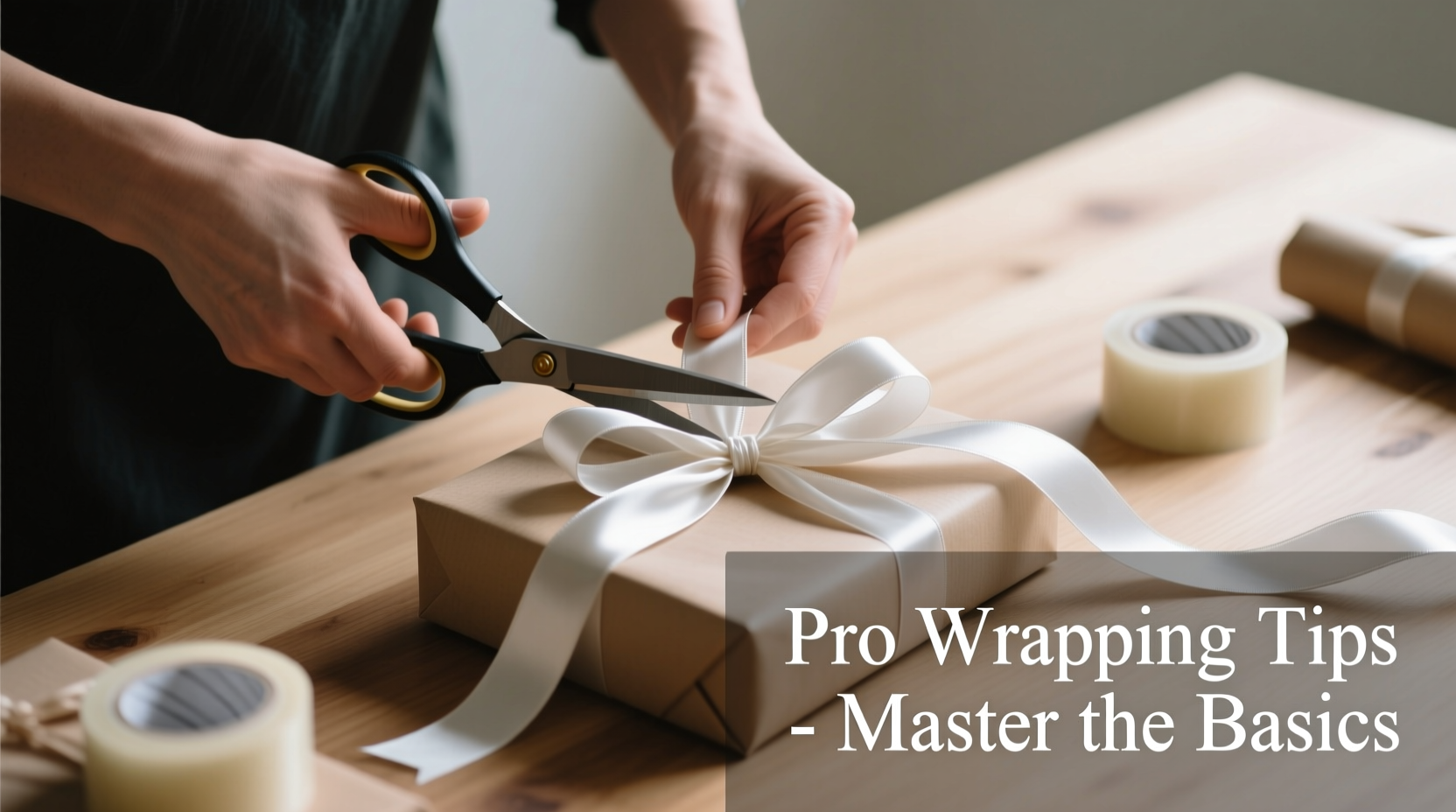
The first step toward flawless wrapping begins before the scissors even touch the paper. Choosing the right sheet size and type sets the tone for everything that follows. While texture and design matter aesthetically, structural integrity is key. Opt for medium-weight paper—thick enough to resist tearing during folding but pliable enough to crease cleanly. Avoid ultra-thin tissue-like stock or overly rigid cardstock.
Measure your paper carefully. Lay the gift box on the roll or sheet and measure one full side length plus two times the height. Then add 2 inches (5 cm) for overlap. For example, if wrapping a 6-inch cube box, calculate: 6 inches (side) + 12 inches (2 × height) + 2 inches = 20 inches of paper width. Repeat along the depth to cover all sides.
Cutting too little leads to gaps; cutting too much creates bulk and increases chances of misalignment. Precision here eliminates guesswork later.
2. Step-by-Step: Wrapping the Box with Clean Lines
Professional results come from methodical execution. Follow this sequence to build a seamless base layer:
- Position the box face-down on the center of the paper, aligning one edge flush with the bottom of the paper.
- Roll the box forward once so the top face is now down. Pull the paper taut over the back and press flat.
- Apply a small piece of tape at the seam where the paper meets itself. Use just enough to secure—over-taping causes bulges.
- Fold the ends like an envelope: Bring one side panel inward, creating a straight vertical edge. Crease sharply along the box edge with your fingernail.
- Create triangular flaps at the top and bottom of the end panel by folding diagonally into the corners of the box.
- Fold the remaining side up over the sealed end, pressing the top and bottom flaps flat before securing with two small pieces of tape—one near the top, one near the bottom.
- Repeat on the opposite end.
The result should be a smooth, wrinkle-free surface with no visible gaps and minimal tape exposure. The key is tension: hold the paper snug against the box throughout, but never stretch it. Stretching causes recoil and loosening after release.
“Most people fail at wrapping not because they lack skill, but because they rush the foundation. A shaky base ruins even the best bow.” — Lila Torres, Gift Stylist & Workshop Instructor
3. Achieving Invisible Seams and Hidden Tape
Amateur wraps often reveal themselves through obvious tape lines, uneven overlaps, or lifted edges. Pros minimize visibility through strategic placement and controlled adhesion.
Place tape only where structural integrity is critical—typically along the main horizontal seam and at the tips of end flaps. Never run tape across the entire flap; instead, use ½-inch (1.25 cm) segments spaced 2–3 inches apart. This prevents warping while maintaining flexibility.
To hide tape completely, apply it to the underside of the overlapping panel before pressing it down. That way, the adhesive bonds beneath the surface, leaving only clean paper visible. If minor lifting occurs, gently warm the area with your fingers—the body heat softens the adhesive slightly, allowing re-adhesion without residue.
| Technique | Do | Don't |
|---|---|---|
| Seam Placement | Align seam along the back centerline | Leave seam on visible front face |
| Tape Length | Use short, spaced pieces (½”) | Run long strips across entire flap |
| Fold Pressure | Cease firmly with fingernail or ruler edge | Press lightly with palm only |
| Overlap Amount | 1–1.5 inches (2.5–4 cm) | Excessive overlap (>2 inches) |
Maintaining consistent pressure when folding ensures sharp edges. Run your thumbnail along every crease immediately after forming it. This “sets” the fold and prevents springback.
4. Ribbon Work: Structure, Symmetry, and Style
Ribbon transforms a neatly wrapped box into a statement piece. But even here, simplicity wins. Limit yourself to one ribbon color and one width—typically ⅝ inch (1.6 cm) satin or grosgrain—for maximum impact.
Start by measuring. Wrap the ribbon around the box horizontally once and add 12 inches (30 cm) for tails. Cut with sharp scissors at a 45-degree angle to prevent fraying and enhance visual taper.
Center the box upside down and place the ribbon underneath, crossing at the top. Hold both ends together and flip the box upright. Pull upward evenly until the ribbon hugs the box snugly at its equator. Secure the intersection point from below with a single small piece of tape.
Now tie the bow. Use a standard double-loop method:
- Cross the two ends and form a simple knot.
- Make a loop with each hand and pull them through simultaneously.
- Tighten gradually, adjusting loop size for symmetry.
- Trim the tail ends at an angle, or create decorative points with V-cuts.
For extra polish, shape the loops by gently pulling the outer edges outward and flattening the centers. Fluff the bow so it sits proud of the package, not flat against it.
5. Real Example: The Last-Minute Birthday Wrap
Sarah had 20 minutes before her friend’s birthday dinner. She needed to wrap a tall, narrow candle box using only printer paper, clear tape, and red ribbon she found in a drawer. No specialty supplies, no time to shop.
She began by measuring the paper: the box was 8 inches tall and 3 inches square. She calculated 3 + (2×8) + 2 = 21 inches wide, and cut accordingly. Using sharp office scissors, she made clean edges.
After rolling the box and sealing the back seam with two small tape pieces, she folded the ends precisely, creasing each flap with her nail. At the top and bottom, she formed neat triangles and pressed them flat before attaching the final panel. One tiny piece of tape anchored each end.
For the ribbon, she used 24 inches—just enough to wrap around and leave 6-inch tails. She tied a centered bow, shaped the loops, and angled the cuts. The final result looked store-bought, despite the humble materials.
Her secret? Focus on technique, not tools. “I didn’t have pretty paper,” she said later, “but I knew how to make it look intentional.”
Checklist: Pro-Level Wrap in Under 10 Minutes
Follow this concise checklist to ensure every wrap meets professional standards:
- ✅ Choose medium-weight paper with clean grain direction
- ✅ Measure paper: side + (2 × height) + 2 inches
- ✅ Cut with sharp scissors in one motion
- ✅ Position box face-down, aligned with bottom edge
- ✅ Roll box forward, pull paper taut, seal back seam with minimal tape
- ✅ Fold side panels with crisp creases using fingernail or edge
- ✅ Form diagonal flaps at ends, press flat, then attach final panel
- ✅ Use short tape segments (½”) at stress points only
- ✅ Apply ribbon with 12-inch tail allowance, centered and snug
- ✅ Tie symmetrical bow, shape loops, trim tails at angles
Run through this list mentally with each gift. Over time, these steps become automatic, reducing wrapping time while increasing quality.
FAQ: Common Questions About Minimalist Wrapping
Can I achieve clean edges without a bone folder or ruler?
Absolutely. Your fingernail is the most accessible creasing tool. Press firmly along every fold immediately after forming it. For longer edges, use the spine of a book or the blunt edge of scissors—anything with a straight, hard ridge.
What if my paper tears during folding?
Small tears can be discreetly repaired. Flip the package and apply a tiny piece of tape underneath the damaged area. Then, gently press the torn section back into place from above. If the tear is on a visible face, consider repositioning the box so the flaw lands on the bottom.
Is it possible to reuse wrapping paper with just tape?
Yes, but only if you’re careful. Use removable tape (like low-adhesion painter’s tape) and avoid folding taped areas. When unwrapping, cut the tape rather than pulling it off. Reuse works best for large sheets used on small items.
Conclusion: Elevate the Ordinary with Skill, Not Supplies
Wrapping gifts like a pro isn’t about access to luxury materials—it’s about discipline, repetition, and respect for the craft. With only scissors, tape, and ribbon, you can produce results that rival boutique packaging. The difference lies not in what you use, but how you use it: precise measurement, controlled tension, hidden seams, and thoughtful finishing.
Every gift is an opportunity to communicate care. By mastering these fundamentals, you turn a routine task into a meaningful ritual. No special purchases required. No clutter added. Just better results, every time.




 浙公网安备
33010002000092号
浙公网安备
33010002000092号 浙B2-20120091-4
Comments
No comments yet. Why don't you start the discussion?