
Navigating dissatisfaction—whether with a product, service, or workplace issue—requires more than frustration. It demands clarity, professionalism, and strategic communication. A well-crafted formal complaint letter can resolve issues efficiently, preserve relationships, and establish your credibility. Unlike emotional outbursts or vague messages, a structured letter directs attention to the problem while maintaining respect and objectivity. This guide walks you through every stage of writing a compelling formal complaint, from identifying the core issue to ensuring your message is received and acted upon.
Why a Formal Complaint Letter Matters
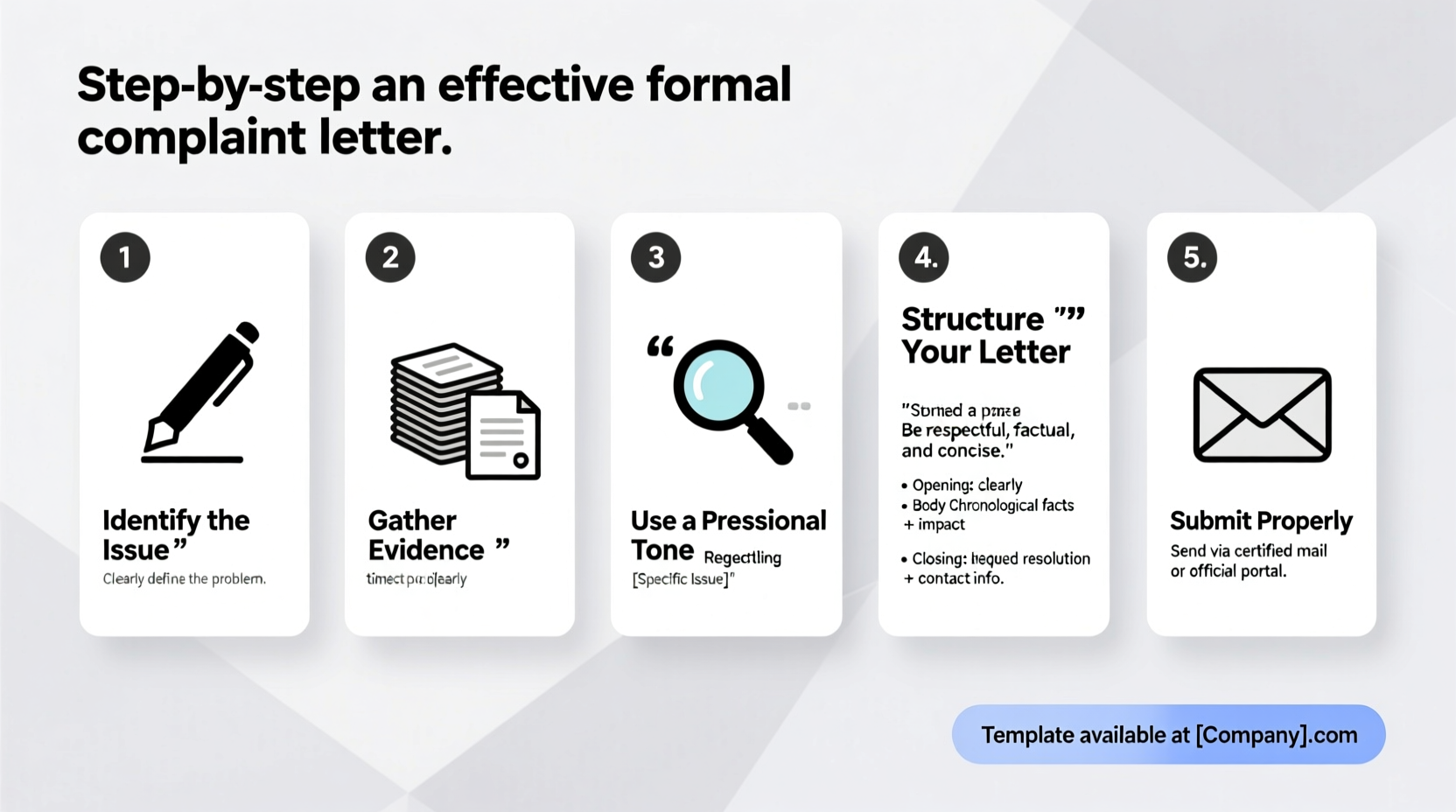
A formal complaint letter serves as both a record and a request. It documents your experience, outlines expectations, and invites resolution. When done correctly, it shifts the dynamic from confrontation to collaboration. Organizations often rely on written complaints to initiate internal reviews, track recurring problems, and comply with regulatory standards. More importantly, a respectful tone increases the likelihood of a constructive response. Aggression may feel justified in the moment, but it often triggers defensiveness rather than solutions.
“Effective communication isn’t about winning an argument—it’s about achieving resolution. A clear, fact-based complaint letter sets the foundation for accountability.” — Dr. Linda Harper, Organizational Communication Specialist
Step-by-Step Guide to Writing Your Complaint Letter
Follow this structured process to ensure your letter is thorough, persuasive, and professionally presented.
- Identify the Issue Clearly
Pinpoint exactly what went wrong. Was a service delayed? Was a product defective? Avoid generalizations like “poor customer service” and instead specify: “The technician arrived two hours after the scheduled time without prior notice.” - Gather Supporting Evidence
Collect receipts, emails, photos, contracts, or warranty documents. Reference these in your letter to strengthen your position. For example: “As shown in the attached invoice (Ref: #7845), payment was made in full on June 3.” - Determine the Recipient
Address the letter to the appropriate person or department. If unsure, start with customer service or a supervisor. Use official titles when possible: “Dear Customer Relations Manager,” not “To Whom It May Concern,” if avoidable. - Structure the Letter Properly
Use standard business formatting: your contact information at the top, date, recipient details, subject line, salutation, body paragraphs, closing, and signature. Keep the layout clean and easy to read. - Draft with Clarity and Calmness
Begin with context, state the problem, present facts, explain the impact, and conclude with a specific request. Never assume intent—focus on actions and outcomes. - Proofread and Send
Check for spelling, grammar, and tone. Read it aloud to catch awkward phrasing. Send via certified mail or email with read receipt, depending on urgency and formality required.
Key Components of an Effective Complaint Letter
An impactful letter includes several essential elements. Omitting any of them weakens its effectiveness.
- Subject Line: Clear and specific, e.g., “Formal Complaint Regarding Unauthorized Charges – Account #XK928”
- Opening Paragraph: State your purpose immediately: “I am writing to formally complain about the malfunctioning refrigerator delivered on May 12, 2024.”
- Middle Section: Present facts chronologically. Include dates, names, and reference numbers. Explain how the issue affected you—financial loss, inconvenience, safety concerns.
- Resolution Request: Be specific. Do you want a refund, replacement, repair, apology, or policy change? Example: “I request a full refund of $1,250 or a replacement unit within 10 business days.”
- Closing: Express willingness to cooperate and provide contact details. End politely: “I appreciate your prompt attention to this matter.”
Do’s and Don’ts of Formal Complaints
| Do’s | Don’ts |
|---|---|
| Be factual and objective | Use emotional language or accusations |
| Include dates, names, and reference numbers | Omit supporting evidence |
| Request a specific action or remedy | Make threats or ultimatums |
| Maintain a respectful tone | Blame individuals personally |
| Keep a copy and track responses | Send anonymous complaints without follow-up |
Real Example: Resolving a Billing Error
Sarah Thompson noticed a $300 overcharge on her internet bill. The provider had applied a discontinued promotional rate retroactively, violating their agreement. Instead of calling angrily, she wrote a formal letter:
“On January 5, I received Invoice #IN9442 showing a balance of $380. According to our contract (attached), my monthly rate is $80 under Promotion Code WELC100, valid until December 31, 2024. However, your system charged me at the standard rate of $380 starting October. This discrepancy has caused undue financial strain. I request an immediate correction, a refund of $300, and written confirmation of the adjustment. I can be reached at sarah.thompson@email.com or (555) 123-4567.”
Within five days, the company responded with an apology, processed the refund, and assigned a dedicated account manager. Sarah’s clarity, documentation, and calm tone made resolution faster and more effective than repeated phone calls would have.
Checklist: Before You Send Your Letter
- ✅ Defined the exact issue with supporting details (dates, names, amounts)
- ✅ Attached copies of relevant documents (no originals)
- ✅ Addressed the letter to the correct person/department
- ✅ Used a professional tone—respectful, not emotional
- ✅ Stated a clear, reasonable request for resolution
- ✅ Proofread for grammar, spelling, and clarity
- ✅ Kept a copy and planned follow-up if no response in 10–14 days
Frequently Asked Questions
How long should a formal complaint letter be?
Ideal length is one page. Focus on conciseness. If additional details are necessary, include them as attachments rather than extending the letter.
What if I don’t receive a response?
If there's no reply within 10–14 business days, send a polite follow-up. If still ignored, consider escalating to a regulatory body, ombudsman, or legal counsel, depending on the issue.
Can I send a complaint email instead of a physical letter?
Yes, email is acceptable and often faster. Use the same structure and tone. Include “Formal Complaint” in the subject line and request a read receipt if possible.
Final Thoughts: Turn Frustration into Resolution
A formal complaint letter is not an act of aggression—it’s an assertion of your rights and expectations. When written with precision and professionalism, it commands attention and opens the door to resolution. Whether dealing with a faulty appliance, billing error, or workplace concern, your ability to communicate clearly determines the outcome more than the severity of the issue itself. Take the time to organize your thoughts, gather evidence, and craft a message that reflects both your seriousness and your reasonableness.




 浙公网安备
33010002000092号
浙公网安备
33010002000092号 浙B2-20120091-4
Comments
No comments yet. Why don't you start the discussion?