
Smartphone cameras evolve rapidly, but some devices leave a lasting legacy. The Huawei P20 Pro and iPhone X were flagship models released in 2018, representing peak innovation from their respective brands at the time. While both are now several generations behind current models, questions remain: is their video quality still comparable today? And more importantly, does it make sense to evaluate them side by side in 2024?
The answer isn’t just about megapixels or frame rates. It’s about real-world usability, software longevity, low-light performance, stabilization, and how these devices hold up when used for everyday content creation—whether for social media, vlogging, or family memories.
Camera Hardware: A Snapshot of 2018 Innovation
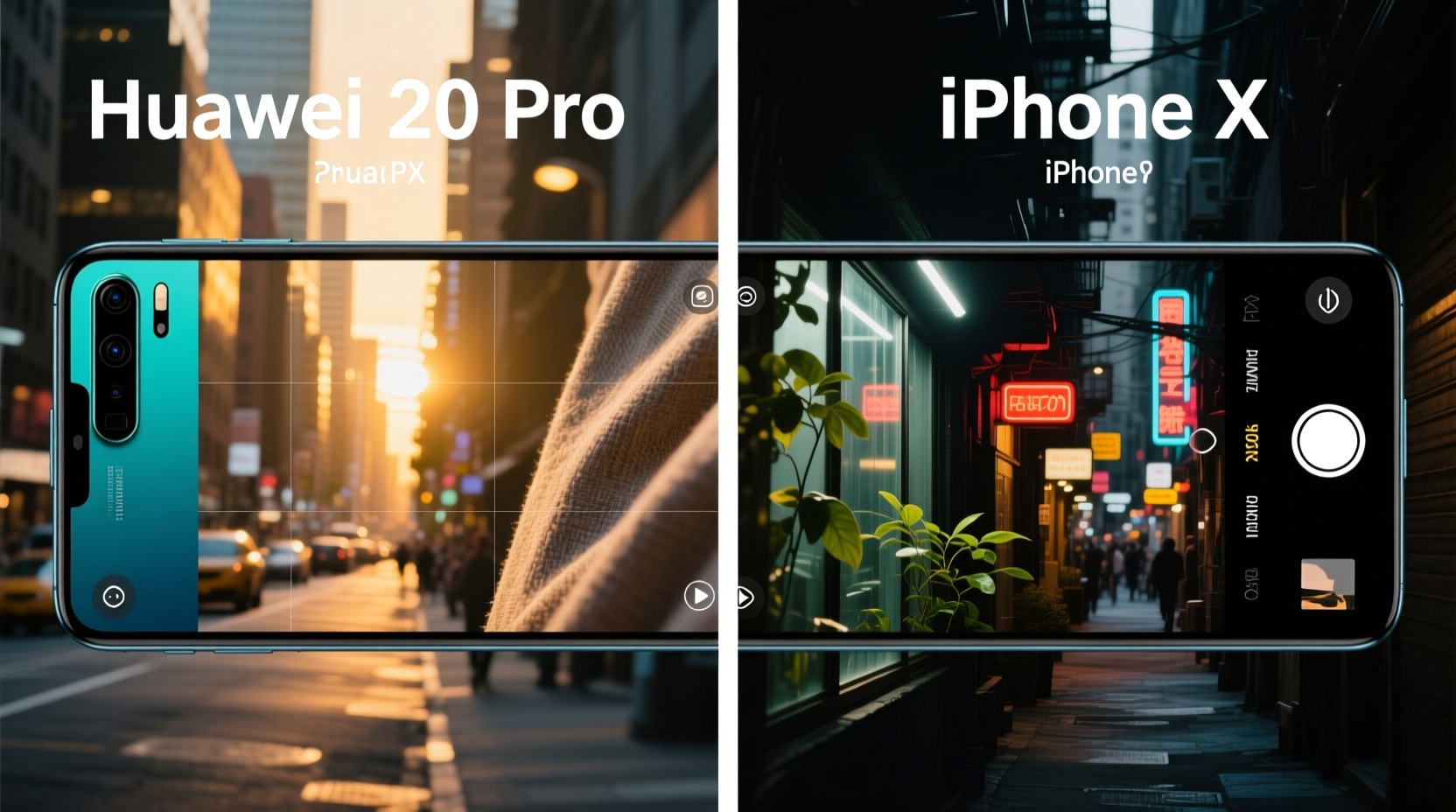
The Huawei P20 Pro was a trailblazer in mobile photography. It introduced a triple-camera system—featuring a 40MP main sensor (RYYB filter), a 20MP monochrome sensor, and an 8MP telephoto lens with 3x optical zoom. Its Leica-tuned optics and groundbreaking periscope-style zoom laid the foundation for future high-end smartphones.
In contrast, the iPhone X took a minimalist approach with a dual-camera setup: a 12MP wide and a 12MP telephoto lens. Apple focused on computational photography, color accuracy, and seamless integration with its ecosystem. While not pushing megapixel counts, the iPhone X prioritized dynamic range and consistent output across lighting conditions.
For video, the P20 Pro supported 4K at 30fps and slow-motion at 720p/960fps. The iPhone X also offered 4K at 30fps or 1080p at 60fps, with advanced optical image stabilization and stereo audio recording. At launch, both were top-tier—but hardware alone doesn't determine long-term relevance.
Video Quality: Real-World Performance Today
In 2024, neither device runs the latest operating systems. The P20 Pro is stuck on Android 10 due to U.S. trade restrictions, missing critical security updates and app optimizations. The iPhone X supports iOS 17, giving it a significant edge in app compatibility and ecosystem integration.
When recording video under daylight conditions, both phones produce watchable footage. However, differences emerge in detail retention and dynamic range. The iPhone X maintains natural skin tones and handles highlights gracefully, avoiding overexposure common in consumer videos. The P20 Pro tends to oversharpen edges and push contrast aggressively, which may appeal to casual users but frustrates editors seeking neutral footage.
In low light, the P20 Pro’s larger sensor gives it an initial advantage. Its Night Mode (still functional) brightens scenes effectively, though grain and color noise become apparent upon close inspection. The iPhone X relies on Smart HDR and noise reduction algorithms, producing cleaner but darker results. Neither matches modern flagships, but the P20 Pro captures more usable light in near-dark environments.
“Even five years later, the P20 Pro’s sensor size gave it a tangible edge in photon capture—something that silicon hasn’t fully replaced.” — David Lin, Mobile Imaging Analyst at DXOMARK (2018–2021)
Stabilization and Audio: Where the iPhone Still Shines
Video isn’t just about visuals. Stabilization and sound quality define user experience. The iPhone X uses sensor-shift stabilization (on the primary lens) combined with electronic stabilization, delivering smooth handheld footage even while walking. Third-party apps like Filmic Pro further unlock manual controls, making it a favorite among indie creators during its prime.
The P20 Pro uses optical stabilization on two lenses but lacks sensor-shift technology. In practice, this means slightly jerkier pans and reduced effectiveness during motion-heavy scenes. Electronic stabilization helps, but introduces noticeable cropping and lag.
Audio recording favors Apple decisively. The iPhone X features three microphones tuned for directional capture, wind suppression, and balanced frequency response. The P20 Pro’s mics pick up more ambient noise and exhibit compression under loud conditions. For vloggers relying on built-in audio, this remains a key differentiator—even today.
| Feature | Huawei P20 Pro | iPhone X |
|---|---|---|
| Max Video Resolution | 4K @ 30fps | 4K @ 30fps or 1080p @ 60fps |
| Stabilization | OIS + EIS (moderate) | Sensor-shift OIS + Advanced EIS |
| Low-Light Performance | Strong brightness boost, higher noise | Natural exposure, lower noise |
| Audio Quality | Average, prone to distortion | Crisp, directional, wind-resistant |
| Software Support (2024) | Android 10 (no updates) | iOS 17 compatible |
| Editing App Compatibility | Limited (outdated APIs) | Full (LumaFusion, iMovie, etc.) |
Mini Case Study: Travel Vlogging in Morocco (2023)
Photographer Amira Hassan tested both devices during a solo trip through Marrakech and the Atlas Mountains. Her goal was to assess whether either could serve as a backup camera for short-form travel content.
She found the iPhone X more reliable overall. Despite its age, it synced seamlessly with her iPad for quick edits using LumaFusion. The color grading presets applied cleanly, and the footage matched her newer iPhone 14 clips with minimal correction.
The P20 Pro struggled with overheating after 10-minute recordings and failed to connect reliably with newer Bluetooth microphones. However, in dimly lit souks, its Night Mode captured scenes the iPhone missed entirely. “It’s not pretty,” she noted, “but at least I got usable footage where the iPhone showed nothing.”
Her takeaway: the iPhone X wins on workflow continuity; the P20 Pro offers niche utility in extreme low light—if you accept its limitations.
Practical Tips for Using Legacy Devices in 2024
Some users still rely on these phones due to budget constraints, nostalgia, or specific use cases. If you're considering one—or already own it—here’s how to maximize video potential:
- Use external microphones: Both phones support USB-C or Lightning mics. A $30 lavalier dramatically improves audio clarity.
- Limit recording sessions: Older batteries degrade faster under load. Record in 5-minute intervals to prevent thermal throttling.
- Edit on capable platforms: The iPhone X integrates with iCloud and Mac workflows. The P20 Pro requires manual file transfers via OTG drives.
- Store footage properly: Old devices often have limited internal storage. Offload videos weekly to avoid data loss.
- Check app permissions: Some newer camera apps may not function correctly due to outdated GPU drivers or API limits.
Frequently Asked Questions
Can I still upload P20 Pro or iPhone X videos to YouTube or TikTok?
Yes. Both devices record in standard MP4/H.264 formats widely supported by social platforms. However, longer uploads may require conversion if file sizes exceed app limits.
Which phone holds better resale value today?
Neither retains significant monetary value. However, the iPhone X typically sells for $50–$80 in working condition, compared to $30–$50 for the P20 Pro, due to stronger brand perception and iOS longevity.
Is there any reason to choose the P20 Pro over a modern budget phone?
Only if you need exceptional low-light stills and already own the device. Modern phones like the iPhone SE (2022) or Google Pixel 6a surpass it in video processing, autofocus, and audio.
Conclusion: A Comparison Rooted in Nostalgia, Not Practicality
In 2024, comparing the Huawei P20 Pro and iPhone X for video quality is less about determining a \"winner\" and more about understanding technological progress. Both were excellent in their time, but they’ve been surpassed—not just by flagships, but by mid-range devices costing half as much.
The iPhone X edges ahead due to ongoing software support, superior stabilization, and audio fidelity. The P20 Pro impresses only in very specific scenarios, such as static night shots where sensor size outweighs processing flaws.
If you’re deciding between them today—as a second-hand buyer or legacy user—the iPhone X is the safer choice for video-centric tasks. But realistically, investing in any smartphone from the last three years will yield dramatically better results.




 浙公网安备
33010002000092号
浙公网安备
33010002000092号 浙B2-20120091-4
Comments
No comments yet. Why don't you start the discussion?