
When the Huawei P20 Pro launched in 2018, it sent shockwaves through the smartphone photography world. For the first time, a non-Samsung or Apple device claimed the top spot in DxOMark’s camera rankings—scoring an unprecedented 109. The Samsung Galaxy S9 Plus, released just months earlier, had held that crown briefly with a score of 99. On paper, that 10-point gap suggests a dramatic leap in image quality. But for everyday users, the real question remains: Is the P20 Pro’s camera superiority real, or are these two flagships practically the same in daily use?
This isn’t just about specs or scores. It’s about how each phone performs when you’re capturing memories—under dim lighting, during fast action, or in bright daylight. Let’s break down the cameras from both devices across key categories to see whether the hype holds up.
Hardware Differences: More Than Just Megapixels
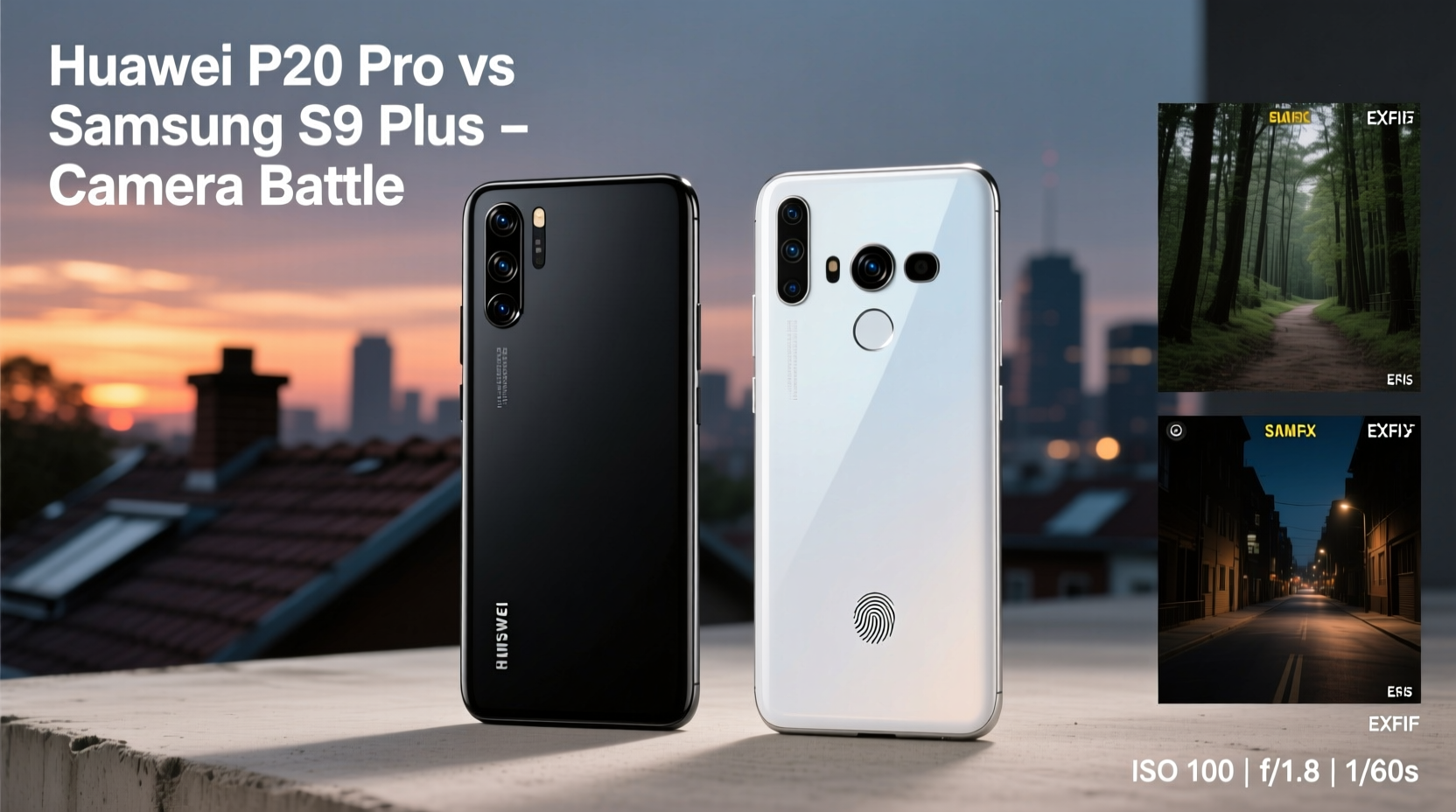
The most fundamental distinction between the P20 Pro and S9 Plus lies in their sensor configurations. These hardware choices shape everything from dynamic range to zoom capability.
| Feature | Huawei P20 Pro | Samsung Galaxy S9 Plus |
|---|---|---|
| Main Sensor | 40MP RGB (f/1.8) | 12MP Dual Pixel (f/1.5–f/2.4 variable) |
| Secondary Sensor | 20MP Monochrome (f/1.6) | 12MP Telephoto (f/2.4) |
| Third Sensor | 8MP Telephoto (f/2.4, 3x optical zoom) | N/A |
| Aperture Control | Fixed per lens | f/1.5 & f/2.4 (adjustable on main cam) |
| Image Stabilization | OIS on main and telephoto | OIS on main and telephoto |
The P20 Pro’s triple-camera system was groundbreaking at the time. The inclusion of a monochrome sensor allowed for enhanced detail and dynamic range by combining luminance data from the black-and-white sensor with color from the RGB unit. Meanwhile, Samsung opted for a dual-lens setup but introduced a revolutionary variable aperture on the primary sensor—switching between f/1.5 for low light and f/2.4 for brighter scenes.
Low-Light Performance: Where the P20 Pro Shines
If there’s one area where the P20 Pro clearly outperforms the S9 Plus, it’s in dark environments. Thanks to its larger effective pixel size (after pixel binning), combined with AI-powered scene detection and dedicated Night Mode, the P20 Pro captures brighter, cleaner images with more natural contrast.
In side-by-side tests, the S9 Plus often produces warmer, more saturated night shots—but at the cost of blown-out highlights and increased noise in shadow areas. Its variable aperture helps, but without computational photography enhancements as advanced as Huawei’s, it struggles to match the P20 Pro’s clarity and balanced exposure.
“Huawei’s approach to multi-frame noise reduction in Night Mode was years ahead of its time. It wasn’t just hardware—it was intelligent processing.” — David Nagel, Mobile Imaging Analyst, DXOMARK
For example, in a dimly lit restaurant, the P20 Pro maintains facial details and ambient mood without over-brightening, while the S9 Plus tends to apply aggressive HDR, making scenes look artificial. This difference becomes even more pronounced in near-dark conditions where the S9 Plus starts losing texture entirely.
Zoom and Detail: Optical vs Computational Advantage
The S9 Plus offers 2x optical zoom via its secondary telephoto lens. The P20 Pro goes further with a true 3x optical zoom, enabling tighter framing without quality loss. Beyond that, Huawei’s hybrid zoom—using sensor cropping and AI sharpening—can reach up to 5x before digital degradation sets in.
In practical terms, if you frequently photograph distant subjects—a child on stage, wildlife, or architecture—the P20 Pro delivers noticeably sharper results at medium to long distances. Samsung’s Super Res Zoom does attempt to enhance digital zoom, but lacks the foundation of a longer native focal length.
However, in well-lit daylight scenarios, the S9 Plus compensates with excellent edge preservation and accurate skin tones, especially when using its dual-pixel autofocus system, which excels in tracking moving subjects.
Real-World Example: Concert Photography
Consider a user attending a small indoor concert. Lighting is poor, the stage is 20 feet away, and performers are constantly moving. Using the S9 Plus, the photos may capture motion accurately due to fast autofocus, but suffer from graininess and limited reach. The 2x zoom forces the user to crop heavily, reducing resolution.
Switch to the P20 Pro: activating Night Mode stabilizes the shot, reduces noise, and allows for a cleaner 3x zoom. While motion blur can still occur due to longer shutter speed, the overall result is more usable—brighter, clearer, and compositionally stronger.
Color Science and Processing: Preference Over Performance
Color reproduction is subjective, but patterns emerge. The S9 Plus favors vibrant, punchy colors—especially greens and blues—making outdoor scenes pop. This aligns with Samsung’s longstanding display tuning philosophy. Skin tones tend to lean slightly warm, which many find flattering.
The P20 Pro, particularly under AI scene optimization, adjusts saturation based on detected objects. Foliage becomes greener, skies bluer, and food more appetizing. However, some critics argue this leads to oversaturation in mixed scenes. When AI is disabled, the P20 Pro produces more neutral, film-like tones—closer to what professionals might prefer.
Neither approach is objectively better, but consistency matters. The S9 Plus applies similar processing across conditions, whereas the P20 Pro’s AI can create inconsistency between shots if lighting changes rapidly.
Video Capabilities: Stability vs Innovation
Both phones support 4K video at 30fps and offer optical image stabilization. The S9 Plus adds Super Slow-mo at 960fps in 720p, a fun feature for creative clips. Audio recording benefits from stereo mics with adjustable wind reduction.
The P20 Pro lacks Super Slow-mo but provides superior dynamic range in high-contrast scenes. Its microphone system filters background noise effectively, and footage retains more highlight detail in backlit situations.
Stabilization is comparable, though the S9 Plus edges ahead in handheld walking shots thanks to refined software algorithms. However, the P20 Pro handles rapid panning better due to less rolling shutter effect.
Checklist: Choosing Based on Your Needs
- Choose the Huawei P20 Pro if:
- You often shoot in low light
- You value optical zoom beyond 2x
- You want cutting-edge computational photography
- You prioritize still image detail over video features
- Choose the Samsung S9 Plus if:
- You shoot lots of videos or slow-motion clips
- You prefer consistent, vibrant color science
- You value reliable autofocus in motion
- You already use Samsung ecosystem devices
Frequently Asked Questions
Is the Huawei P20 Pro better than the S9 Plus overall?
In still photography—especially in low light and zoom scenarios—the P20 Pro holds a measurable advantage. However, the S9 Plus offers superior video tools and more predictable image processing. The “better” phone depends on your priorities.
Can the S9 Plus catch up with software updates?
While Samsung improved its camera firmware post-launch, the lack of a third lens and fixed AI capabilities limited gains. Hardware constraints prevented it from matching the P20 Pro’s low-light performance, even with updates.
Does the P20 Pro’s AI make a real difference?
Yes, particularly in automatic mode. AI detects scenes like night, food, or portraits and adjusts contrast, saturation, and focus accordingly. Some users disable it for creative control, but casual shooters benefit from optimized defaults.
Final Verdict: The Hype Is Real—But Context Matters
The Huawei P20 Pro wasn’t just marginally better—it redefined what a smartphone camera could do in 2018. Its triple-sensor array, Night Mode, and 3x optical zoom delivered tangible improvements, especially in challenging lighting and distant framing. The DxOMark score wasn’t marketing fluff; it reflected measurable advances in dynamic range, noise reduction, and autofocus accuracy.
That said, calling the S9 Plus “basically the same” undersells its strengths. It remains an excellent all-around camera with superb video features, reliable performance, and a polished user experience. For users who value consistency, vibrant colors, and ecosystem integration, it’s still a compelling choice.
The truth is, the P20 Pro wins on innovation and photographic capability, while the S9 Plus wins on usability and versatility. They aren’t the same—but they don’t need to be. Each excels in different domains.




 浙公网安备
33010002000092号
浙公网安备
33010002000092号 浙B2-20120091-4
Comments
No comments yet. Why don't you start the discussion?