
Choosing the right headset for podcasting isn’t just about comfort or brand reputation—it’s about capturing clear, professional-grade audio while ensuring long-term usability during recording sessions. Two of the most frequently recommended headsets in this price range are the HyperX Cloud series and the Audio-Technica ATH-M50x. Both have earned loyal followings among streamers, musicians, and content creators. But when it comes to podcasting specifically—where vocal clarity, isolation, and consistent monitoring matter—how do they really stack up?
This comparison dives deep into build quality, sound signature, microphone performance, comfort, and real-world usability to determine which headset better serves podcasters from beginner to intermediate levels.
Sound Quality and Frequency Response
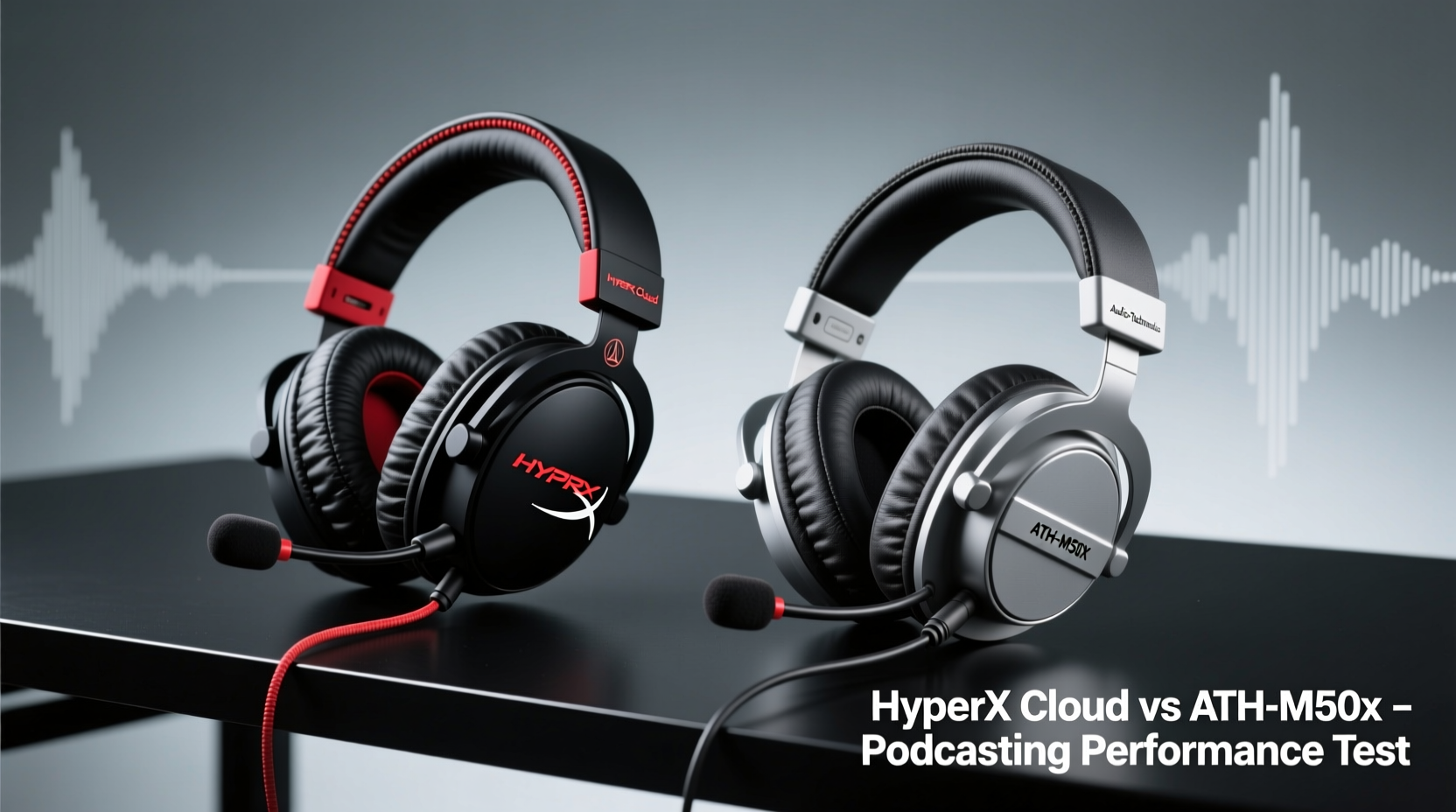
For podcasters, accurate sound reproduction is critical—not only for hearing your own voice clearly but also for editing and post-production decisions. The way a headset renders frequencies directly impacts how well you can detect plosives, background noise, or tonal imbalances.
The **Audio-Technica ATH-M50x** has long been praised for its studio-grade sound profile. With a frequency response of 15 Hz – 28 kHz and neodymium magnets driving 45 mm drivers, it delivers a balanced, slightly neutral-to-crisp sound. This makes it excellent for identifying subtle audio flaws in recordings. Its closed-back design provides decent passive isolation, helping you focus on playback without external distractions.
In contrast, the **HyperX Cloud** (specifically the original and Cloud II models) leans toward a consumer-friendly tuning with boosted bass and enhanced mids. While great for gaming immersion, this can mask low-end rumble or overemphasize vocal warmth, potentially leading to over-compression during editing. Its frequency response ranges from 15 Hz – 27 kHz, similar to the M50x, but the tuning philosophy differs significantly.
“Headphones that color the sound can mislead your mixing choices. For voice work, neutrality wins.” — Daniel Ruiz, Audio Post-Production Engineer
Microphone Performance and Clarity
A built-in microphone is essential for podcasters who want an all-in-one solution. Here, the HyperX Cloud holds a distinct advantage over the ATH-M50x.
The HyperX Cloud features a detachable noise-cancelling microphone with a cardioid polar pattern, designed to pick up sound primarily from the front while minimizing ambient noise. It's certified by Discord and TeamSpeak, meaning it performs reliably in voice capture. When tested with voice recording software like Audacity or Adobe Audition, the mic delivers warm, full-bodied vocal tones suitable for narrative or conversational podcasts. However, it may require minor gain adjustment to avoid clipping on louder speech.
The **ATH-M50x**, on the other hand, does not come with a microphone. Period. This is a major limitation for podcasters seeking plug-and-play functionality. To use the M50x for recording, you’ll need to pair it with an external microphone—such as a dynamic mic like the Shure SM7B or even a USB option like the Elgato Wave 3. While this setup offers higher flexibility and superior vocal capture, it increases cost and complexity.
For solo podcasters or those recording remotely with limited gear, the lack of a mic on the M50x could be a dealbreaker. But for professionals already using standalone mics, the absence becomes irrelevant—and possibly preferable, since monitoring and recording inputs can be separated cleanly.
Comfort and Long-Term Wearability
Podcast episodes often run 30 minutes to over two hours. During that time, comfort is non-negotiable. A headset that causes ear fatigue or pressure points will distract from performance and reduce recording quality.
The HyperX Cloud uses memory foam ear cushions wrapped in synthetic leather and fabric. These pads are soft out of the box and distribute clamp force evenly across the headband. Many users report being able to wear them for 3+ hour sessions without discomfort. The adjustable steel-reinforced frame adds durability while allowing precise fit customization.
The ATH-M50x uses thicker pleather-covered earcups and a tighter clamp initially. Some users find them uncomfortable during extended use due to increased heat buildup and side pressure. However, after a break-in period (typically 20–30 hours), the earpads soften and conform better to the ears. Replacement aftermarket pads (like velour or hybrid options) are widely available and can dramatically improve comfort.
| Feature | HyperX Cloud | Audio-Technica ATH-M50x |
|---|---|---|
| Ear Pad Material | Synthetic leather + fabric | Pleather (closed-cell) |
| Clamp Force | Moderate | Firm (eases over time) |
| Heat Buildup | Low to moderate | Moderate to high |
| Replaceable Pads | Yes (proprietary shape) | Yes (standard screw-on) |
| Best For | Long recording sessions | Shorter monitoring tasks |
Durability and Build Quality
Podcasters need gear that lasts. Frequent plugging/unplugging, travel, and daily use demand rugged construction.
The HyperX Cloud boasts a hybrid aluminum and steel frame, with reinforced hinges at the ear cup swivels. Its detachable microphone cable uses a standard 3.5mm connection, reducing strain on the main unit. The overall design prioritizes resilience for gamers—but that toughness translates well to mobile podcasters or co-hosted shows where equipment gets handled regularly.
The ATH-M50x matches this with a fully foldable design and industrial-grade build. Its earcups rotate 90 degrees for single-ear monitoring—a feature rare among consumer headsets but invaluable for checking levels mid-interview. The cables are replaceable via dual-sided locking connectors, and the entire unit is made from ABS plastic with metal reinforcement. It’s lighter than the Cloud but feels equally robust.
Both headsets exceed typical consumer durability standards. However, the M50x’s proven track record in broadcast environments gives it a slight edge for mission-critical applications.
Use Case Scenarios: Who Should Choose Which?
Let’s look at real-world examples to illustrate which headset fits different podcasting needs.
Mini Case Study: Remote Interview Podcast
Maya runs a weekly interview podcast with remote guests. She records via Zoom using her laptop and wants a simple, reliable setup. She doesn’t edit heavily—just basic trimming and leveling. For her, the **HyperX Cloud II** is ideal. The built-in mic works seamlessly with conferencing apps, and she can monitor both her voice and guest audio in real time. Comfort allows her to wear it through back-to-back interviews. She values convenience over audiophile precision.
Mini Case Study: Independent Narrative Podcaster
James produces a cinematic storytelling podcast with layered sound design. He records narration in a treated closet-turned-studio and edits extensively in Reaper. He already owns an Audio-Technica AT2020USB+ and uses it for voice capture. For him, the **ATH-M50x** is the logical choice. He only needs accurate monitoring headphones. The neutral sound helps him fine-tune reverb, EQ, and dynamics. The foldable design lets him pack them easily when recording field audio.
Checklist: Choosing the Right Headset for Your Podcast
- ✅ Do you need a built-in microphone? → Choose HyperX Cloud
- ✅ Are you already using an external mic? → Consider ATH-M50x
- ✅ Will you record for more than 60 minutes per session? → Prioritize comfort (Cloud edges out M50x)
- ✅ Do you edit your own audio? → Opt for neutral sound (M50x preferred)
- ✅ Is portability important? → Both are good; M50x folds smaller
- ✅ On a tight budget? → Cloud offers more value with mic included
Frequently Asked Questions
Can I use the ATH-M50x for recording my voice?
No, the ATH-M50x does not have a microphone. You must pair it with a separate microphone for voice recording. However, it excels as monitoring headphones once you have a mic setup.
Is the HyperX Cloud good for professional-sounding podcasts?
Yes, especially if you’re starting out. The microphone captures clear voice audio, and the sound quality is sufficient for platforms like Spotify and Apple Podcasts. For higher-end production, consider upgrading to a dedicated mic later.
Which headset has better noise isolation?
The HyperX Cloud offers slightly better passive isolation due to deeper ear cups and softer padding. Neither has active noise cancellation, so quiet recording environments are still essential.
Final Verdict: Which One Wins for Podcasting?
The answer depends on your stage, goals, and existing setup.
If you're launching your first podcast and want an affordable, all-in-one solution with strong mic performance and solid comfort, the **HyperX Cloud** is the better choice. It removes barriers to entry, integrates smoothly with common software, and handles daily use reliably.
If you're serious about audio fidelity, already investing in recording gear, or editing your own content, the **Audio-Technica ATH-M50x** is the superior tool. Its accuracy, durability, and industry recognition make it a staple in professional workflows—even if it requires additional investment in a microphone.
Ultimately, neither headset fails. But for most emerging podcasters, the HyperX Cloud delivers more immediate utility. For purists and upgraders, the ATH-M50x remains a benchmark in reference listening.
Take Action Today
Your podcast deserves reliable tools from day one. Whether you choose the versatility of the HyperX Cloud or the precision of the ATH-M50x, what matters most is consistency in your craft. Start recording, refine your process, and let your voice be heard. The right headset is just the beginning.




 浙公网安备
33010002000092号
浙公网安备
33010002000092号 浙B2-20120091-4
Comments
No comments yet. Why don't you start the discussion?