
There’s a quiet power in repetition—especially when it comes to music. The phrase “I keep on wondering why” echoes not just as a lyric but as an internal refrain many of us carry. Whether it stems from a specific track or has become a symbolic expression of introspection, this line opens a door into emotional landscapes shaped by doubt, longing, and self-inquiry. Exploring the song—and the sentiment behind it—reveals more than melody; it uncovers how music becomes a mirror for unresolved questions.
While no single globally recognized hit bears this exact title, variations of the phrase appear across genres—from soul and R&B to indie folk and lo-fi ballads. These songs often center on themes of confusion in love, existential reflection, or the aftermath of loss. What makes them compelling is not just their sound, but their ability to articulate what words alone sometimes fail to express: the ache of not knowing.
The Emotional Weight of Repetition in Lyrics
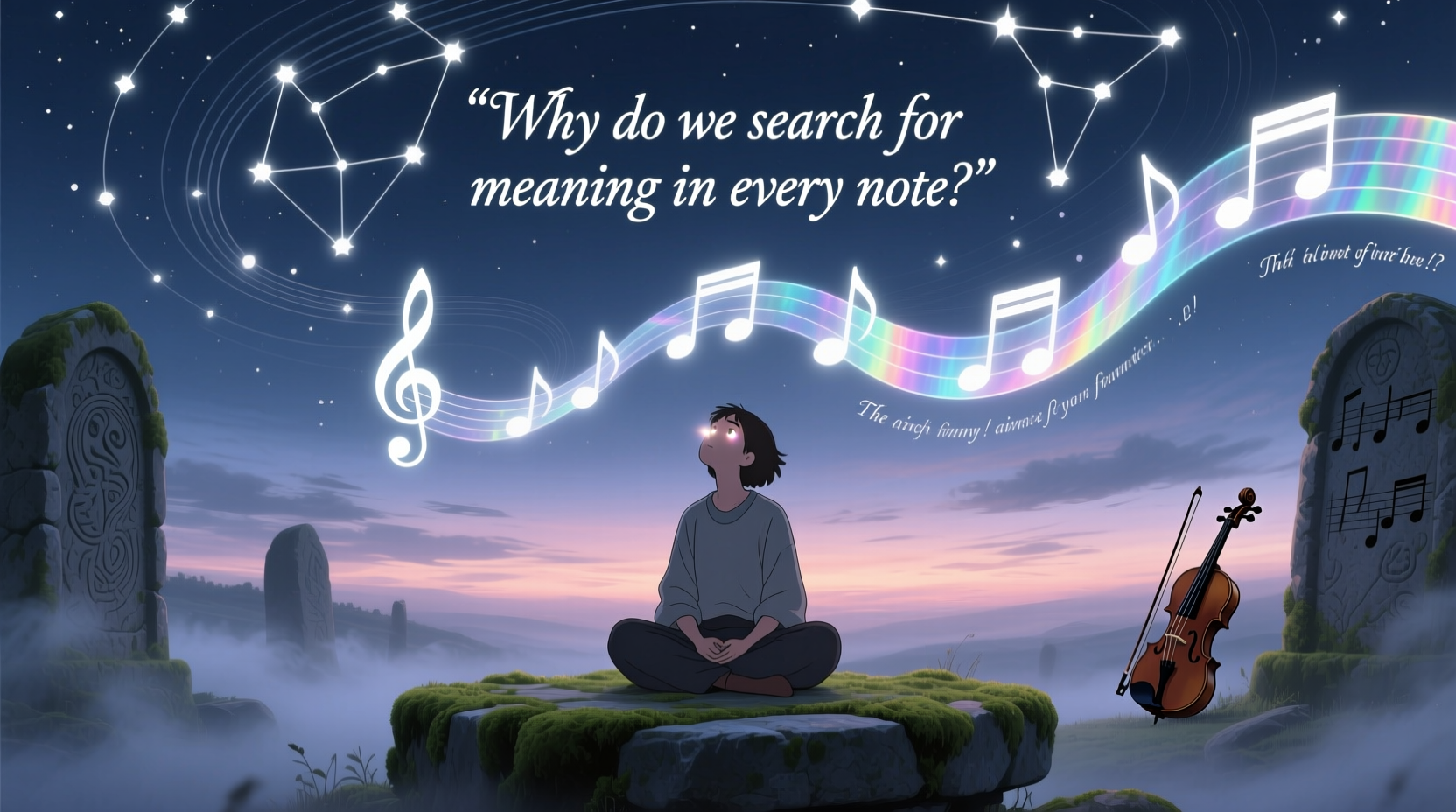
Repetition in songwriting isn’t redundancy—it’s resonance. When an artist repeats “I keep on wondering why,” they’re not merely filling space; they are simulating the looping nature of human thought. Psychological studies show that unresolved cognitive loops—questions without answers—tend to replay in our minds, especially during periods of emotional stress. Music harnesses this tendency, transforming mental recurrence into rhythm.
In songs where this phrase appears, the repetition often coincides with minimal instrumentation—a bare piano line, soft guitar strums, or ambient synth pads. This sonic sparseness forces attention onto the vocal delivery, making each iteration feel heavier than the last. The listener doesn’t just hear the question—they experience its persistence.
Interpreting the Meaning: Love, Loss, and Identity
Most interpretations of “I keep on wondering why” fall into three core categories: romantic uncertainty, grief processing, and identity exploration.
- Romantic Uncertainty: In breakup ballads, the line often follows a sudden separation. The singer isn’t angry or vengeful—they’re puzzled. Why did you leave? Why didn’t we try harder? Why do I still miss you?
- Grief Processing: Some versions emerge after the death of a loved one. Here, the “why” transcends logic—it's less about cause and more about coping. The repetition becomes a form of mourning, a way to stay connected through unanswered questions.
- Identity Exploration: In more introspective tracks, particularly in alternative or spoken-word genres, the phrase shifts inward. It becomes a meditation on self: Why do I react this way? Why can’t I move on? Why do I repeat the same patterns?
“Songs built around unresolved questions don’t aim to provide closure—they create space for it.” — Dr. Lena Torres, Music Psychologist
Case Study: A Hidden Gem – \"Wondering Why\" by Elias June
Elias June, a Brooklyn-based indie artist, released a low-key track titled “Wondering Why” in 2021. With fewer than 500,000 streams, it never charted—but within niche online communities, it gained cult status. The song tells the story of a man revisiting his childhood home years after his father’s passing. Over a looped tape recording of rain sounds, he sings:
“I keep on wondering why / the lights stayed on till 3 a.m. / I keep on wondering why / you never said you were afraid…”
Fans began sharing personal stories in the comments—many about strained parental relationships, undelivered apologies, or inherited silence. What made the song powerful wasn’t resolution, but recognition. Listeners didn’t need answers; they needed confirmation that others carried the same weight.
This example illustrates how a simple lyrical motif can become a vessel for collective emotion. The absence of definitive meaning allowed listeners to project their own experiences, making the song deeply personal despite its sparse narrative.
A Step-by-Step Guide to Analyzing Songs Like This
If you find yourself drawn to songs centered on questioning and introspection, here’s how to engage more deeply:
- Listen without distraction. Use headphones in a quiet space. Focus only on the vocal tone, pacing, and instrumentation.
- Transcribe the lyrics manually. Writing them down slows your engagement and reveals nuances you might miss otherwise.
- Identify the central question. Is it literal (“Why did you leave?”) or metaphorical (“Why am I still stuck?”)?
- Analyze the musical mood. Does the key (major/minor), tempo, or dynamics reflect tension, sadness, or resignation?
- Reflect personally. Ask: Where in my life have I asked this same question? How does the song validate or challenge my feelings?
- Research context. Look up interviews with the artist. Often, creators reveal hidden meanings long after release.
Do’s and Don’ts When Interpreting Lyrical Ambiguity
| Do | Don't |
|---|---|
| Embrace multiple interpretations—ambiguity is intentional | Assume there’s one “correct” meaning |
| Consider the artist’s background and previous work | Ignore cultural or historical context |
| Allow your personal experience to inform understanding | Project so heavily that you erase the original intent |
| Discuss interpretations with others to gain new perspectives | Insist your reading is superior to others’ |
Why We Return to These Songs Again and Again
Songs like these aren’t designed for casual listening. They serve a psychological function: they give voice to thoughts we suppress. In daily life, we’re expected to move forward, to resolve, to heal. But healing isn’t linear. There are days when all we can say is, “I keep on wondering why”—and music gives us permission to stop there.
Neurologically, listening to familiar, emotionally resonant music activates the default mode network—the part of the brain associated with self-reflection, memory, and daydreaming. That’s why hearing such a song might suddenly bring back a forgotten moment, a lost person, or a buried feeling. It’s not escapism; it’s integration.
“Music doesn’t always comfort us by offering answers. Sometimes it comforts us by asking the same questions we do.” — Dr. Lena Torres
FAQ
Is “I Keep on Wondering Why” an actual song title?
Not widely known as a mainstream hit, though several independent artists have used similar phrasing in their titles. Variations appear in genres ranging from soul to bedroom pop. The phrase also circulates in lyric databases and AI-generated music platforms, which may contribute to its perceived ubiquity.
Why do songs about uncertainty feel so relatable?
Because most human experiences involve ambiguity. Unlike films or books, which often conclude with resolution, songs can honor the unresolved. This honesty creates intimacy between artist and listener.
Can listening to sad or questioning music improve mental health?
Yes—when used intentionally. Research shows that reflective listening can aid emotional regulation, provided it doesn’t lead to rumination. Pairing such music with journaling or conversation enhances its therapeutic potential.
Final Thoughts: Let the Question Breathe
There’s courage in not knowing. The next time you find yourself caught in a loop of “I keep on wondering why,” consider leaning into it rather than pushing through. Press play on a song that speaks to that uncertainty. Sit with it. Write your own verse. Share it with someone who might feel the same.
Music like this doesn’t exist to fix us—it exists to remind us we’re not broken for being unfinished. The most profound answers often begin not with certainty, but with a whisper: I keep on wondering why…




 浙公网安备
33010002000092号
浙公网安备
33010002000092号 浙B2-20120091-4
Comments
No comments yet. Why don't you start the discussion?