
Maya Angelou’s groundbreaking memoir I Know Why the Caged Bird Sings is a powerful exploration of identity, trauma, resilience, and self-discovery. Published in 1969, it chronicles Angelou’s early life from age three to seventeen, detailing her experiences with racism, sexual abuse, displacement, and personal growth. The title, drawn from Paul Laurence Dunbar’s poem “Sympathy,” evokes the central metaphor of freedom versus confinement—a theme that resonates throughout each chapter. This in-depth chapter-by-chapter summary and analysis offers readers a deeper understanding of the narrative arc, character evolution, and enduring literary significance of one of the most influential autobiographies of the 20th century.
Chapter 1–5: Displacement and the Search for Belonging
The memoir opens with Marguerite (Maya) and her brother Bailey being sent from California to Stamps, Arkansas, to live with their paternal grandmother, Annie Henderson (Momma). The abrupt separation from their parents sets the tone for Maya’s lifelong struggle with abandonment and identity. In Stamps, a rigidly segregated Southern town, Maya grapples with internalized racism, feeling unattractive and inferior due to societal standards favoring white features.
These early chapters establish Momma as a pillar of strength and moral integrity. Her quiet dignity in the face of racial humiliation—such as when she calmly endures taunts from white children—leaves a lasting impression on Maya. Meanwhile, Bailey serves as Maya’s emotional anchor, offering companionship and protection in an often-hostile environment.
Chapter 6–12: Trauma, Silence, and the Loss of Innocence
The pivotal moment occurs in Chapter 12 when Mr. Freeman, her mother’s boyfriend, sexually assaults eight-year-old Maya. Fearing retaliation against Bailey, she confesses the truth in court—but Mr. Freeman is later killed, likely by her uncles. Convinced her words caused his death, Maya retreats into nearly five years of selective mutism.
This section marks a profound psychological shift. Her silence becomes both a prison and a sanctuary. During this time, Mrs. Bertha Flowers, a refined Black woman in Stamps, plays a transformative role. She reintroduces Maya to language through literature, helping her reclaim her voice through poetry and reading. This act symbolizes the restorative power of art and mentorship in healing trauma.
“Words mean more than what is set down on paper. It takes the human voice to infuse them with shades of deeper meaning.” — Maya Angelou
Chapter 13–19: Movement, Identity, and Racial Consciousness
Maya and Bailey return to their mother, Vivian Baxter, in St. Louis, but the reunion is short-lived due to the aftermath of the assault. They are sent back to Stamps, where Maya begins to confront her sense of difference—not just racially, but emotionally and intellectually. As she grows older, she becomes increasingly aware of systemic racism: the hypocrisy of white churches, the indignity of segregated services, and the economic exploitation of Black labor.
In Chapter 17, the Joe Louis heavyweight championship fight becomes a communal event in Stamps. When Louis wins, the town erupts in pride—an ephemeral moment of triumph over oppression. Angelou writes, “It was victory of the moat deepest kind… it meant to us that we were not so much defeated after all.” This passage underscores how national events become deeply personal for marginalized communities.
| Chapter Range | Key Events | Themes Explored |
|---|---|---|
| 1–5 | Relocation to Stamps; early racial awareness | Belonging, identity, segregation |
| 6–12 | Sexual assault; muteness; Mrs. Flowers’ influence | Trauma, silence, healing through language |
| 13–19 | Return to St. Louis and Stamps; Louis fight | Racial pride, resilience, community |
| 20–24 | Moving to San Francisco; pregnancy | Autonomy, maturity, self-worth |
Chapter 20–24: Autonomy and the Reclamation of Self
As a teenager, Maya moves to San Francisco with her mother. There, she experiences greater personal freedom but also new challenges. She attends a progressive high school, spends time exploring the city, and briefly lives on her own in a junkyard community of teens. This interlude highlights her growing independence and desire to understand human connection beyond race or family.
The climax arrives when Maya discovers she is pregnant after her first sexual experience—motivated more by curiosity than desire. Rather than shame, she responds with determination. She secures a job, hides her condition until the last month, and gives birth to a son at sixteen. The final lines—“Just my breath, carrying my song out” —echo the book’s central metaphor: despite confinement, the caged bird still sings.
Literary Significance and Thematic Analysis
I Know Why the Caged Bird Sings transcends autobiography through its lyrical prose and universal themes. Angelou blends poetic narration with stark realism, creating a work that is both intimate and socially charged. Key themes include:
- Racism and Segregation: Depicted through daily humiliations, such as being denied medical care or forced to use separate facilities.
- Female Empowerment: Maya’s journey from victimhood to agency exemplifies feminist resilience.
- The Power of Language: Speech, silence, and storytelling are tools of survival and liberation.
- Identity Formation: Maya navigates multiple identities—Black, female, displaced, intellectual—and ultimately claims ownership of her story.
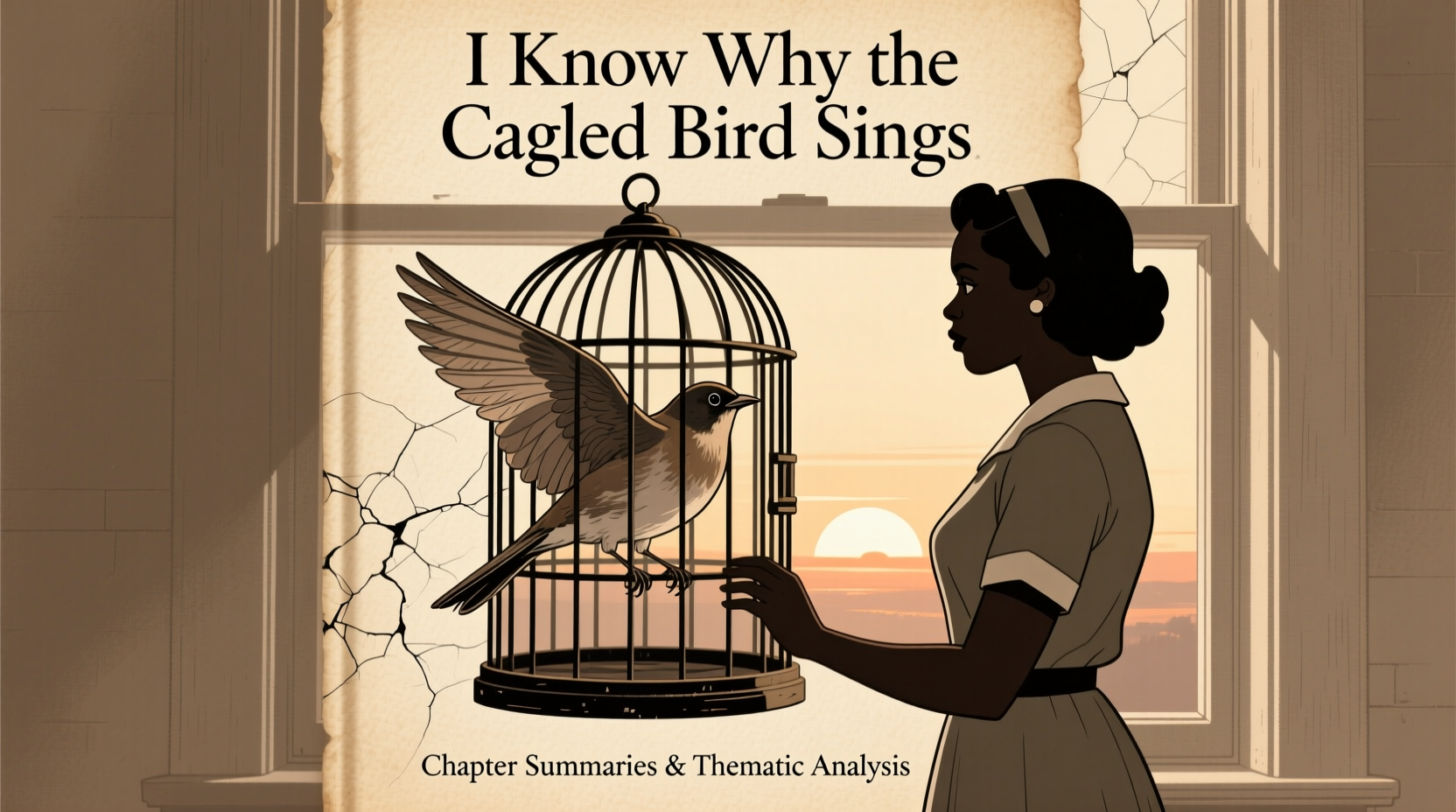
The caged bird itself is a multifaceted symbol: it represents the African American experience under systemic oppression, the silenced voice of abused children, and the indomitable human spirit striving for expression.
“This testimony from a sensitive and intelligent observer of humanity is important for everyone—not only for its historical insight, but for its literary beauty.” — James Baldwin
FAQ
Why is I Know Why the Caged Bird Sings often banned?
The book has faced censorship due to its candid depiction of sexual abuse, racism, and teenage pregnancy. Critics argue these topics are inappropriate for younger readers, though educators defend its value in fostering empathy and dialogue about difficult social issues.
Is Maya Angelou the caged bird?
Yes—metaphorically. Throughout the memoir, Maya experiences various forms of confinement: racial discrimination, trauma-induced silence, and societal expectations placed on Black girls. Her ability to write this memoir is itself an act of singing despite the cage.
How many books are in Maya Angelou’s autobiography series?
There are seven volumes in total. Gather Together in My Name, Singin’ and Swingin’ and Gettin’ Merry Like Christmas, and The Heart of a Woman continue her life story beyond this first installment.
Checklist: How to Analyze I Know Why the Caged Bird Sings Like a Scholar
- Track Maya’s geographic movements and note how each location shapes her identity.
- Annotate passages where language or silence plays a symbolic role.
- Identify key adult figures (Momma, Mrs. Flowers, Vivian) and assess their influence.
- Highlight moments of racial injustice and analyze the community’s response.
- Examine the structure: how does Angelou use chronology, flashbacks, and tone to convey meaning?
- Reflect on the title’s recurring motif—when does the “caged bird” appear explicitly or implicitly?
Conclusion: The Enduring Song of Resilience
I Know Why the Caged Bird Sings remains a cornerstone of American literature because it transforms pain into poetry. Each chapter builds toward a singular truth: that identity is forged not in spite of suffering, but through the courage to speak it. From the cotton fields of Arkansas to the streets of San Francisco, Maya Angelou crafts a narrative that is unflinchingly honest, deeply humane, and artistically masterful.
Understanding the memoir chapter by chapter reveals not just a life story, but a blueprint for resilience. Whether you’re studying the text academically or reading it for personal insight, let Angelou’s voice inspire your own. Her legacy reminds us that even in silence, there is song—and in sharing our stories, we break cages wide open.




 浙公网安备
33010002000092号
浙公网安备
33010002000092号 浙B2-20120091-4
Comments
No comments yet. Why don't you start the discussion?