
When it comes to adding a whimsical touch to handmade crafts, few motifs are as universally loved as ice cream. Whether stitched into fabric or shaped into soft plush, this dessert-inspired design brings joy to tote bags, children’s clothing, and home décor. But when choosing between ice cream plushies and embroidered appliqués, crafters face a real aesthetic and functional dilemma. One offers tactile charm, the other precision and longevity. So which truly wins in the cuteness contest—and more importantly, which serves your project best?
The Allure of Ice Cream Plushies
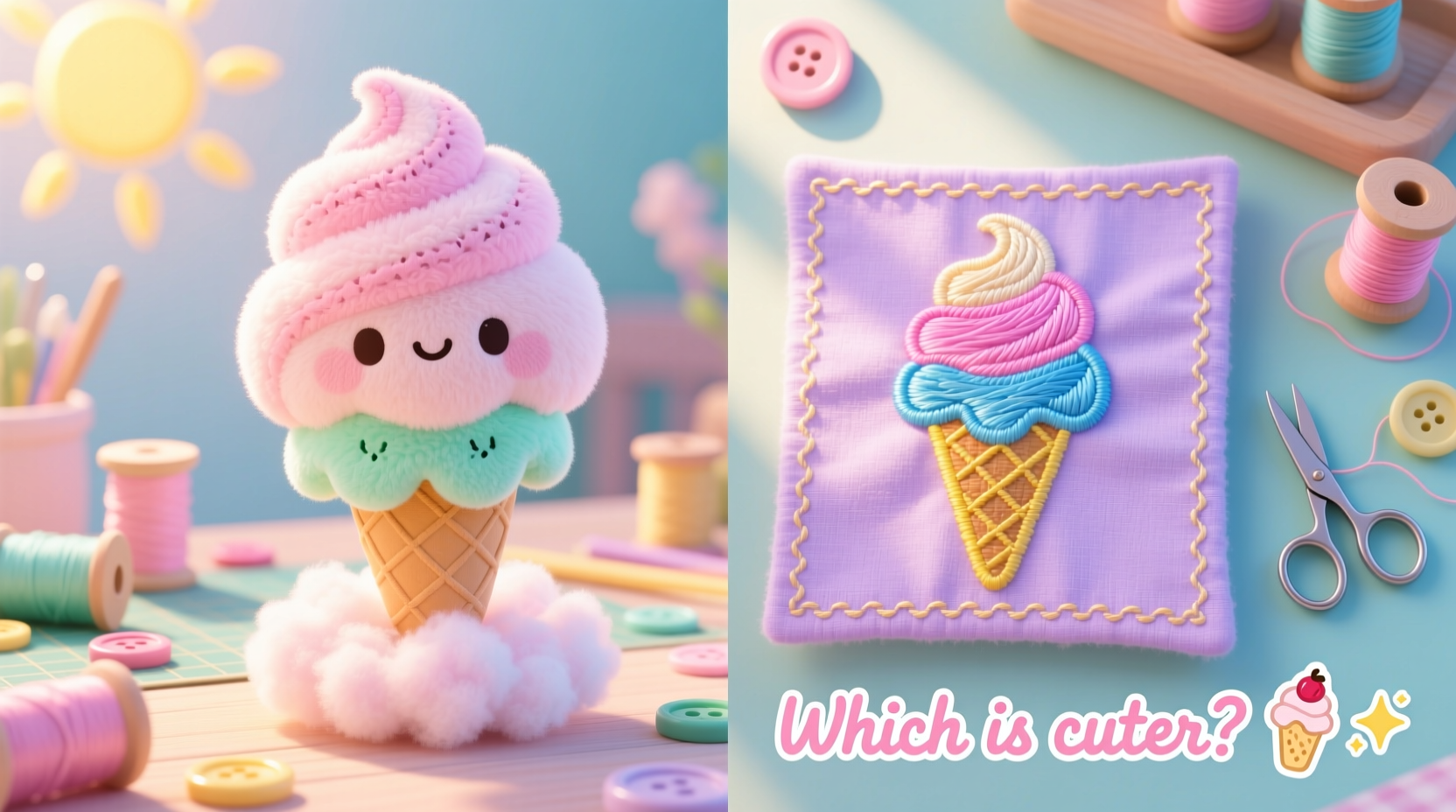
Plushies—three-dimensional, stuffed fabric toys or decorations—are inherently playful. An ice cream plushie typically features soft pastel colors, squishy texture, and exaggerated details like wobbly cherries on top or melting swirls. These characteristics make them instant favorites in children’s crafts, gift-making, and sensory play items.
Because they’re fully formed objects, plushies bring dimension and realism. A hand-sewn ice cream cone plush can sit proudly on a shelf or be attached as a dangling charm to a backpack. Their physical presence adds depth that flat embellishments simply can’t match.
When Plushies Shine: Ideal Use Cases
- Toys and dolls: Perfect for creating themed playsets or character accessories.
- Keychains and bag charms: Durable plushies with secure stitching work well here.
- Sensory crafts: Textural variety appeals to young children and special needs learners.
- Gift toppers: Attach a mini ice cream plush to elevate handmade presents.
The Precision of Embroidered Appliqués
An embroidered appliqué combines two techniques: fabric pieces (the appliqué) are layered onto a base material and then secured with decorative stitching. In the case of an ice cream design, you might see a pink felt scoop stitched over a brown cone with satin-stitch edges and French-knot sprinkles.
Unlike plushies, appliqués lie flat against the surface. This makes them ideal for garments, quilts, and wall hangings where bulk would be uncomfortable or impractical. The craftsmanship involved—color matching, stitch tension, edge finishing—adds an artisanal quality that many crafters appreciate.
“Appliqué work teaches patience and precision. Each stitch contributes to a polished, professional look.” — Lila Tran, Textile Artist & Craft Instructor
Detailed Control and Customization
With embroidery floss, you can mimic melting drips using variegated thread, add glitter with metallic strands, or create a rainbow sherbet effect with carefully placed fabric swatches. Because appliqués are sewn directly onto the project, they become an integrated part of the design rather than an add-on.
Machine embroidery has made this technique more accessible. Digital patterns allow consistent replication across multiple items—ideal for selling handmade goods at markets or online shops.
Side-by-Side Comparison: Plushies vs Appliqués
| Feature | Ice Cream Plushies | Embroidered Appliqués |
|---|---|---|
| Dimension | 3D, tactile, soft | Flat, smooth, lightweight |
| Attachment Method | Sewn, glued, or tied on | Fully stitched into fabric |
| Durability | Moderate; seams may weaken over time | High; resists washing and wear |
| Cuteness Factor | High—immediately charming and huggable | Subtle—elegant, detailed, artistic |
| Skill Level | Beginner to intermediate | Intermediate to advanced |
| Best For | Toys, gifts, decor | Clothing, quilts, heirloom crafts |
Real Example: A Children’s Summer Camp Project
A craft coordinator at Sunny Pines Day Camp faced a decision: decorate reusable tote bags for campers using either pre-made ice cream plushies or custom-appliquéd designs. Budget was limited, but durability and safety were top priorities.
She tested both options. Plushies were a hit during the craft session—kids loved gluing on the soft cones and choosing their favorite colors. However, after two weeks of daily use, several plushies had come loose or been torn off during play.
In contrast, the appliqué versions—though slower to assemble—held up perfectly through washing and rough handling. The instructor concluded that while plushies offered instant gratification, appliqués provided better long-term value for frequently used items.
Step-by-Step Guide: Choosing the Right Option
- Define the project’s purpose: Is it decorative, wearable, or interactive?
- Assess user age: Young children may prefer plushies; older audiences may appreciate finer details.
- Evaluate wash frequency: Items needing regular cleaning favor appliqués.
- Check your skill level: Beginners may find plush assembly easier than precise embroidery.
- Consider materials on hand: Do you have felt scraps and floss, or pre-cut plush kits?
- Test one sample: Make a prototype of each style and compare attachment strength and appearance.
- Decide based on function first, cuteness second: Longevity often trumps initial appeal.
FAQ: Common Questions Answered
Can I machine-wash crafts with ice cream plushies?
Proceed with caution. While some well-constructed plushies survive gentle cycles, repeated washing can loosen seams or flatten stuffing. Hand-washing is safer. For durable results, opt for appliqués instead.
Are embroidered appliqués safe for babies?
Yes, if done correctly. Ensure all edges are securely stitched and avoid small embellishments like beads that could detach. Use soft backing fabrics to prevent irritation. Appliqués are often safer than plushies with weak seams or glued parts.
Which option is cheaper for bulk crafting?
Appliqués win on cost-efficiency. Once you have fabric scraps and thread, making dozens costs very little. Pre-made plushies, especially high-quality ones, add up quickly. However, DIY plushies from leftover fabric can be economical too.
Final Checklist Before You Start
- ☐ Determine whether the item will be washed often
- ☐ Decide if 3D texture is essential to the design
- ☐ Confirm your sewing or crafting skill level
- ☐ Source safe, non-toxic materials (especially for kids’ items)
- ☐ Test adhesion method: stitching vs glue vs ties
- ☐ Choose colorfast fabrics to prevent bleeding
- ☐ Plan for wear points—reinforce stress areas like attachment seams
Conclusion: Cuteness Meets Function
The debate between ice cream plushies and embroidered appliqués isn’t just about which looks cuter—it’s about what works best for your project. Plushies radiate charm and delight, making them ideal for toys, gifts, and display pieces. Appliqués offer elegance, durability, and integration, excelling in clothing, quilts, and keepsakes.
Ultimately, the most “cute” choice is the one that aligns with your goals. A lopsided plushie made with love might be infinitely cuter than a technically perfect appliqué. But if you want something that lasts, wears well, and withstands real life, craftsmanship often wins over fluff.
Why not experiment with both? Try a series of matching crafts—one with plush, one with embroidery—and see how each resonates with your audience. The joy of crafting lies not just in the result, but in the process of discovery.




 浙公网安备
33010002000092号
浙公网安备
33010002000092号 浙B2-20120091-4
Comments
No comments yet. Why don't you start the discussion?