
Sitting for long hours, whether at a desk, dining table, or office chair, can become uncomfortable—especially during hot summer months. As temperatures rise, so does the demand for cooling solutions. Enter \"ice silk\" chair cushions, marketed as breathable, temperature-regulating alternatives to traditional memory foam. But do they actually keep you cooler? And how do they stack up against memory foam, the longtime favorite for comfort and support?
This article dives deep into the science, materials, and user experience behind ice silk and memory foam cushions. We’ll examine thermal properties, airflow, durability, and real-world effectiveness to help you decide which cushion truly earns its place under your seat when the mercury climbs.
Understanding Ice Silk: What Is It Really?
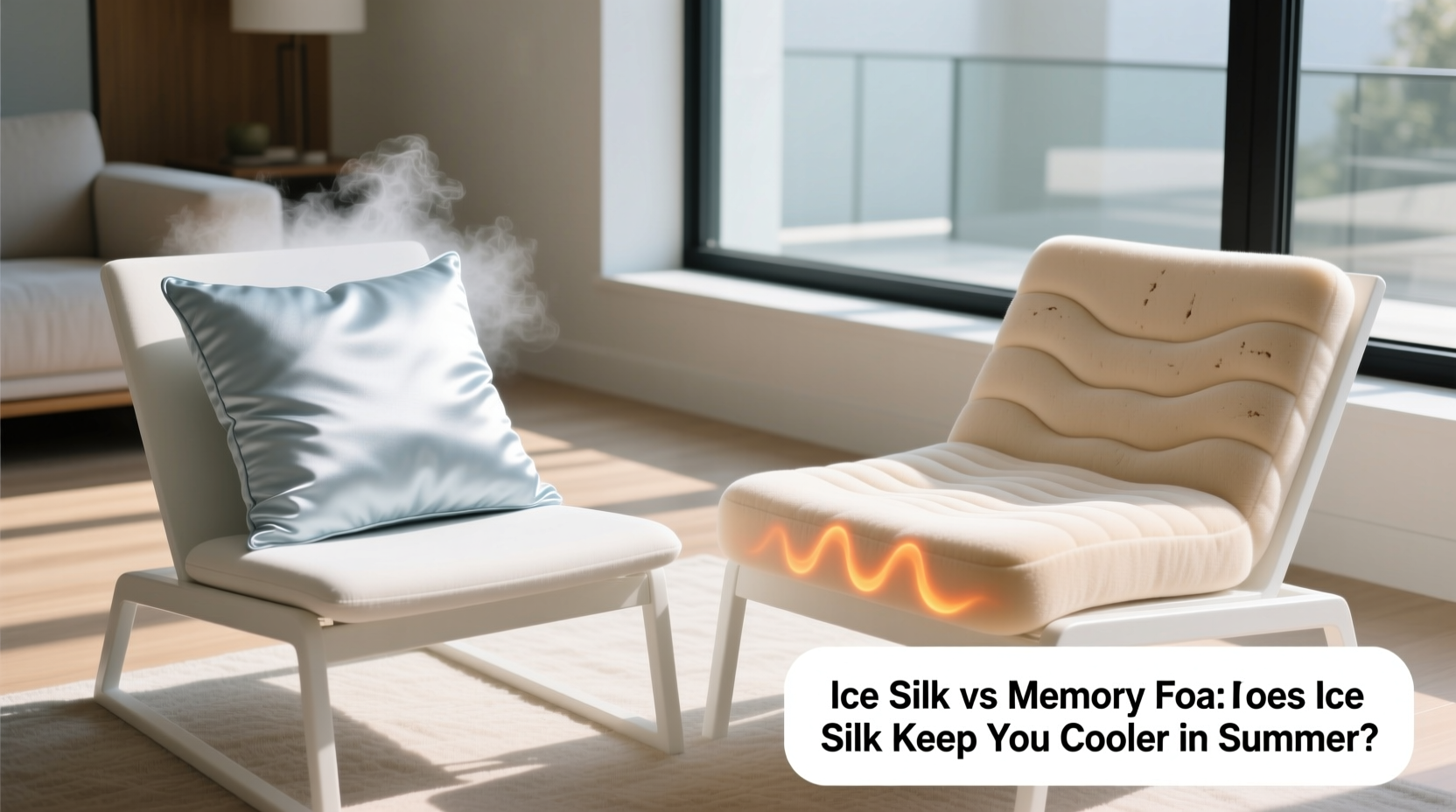
The term “ice silk” is more marketing than material science. It doesn’t refer to a natural fiber like silk or cotton. Instead, it’s typically a blend of polyester, spandex, and sometimes nylon, engineered with moisture-wicking and heat-dissipating properties. The fabric is designed to feel cool to the touch upon contact—a sensation often described as a “cooling effect.”
Manufacturers achieve this by incorporating micro-gel beads, phase-change materials (PCMs), or special knitting techniques that increase air circulation. Some versions use a mesh-like structure to enhance breathability. However, the “ice” in ice silk is metaphorical—it won’t lower your body temperature like an ice pack, but it may delay the onset of sweat and discomfort.
Memory Foam: Comfort With a Heat Trade-Off
Memory foam has long been praised for its pressure-relieving qualities. Originally developed by NASA, viscoelastic foam molds to your body shape, reducing pressure points and improving posture. However, its biggest drawback is heat retention. Traditional memory foam is dense and closed-cell, meaning it traps body heat and restricts airflow.
When sitting for extended periods, especially in warm environments, users often report feeling “stuck” in a warm pocket of air. This has led to the development of “cooling memory foam”—infused with gel beads, copper particles, or open-cell structures to improve breathability. Even with these upgrades, many users still find memory foam warmer than fabric-based alternatives.
“While gel-infused memory foam helps, it’s still fundamentally a heat-retaining material. For true thermal regulation, surface-level breathability matters more than internal additives.” — Dr. Lena Tran, Ergonomics Researcher at Human Factors Lab
Direct Comparison: Ice Silk vs Memory Foam
To assess real-world performance, we evaluated both types across key categories: cooling, support, durability, maintenance, and suitability for summer use.
| Feature | Ice Silk Cushion | Memory Foam Cushion |
|---|---|---|
| Cooling Effect | High initial cool touch; good airflow due to mesh weave | Low to moderate; retains heat unless gel-infused |
| Breathability | Excellent—open-knit fabric allows air circulation | Poor in standard versions; improved in open-cell variants |
| Support & Pressure Relief | Moderate—depends on padding underneath fabric | High—conforms precisely to body contours |
| Durability | Good, but fabric may sag over time without inner structure | Excellent—maintains shape for years with proper care |
| Maintenance | Easy—often machine washable | Harder—spot clean only; sensitive to moisture |
| Best For Summer? | Yes—superior heat dissipation and dry-touch feel | No, unless specifically designed with cooling tech |
Real-World Performance: A Mini Case Study
Jamie, a remote worker in Phoenix, Arizona, spends 8–10 hours daily at her home desk. Last summer, she used a standard memory foam seat cushion. By midday, she noticed increased sweating, discomfort, and a persistent warm spot on her lower back. After switching to an ice silk-covered orthopedic pad with a 3D mesh top layer, she reported immediate improvement.
“It didn’t make the room cooler, but I wasn’t sticking to the chair anymore,” she said. “The surface stayed dry, and I didn’t feel that buildup of heat under my thighs.” Her new cushion combined a thin layer of responsive foam with a highly breathable cover—essentially getting the best of both worlds: support from foam, cooling from fabric.
This hybrid approach is increasingly common. Pure ice silk cushions without supportive padding tend to flatten quickly, while high-density memory foam with advanced covers offers balanced comfort and thermal management.
How Cooling Actually Works: Science Over Marketing
The human body cools itself primarily through convection (air movement), conduction (contact with cooler surfaces), and evaporation (sweat). Chair cushions influence all three.
- Conduction: Ice silk fabrics often have a higher thermal conductivity than foam, meaning they draw heat away from the skin faster initially.
- Convection: Mesh-based ice silk allows air to circulate, aiding in convective cooling.
- Evaporation: Moisture-wicking fibers pull sweat away from the skin, helping it evaporate faster.
In contrast, memory foam excels in conduction only if it contains cooling gels, and performs poorly in convection due to limited airflow. While some premium models now feature perforated foam cores or ventilated bases, most budget options remain thermally inefficient.
Choosing the Right Cushion: A Practical Checklist
Not all ice silk or memory foam cushions are created equal. Use this checklist to make an informed decision:
- ✅ Check the cover material—look for 3D mesh, knitted polyester, or certified cooling fabrics.
- ✅ Avoid cushions that claim “ice silk” but lack breathable construction underneath.
- ✅ If choosing memory foam, opt for open-cell or gel-infused versions with ventilated base designs.
- ✅ Consider hybrid models: memory foam core with ice silk or mesh top layer.
- ✅ Ensure the cushion has non-slip backing to stay in place during use.
- ✅ Read user reviews focusing on “heat,” “sweating,” and “summer use.”
- ✅ Prioritize removable, washable covers for hygiene and longevity.
Frequently Asked Questions
Does ice silk really feel cold?
No, it doesn’t actively cool like refrigeration. Instead, it feels cool to the touch because it conducts heat away from your skin quickly and wicks moisture. The sensation fades after a few minutes but returns when you stand up and sit back down.
Can I use memory foam in summer?
You can, but standard memory foam will likely make you hotter. If you prefer its support, choose a cooling version with gel infusion, open-cell structure, or a breathable cover. Pair it with a fan or air-conditioned room for better results.
Is ice silk durable enough for daily use?
High-quality ice silk blends are durable, but cheaper versions may pill or lose elasticity over time. Look for reinforced stitching and multi-layer construction. Cushions with foam or gel inserts last longer than flat fabric pads.
Final Verdict: Does Ice Silk Keep You Cooler?
Yes—ice silk cushions do keep you cooler than traditional memory foam, but with important caveats. Their advantage lies in superior breathability and moisture management, not active cooling. They prevent heat buildup by allowing air to flow and sweat to evaporate, making them ideal for summer or warm climates.
However, comfort is multidimensional. If you need serious lumbar or tailbone support, a thin ice silk pad alone may not suffice. The optimal solution for many users is a hybrid cushion: a supportive foam base topped with a breathable ice silk or 3D mesh cover. This design balances pressure relief with thermal comfort.
Ultimately, “ice silk” should be viewed not as a miracle fabric, but as part of a smarter seating ecosystem. When paired with ergonomic design and proper airflow, it can significantly improve summer sitting comfort.




 浙公网安备
33010002000092号
浙公网安备
33010002000092号 浙B2-20120091-4
Comments
No comments yet. Why don't you start the discussion?