
The phrase “if evil why hot” has evolved from a throwaway joke into one of the most recognizable internet memes of the early 2020s. It captures a paradox that resonates across pop culture: why do characters—or people—who embody villainy often possess undeniable charisma or physical appeal? This contradiction isn’t new, but the meme crystallizes it in a way that’s both humorous and philosophically intriguing. From cartoon villains to real-life antiheroes, the tension between moral alignment and aesthetic allure continues to fascinate audiences.
More than just a comedic quip, “if evil why hot” reflects deeper societal patterns in storytelling, media portrayal, and human psychology. Its viral spread across platforms like TikTok, Twitter, and Reddit underscores how digital culture thrives on irony, absurdity, and self-aware commentary. To understand its staying power, we need to trace its roots, unpack its implications, and examine how it's used today.
Origins of the Meme
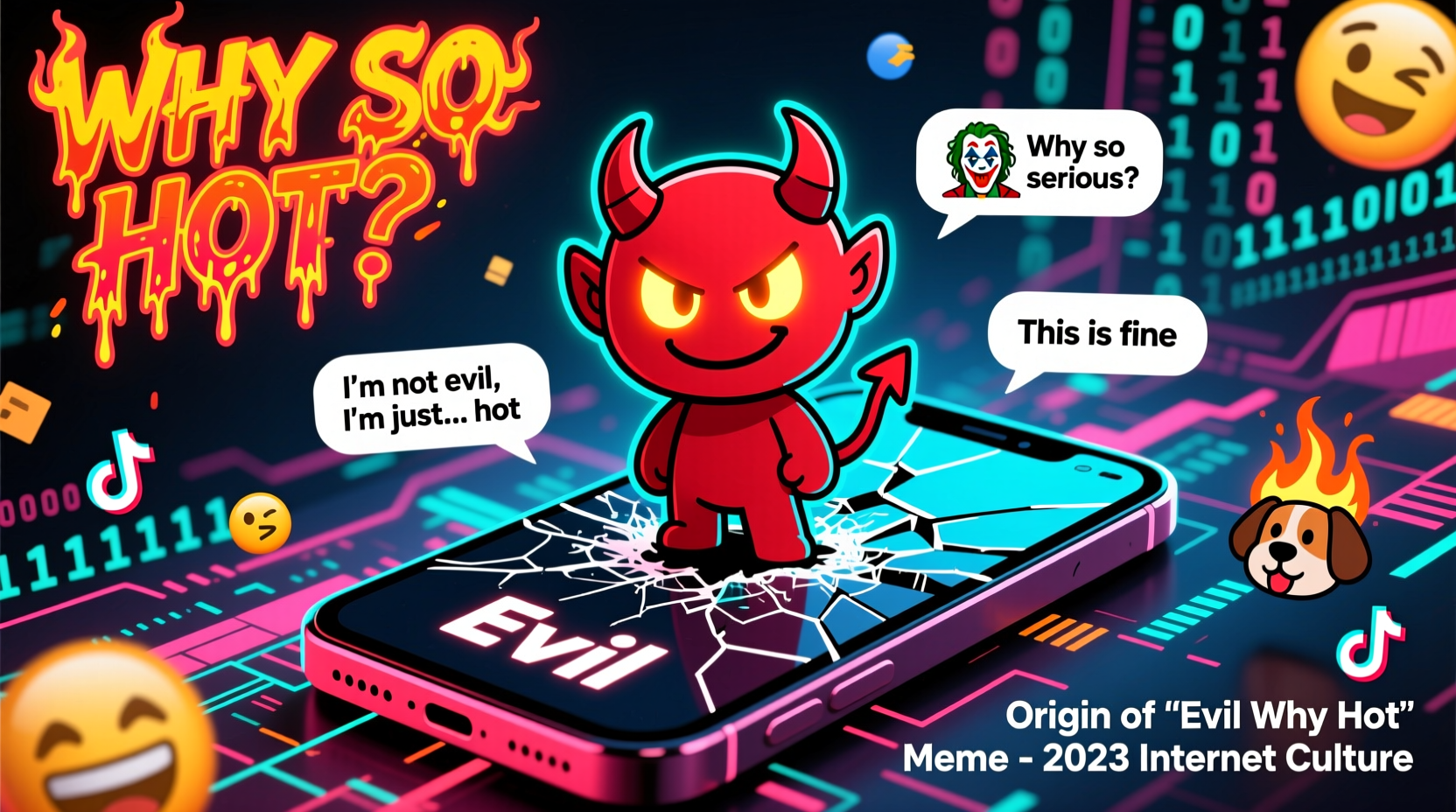
The exact origin of “if evil why hot” is difficult to pinpoint, as is common with many internet-born phrases. However, its earliest known appearances surfaced around 2019–2020 on image boards and meme-centric subreddits such as r/PrequelMemes and r/DeepFriedMemes. These communities often blend satire with philosophical absurdity, creating fertile ground for lines that mock logical inconsistencies in fiction.
The meme gained traction when users began pairing the phrase with images of traditionally \"evil\" characters who were also undeniably attractive—such as Disney villains (Ursula, Maleficent), anime antagonists (Sasuke Uchiha, Griffith from *Berserk*), or even historical figures stylized in modern media (Cesare Borgia, Vlad the Impaler). The juxtaposition highlighted a narrative double standard: audiences are expected to fear these characters while simultaneously being drawn to their design, voice, or demeanor.
By 2021, the phrase had been repurposed into standalone text posts, reaction videos, and audio edits. A notable boost came from TikTok creators using the line over dramatic music or slow-motion clips of villains walking toward the camera. The audio trend often featured distorted vocal effects layered over orchestral scores, amplifying the meme’s ironic gravitas.
The Philosophical Undercurrent
Beneath the humor lies a genuine cultural question: why do we romanticize evil through aesthetics? Scholars of media studies have long noted that villain design frequently borrows from archetypes associated with power, mystery, and rebellion—all traits linked to attractiveness in visual storytelling. As Dr. Lena Peterson, a cultural semiotics researcher at NYU, explains:
“Villains are often given sharp silhouettes, commanding voices, and complex motivations. We don't find them hot because they're evil—we find them compelling because their presentation violates norms in ways that feel liberating.” — Dr. Lena Peterson, Cultural Semiotics Researcher
This insight reveals that the meme isn’t mocking individual characters but rather critiquing the tendency of media to conflate danger with desirability. The phrase “if evil why hot” functions as both a punchline and a subtle form of media literacy—a way for audiences to call out inconsistent character development masked by glamour.
Common Usage and Examples
The meme appears in various formats, including captions, video edits, and satirical dialogues. Below are some typical contexts where “if evil why hot” is deployed:
- Film & TV: Used when a villain enters a scene with an intense visual presence (e.g., Thanos in *Avengers: Infinity War*).
- Anime: Applied to morally ambiguous protagonists like Light Yagami (*Death Note*) or Griffith (*Berserk*).
- Real People: Sometimes jokingly applied to celebrities accused of controversial behavior but still considered attractive.
- Gaming: Referenced in games like *Final Fantasy* or *The Legend of Zelda*, where antagonists often have elaborate designs.
Notable Examples Across Platforms
| Platform | Example | Context |
|---|---|---|
| TikTok | Clip of Killua Zoldyck smirking with caption “if evil why hot” | Highlights his deadly skills vs. youthful charm |
| Twitter/X | Meme comparing Satan artwork to male models | Satirizes religious depictions of the Devil as charismatic |
| Post asking “Why are all the hot characters sociopaths?” with the phrase in comments | Reflects fan frustration with trope-heavy writing | |
| YouTube | Montage titled “If Evil Why Hot – Top 10 Villain Entrances” | Celebrates cinematic villain introductions set to epic music |
How the Meme Reflects Broader Internet Culture
“If evil why hot” exemplifies what scholars call “ironic sincerity”—a state where mockery and genuine admiration coexist. Internet users aren’t necessarily saying villains should be punished for being attractive; instead, they’re pointing out how consistently media rewards transgressive behavior with visual prestige.
This dynamic plays into larger trends like the popularity of antiheroes (*Walter White*, *Tommy Shelby*) and the rise of “toxic fandom” aesthetics, where loyalty to a character overrides ethical concerns. The meme acts as a safety valve—allowing fans to acknowledge cognitive dissonance without abandoning their enjoyment.
Step-by-Step: Creating Your Own “If Evil Why Hot” Meme
- Choose a character known for villainous or morally gray actions.
- Select a visually striking moment—preferably a close-up, slow walk, or dramatic reveal.
- Add the text “if evil why hot” in bold, centered font (often Impact or Bebas Neue).
- Enhance with audio—popular choices include dark orchestral music or slowed/reverbed tracks.
- Optional: Layer in glitch effects or deep-fried visuals for added meme authenticity.
FAQ
Is “if evil why hot” making fun of people attracted to villains?
No, not exactly. While it pokes fun at narrative tropes, the meme is generally inclusive and self-aware. Most users recognize that attraction to fictional villains is part of fantasy escapism, not endorsement of real-world harm.
Can the phrase be used seriously?
Rarely. Though it touches on real issues in media representation, it remains rooted in humor. Using it outside meme culture may come across as sarcastic unless clearly framed as critique.
Has the meme influenced actual media?
Indirectly. Writers and animators have acknowledged fan reactions to villain designs, and some newer shows now subvert the trope—giving less glamorous looks to truly dangerous characters, or making heroes look more flawed.
Checklist: Is Your Meme On Point?
- ✅ Character is clearly established as evil or dangerous
- ✅ Visual presentation is undeniably stylish or attractive
- ✅ Text is legible and well-timed
- ✅ Audio enhances the dramatic irony
- ✅ Shared in a context where irony is understood (e.g., meme pages, fan forums)
A Mini Case Study: The Rise of “Evil Pretty Boy” Tropes
In 2022, a popular TikTok series titled *Why Are All the Villains Hot?!* went viral, analyzing characters from *Demon Slayer*, *Attack on Titan*, and *Arcane*. Each episode ended with the narrator staring into the camera and whispering, “if evil why hot.” The series amassed over 15 million views and inspired dozens of spin-offs.
What made it successful wasn’t just humor—it offered light analysis of costume design, lighting techniques, and voice acting that elevate villains beyond mere antagonists. Fans began applying the framework to other genres, leading to discussions about gender dynamics (e.g., “Why are evil women portrayed as either ugly or seductive?”) and racial stereotypes in villain portrayal.
This case illustrates how memes can evolve into tools for cultural critique—even when starting as jokes.
Conclusion
“If evil why hot” may seem like a simple internet quip, but it encapsulates a growing awareness of how media manipulates perception through aesthetics. It challenges audiences to question why certain traits are rewarded with beauty, charm, or style—even when attached to destructive behavior. More than just a meme, it’s a reflection of evolving digital literacy and the public’s appetite for self-referential commentary.




 浙公网安备
33010002000092号
浙公网安备
33010002000092号 浙B2-20120091-4
Comments
No comments yet. Why don't you start the discussion?