
Despite promotions, praise, and proven results, many professionals still wake up each morning convinced they’re one mistake away from being exposed as a fraud. This isn’t arrogance or humility—it’s imposter syndrome, a psychological pattern where individuals doubt their accomplishments and fear being “found out.” It affects high achievers across industries, from junior employees to CEOs. The irony is that the more competent someone becomes, the more likely they are to question whether they truly belong. Recognizing imposter syndrome is the first step toward dismantling it. More importantly, understanding how to respond to those feelings can transform self-doubt into sustainable confidence.
What Is Imposter Syndrome—and Who Does It Affect?
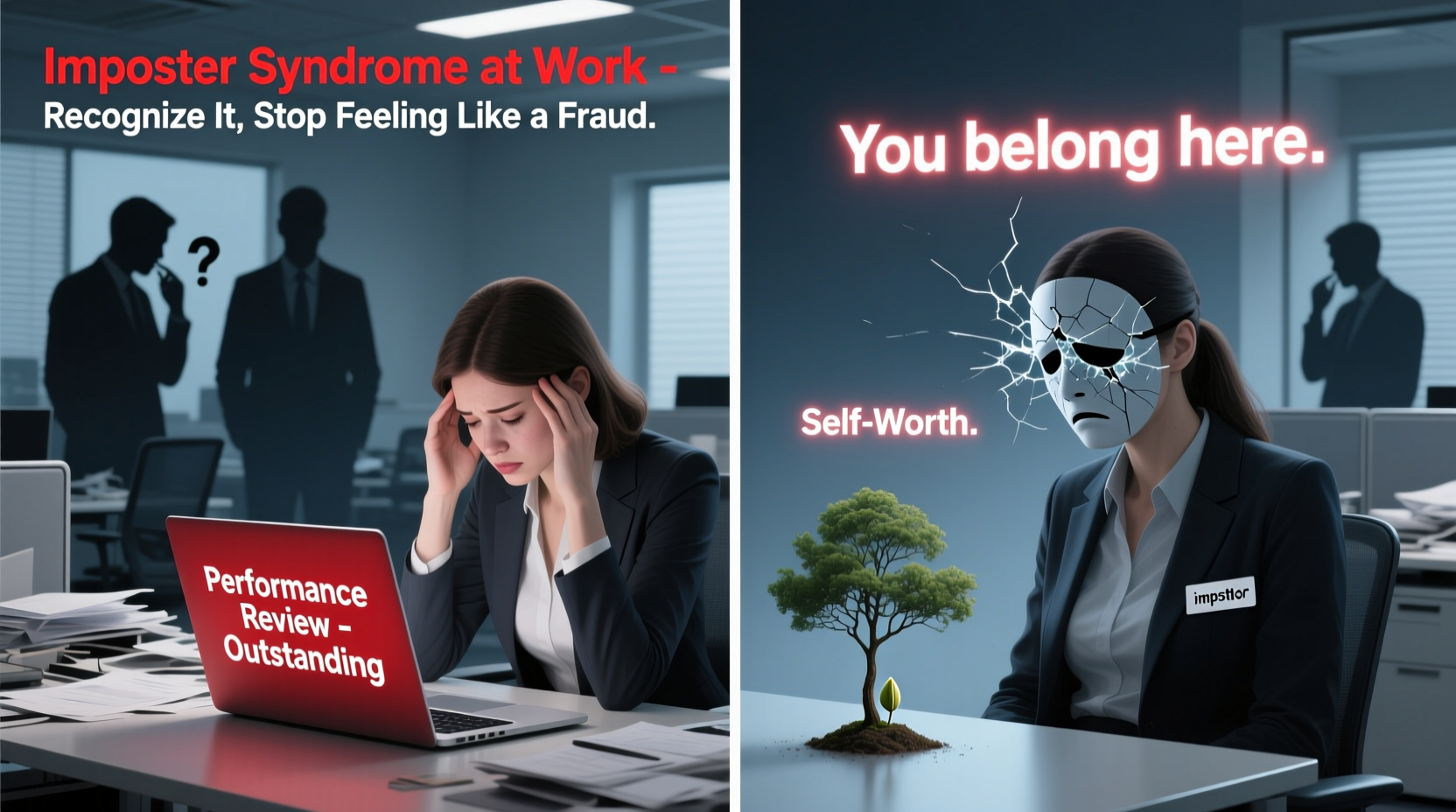
Coined in 1978 by psychologists Pauline Clance and Suzanne Imes, imposter syndrome describes a persistent belief that one’s success is due to luck, timing, or deception rather than skill or intelligence. Though originally observed in high-achieving women, research now shows it affects people of all genders, ages, and career levels. A 2020 review published in the International Journal of Behavioral Science found that up to 70% of people experience imposter feelings at least once in their professional lives.
It often surfaces during transitions—starting a new job, receiving a promotion, joining a competitive team, or presenting ideas in high-stakes environments. The internal narrative follows a familiar loop: “I got lucky this time,” “They’ll realize I don’t know what I’m doing,” or “Anyone could have done what I did.” These thoughts aren’t just fleeting insecurities; they can trigger chronic stress, burnout, and avoidance behaviors that hinder growth.
“Even after publishing dozens of papers, giving keynote speeches, and mentoring others, I still sometimes feel like I’ve tricked everyone into thinking I’m smart.” — Dr. Lisa Thompson, Cognitive Psychologist
How to Recognize Imposter Syndrome at Work
Imposter syndrome doesn’t announce itself with a label. Instead, it disguises itself as diligence, perfectionism, or humility. To identify it, look for behavioral and cognitive patterns that distort your self-perception:
- Discounting praise: When praised, you deflect with comments like “It was nothing” or “I just got lucky.”
- Fear of failure: You avoid taking on new challenges because you believe failure would confirm your inadequacy.
- Overpreparation: You spend excessive time on tasks to ensure perfection, even when it’s unnecessary.
- Attributing success externally: You credit teamwork, timing, or lenient evaluators instead of your own effort or talent.
- Comparing yourself unfavorably: You assume colleagues are more capable, smarter, or more deserving—even when evidence suggests otherwise.
- Feeling like a fraud: Despite objective proof of competence, you believe you’re fooling others.
The Five Types of Imposter Patterns
Psychologist Valerie Young identified five archetypes of imposter syndrome, each reflecting different coping mechanisms:
| Type | Core Belief | Behavioral Tendency |
|---|---|---|
| The Perfectionist | “If I’m not flawless, I’ve failed.” | Spends too much time refining minor details; avoids starting tasks unless guaranteed success. |
| The Expert | “I must know everything before I act.” | Constantly seeks certifications or training; hesitates to apply for roles without 100% match. |
| The Natural Genius | “I should master skills quickly.” | Frustrated when learning takes time; views struggle as proof of incompetence. |
| The Soloist | “Asking for help means I’m weak.” | Avoids collaboration; works in isolation to prove self-reliance. |
| The Superhero | “I must do everything perfectly and tirelessly.” | Takes on excessive workloads; equates self-worth with productivity. |
Recognizing which type resonates with you helps tailor your response. For example, if you’re a perfectionist, the goal isn’t to lower standards but to redefine what “good enough” means in context.
Why Imposter Syndrome Persists—And Why It’s Not Your Fault
Imposter syndrome isn’t a personal failing. It’s often rooted in early experiences—growing up in high-pressure environments, receiving conditional praise (“You’re only special when you win”), or belonging to underrepresented groups in a workplace that subtly questions your legitimacy. Systemic factors like bias, lack of role models, or cultures that reward overwork amplify these feelings.
In male-dominated fields, women may feel they must outperform peers to be seen as equally competent. In diverse teams, minority professionals might internalize microaggressions as confirmation of their supposed “outsider” status. Even well-intentioned comments—like “You’re so articulate for someone so young”—can reinforce imposter narratives.
The workplace environment also plays a role. Companies that celebrate individual heroics over team contributions, or that lack transparent feedback systems, create fertile ground for self-doubt. Without regular validation, employees default to worst-case assumptions about their performance.
“We don’t need to fix individuals who feel like imposters—we need to fix workplaces that make people feel that way.” — Dr. Ravi Mehta, Organizational Behavior Researcher
Strategies to Overcome Imposter Syndrome
Healing from imposter syndrome isn’t about eliminating doubt completely—that’s neither realistic nor desirable. Healthy skepticism keeps us growing. The goal is to prevent self-doubt from hijacking your potential. Here are seven evidence-based strategies to reframe your mindset and reclaim confidence.
1. Normalize the Experience
Start by reframing imposter feelings as common, not defective. Talk openly with trusted colleagues. You’ll likely discover they’ve had similar thoughts. One marketing director shared that after winning an industry award, she spent weeks convinced the judges had confused her entry with someone else’s. Her admission sparked a team conversation where four others admitted identical fears.
2. Separate Feelings from Facts
When you think, “I don’t belong here,” ask: What evidence supports this? What contradicts it? List your qualifications, achievements, and feedback received. Feelings are data, but not directives. Just because you *feel* unqualified doesn’t mean you *are*.
3. Reframe Failure as Learning
Imposter syndrome thrives in environments where mistakes are stigmatized. Challenge this by adopting a growth mindset. Instead of “I failed because I’m not good enough,” try “This didn’t work, so what can I adjust next time?” High performers aren’t those who never fail—they’re the ones who keep going.
4. Limit Comparisons
Comparing your behind-the-scenes struggles to others’ highlight reels is misleading. Social media and office bravado often mask private doubts. Focus on your progress, not someone else’s perceived perfection. Track your growth over time, not against others in the moment.
5. Seek Balanced Feedback
Instead of avoiding evaluations, request specific, constructive feedback regularly. Vague praise like “Great job!” does little to dispel doubt. Ask: “What specifically worked?” and “What could I improve?” Concrete input grounds your self-assessment in reality.
6. Practice Self-Compassion
Treat yourself with the same kindness you’d offer a colleague. Would you tell a coworker they were a fraud for missing a deadline? Probably not. Replace harsh inner dialogue with supportive language: “This is tough, but I’m learning,” or “I’m allowed to make mistakes and still be capable.”
7. Own Your Successes
When you succeed, pause and absorb it. Say aloud: “I earned this.” Acknowledge the skills, effort, and decisions that led to the outcome. Avoid diminishing statements like “It was easy” or “Anyone could’ve done it.” Those phrases erase your agency.
Step-by-Step Guide to Building Authentic Confidence
Confidence isn’t something you either have or don’t—it’s built through deliberate practice. Follow this six-week timeline to shift from self-doubt to self-trust:
- Week 1: Awareness Audit
Journal daily: When do imposter feelings arise? What triggers them? Note situations, thoughts, and physical reactions (e.g., racing heart, avoidance). - Week 2: Evidence Collection
Create a “competence file” with emails of praise, project outcomes, and skills mastered. Add to it weekly. - Week 3: Thought Challenging
Each time you think “I’m a fraud,” write the thought, then list facts that contradict it. Reframe it realistically. - Week 4: Controlled Risk-Taking
Volunteer for a small task outside your comfort zone. Reflect afterward: Did disaster occur? What did you learn? - Week 5: Feedback Loop
Ask two colleagues for honest input on your work. Compare their perceptions to your self-assessment. - Week 6: Integration
Review your journal and competence file. Write a letter to yourself acknowledging growth and resilience.
This process doesn’t eliminate doubt overnight, but it builds a stronger internal foundation over time.
Mini Case Study: From Doubt to Leadership
Sarah, a senior data analyst at a tech startup, was promoted to lead a new analytics team. Despite having the highest accuracy rate in forecasting and mentoring junior staff, she hesitated to speak in leadership meetings. She believed others saw her as “lucky” rather than skilled. After reading about imposter syndrome, she started tracking her wins and requested monthly feedback from her manager.
During a quarterly review, her manager said, “Your insights directly influenced our Q3 strategy. That wasn’t luck—that was expertise.” Sarah began sharing her analysis proactively. Within six months, she led a company-wide training session. She still occasionally feels self-doubt, but now she recognizes it as a signal to check facts, not a verdict on her worth.
Checklist: Daily Habits to Reduce Imposter Feelings
- ✅ Start the day with one affirmation based on evidence: “I am prepared because I reviewed the data thoroughly.”
- ✅ Pause before dismissing praise. Say “Thank you” without qualification.
- ✅ Identify one task where “good enough” is acceptable—resist over-polishing.
- ✅ Share a challenge with a colleague. Vulnerability breaks isolation.
- ✅ End the day by writing one thing you did well, no matter how small.
FAQ
Is imposter syndrome a mental illness?
No. Imposter syndrome is not a clinical diagnosis but a psychological pattern. However, it can contribute to anxiety, depression, or burnout if left unaddressed. If it significantly impacts your well-being, consider speaking with a therapist.
Can imposter syndrome ever be useful?
In moderation, yes. A healthy level of self-awareness can drive preparation and improvement. But when it leads to paralysis, avoidance, or chronic stress, it becomes counterproductive.
How do I support a teammate struggling with imposter syndrome?
Offer specific, genuine recognition. Avoid vague compliments. Encourage open conversations about challenges. Normalize learning curves and mistakes as part of growth. Lead by example—share your own uncertainties when appropriate.
Conclusion: Reclaim Your Narrative
Feeling like a fraud doesn’t mean you are one. It often means you care deeply about doing good work. The very qualities that make you question yourself—conscientiousness, humility, ambition—are strengths when balanced with self-trust. Recognizing imposter syndrome is not the end of the journey, but the beginning of a more honest relationship with yourself.
You don’t need to “fix” yourself to belong. You belong because you’ve shown up, contributed, and grown. Stop waiting for permission to feel worthy. Start acting from the truth of your experience, not the fiction of your fears. The most powerful antidote to feeling like an imposter is consistent action—done imperfectly, learned from, and repeated with courage.




 浙公网安备
33010002000092号
浙公网安备
33010002000092号 浙B2-20120091-4
Comments
No comments yet. Why don't you start the discussion?