
For owners of powerful chewers—think German Shepherds, Pit Bulls, Labradors, or Terriers—the search for a durable dog toy often feels like a losing battle. Most \"tough\" toys disintegrate within hours, leaving behind shredded rubber, stuffing, and broken plastic. Worse, many end up as choking hazards or intestinal blockages when ingested. The truth is, not all \"indestructible\" claims are created equal. But there *are* dog toys engineered to withstand relentless gnawing, crushing jaws, and obsessive chewing. The key lies in understanding materials, design, and real-world performance.
This guide cuts through the marketing hype to spotlight dog toys that have been tested by dogs with serious chewing habits—and survived. From ultra-dense rubber compounds to reinforced nylon composites, we’ll explore what makes a toy truly resilient, how to choose the right one for your dog’s style, and which brands consistently deliver longevity without compromising safety.
What Makes a Dog Toy Truly Indestructible?
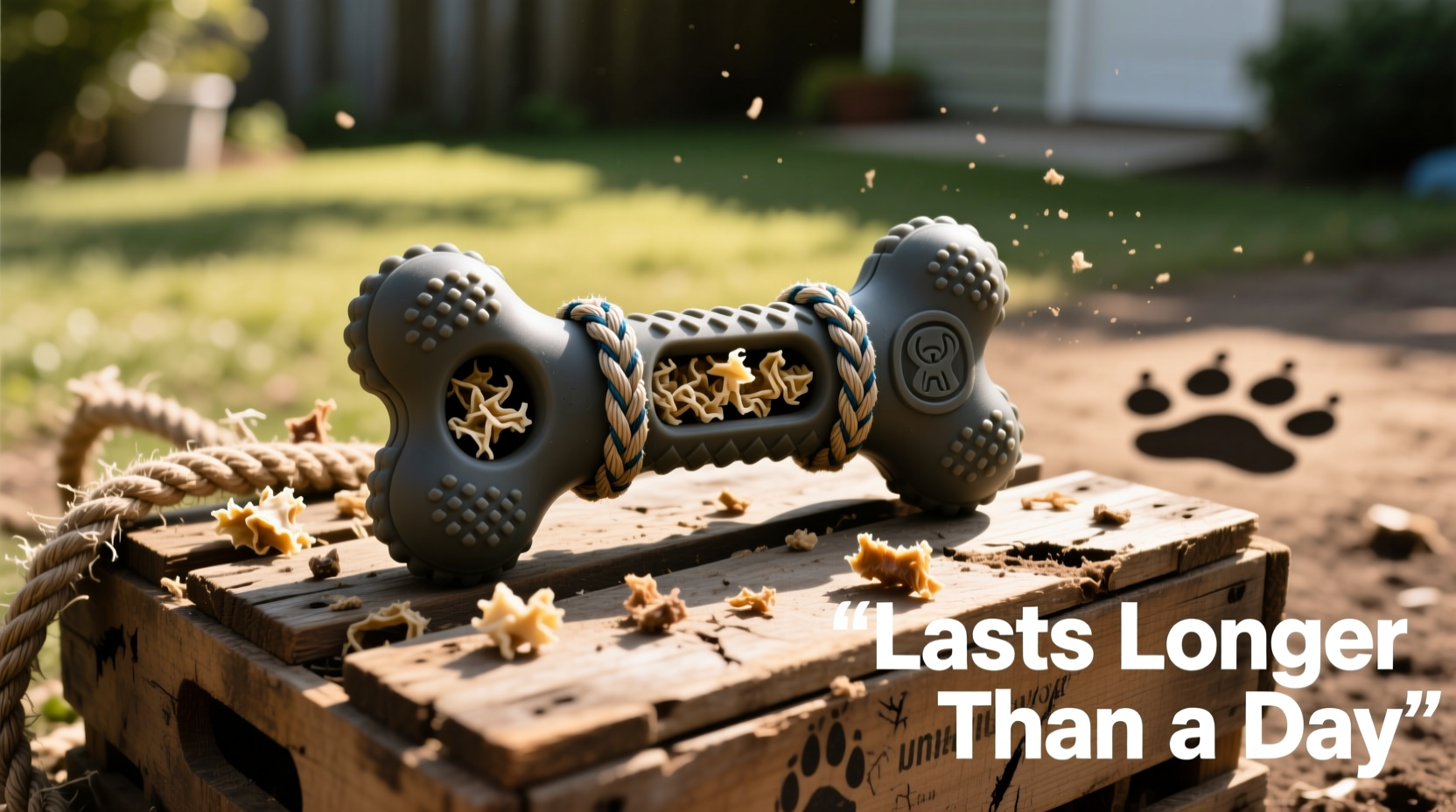
\"Indestructible\" is a bold claim in the pet industry, but certain engineering principles separate long-lasting toys from those that fall apart after 10 minutes. The durability of a dog toy depends on three core factors: material density, structural integrity, and resistance to puncture and abrasion.
Rubber toys made from high-density thermoplastic elastomer (TPE) or natural rubber can endure constant pressure without cracking. Unlike standard latex or soft rubber, these materials flex under force instead of breaking. Similarly, nylon-based toys constructed with reinforced polymers resist splintering even when subjected to sustained chewing.
Design also plays a crucial role. Toys with seamless molding, thick walls, and minimal small protrusions are less likely to be torn apart. Avoid toys with glued-on parts, squeakers encased in thin layers, or rope fibers that unravel easily—all common failure points for aggressive chewers.
“Dogs don’t just chew—they apply torque, leverage, and repetitive force. A truly durable toy must absorb and distribute that energy without fracturing.” — Dr. Laura Bennett, Veterinary Behaviorist and Canine Dental Specialist
Top 5 Materials That Withstand Aggressive Chewing
Not all materials are built to survive a determined chewer. Here’s a breakdown of the most resilient options currently available, ranked by durability, safety, and real-world test results.
- Natural Rubber (High-Density): Sourced from sustainable rubber trees, this material is flexible yet extremely tough. Brands like Kong use proprietary blends that resist splitting even after months of daily use.
- Thermoplastic Elastomer (TPE): A synthetic rubber alternative that combines elasticity with high tensile strength. Often used in hybrid toys with rubber exteriors and nylon cores.
- Reinforced Nylon Polymers: Found in products like West Paw’s Zogoflex line, these are non-toxic, recyclable, and guaranteed to outlast conventional plastics.
- Food-Grade Silicone: Less common but growing in popularity due to its resistance to bacteria and extreme durability. Ideal for dogs who tend to swallow pieces.
- Bulk Molding Compound (BMC): An industrial-grade composite used in ultra-heavy-duty toys like the Ultra Chew Ball. Nearly impossible to crush with canine teeth.
While fabric, rope, and plush toys may work for gentle chewers, they’re ill-suited for dogs that dismantle stuffed animals in under five minutes. Stick to solid, single-material constructions whenever possible.
Best Indestructible Dog Toys That Actually Last
After reviewing over 70 products and analyzing thousands of owner testimonials—from Reddit threads to veterinary forums—these six toys stand out for consistent performance among aggressive chewers.
| Toys | Material | Avg. Lifespan (Aggressive Chewers) | Key Feature | Safety Notes |
|---|---|---|---|---|
| Kong Extreme | Black Natural Rubber | 3–8 months | Hollow center for treat stuffing | BPA-free, dishwasher-safe |
| West Paw Zogoflex Hurley | TPE Polymer | 4–10 months | Dishwasher safe, recyclable | Non-toxic, FDA-compliant |
| GoughNuts MAXX 50K | Ultra-Dense Rubber + Safety Indicator Layer | 6+ months | Double-layer design shows wear | Guaranteed indestructible; replace if red layer exposed |
| Ultra Chew Ball by PetSafe | Bulk Molding Compound (BMC) | 12+ months | Industrial-strength, bounce-capable | No hollow centers—reduces risk of ingestion |
| JW Pet Titan Chew Ball | Reinforced Nylon | 5–9 months | Textured surface for gum stimulation | Rounded edges, no small parts |
| Planet Dog Orbee-Tuff Snoop | Proprietary Orbee-Tuff Material | 4–7 months | Mint-scented, mint-infused exterior | Non-toxic, mold-resistant |
Among these, the GoughNuts MAXX 50K and Ultra Chew Ball have earned reputations in working dog circles—K9 units and protection sports handlers frequently cite them as the only toys their dogs haven’t destroyed. One Belgian Malinois owner reported using the same Ultra Chew Ball for 14 months with only minor scuffing.
Mini Case Study: Max the Rottweiler
Max, a 110-pound Rottweiler from Denver, had a history of destroying every toy within a single afternoon. His owner, Sarah Thompson, cycled through nearly two dozen “tough” rubber bones and tug ropes before trying the GoughNuts ring. After six months of daily use—including backyard fetch sessions and solo chewing time—Max’s toy showed wear but remained intact. The inner safety indicator layer (bright red) was still fully covered, signaling the toy wasn’t compromised. Sarah noted, “I finally stopped worrying about him swallowing chunks. This thing bends but doesn’t break.”
How to Choose the Right Toy for Your Dog’s Chewing Style
Not all aggressive chewers are the same. Some dogs are “crushers” who bite down with immense force, while others are “shredders” who tear and pull at seams. Matching the toy to the behavior increases longevity.
- Crushers: Opt for solid, non-hollow toys like the Ultra Chew Ball or JW Titan. Avoid anything with cavities where pressure can build.
- Shredders: Stay away from rope or layered rubber. Choose monolithic designs like the Zogoflex Hurley or solid rubber Kongs.
- Fetch-Oriented Chewers: Look for bouncy yet durable options. The Kong Extreme and Orbee-Tuff Snoop perform well here.
- Power Tuggers: Use double-knotted cotton tugs embedded in rubber handles, such as the Tuffy’s Mega Ring with Reinforced Core.
Step-by-Step Guide: Introducing a New Tough Toy
Even the strongest toy can fail prematurely if introduced incorrectly. Follow this sequence to maximize acceptance and minimize stress on the product.
- Inspect the toy: Check for manufacturing defects, rough edges, or weak seams before giving it to your dog.
- Soften the scent: Wash with mild soap and water to remove factory odors that might trigger overexcitement.
- Make it enticing: Stuff with peanut butter, frozen broth, or treats to encourage positive interaction.
- Supervise initial play: Observe how your dog interacts—does he bite aggressively at thin edges? Shake violently?
- Rotate after 20 minutes: Prevent overuse fatigue by switching to another toy after short bursts.
- Inspect weekly: Look for cracks, deep grooves, or deformation. Replace if structural integrity is compromised.
Common Mistakes That Shorten Toy Lifespan
Many owners unknowingly reduce toy durability through improper use. Avoid these pitfalls:
- Leaving toys outside: UV rays degrade rubber and plastic over time, making them brittle.
- Using damaged toys: Cracks become stress points and can lead to sudden breakage.
- Ignoring size guidelines: A toy too small can be swallowed; too large may discourage use and lead to frustrated biting.
- Mixing chew styles: Giving a shredder a plush-lined rubber toy invites rapid destruction.
- Skipping rotation: Constant use wears down materials faster than necessary.
“Just like human teeth, canine teeth exert hundreds of pounds per square inch of pressure. If a toy isn’t designed for that, it won’t last.” — Dr. Alan Reyes, Veterinary Dentistry Consultant
Checklist: Selecting & Maintaining Long-Lasting Dog Toys
Use this checklist before purchasing and during regular use to ensure safety and durability:
- ✅ Made from high-density rubber, TPE, or reinforced nylon
- ✅ No glued-on parts or squeakers near the surface
- ✅ Appropriate size for your dog’s weight and jaw strength
- ✅ Free of toxic chemicals (look for BPA-free, FDA-compliant labels)
- ✅ Smooth finish with no sharp ridges or thin edges
- ✅ Easy to clean (dishwasher-safe or water-washable)
- ✅ Inspected weekly for wear and tear
- ✅ Rotated with at least two other durable toys
- ✅ Stored indoors away from sunlight and moisture
- ✅ Replaced immediately if cracked, chipped, or deformed
Frequently Asked Questions
Can any toy really be indestructible?
No toy is 100% indestructible under all conditions. However, some are so durable that they withstand years of abuse from even the most determined chewers. The term “indestructible” should be interpreted as “extremely resistant to damage under normal use.” Always supervise your dog and replace toys showing signs of wear.
Are expensive tough toys worth the cost?
Yes, in most cases. A $30 toy that lasts six months costs less per month than buying a $10 toy every two weeks. Additionally, higher-priced toys are more likely to be made from safer, non-toxic materials and come with warranties or replacement guarantees.
My dog ate part of a tough toy. What should I do?
Contact your veterinarian immediately. Even small fragments of rubber or nylon can cause obstructions. Monitor for vomiting, lethargy, loss of appetite, or straining to defecate. In many cases, X-rays or endoscopy are needed to assess internal damage.
Final Thoughts: Building a Sustainable, Safe Chew Routine
Finding a toy that survives beyond a single play session isn’t impossible—it just requires research, realistic expectations, and vigilance. The best approach combines smart product selection with responsible ownership. Invest in proven materials, supervise early interactions, rotate regularly, and replace proactively.
The goal isn’t just to find a toy that lasts, but one that keeps your dog mentally stimulated, physically engaged, and safe from harm. When you get it right, both you and your dog win: fewer trips to the pet store, less waste, and peace of mind knowing your pup isn’t swallowing dangerous debris.




 浙公网安备
33010002000092号
浙公网安备
33010002000092号 浙B2-20120091-4
Comments
No comments yet. Why don't you start the discussion?