
For decades, gas stoves have reigned supreme in home kitchens, praised for their precise flame control and responsiveness. But a new contender has emerged—induction cooking—offering faster boiling times, improved energy efficiency, and enhanced safety. Yet one major hurdle remains: the need to switch cookware. Many home cooks hesitate at the thought of replacing their favorite pots and pans just to harness the benefits of induction. So, is the dramatic speed boost from induction truly worth overhauling your kitchen arsenal?
The answer depends on how you cook, what kind of results you expect, and how much you value efficiency, safety, and environmental impact. This article breaks down the real differences between induction and gas, examines the cost and effort of upgrading cookware, and helps you decide whether making the switch aligns with your lifestyle.
How Induction and Gas Cooking Work
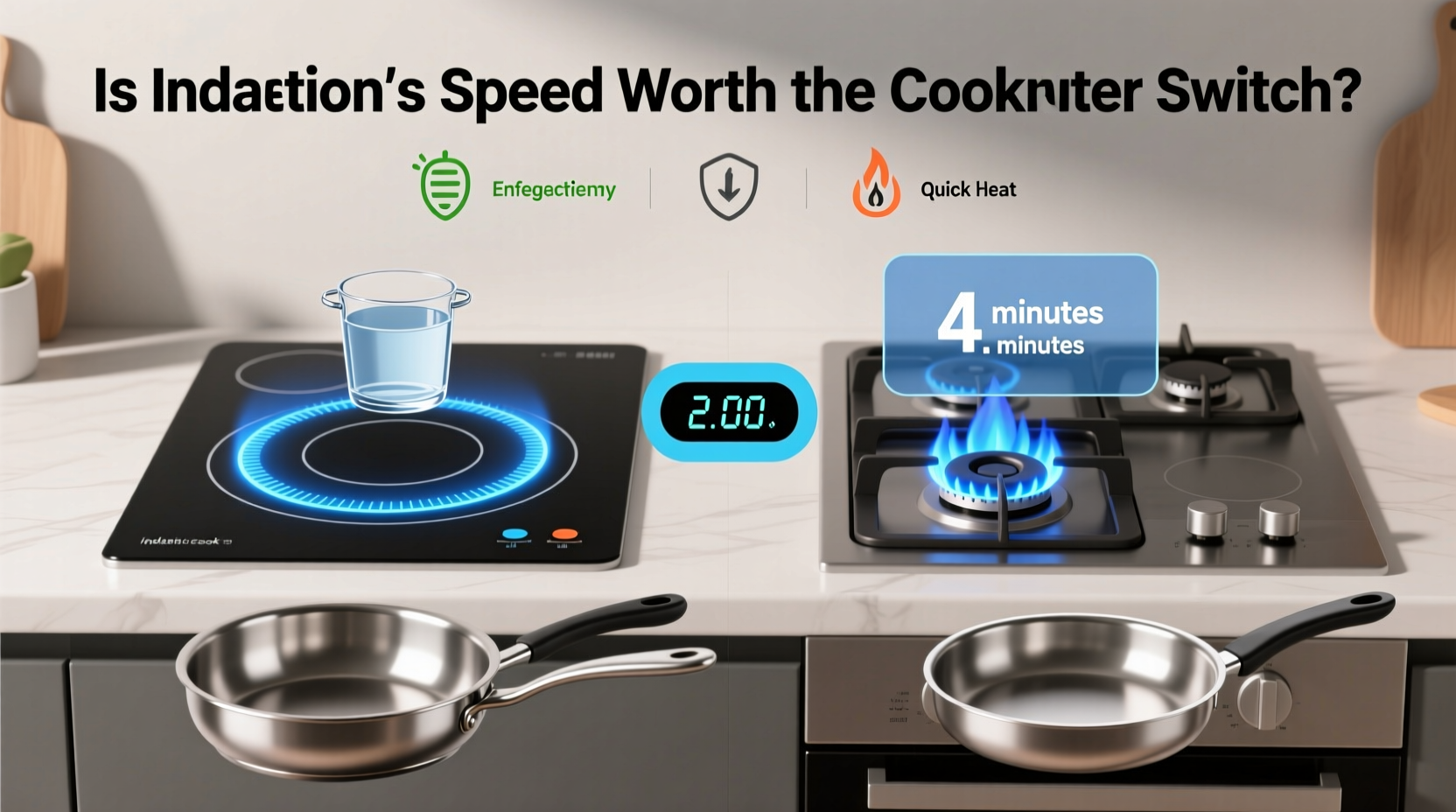
Understanding the science behind each cooking method reveals why their performance differs so drastically.
Gas cooking relies on an open flame fueled by natural gas or propane. The flame directly heats the bottom of the cookware, transferring thermal energy through conduction. Heat control comes from adjusting the size of the flame via the knob, allowing experienced cooks to modulate temperature with finesse.
Induction cooking, by contrast, uses electromagnetic fields. Beneath the glass surface of the cooktop lies a copper coil that generates a magnetic field when electricity passes through it. When a ferromagnetic (iron-based) pot is placed on the surface, this magnetic field induces electric currents within the metal, causing it to heat up. The cookware becomes the heat source; the cooktop itself stays relatively cool.
This fundamental difference explains induction’s speed advantage: instead of heating air and then the pan, induction heats the pan directly and almost instantly. Water boils significantly faster, and temperature changes are nearly immediate.
Speed and Performance: A Side-by-Side Comparison
Speed is induction’s most touted benefit. In controlled tests, induction consistently outperforms gas when bringing water to a boil. For example, a standard 2-quart pot of water takes approximately 4–5 minutes on induction versus 7–9 minutes on gas. That may not sound like much, but over time, those saved minutes add up—especially during meal prep, batch cooking, or high-volume entertaining.
But speed isn’t everything. Precision matters too. While induction responds quickly to adjustments, some chefs argue that gas offers more intuitive tactile feedback. Watching a flame shrink or grow gives visual cues that digital power levels can’t fully replicate. However, modern induction units now include features like simmer modes, residual heat indicators, and even AI-assisted temperature regulation, narrowing the gap.
Another advantage of induction: consistent heat distribution. Because the magnetic field activates across the entire base of compatible cookware, hot spots are minimized. With gas, uneven flames or mismatched burner sizes can lead to inconsistent cooking, particularly with large skillets or woks.
“Induction gives me restaurant-level responsiveness without the gas line. I can go from searing to simmering in seconds.” — Carlos Mendez, Culinary Instructor and Home Kitchen Consultant
Cookware Compatibility: What You Need to Know
The biggest barrier to adopting induction is cookware compatibility. Not all pots and pans work. Only those made from ferromagnetic materials—primarily cast iron and certain types of stainless steel—will activate the magnetic field.
Aluminum, copper, glass, and ceramic cookware will not work unless they have a magnetic layer bonded to the base. Many newer lines advertise “induction-ready” bases, often with a flat, thick disc of magnetic stainless steel.
If you already own quality cookware, you might not need to replace everything. Test each piece with a magnet. If it holds firmly to the bottom, it should work. Warped or rounded-bottom pans may not make full contact with the cooktop, reducing efficiency and triggering error messages.
Upgrading cookware isn’t cheap. A full set of high-quality induction-compatible pots and pans can cost $300–$800, depending on brand and material. But consider this: many people gradually transition by purchasing key pieces first—like a stockpot, sauté pan, and saucepan—then phase out non-compatible items over time.
Induction-Compatible Cookware Checklist
- ✔️ Magnetic stainless steel (look for “induction-ready” label)
- ✔️ Cast iron (including enameled varieties)
- ✔️ Carbon steel
- ✔️ Hybrid pans with magnetic base layers
- ❌ Pure aluminum
- ❌ Copper (unless clad with magnetic stainless)
- ❌ Glass or ceramic (without magnetic base)
- ❌ Non-magnetic stainless steel (e.g., some older sets)
Energy Efficiency, Safety, and Environmental Impact
Induction isn’t just fast—it’s also far more energy-efficient than gas. Approximately 85–90% of the energy used in induction cooking transfers directly to the food, compared to only 40–55% with gas. The rest of a gas flame’s energy escapes as ambient heat, warming your kitchen unnecessarily and increasing cooling costs in summer.
Safety is another area where induction excels. Since only the cookware heats up, the surface remains cool to the touch around the pan. This reduces the risk of burns, especially important in homes with children. There’s no open flame, no gas leaks, and no combustion byproducts like carbon monoxide or nitrogen dioxide—gases linked to respiratory issues, especially in poorly ventilated spaces.
From an environmental standpoint, induction supports cleaner energy use. As more homes shift to renewable electricity sources, induction becomes a low-carbon alternative to fossil-fuel-powered gas stoves. Some cities, including Berkeley and San Francisco, have already banned natural gas hookups in new construction, signaling a broader trend toward electrification.
| Feature | Induction | Gas |
|---|---|---|
| Energy Efficiency | 85–90% | 40–55% |
| Boil Time (2 qt water) | 4–5 min | 7–9 min |
| Safety Risk (Burns) | Low (cool surface) | High (hot grates/flames) |
| Indoor Air Quality | No emissions | Releases NO₂, CO, H₂O vapor |
| Lifespan (Cooktop) | 10–15 years | 12–17 years |
| Cookware Flexibility | Magnetic metals only | All types |
A Real-World Transition: One Home Cook’s Experience
Sarah Kim, a home cook and software engineer in Seattle, switched to induction two years ago after renovating her kitchen. She’d used gas for 15 years and was skeptical about giving it up.
“I loved my gas stove,” she said. “I could tell the heat level just by looking at the flame. But after researching indoor air pollution and seeing how fast water boiled on induction at a friend’s house, I decided to try it.”
Sarah kept her cast iron skillet and replaced three aluminum pans with induction-compatible stainless steel versions. She found the learning curve minimal. “The first week, I burned a couple of things because the response was so fast. But once I adjusted, I never looked back. My kitchen stays cooler, cleanup is easier, and I feel safer with my toddler crawling around.”
She estimates she saves about 20 minutes per week on average during meal prep. “That adds up to nearly 18 hours a year. It’s not just speed—it’s less stress.”
Step-by-Step Guide to Switching from Gas to Induction
Transitioning doesn’t have to be overwhelming. Follow this practical timeline to make the change smoothly:
- Assess your current cookware: Use a magnet to test each pan. Label compatible ones and set aside those that aren’t.
- Identify gaps: Determine which essential pieces you need—usually a large pot, medium saucepan, and frying pan.
- Research induction cooktops: Decide between a full range, a portable unit, or a retrofit zone in a hybrid stove.
- Purchase key compatible pieces: Invest in high-quality, multi-clad stainless steel or cast iron for best performance.
- Install and test: Have the cooktop professionally installed if hardwired. Test each pan for responsiveness and noise (some induction units hum slightly).
- Adjust cooking habits: Reduce preheating time, use lower power settings, and avoid sliding pans to protect the glass surface.
- Phase out incompatible cookware: Replace remaining non-induction pans as they wear out.
Frequently Asked Questions
Can I use my existing cookware with an induction adapter disk?
Yes, but not efficiently. Adapter disks (also called induction interface discs) sit between non-magnetic pans and the cooktop, heating up and transferring warmth conductively. However, this defeats much of induction’s speed and efficiency advantages, adds a fire risk, and may damage the cooktop. They’re a temporary fix at best.
Do induction cooktops make noise?
Some do. You may hear a faint hum or buzz, especially at high power. This comes from the electromagnetic coil and fan cooling system. Lower-end models tend to be noisier. Newer models include noise-dampening technology, and the sound rarely interferes with normal kitchen activity.
Is induction more expensive to operate than gas?
It depends on local utility rates. Electricity is typically more expensive per unit than natural gas, but induction’s superior efficiency often offsets the cost. In many regions, induction ends up being cheaper or comparable over time, especially when factoring in reduced HVAC load from less waste heat.
Conclusion: Weighing Speed Against Practicality
The speed of induction cooking is undeniable. Boiling water in half the time, achieving instant temperature drops, and enjoying a cooler, safer kitchen environment are compelling advantages. But these benefits come with a requirement: compatible cookware.
For many, the switch is absolutely worth it. The initial investment in new pots and pans pays off in long-term energy savings, improved safety, and better cooking precision. For others—especially those deeply attached to gas’s tactile control or unwilling to replace beloved cookware—the trade-off may not justify the change.
Consider your cooking style, household needs, and future goals. If you value efficiency, clean air, and modern performance, induction is likely the right move. Start small: buy one or two key pieces, try a portable unit, and see how it fits your rhythm. The future of home cooking is evolving—and for many, it’s magnetic.




 浙公网安备
33010002000092号
浙公网安备
33010002000092号 浙B2-20120091-4
Comments
No comments yet. Why don't you start the discussion?