
For decades, gas ranges have dominated home kitchens, prized for their responsiveness, visual flame control, and compatibility with nearly every type of cookware. But as induction cooktops gain popularity, many homeowners are reconsidering their cooking setup. Induction offers faster heating, greater energy efficiency, and enhanced safety—but comes with a steep requirement: magnetic cookware. That means upgrading pots and pans can add hundreds to the total investment. So, is making the switch from gas to induction truly worth the expense of new cookware? The answer depends on your cooking style, priorities, and long-term goals.
How Induction and Gas Cooking Work
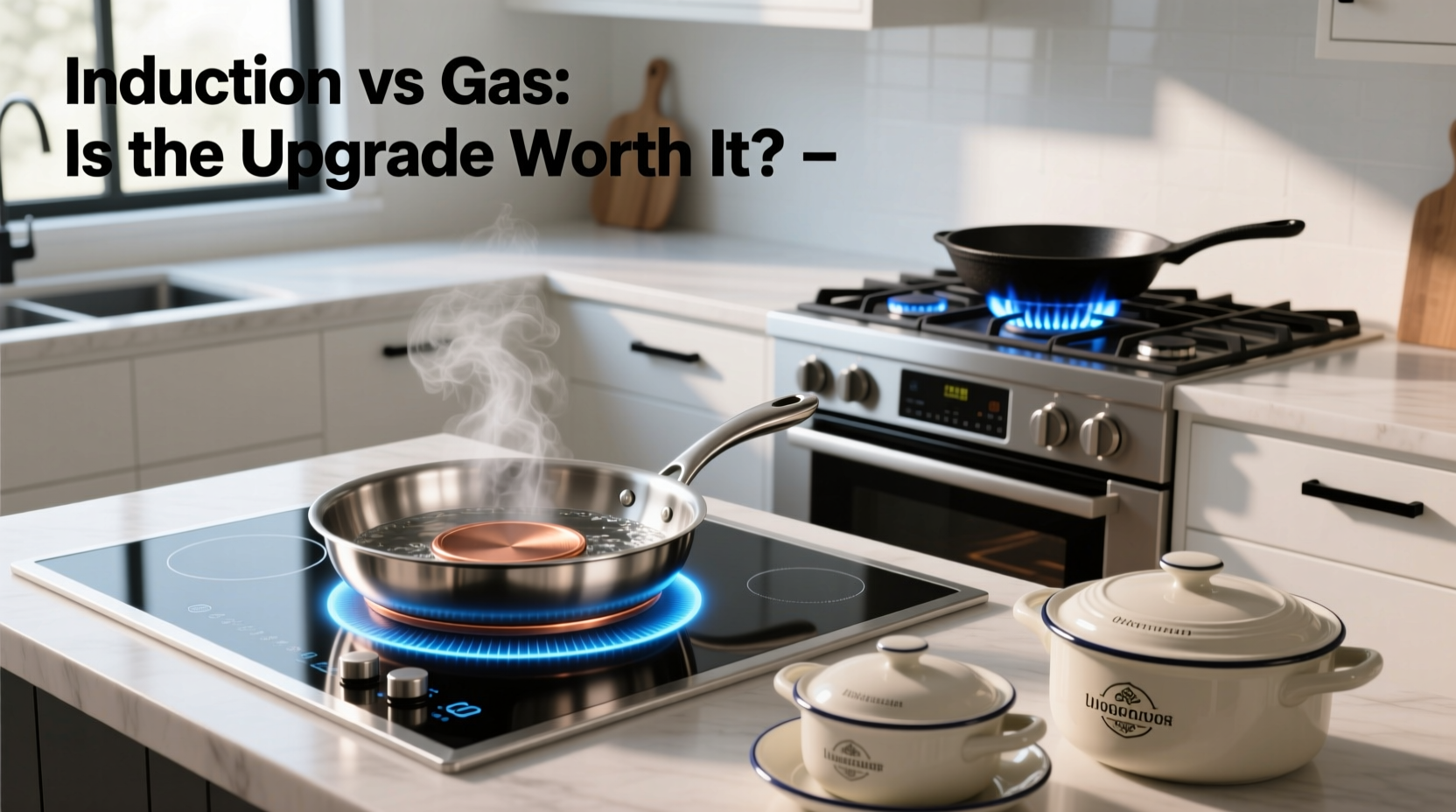
Understanding the fundamental differences between induction and gas starts with how each technology delivers heat.
Gas ranges use an open flame fueled by natural gas or propane. The flame directly heats the bottom of the cookware, transferring energy through conduction. Control is immediate and tactile—adjust the knob, and you see the flame rise or fall in real time. This direct feedback loop makes gas a favorite among professional chefs and home cooks who rely on intuition and visual cues.
Induction cooktops, by contrast, use electromagnetic fields to generate heat. When a magnetic pot is placed on the surface, the magnetic field induces electrical currents within the metal, causing it to heat up. The cooktop itself remains cool to the touch except where the pan contacts the surface. No flame, no combustion, and no wasted ambient heat.
This fundamental shift in heat generation explains why induction is more energy-efficient—up to 90% of the energy goes directly into the food, compared to about 40–55% for gas. It also explains the core limitation: only ferromagnetic cookware (like cast iron or certain stainless steels) works effectively.
Performance Comparison: Speed, Control, and Precision
Cooking isn’t just about boiling water—it’s about control, consistency, and responsiveness. Let’s break down how induction and gas compare across key performance metrics.
- Heating Speed: Induction wins decisively. Boiling a liter of water takes roughly 3–4 minutes on induction versus 7–10 on gas. This speed advantage translates to faster searing, quicker reductions, and less waiting during meal prep.
- Temperature Control: Gas offers intuitive flame adjustment, which many experienced cooks prefer. However, induction provides precise digital control, often with settings down to single-degree increments. Once mastered, this allows for delicate tasks like melting chocolate or simmering sauces without scorching.
- Heat Residual: Gas burners retain heat after being turned off, leading to potential overcooking. Induction stops heating the moment the pan is removed or the power is cut, offering superior safety and control.
- Even Heating: Induction heats the entire base of compatible cookware evenly, reducing hot spots. Gas can create uneven heating, especially if the flame extends beyond the pan’s diameter.
“Induction gives me lab-grade precision in my home kitchen. I can hold a sauce at exactly 180°F without fear of breaking it.” — Daniel Park, Culinary Instructor and Recipe Developer
Cost Analysis: Upfront Investment vs Long-Term Savings
The financial aspect of switching from gas to induction involves three components: appliance cost, cookware replacement, and operating expenses.
| Factor | Gas Range | Induction Cooktop |
|---|---|---|
| Average Appliance Cost | $500–$1,200 | $1,000–$2,500 |
| Installation Requirements | Gas line, ventilation | Dedicated 240V circuit |
| Energy Efficiency | 40–55% | 85–90% |
| Annual Operating Cost (est.) | $40–$60 | $15–$25 |
| Cookware Compatibility | Nearly all types | Ferromagnetic only |
| Potential Cookware Upgrade Cost | $0 | $200–$800+ |
At first glance, induction appears significantly more expensive. A high-end induction range may cost twice as much as a mid-tier gas model, and the need to replace non-magnetic cookware adds another layer of cost. However, long-term savings on energy bills can offset part of this investment. Over five years, an induction cooktop could save $125–$175 in electricity compared to gas, assuming average usage.
Moreover, homes without existing gas lines avoid costly plumbing retrofits. In all-electric buildings or regions phasing out gas appliances, induction becomes not just practical but necessary.
Real-Life Scenario: The Home Cook’s Dilemma
Sarah Thompson, a software engineer and avid home cook in Portland, Oregon, faced this decision when renovating her kitchen in 2023. She loved her old gas range but was drawn to induction’s safety features—especially with two young children. Her existing cookware included a mix: aluminum sauté pans, copper-bottom stockpots, and a few cast iron skillets.
After testing with a magnet, she found only 40% of her collection was induction-compatible. She invested $450 in new cookware: a tri-ply stainless-clad set and additional cast iron pieces. “It stung at first,” she admits, “but I’ve saved so much time. My morning oatmeal heats in 90 seconds. And I don’t worry about leaving the burner on anymore.”
She estimates her energy savings will cover half the cookware cost within four years. More importantly, she reports better results in delicate dishes like custards and risotto due to precise temperature control.
Safety, Cleanliness, and Environmental Impact
Beyond performance and cost, several lifestyle factors influence the decision.
Safety is a major advantage for induction. Since the surface doesn’t get hot unless a pan is present, the risk of burns is drastically reduced. Many models include auto-shutoff, child locks, and residual heat indicators. For families with small children or elderly household members, this peace of mind is invaluable.
Cleanliness is easier with induction. The smooth glass surface wipes clean instantly. Spills don’t bake onto grates or burners. Gas ranges require frequent cleaning of drip pans, grates, and burner heads—tasks that many find tedious.
Environmental impact is increasingly relevant. Gas ranges emit nitrogen dioxide and methane, both harmful pollutants. A 2022 Stanford study found that 75% of gas stoves release methane even when turned off, contributing to indoor air pollution and climate change. Induction produces zero emissions at point of use and aligns with decarbonization goals in residential construction.
Checklist: Is Induction Right for You?
Before committing to the switch, evaluate your situation with this checklist:
- Do you already own or are willing to invest in magnetic cookware?
- Is your kitchen on a dedicated 240-volt circuit (required for most induction units)?
- Do you prioritize energy efficiency and lower utility bills?
- Are you concerned about indoor air quality or reducing carbon footprint?
- Do you cook frequently with precision-dependent dishes (e.g., sauces, candy, sous vide)?
- Do you have children or mobility concerns that make open flames risky?
- Is gas service available, or would installing a gas line be prohibitively expensive?
If you answered “yes” to most of these, induction is likely a worthwhile investment—even with the cookware upgrade.
Expert Tips for a Smooth Transition
Making the switch successfully requires more than just buying new pots. Here’s how to adapt without frustration:
- Start small: Replace one or two key pieces first—like a frying pan and saucepan—before overhauling your entire collection.
- Look for labels: Choose cookware marked “induction-ready” or check manufacturer specifications. Tri-ply clad stainless steel with an aluminum core and magnetic base is ideal.
- Avoid warping: Don’t preheat empty pans on high—induction heats quickly and can damage thin or low-quality cookware.
- Use appropriate heat levels: Medium heat on induction often equals high on gas. Adjust recipes accordingly to prevent burning.
- Keep older pans for oven or outdoor use: Your non-induction cookware doesn’t need to be discarded—just repurposed.
FAQ
Can I use my copper or aluminum pots on induction with an interface disk?
Yes, but inefficiently. Interface disks (magnetic adapters) allow non-magnetic cookware to work, but they reduce heating speed, waste energy, and create a fire hazard if overheated. They’re a temporary fix, not a long-term solution.
Will induction cooking change how I prepare meals?
Initially, yes. The speed and responsiveness require adjustment. You’ll learn to use lower settings and remove pans earlier due to instant shutoff. Most users adapt within a few weeks and appreciate the improved control.
Are there any health risks from electromagnetic fields (EMFs) in induction cooking?
Induction cooktops do emit low-frequency EMFs, but studies show exposure levels drop rapidly with distance (under 12 inches). The World Health Organization states that typical induction use poses no known health risks for the general population.
Conclusion: Weighing Value Beyond the Price Tag
The question isn’t whether induction is more expensive upfront—it clearly is. The real question is whether the benefits justify the cost of new cookware and equipment. For those who value speed, safety, cleanliness, and sustainability, the answer is increasingly yes.
The cookware upgrade, while initially daunting, is a one-time investment in a system that lasts 15–20 years. High-quality magnetic cookware performs better on induction than cheaper alternatives ever could on gas. And as more cities restrict gas installations and energy costs rise, induction is positioned not as a luxury, but as the future of home cooking.
If you’re renovating, building new, or simply ready for a safer, smarter kitchen, making the switch now could pay dividends for years to come. Evaluate your needs, test your current pots, and consider starting with a single induction zone. The upgrade might cost more today—but the return in time, safety, and culinary precision could be well worth it.




 浙公网安备
33010002000092号
浙公网安备
33010002000092号 浙B2-20120091-4
Comments
No comments yet. Why don't you start the discussion?