
For decades, gas has reigned supreme in professional kitchens. The flicker of a blue flame, the tactile control of a knob, and the unmistakable sizzle of searing meat—these are the sensory hallmarks of a chef’s domain. Yet today, an increasing number of culinary professionals are turning off the gas and switching to induction cooktops. This isn’t just a trend driven by sustainability or home appliance marketing—it’s a quiet revolution rooted in performance, precision, and practicality.
The debate between induction and gas is no longer about tradition versus technology. It’s about which tool delivers better results in real-world cooking conditions. From Michelin-starred restaurants to high-volume commercial kitchens, induction is proving it can match—and often surpass—the responsiveness and control that chefs once believed only gas could provide.
The Performance Showdown: Heat Control and Responsiveness
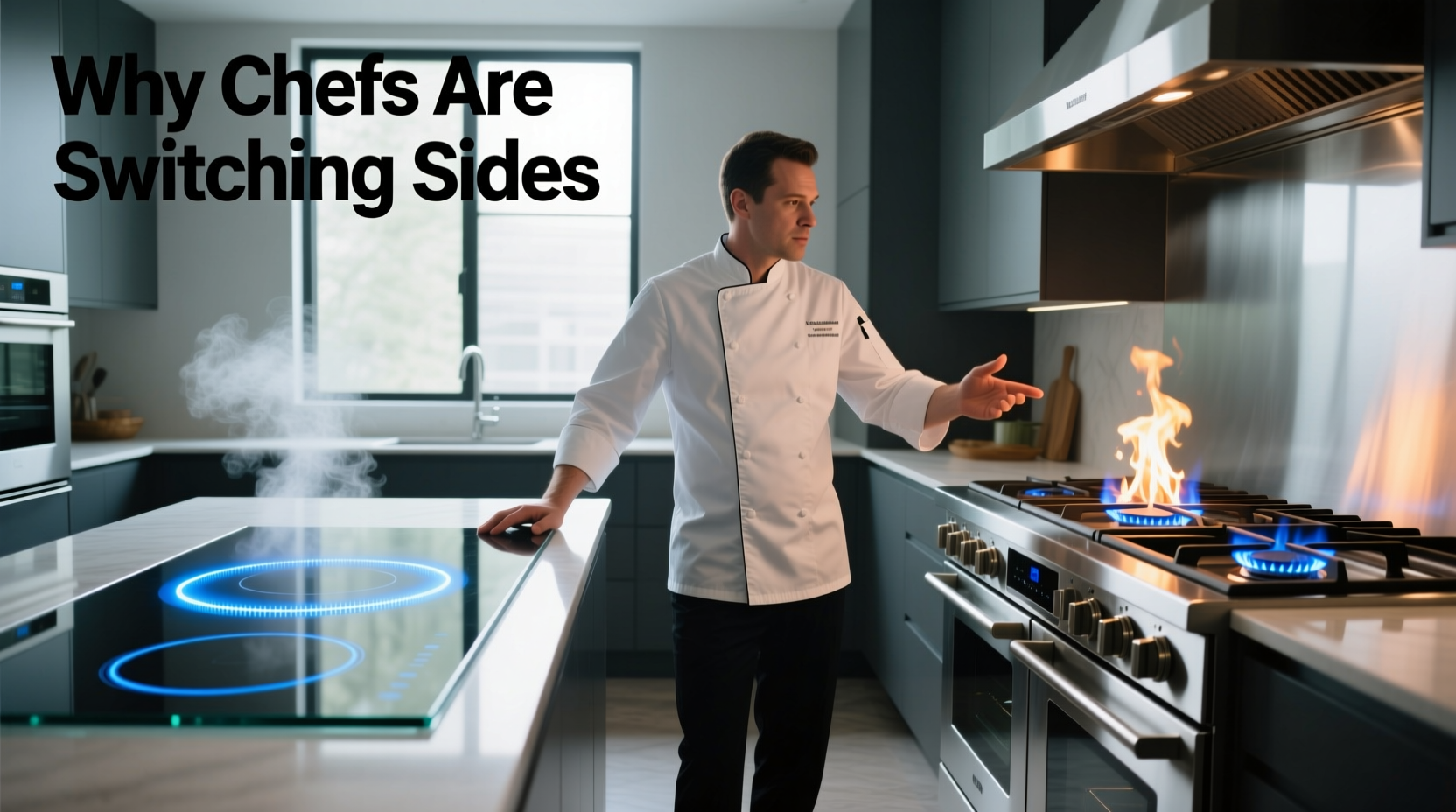
One of the most persistent myths about induction is that it lacks the \"feel\" of gas. Chefs have long trusted their instincts when adjusting flames, relying on visual cues and subtle temperature shifts. But modern induction cooktops offer digital precision that rivals even the most seasoned hand over a burner.
Induction heating works by creating a magnetic field that directly energizes the cookware itself, not the surface beneath it. This means nearly 90% of the energy goes into the food, compared to around 40–55% with gas. The result? Faster boiling times, immediate response to adjustments, and zero residual heat after turning off.
Gas, while responsive, suffers from heat loss through convection and radiation. Flames don’t distinguish between the pan and the surrounding air, leading to wasted energy and uneven zones of heat. Induction eliminates this inefficiency by focusing energy exactly where it’s needed.
Real-World Example: A High-Volume Restaurant Kitchen
At Bistro Lumière in Portland, Chef Elena Torres replaced her six-burner gas range with a full induction line during a recent kitchen renovation. Initially skeptical, she was swayed by the promise of faster service times and improved ventilation requirements.
\"I thought I’d miss the flame,\" she admitted. \"But within two weeks, my sauciers were moving faster than ever. We reduced our average sauce reduction time by three minutes because water boils so much quicker. And cleanup? No more scrubbing burnt-on grease from under grates.\"
More importantly, her team reported fewer burns and greater consistency across stations. With induction, each burner delivers uniform heat without hot spots—a critical factor when producing hundreds of identical dishes per night.
Safety and Kitchen Environment: A Healthier Workspace
Professional kitchens are inherently dangerous environments. Open flames, hot surfaces, and high-pressure gas lines introduce risks that every chef must manage daily. Induction dramatically reduces these hazards.
- No open flame means no accidental ignition of towels, paper, or spilled alcohol.
- The cooktop remains cool to the touch except where the pan makes contact, reducing burn incidents.
- No combustion byproducts like carbon monoxide, nitrogen dioxide, or particulate matter are released into the air.
- Lower ambient heat improves comfort for staff during long shifts.
“Switching to induction was one of the best safety upgrades we’ve made. Our HVAC load dropped, air quality improved, and we’ve had zero fire scares since installation.” — Marcus Lin, Executive Chef, Urban Table Collective
In residential settings, studies have shown that homes with gas stoves can exceed outdoor pollution levels for nitrogen dioxide. In commercial kitchens, where multiple burners run for hours, the cumulative effect is even more pronounced. Induction eliminates indoor air pollution at the source, contributing to both employee well-being and regulatory compliance.
Energy Efficiency and Operational Costs
While the upfront cost of induction equipment can be higher than gas, the long-term savings are compelling—especially in commercial operations where utility bills run into tens of thousands annually.
| Feature | Induction Cooktop | Gas Range |
|---|---|---|
| Energy Efficiency | ~90% | ~40–55% |
| Boil Time (1L water) | 3–4 minutes | 6–9 minutes |
| Ventilation Needs | Minimal (no combustion) | High (hood required) |
| Maintenance Frequency | Low (smooth surface) | High (grates, burners, lines) |
| Safety Risk Level | Low | Medium–High |
Because induction doesn’t produce combustion gases, exhaust hoods can be smaller or even eliminated in some jurisdictions under code exceptions for low-emission appliances. This reduces construction costs during kitchen builds and lowers ongoing fan energy usage by up to 70%.
Additionally, many cities now offer rebates and incentives for switching to electric cooking as part of broader decarbonization initiatives. For example, programs in California and New York provide thousands in credits for commercial kitchens adopting induction, effectively offsetting initial investment.
Precision Cooking: Why Sous-Vide and Simmering Matter
Professional cooking isn’t just about searing and frying. It’s about delicate reductions, consistent poaching temperatures, and maintaining sauces without scorching. This is where induction truly shines.
Unlike gas, which struggles to maintain very low temperatures without cycling on and off, induction can hold a steady 60°C (140°F) for hours—ideal for sous-vide setups or melting chocolate. Digital controls allow precise increments, often down to single-degree adjustments.
Consider a hollandaise sauce, which breaks if heated above 65°C (150°F). On gas, maintaining that threshold requires constant attention and stirring. With induction, a chef can set the exact temperature and walk away, confident the sauce will remain emulsified.
Step-by-Step: Transitioning a Station to Induction
- Assess current workflow: Identify which stations use rapid heating or prolonged simmering.
- Select compatible cookware: Replace non-magnetic pans with induction-ready alternatives.
- Train staff: Conduct sessions on power levels, auto-shutoff features, and cleaning protocols.
- Start with one station: Pilot induction on a prep or sauce station before full rollout.
- Monitor performance: Track cooking times, energy use, and feedback over two weeks.
- Scale accordingly: Expand based on measurable improvements in speed, consistency, and safety.
Addressing Common Concerns: The Counterarguments
No technology is perfect, and induction does come with limitations. Understanding these helps chefs make informed decisions rather than reacting to misconceptions.
“It Doesn’t Work with My Pans”
This is the most frequent objection—and largely solvable. Induction requires ferromagnetic cookware. If a magnet sticks to the bottom, it will work. Many high-end brands now offer induction-compatible lines, and retrofitting a kitchen usually involves replacing only 20–30% of existing pans.
“It Feels Less Intuitive”
The absence of visible flame changes how chefs gauge heat. However, modern units include features like boost modes, residual heat indicators, and programmable presets that mimic traditional techniques. After a short adjustment period, most users report regaining—or exceeding—their previous level of control.
“Power Requirements Are Too High”
Yes, induction demands robust electrical circuits—typically 208–240V and 30–50 amps per unit. But commercial kitchens already support heavy loads for ovens, refrigeration, and HVAC. With proper planning, electrical upgrades are manageable and often future-proof the space for other smart equipment.
Checklist: Is Your Kitchen Ready for Induction?
- ✅ Do you use magnetic cookware or are willing to upgrade?
- ✅ Is your electrical system capable of supporting high-wattage appliances?
- ✅ Are ventilation costs or indoor air quality concerns present?
- ✅ Do you prioritize consistency in temperature-sensitive dishes?
- ✅ Are safety and staff comfort key operational priorities?
- ✅ Are you eligible for local rebates or incentives for electrification?
Expert Insight: What Top Chefs Are Saying
The shift isn’t limited to eco-conscious startups. Established names in the industry are embracing induction—not out of obligation, but because it enhances their craft.
“We used to think gas was the only way to cook with soul. But precision is also a form of respect—for ingredients, for timing, for flavor. Induction gives us that precision without compromise.” — Chef Daniel Park, James Beard Award Winner, Nourish & Co.
Even在传奇 figures like Thomas Keller have begun incorporating induction into training kitchens at The French Laundry, citing consistency and repeatability as essential for teaching next-generation chefs.
Frequently Asked Questions
Can you wok on an induction cooktop?
Yes—with the right setup. Flat-bottomed carbon steel woks work exceptionally well on induction. Some models feature “wok zones” with expanded heating areas. While traditional rounded woks on gas rings allow for dramatic tossing, induction offers superior heat control for stir-frying, reducing the risk of burning.
Does induction affect the taste of food?
No credible evidence suggests induction alters flavor. Taste is influenced by Maillard reaction, caramelization, and seasoning—all of which occur identically when the correct temperature and cookware are used. Any perceived difference is likely due to improved temperature control, which leads to more consistent results.
Are induction cooktops durable enough for commercial use?
Absolutely. Commercial-grade induction units are built with reinforced glass-ceramic surfaces designed to withstand heavy pots, frequent cleaning, and constant operation. Brands like Vollrath, Garland, and Rational manufacture industrial systems rated for 20,000+ hours of service.
The Future Is Electric—And So Are the Results
The culinary world is evolving. As sustainability, efficiency, and workplace safety become non-negotiables, induction is no longer just an alternative—it’s becoming the standard. Chefs aren’t abandoning their standards; they’re upgrading their tools to meet them more effectively.
Gas will always have its place, especially in cultures where live-fire cooking defines cuisine. But for the majority of modern kitchens—where consistency, speed, and safety matter—induction offers a compelling advantage.
The switch isn’t about rejecting tradition. It’s about honoring the essence of great cooking: control, care, and excellence. And increasingly, that excellence is being powered not by flame, but by electromagnetic fields calibrated to perfection.




 浙公网安备
33010002000092号
浙公网安备
33010002000092号 浙B2-20120091-4
Comments
No comments yet. Why don't you start the discussion?