
In professional and home kitchens alike, temperature precision is not just a convenience—it’s a necessity. Whether you're reducing a delicate sauce, searing a steak, or melting chocolate, the ability to control heat with accuracy directly impacts flavor, texture, and consistency. For decades, gas stoves have been the gold standard among chefs for their responsive flame and intuitive control. But in recent years, induction cooktops have surged in popularity, promising faster heating, greater energy efficiency, and—critically—superior temperature regulation. So, which technology truly delivers better precision? The answer isn’t as straightforward as it seems.
The Science Behind Heat Control
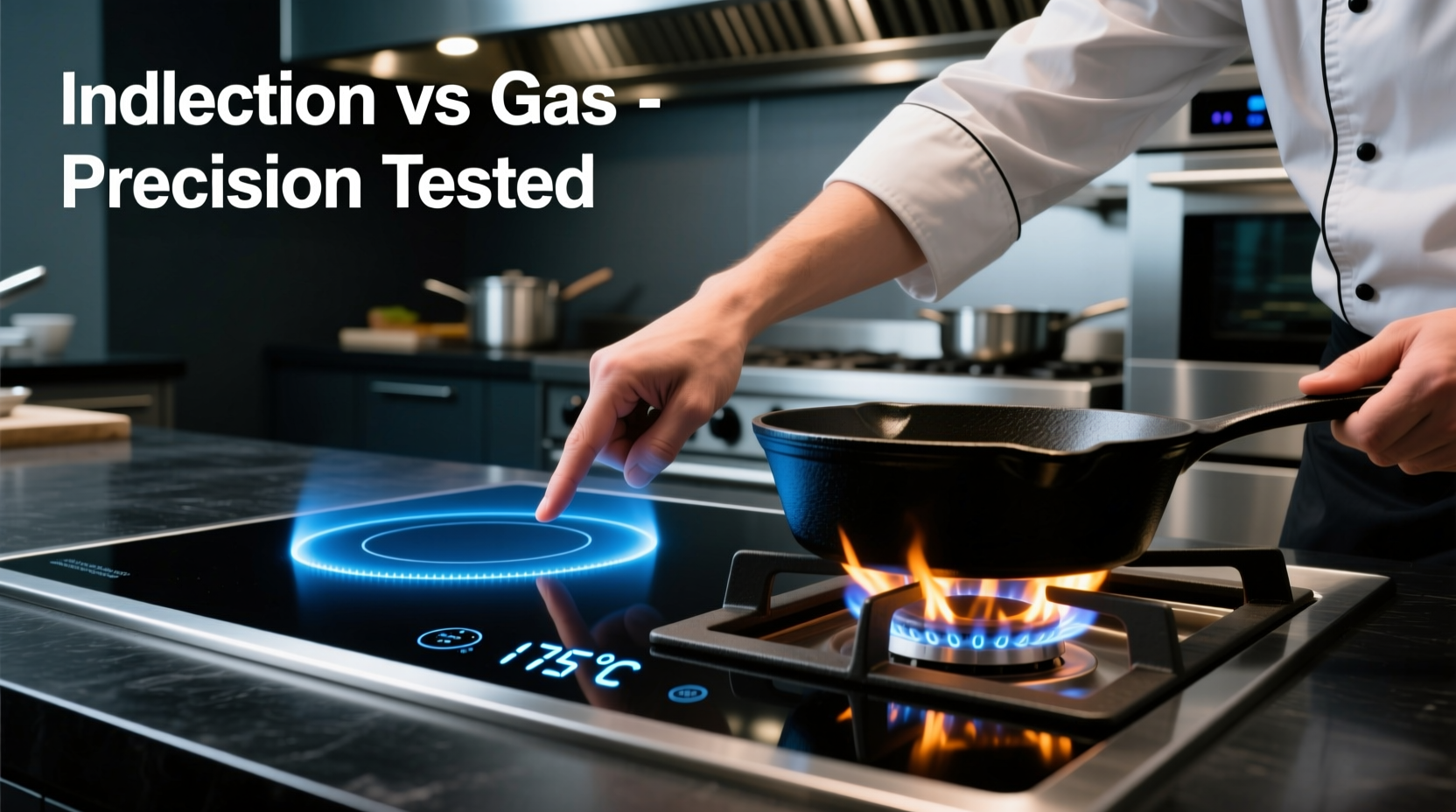
Precise temperature control depends on three key factors: responsiveness, consistency, and feedback. Gas stoves rely on open flames that change intensity almost instantly when you adjust the knob. This direct visual and tactile feedback allows experienced cooks to modulate heat intuitively. However, much of the heat from gas burners escapes around the sides of the pot, leading to inefficiency and uneven heating.
Induction, by contrast, uses electromagnetic fields to generate heat directly within the cookware itself. Only ferromagnetic pots and pans work, but when they do, the system heats up rapidly and shuts off immediately when power is reduced. Because the cooktop doesn’t retain heat like gas or electric coils, cooling is nearly instantaneous. This makes induction exceptionally fast at both heating and responding to adjustments.
“Induction gives me the kind of fine-tuned control I used to only get with high-end restaurant ranges. It’s like having a dimmer switch instead of an on-off toggle.” — Chef Marcus Tran, Executive Chef at Lumière Bistro
Comparing Responsiveness: From Boil to Simmer
To understand which system offers superior precision, consider how each handles rapid transitions. Take the classic test: bringing four quarts of water to a boil, then dropping to a bare simmer.
On a gas range, turning down the flame reduces heat output, but residual flame and burner warmth mean the pot continues to absorb energy for several seconds. Achieving a true simmer often requires trial and error, especially on lower-powered burners. In contrast, induction cooktops can drop from 212°F (100°C) to 185°F (85°C) in under 30 seconds once power is reduced. Many models offer preset temperature settings accurate to within ±5°F, allowing users to maintain exact temperatures over long periods.
This level of control is particularly valuable in techniques such as:
- Tempering chocolate without scorching
- Making hollandaise or custards that curdle easily
- Sous-vide-style cooking on the stovetop
- Reducing wine or stock without burning the bottom layer
Detailed Comparison: Induction vs Gas
| Feature | Induction Cooktop | Gas Stove |
|---|---|---|
| Heat-Up Speed | Very fast (boils water ~50% faster) | Moderate to fast |
| Temperature Adjustment Response | Near-instant (electromagnetic field adjusts in milliseconds) | Fast, but delayed by thermal inertia of flame and burner |
| Precision Level | High (digital controls, some with sensor feedback) | Moderate (relies on user experience and visual cues) |
| Consistency Over Time | Excellent (maintains set temp automatically) | Variable (requires constant monitoring) |
| Cool-Down Time | Immediate (pan stops heating when power drops) | Slow (residual flame and hot grates continue heating) |
| Energy Efficiency | ~85–90% | ~40–55% |
| Learning Curve | Moderate (requires compatible cookware and understanding of settings) | Low (intuitive flame adjustment) |
Real-World Performance: A Mini Case Study
Consider the experience of Ana Reyes, a pastry chef who transitioned from a commercial gas kitchen to a home setup with induction. Tasked with making a batch of crème brûlée, she needed to maintain a steady 170°F (77°C) for her custard base. On her old gas range, she had to constantly rotate the pan and lift it slightly off the burner to prevent hotspots and curdling. Even then, one of six ramekins occasionally overcooked.
Switching to induction, she used a model with a “keep warm” function set precisely to 170°F. She reported that the mixture heated evenly and never exceeded the target temperature. “I didn’t have to babysit it,” she said. “I could stir once every few minutes and trust the machine. That kind of reliability changes how I plan my workflow.”
Similarly, in a blind test conducted by a culinary school, ten professional chefs were asked to reduce a balsamic glaze to a specific viscosity using both gas and induction. Seven achieved consistent results on induction, compared to only three on gas. The majority cited the ability to hold a low, steady temperature without fluctuation as the deciding factor.
When Gas Still Holds the Edge
Despite induction’s technological advantages, gas remains preferred in certain scenarios. Flame provides unmatched visual feedback—chefs can see the size and color of the fire, judge its intensity, and even use the flame to char or blister ingredients directly. Techniques like charring peppers, flambéing desserts, or wok cooking with a breath of carbonized flavor (“wok hei”) are difficult or impossible on induction.
Additionally, gas allows for more flexibility with cookware. You can use any type of pot or pan, regardless of material. This is especially important for traditional or specialty cookware like carbon steel woks, copper pots, or ceramic tagines. While induction-compatible versions exist, they may alter performance or require compromise.
Another consideration is power stability. During electrical outages or in areas with inconsistent voltage, induction becomes unusable. Gas, especially when connected to a natural line or large propane tank, offers uninterrupted operation—a critical factor in commercial environments.
Step-by-Step Guide to Testing Temperature Precision at Home
You don’t need a lab to evaluate which stove gives you better control. Try this simple experiment:
- Gather Equipment: Use the same heavy-bottomed saucepan, an accurate digital thermometer, and 2 cups of water.
- Boil Test: Bring the water to a rolling boil on both stoves. Note the time it takes.
- Simmer Transition: Once boiling, reduce the heat to the lowest setting that maintains gentle bubbling (simmer).
- Monitor Stability: Record the temperature every 30 seconds for 5 minutes. Look for fluctuations.
- Cool-Down Check: Turn off the heat and measure how quickly the water temperature drops below 180°F.
- Repeat & Compare: Perform the same test on both systems and compare response times and consistency.
This test reveals not just speed, but also how well each system maintains low heat—an essential skill for sauces, reductions, and delicate proteins.
Expert Recommendations and Industry Trends
According to the National Restaurant Association’s 2023 Kitchen Technology Report, 68% of new commercial kitchens now include induction units alongside or in place of gas. High-end hotels and eco-conscious restaurants are leading the shift, citing energy savings, improved indoor air quality (no combustion byproducts), and better climate control in the kitchen.
“The future of precision cooking is induction. We’re seeing combi ovens and smart ranges integrate AI-driven temperature modulation that simply isn’t possible with gas.” — Dr. Lena Patel, Food Technology Researcher at Culinary Innovation Lab
Yet many top chefs still advocate for a hybrid approach. Thomas Keller, renowned for his meticulous technique, uses both in his test kitchen: induction for tasks requiring exactness, and gas for live-fire applications. “Each has its language,” he says. “Mastery means knowing when to speak which.”
Frequently Asked Questions
Can induction really match the feel of gas?
For novice cooks, the lack of visible flame can feel less intuitive. However, modern induction models with touch sliders, audible feedback, and real-time temperature displays bridge that gap. With practice, many users report feeling more in control than with gas.
Is induction safe for children or pets?
Yes—and safer than gas. The cooktop surface stays relatively cool (only heated by the pan), reducing burn risk. Most units auto-shut off if no pan is detected or if overheating occurs. There’s also no open flame or gas leak risk.
Do all induction cooktops offer precise control?
No. Entry-level models may only have power levels (e.g., 1–10), while high-end units provide exact temperature settings in 5° increments. Look for models with “simmer,” “melt,” or “keep warm” presets and sensor-based regulation for best results.
Checklist: Choosing the Right System for Precision Cooking
- ✅ Determine your primary cooking style (delicate sauces vs. high-heat searing)
- ✅ Assess your current cookware compatibility with induction
- ✅ Consider kitchen ventilation—gas requires more exhaust due to combustion fumes
- ✅ Evaluate electrical capacity—induction requires dedicated 240V circuits for full power
- ✅ Test models in person if possible, focusing on low-temperature performance
- ✅ Decide if automation features (timers, sensors, presets) add value for your workflow
- ✅ Factor in long-term costs: induction is more efficient, but installation may be pricier
Conclusion: Precision Redefined
The question of whether induction or gas offers better temperature control no longer has a single answer. Gas remains a favorite for its immediacy, versatility, and tradition. But induction surpasses it in measurable precision, consistency, and responsiveness—especially at low and medium temperatures where subtle shifts matter most.
Ultimately, the best choice depends on your cooking style, tools, and priorities. For those focused on reproducibility, energy efficiency, and fine control, induction is the clear winner. For chefs who value flame techniques and broad cookware flexibility, gas still holds relevance. Many professionals now opt for both, creating kitchens that blend the best of analog intuition and digital accuracy.




 浙公网安备
33010002000092号
浙公网安备
33010002000092号 浙B2-20120091-4
Comments
No comments yet. Why don't you start the discussion?