
The smartphone market moves fast, but older flagships often linger in secondhand markets and budget-conscious buyers' minds. The Samsung Galaxy Note 5, released in 2015, was once a powerhouse with its premium metal-and-glass design and S Pen functionality. Fast forward to today, and devices like the Infinix Note 5—launched in 2018—offer modern features at a fraction of the cost. But how do they truly compare? More importantly, is the older Samsung still worth considering in 2024?
This isn’t just about nostalgia. For users on tight budgets or those seeking specific features like stylus support, the decision between these two phones carries real implications. Let’s break down their strengths, weaknesses, and long-term viability.
Design and Build Quality
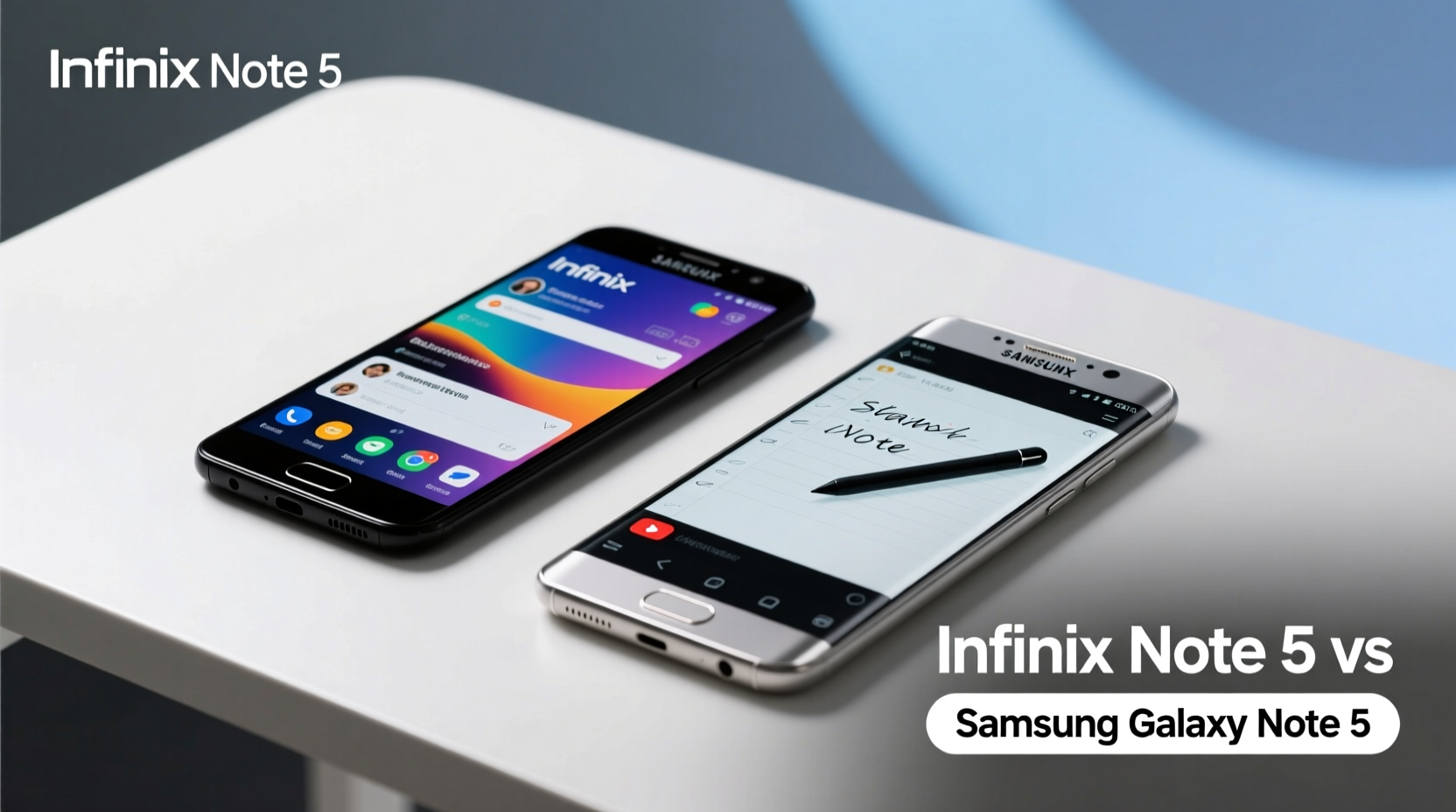
The Samsung Galaxy Note 5 set a high bar for design in its era. It featured a sleek glass front and back with an aluminum frame, giving it a premium feel that most mid-range phones still struggle to match. Its compact 5.7-inch display fits comfortably in one hand, and the build quality exudes durability—when handled carefully.
In contrast, the Infinix Note 5 embraces a more utilitarian approach. It uses a plastic body with a faux-metal finish and a larger 6.01-inch IPS LCD display. While less refined than the Note 5, the Infinix offers better grip and is less prone to shattering if dropped. However, it lacks water resistance and feels noticeably lighter—sometimes to the point of seeming flimsy.
Performance and Software Experience
Under the hood, the differences become stark. The Note 5 runs on Samsung’s Exynos 7420 or Snapdragon 808 (depending on region), both of which were top-tier chips in 2015. Paired with 4GB of RAM, it delivered smooth multitasking and strong gaming performance—for its time.
By 2024 standards, however, the Note 5 struggles. It shipped with Android 5.1 and received updates only up to Android 7.0 Nougat. Most modern apps are optimized for newer APIs, and many services—including banking and streaming platforms—no longer support such outdated operating systems. Google Play Services may function intermittently, and security patches ceased years ago.
The Infinix Note 5, while not a performance beast, runs on a MediaTek Helio P35 or X20 (varies by model) with 4GB or 6GB RAM options. It launched with Android 8.1 Oreo and received limited updates, but even its base software is significantly more current than the Note 5’s final OS version. App compatibility is far better, and basic tasks like browsing, social media, and video playback remain fluid.
“Phones older than seven years face increasing obsolescence—not from hardware alone, but from software abandonment.” — David Lin, Mobile Analyst at TechTrends Asia
Camera Comparison: Real-World Results
On paper, both devices feature 16MP rear cameras, but real-world performance tells a different story.
The Note 5’s camera was excellent in 2015. It captured sharp, color-accurate photos in daylight and offered optical image stabilization (OIS), rare even in some current budget phones. Low-light performance was decent for its time, and the 5MP front camera handled selfies well.
Fast forward nine years, and the aging sensor shows its limits. Autofocus is slow, dynamic range is narrow, and night shots are grainy. Worse, the lack of computational photography—HDR, night mode, AI enhancements—means every photo feels flat compared to modern standards.
The Infinix Note 5 compensates with software tricks. Its dual rear setup (13MP + 2MP depth) allows portrait mode effects, and AI scene detection attempts to optimize colors. While the primary sensor is smaller and lacks OIS, firmware enhancements help stabilize images and improve contrast. In direct daylight comparisons, the Infinix often produces more vibrant, socially shareable photos—even if technically inferior.
| Feature | Samsung Note 5 | Infinix Note 5 |
|---|---|---|
| Rear Camera | 16MP, f/1.9, OIS | 13MP + 2MP depth |
| Front Camera | 5MP | 16MP |
| Video Recording | 4K @ 30fps | 1080p @ 30fps |
| Low-Light Performance | Moderate (no night mode) | Basic (AI-enhanced) |
| Software Enhancements | None | AI Beauty, HDR, Portrait Mode |
Battery Life and Charging
The Note 5 packs a 3000mAh battery—a modest capacity even in 2015. With modern app demands and degraded cells (after 9 years), expect no more than half a day of light use. Fast charging via Quick Charge 2.0 helps, but wireless charging takes priority over battery longevity in daily use.
The Infinix Note 5 counters with a massive 4500mAh battery. Even under moderate usage—YouTube, WhatsApp, web browsing—it easily lasts 1.5 to 2 days. This is a decisive advantage for users without consistent access to charging. It supports 18W fast charging, though the included charger is often slower.
S Pen: Still a Game-Changer?
One area where the Note 5 remains unique is the S Pen. Unlike the Infinix’s passive stylus (if bundled at all), the Note 5’s stylus offers pressure sensitivity, air commands, and screen-off memo functionality. Artists, note-takers, and productivity-focused users may still find value here.
However, the S Pen ecosystem has evolved dramatically since 2015. Modern Notes offer Bluetooth control, advanced doodling, and seamless integration with DeX and Samsung Notes. The Note 5’s stylus is basic by comparison. Still, for sketching ideas or jotting quick reminders without unlocking the phone, it holds niche appeal.
Is the Older Samsung Still Worth It? A Realistic Case
Consider Maria, a college student in Manila looking for a cheap phone for classes. She found a used Note 5 online for ₱3,500 (~$60), drawn by its “premium” branding and S Pen. After two weeks, she struggled with app crashes, couldn’t install her university’s learning portal, and the battery died during lectures. She eventually traded it for an Infinix Note 5 at double the price—but with reliable performance, all-day battery, and working mobile banking.
Her experience reflects a broader trend: emotional attachment to legacy brands doesn’t override technical limitations. While the Note 5 was groundbreaking, its age makes it a liability in 2024.
Checklist: What to Consider Before Buying Either Phone
- Evaluate software support: Can the phone run current versions of WhatsApp, Google Maps, and your bank’s app?
- Test the battery: Does it hold charge beyond 4 hours of mixed use?
- Check update status: When was the last OS or security patch?
- Assess repairability: Are replacement parts still available locally?
- Determine your primary use: Is it for calls and texts, social media, or productivity?
Frequently Asked Questions
Can the Samsung Note 5 still receive security updates?
No. Samsung ended official software support for the Note 5 in 2018. No security patches have been released since, making it vulnerable to malware and phishing attacks.
Does the Infinix Note 5 support the latest apps?
Mostly yes. Running Android 8.1 or higher (depending on variant), it supports mainstream apps like Facebook, YouTube, TikTok, and Google services. Some newer apps may run slowly but remain functional.
Is the S Pen on the Note 5 worth choosing it over modern phones?
Only for very specific use cases. If you regularly take handwritten notes or annotate PDFs, the S Pen adds value. But modern alternatives like the Samsung Galaxy Tab A or budget styluses on newer phones offer better overall experiences.
Final Verdict: Practicality Over Prestige
The Samsung Galaxy Note 5 was a landmark device. It showcased innovation in design, display, and stylus integration. But time has moved on. In 2024, choosing it over a modern budget phone like the Infinix Note 5 means accepting poor battery life, unreliable app performance, and serious security risks.
The Infinix Note 5 isn’t perfect—its build is plasticky, and the camera lags behind mid-range competitors—but it delivers what matters most: dependable daily performance, long battery life, and compatibility with today’s digital world.
If you’re buying for nostalgia or collecting, the Note 5 earns respect. But if you need a working phone for communication, education, or work, the Infinix is the smarter, safer, and more sustainable choice.




 浙公网安备
33010002000092号
浙公网安备
33010002000092号 浙B2-20120091-4
Comments
No comments yet. Why don't you start the discussion?