
The choice between an inlaid and a prong setting goes beyond aesthetics—it can significantly impact the perceived beauty, longevity, and ultimately, the financial value of a piece of jewelry. Whether you're purchasing an engagement ring, a statement pendant, or heirloom earrings, understanding how these settings function—and how they contribute to long-term worth—is essential. Jewelers, appraisers, and collectors agree: the setting is not just a frame for the gemstone; it’s a critical component that influences security, brilliance, maintenance needs, and market desirability.
While many buyers focus solely on carat weight or cut quality, overlooking the setting can lead to unexpected wear, higher repair costs, or diminished resale value. This article breaks down the structural, visual, and economic differences between inlaid (also known as flush or gypsy setting) and prong settings, helping you make informed decisions that preserve both beauty and value over time.
Understanding Inlaid and Prong Settings
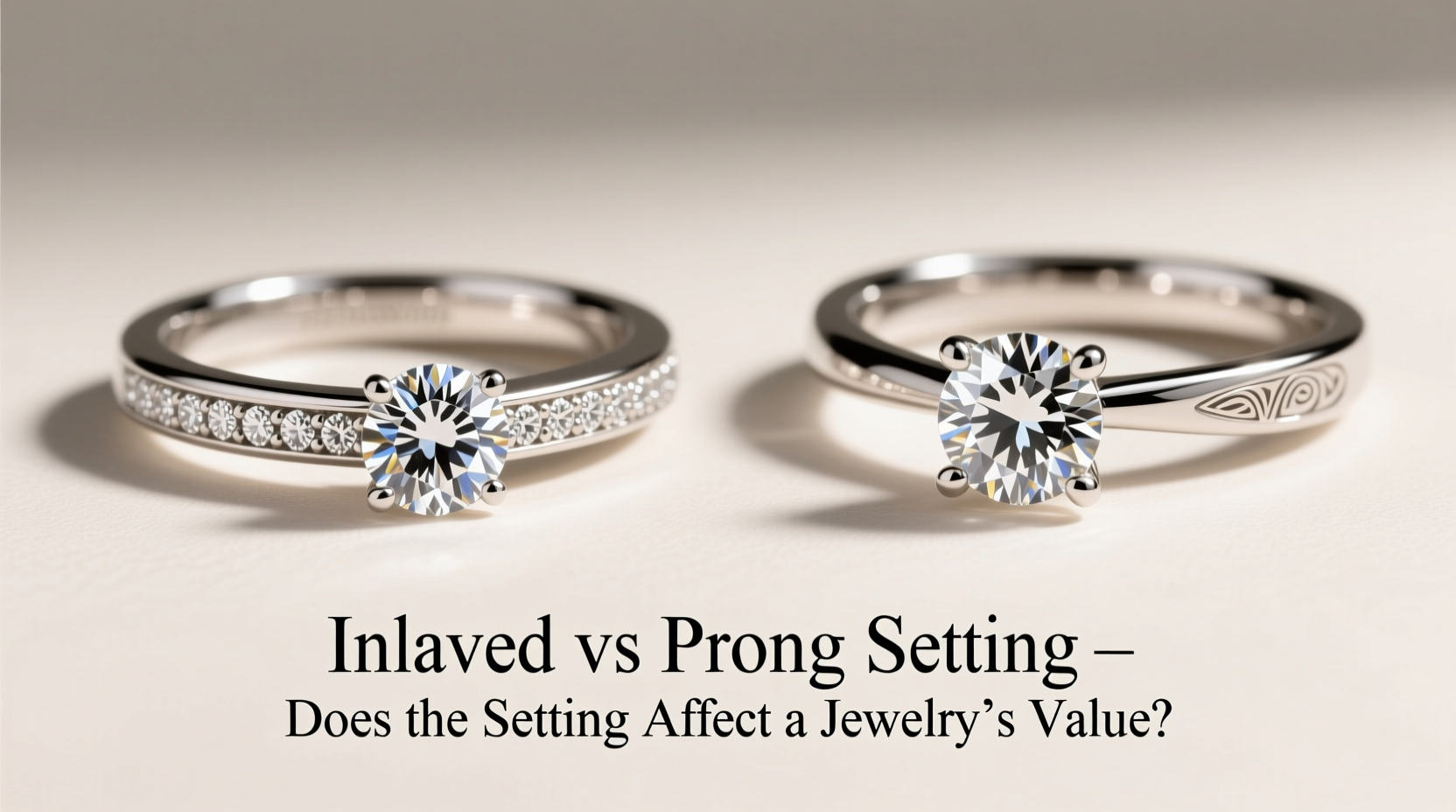
Inlaid setting, often referred to as flush or gypsy setting, involves embedding a gemstone directly into the metal surface of the band or mounting. The stone sits level with or slightly below the surrounding metal, which is then pushed up around the edges to secure it. This creates a smooth, seamless appearance ideal for minimalist designs and active lifestyles.
Prong setting, one of the most traditional and widely used methods, uses small metal claws (typically four or six) to lift the gemstone above the band, exposing more of its surface to light. This maximizes sparkle and allows for easier cleaning but exposes the stone to greater risk of snagging or impact damage.
Each method has distinct advantages and trade-offs. However, their influence extends well beyond style—these choices shape how the jewelry ages, how easily it can be repaired, and how future buyers or appraisers perceive its worth.
Structural Integrity and Durability
Durability plays a major role in determining long-term value. Jewelry that withstands daily wear without frequent repairs maintains higher resale potential.
- Inlaid settings are inherently more durable due to their low profile. Because the stone is recessed and surrounded by metal, it's less likely to catch on fabric or get knocked during regular use. This makes them ideal for people with active jobs or those who prefer understated elegance.
- Prong settings, while stunning, require more maintenance. Over time, prongs can bend, wear down, or break—especially if the wearer engages in manual labor or sports. Loose prongs increase the risk of losing the center stone, which drastically reduces value.
Light Performance and Visual Appeal
One of the primary reasons prong settings dominate engagement rings is their ability to maximize light exposure. With minimal metal blocking the stone, more light enters and reflects back through the crown, enhancing fire and brilliance.
In contrast, inlaid settings restrict light entry from the sides due to the encasing metal. While this may reduce overall sparkle compared to elevated stones, modern cuts and high-quality diamonds can still perform beautifully even when set flush.
“Even a perfectly cut diamond loses visual impact if poorly set. A prong setting amplifies brilliance, but only if maintained. An inlaid setting sacrifices some flash for resilience.” — Daniel Reeves, GIA-Certified Gemologist
Appreciation in value often correlates with visual appeal at first glance. At auctions or resale markets, prong-set pieces tend to draw more attention because they showcase the gemstone dramatically. However, if the prongs are worn or damaged, that advantage disappears quickly.
Impact on Jewelry Value: A Comparative Analysis
To understand how each setting affects value, consider three key factors: material efficiency, craftsmanship complexity, and market demand.
| Factor | Inlaid Setting | Prong Setting |
|---|---|---|
| Metal Usage | Low – only enough to surround the stone | Moderate – requires structured prongs and support base |
| Craftsmanship Skill | High – precise drilling and stone fitting required | Moderate to High – depends on number and thinness of prongs |
| Diamond Visibility | Limited side exposure; top view only | Full 360° visibility enhances perceived size |
| Resale Demand | Niche appeal; favored in men’s bands and modern designs | Broad appeal; dominant in bridal and luxury markets |
| Maintenance Needs | Minimal – resistant to snags and impacts | Frequent checks needed; prongs weaken over time |
From a valuation standpoint, prong settings generally command higher premiums in retail and secondary markets—especially for solitaire engagement rings—because they highlight the centerpiece effectively. However, inlaid settings offer long-term cost savings due to reduced servicing needs and lower risk of stone loss.
Real Example: Two Rings, Ten Years Later
Consider two identical 1-carat round brilliant diamonds set in platinum bands, purchased at the same time for $6,500 each.
- Ring A: Prong-set solitaire. Worn daily by a teacher who loves the sparkle. After five years, one prong broke during gym class, causing the diamond to fall out. Re-setting cost $420, plus insurance deductible. By year ten, two additional prongs required re-tipping. Resale value dropped to $4,800 due to visible wear and repair history.
- Ring B: Inlaid setting chosen for practicality. Worn just as frequently, including gardening and travel. No repairs needed. When sold after ten years, it fetched $5,900—closer to original value despite less initial sparkle.
This scenario illustrates that while prong settings start strong in terms of visual impact, real-world usage often erodes their advantage unless meticulously maintained.
Expert Care Tips to Preserve Value
No matter the setting, proper care ensures maximum longevity and retention of value. Here’s what professionals recommend:
- Regular Inspections: Visit your jeweler every six months to check for loose stones, bent prongs, or worn metal.
- Cleaning Routine: Use mild soap and soft brush weekly. Avoid ultrasonic cleaners for older or delicate prong settings.
- Insurance Appraisal: Get a professional appraisal every 3–5 years to reflect current market values.
- Safe Storage: Store pieces separately in padded compartments to prevent scratching, especially important for inlaid stones that sit flush.
- Avoid Harsh Chemicals: Chlorine and bleach can corrode metal settings over time, weakening both prongs and inlaid walls.
FAQ: Common Questions About Setting and Value
Does changing a setting affect jewelry value?
Yes. Converting from prong to inlaid (or vice versa) alters structural integrity and design intent. If done poorly, it can devalue the piece. Done by a master jeweler using compatible materials, it may enhance practicality and appeal—but rarely increases intrinsic value unless upgrading metal quality or adding accent stones.
Can a worn prong setting be restored?
Most prong damage can be repaired through re-tipping (adding metal to worn claw tips) or full re-setting. However, repeated repairs suggest instability, which can deter buyers and lower appraisal estimates.
Is inlaid setting suitable for large center stones?
Rarely. Inlaid settings are typically used for smaller accent stones or modest center gems under 0.50 carats. Larger stones need elevation and support that inlaid settings cannot safely provide.
Conclusion: Choosing for Long-Term Worth
The debate between inlaid and prong settings isn’t about which is universally better—it’s about aligning your choice with lifestyle, priorities, and long-term goals. Prong settings deliver unmatched brilliance and are deeply embedded in cultural expectations, particularly for engagement rings. But their vulnerability means they require ongoing investment in upkeep to maintain value.
Inlaid settings, though less flashy, offer resilience and timeless simplicity. They may not dazzle in store lighting, but they endure. For those seeking jewelry that ages gracefully with minimal intervention, inlaid could represent smarter value preservation.
Ultimately, the setting doesn’t just hold the stone—it holds the promise of the piece’s future. Choose not just for today’s sparkle, but for how you want your jewelry to stand the test of time.




 浙公网安备
33010002000092号
浙公网安备
33010002000092号 浙B2-20120091-4
Comments
No comments yet. Why don't you start the discussion?