
Families, legal representatives, and concerned individuals often rely on online inmate search tools to locate someone currently incarcerated. These public databases—maintained by county jails, state departments of corrections, or federal agencies—are essential for staying informed. Yet, despite entering accurate details, many users find that the person they’re searching for does not appear in the results. This absence doesn’t necessarily mean the individual isn’t in custody; it could reflect system limitations, procedural delays, or jurisdictional nuances. Understanding the reasons behind missing records is crucial for effective follow-up and peace of mind.
Common Reasons an Inmate May Not Appear Online
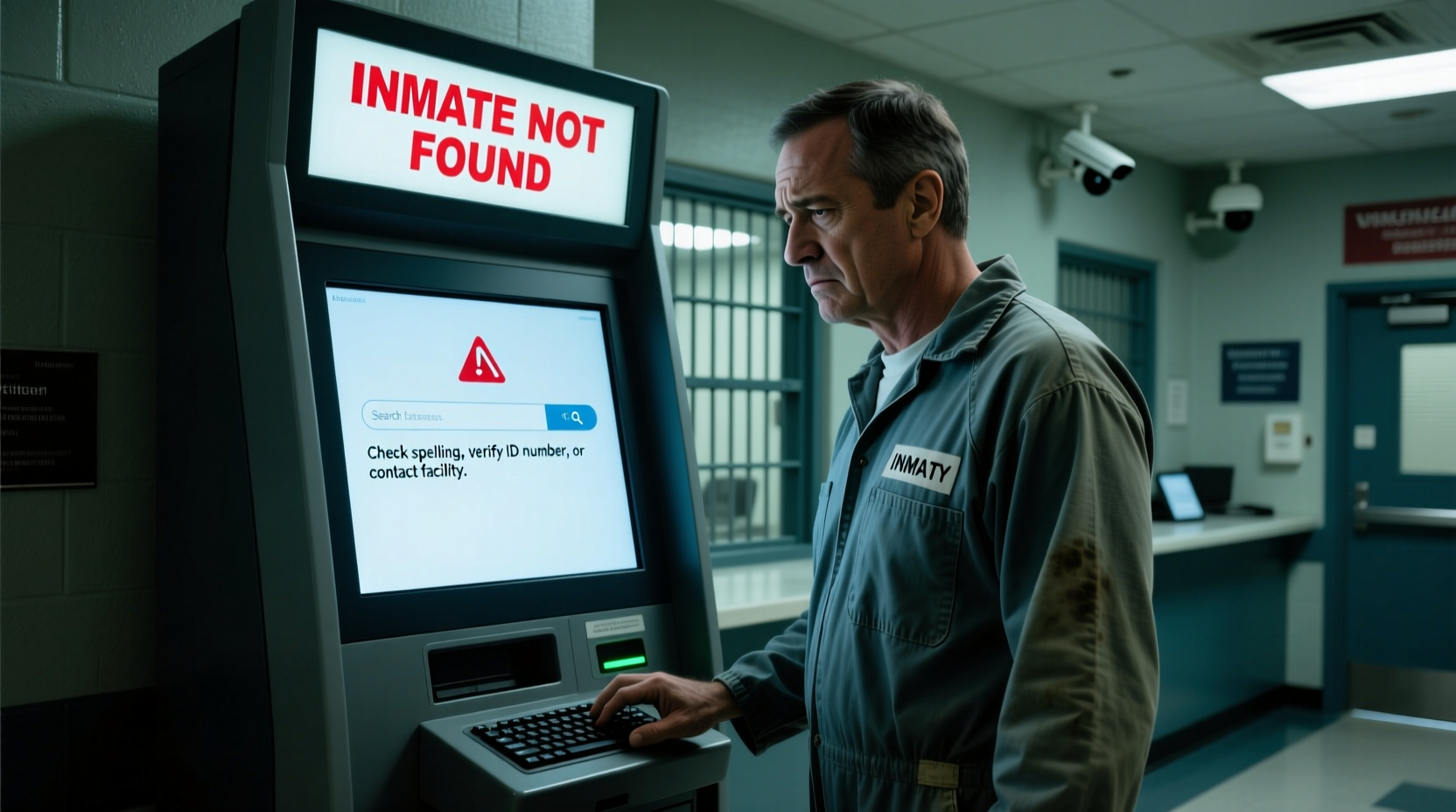
The most frequent cause of a missing inmate record is timing. When someone is arrested, there's a process before their information becomes publicly accessible. Booking procedures—fingerprinting, photographing, charging, and data entry—can take several hours, especially during peak arrest times. During this window, the person is technically in custody but won’t show up in online searches.
Jurisdiction also plays a major role. Local sheriff’s offices manage county jail populations, while state prisons house individuals serving longer sentences. If a person was recently transferred from a county facility to a state prison, their record may no longer appear in the original search portal. Similarly, federal detainees held by ICE, U.S. Marshals, or the Bureau of Prisons are listed in separate systems not always linked to local databases.
Data accuracy is another concern. Misspellings, incorrect dates of birth, or alias usage can prevent a match even if the inmate is in the system. Some facilities use legal names only, so nicknames or variations won’t return results. Juvenile offenders are typically excluded from public databases altogether due to privacy laws, making searches for minors futile.
System Limitations and Jurisdictional Gaps
Not all correctional facilities maintain real-time, publicly accessible databases. Rural counties with limited IT infrastructure may update their websites only once per day—or less. Others may restrict access entirely, requiring in-person or phone inquiries. In such cases, the absence of a digital footprint doesn’t indicate freedom; it reflects technological or policy constraints.
Federal holdings introduce additional complexity. For example, someone arrested on federal drug charges might be held in a local jail under contract with the U.S. Marshals Service. While physically present in the county facility, their official status falls under federal jurisdiction, meaning they may only appear in the USMS inmate locator—not the county’s site.
Immigration detainees pose another challenge. Individuals held by Immigration and Customs Enforcement (ICE) are tracked through the Online Detainee Locator System (ODLS), which operates independently from criminal justice databases. A person detained solely on immigration violations will not appear in state or county inmate searches, even if they’re housed in a local jail.
“Public access to inmate data varies widely across jurisdictions. Just because someone isn’t visible online doesn’t mean they aren’t in custody—it means the system hasn’t caught up yet.” — Lt. Maria Thompson, Retired Corrections Administrator
Step-by-Step Guide to Locating a Missing Inmate
If your search yields no results, follow this structured approach to uncover accurate information:
- Confirm Basic Information: Gather the full legal name, date of birth, and any known aliases. Verify spelling with family members or legal counsel.
- Check Multiple Databases: Search at the county, state, and federal levels. Use the National Sex Offender Public Website as a cross-reference if applicable.
- Contact the Arresting Agency: Call the police department or sheriff’s office that made the arrest. They can confirm current holding status even if it’s not online.
- Review Court Records: Visit the local courthouse website or clerk’s office. Pending charges often appear in court dockets before booking data is published.
- Use Third-Party Aggregators: Sites like JailBase or Vinelink compile data from multiple sources. While not always authoritative, they can provide leads.
- Follow Up After 24–48 Hours: If the person was recently arrested, wait a day or two and repeat the search. Most bookings are processed within this timeframe.
Do’s and Don’ts When Conducting an Inmate Search
| Do | Don’t |
|---|---|
| Double-check spelling and date of birth | Assume the person is free just because they don’t appear online |
| Search both first and last name variations | Rely solely on one database |
| Call the facility directly if online search fails | Share sensitive inmate details on public forums |
| Wait 24–48 hours after suspected arrest | Panic or draw conclusions too quickly |
Real Example: The Case of James R. Carter
In early 2023, a woman in Ohio attempted to locate her brother, James R. Carter, after losing contact. She searched the county sheriff’s inmate roster repeatedly using his common nickname, “Jimmy,” and a slightly incorrect birth year. No results appeared. Worried, she contacted a local advocacy group, which advised her to use his full legal name and correct DOB.
Still no match. The breakthrough came when the advocate called the county jail directly. Staff confirmed James had been booked two days earlier but hadn’t been uploaded to the public site due to a server delay. Additionally, he was scheduled for transfer to a state facility within 48 hours for a parole violation. His record disappeared from the county site shortly after—but reappeared in the state department of corrections database.
This case underscores the importance of persistence, accurate data, and direct communication with authorities when online tools fall short.
Frequently Asked Questions
Why can’t I find an inmate even though I know they were arrested?
Several factors could explain this: the booking process may still be underway, the facility may not have updated its website, or the inmate has been transferred to another jurisdiction. It’s also possible the person is being held on a warrant without formal charges yet, delaying public record entry.
Can an inmate be hidden from public searches intentionally?
In rare cases, yes. High-profile defendants, victims of domestic violence, or individuals in protective custody may have their records restricted for safety reasons. Law enforcement can also delay release of information during active investigations.
How long does it take for an inmate to appear in a search?
Most county facilities update their systems within 12 to 24 hours after booking. State and federal systems may take longer, especially if transfer or classification processes are involved. Waiting 48 hours is often advisable before escalating inquiries.
Actionable Checklist: What to Do When an Inmate Doesn’t Appear Online
- Verify the full legal name and date of birth
- Search county, state, and federal databases separately
- Check ICE’s Online Detainee Locator if immigration status is a possibility
- Call the local jail or arresting agency directly
- Look up recent arrests or court dockets in the jurisdiction
- Use third-party sites like JailBase or VINE as supplementary tools
- Wait 24–48 hours and repeat the search
- Contact a bail bondsman or attorney familiar with the area
Conclusion
An inmate not appearing in online search results is more common than many realize—and rarely means the person is unaccounted for. Delays in processing, jurisdictional boundaries, technical issues, and privacy protections all contribute to gaps in public data. By understanding how correctional systems operate and knowing where and how to look, you can navigate these challenges effectively. Persistence, attention to detail, and direct outreach often yield answers that automated searches cannot.




 浙公网安备
33010002000092号
浙公网安备
33010002000092号 浙B2-20120091-4
Comments
No comments yet. Why don't you start the discussion?