
Creating a custom clock is more than just assembling hands and numbers—it’s an opportunity to merge function with personal expression. With advancements in materials, tools, and maker culture, building a unique timepiece has never been more accessible or exciting. From reclaimed wood and 3D-printed gears to smart displays and kinetic sculptures, today’s DIY clock projects go far beyond the traditional face on the wall. Whether you're drawn to minimalist design, industrial aesthetics, or interactive tech, there are countless ways to craft a clock that reflects your style and ingenuity.
Choosing Materials That Tell a Story
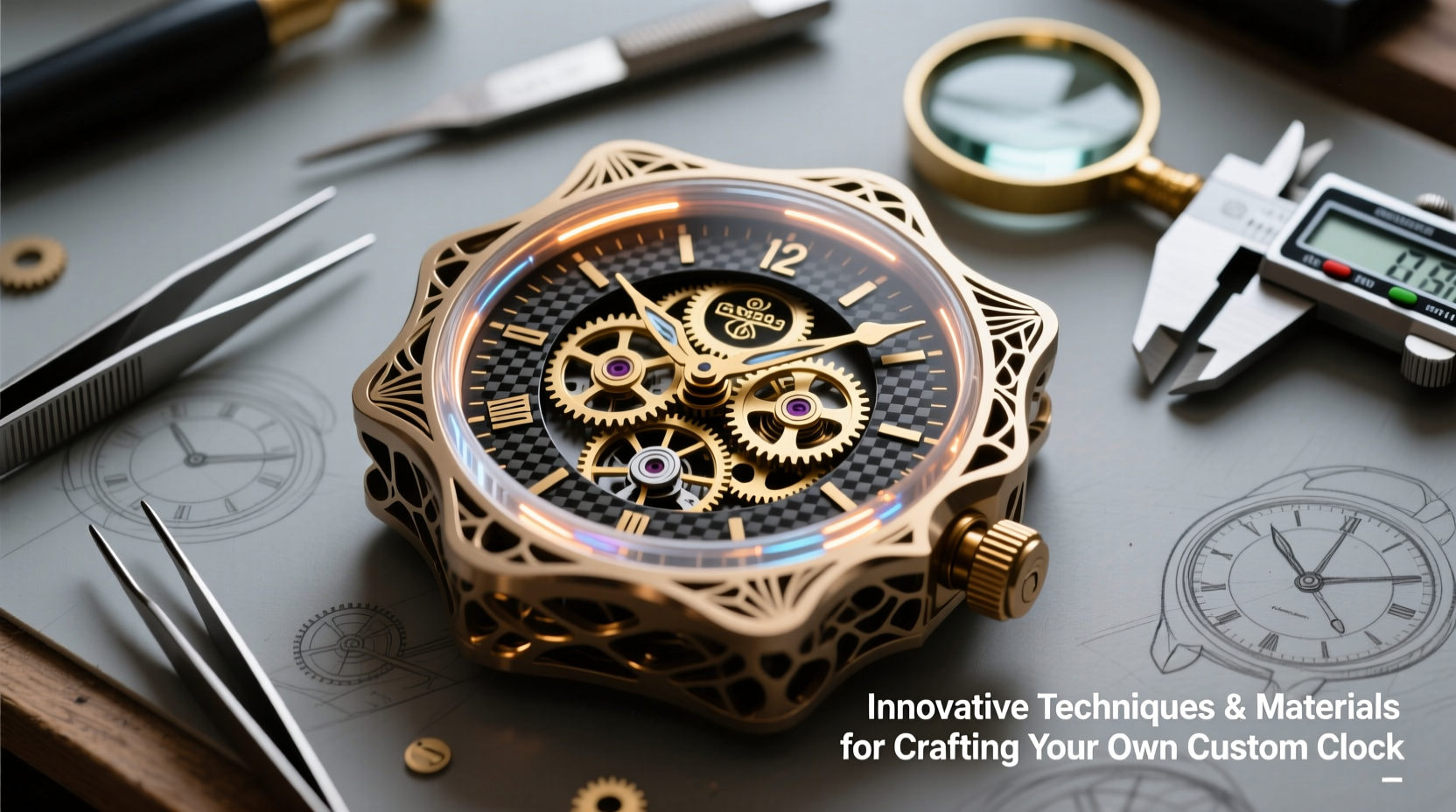
The material you select sets the tone for your entire project. While standard clocks use plastic or mass-produced metal components, custom builds invite experimentation. The most compelling handmade clocks often incorporate materials with history, texture, or environmental significance.
- Reclaimed wood – Salvaged barn wood, pallets, or old furniture offer rich grain patterns and sustainability. Sand and seal it for durability.
- Recycled glass – Use broken mirror pieces or repurposed bottles as a reflective surface or frame element.
- Corrugated metal – Lightweight and industrial in appearance, ideal for steampunk or urban-themed designs.
- Epoxy resin – Embed objects like gears, watch parts, or even dried botanicals for a layered, artistic effect.
- Bamboo or cork – Sustainable, lightweight options perfect for eco-conscious builders.
Incorporating Modern Technology
Gone are the days when a clock movement was limited to ticking quartz mechanisms. Today, makers can integrate digital intelligence, wireless connectivity, and responsive elements into their designs.
Consider using smart clock movements that sync with Wi-Fi or Bluetooth. These allow automatic time updates, timezone adjustments, and even integration with voice assistants. Some models display temperature, weather, or notifications through discreet LED panels embedded behind semi-transparent faces.
For advanced tinkerers, pairing an Arduino or Raspberry Pi with real-time clock (RTC) modules enables full customization. You can program animated sequences, color-changing LEDs based on time of day, or motion-activated displays. One designer created a “mood clock” that shifts from cool blue at dawn to warm amber by sunset, syncing with circadian rhythms.
“Blending traditional craftsmanship with microelectronics allows us to create clocks that don’t just tell time—they respond to it.” — Dr. Lena Patel, Interactive Design Researcher at MIT Media Lab
Step-by-Step Guide: Building a Wall Clock from Reclaimed Wood and Smart Components
This guide walks through constructing a hybrid analog-digital clock using sustainable materials and programmable features.
- Design the layout: Sketch your desired size and shape. A circular or hexagonal outline works well for balance.
- Source and prepare wood: Cut reclaimed wood into your chosen shape using a jigsaw. Sand all edges smooth and apply two coats of matte sealant.
- Install the clock mechanism: Drill a center hole for a standard quartz shaft or smart movement. Ensure the backing plate fits flush.
- Add digital accents: Wire small RGB LEDs around the perimeter, connecting them to an Arduino Nano programmed to change color hourly.
- Program functionality: Use open-source code to set lighting patterns or ambient brightness based on room light sensors.
- Mount and test: Attach a hanging bracket and insert batteries or connect to USB power. Calibrate the time and observe performance over 24 hours.
Unconventional Techniques for Unique Visual Impact
Some of the most memorable clocks defy conventional form. Experimentation with structure, motion, and perception can elevate your piece from functional object to conversation-starting art.
| Technique | Description | Best For |
|---|---|---|
| Kinetic Sculpture | Moving parts driven by motorized gears; may not show time traditionally | Artists, makerspaces |
| Laser-cut layering | Multiple acrylic or wood layers create depth and shadow effects | Modern interiors |
| Projection mapping | Time displayed via projector onto irregular surfaces (e.g., ceiling, sculpture) | High-tech installations |
| Transparent OLED | See-through screen shows time over physical textures | Futuristic designs |
| Solar-powered analog | Uses tiny solar cell to drive silent sweep movement | Eco-friendly builds |
A growing trend involves deconstructed clocks, where internal gears are exposed and arranged asymmetrically. These highlight mechanical beauty while challenging symmetry norms. One Brooklyn-based artist mounted individual brass gears across a concrete slab, each rotating slowly to represent hours, minutes, and seconds without a central dial.
Mini Case Study: The Library Timepiece
In Portland, Oregon, a local librarian wanted a clock for her reading nook that reflected her love of books and quiet contemplation. She crafted a round clock face from compressed pages of discarded library books, sealed under UV-resistant resin. Using a silent German-made movement, she ensured no ticking would disturb reading sessions. Around the edge, she embedded fiber-optic strands connected to a soft LED ring that glowed faintly at night, mimicking moonlight on paper.
The result? A deeply personal object that honored her profession, minimized waste, and added warmth to her space. It sparked interest among colleagues, leading to a small workshop series on upcycled timepieces at the community center.
Checklist: Essential Tools and Supplies for Your First Custom Clock
- Measuring tape and compass for accurate sizing
- Jigsaw or laser cutter (depending on material)
- Dremel tool for fine detailing or hole shaping
- Drill with precision bits (1/8” to 1/4”)
- Quartz or smart clock movement kit (includes hands and motor)
- Adhesives: epoxy for metal, wood glue, or cyanoacrylate for plastics
- Sanders and finishing supplies (sealant, polish)
- Basic electronics kit if adding lights or sensors (breadboard, jumper wires, resistors)
- Safety gear: goggles, gloves, mask (especially when cutting or sanding)
Frequently Asked Questions
Can I make a clock without any power source?
Yes. Mechanical wind-up movements are available and operate similarly to vintage watches. However, they require daily winding and may be harder to source. Alternatively, solar-powered movements eliminate the need for frequent battery changes.
What’s the easiest way to personalize a clock face?
Use printable adhesive vinyl or transfer paper to apply custom numerals, photos, or quotes. For a hand-drawn touch, sketch directly onto a primed surface with paint pens or fine liners.
Are there safety concerns when combining electronics and wood?
Low-voltage circuits (under 12V) are generally safe. Always insulate connections, avoid placing batteries near flammable materials, and disconnect power before adjustments. If embedding lithium cells, include a protective enclosure.
Pushing Boundaries, One Tick at a Time
Crafting a custom clock isn’t just about marking hours—it’s about redefining how we experience time. By choosing unexpected materials, integrating responsive technology, or embracing asymmetry, you transform a utilitarian object into a statement of creativity and intention. The best designs emerge not from perfection, but from curiosity: What happens if I use rusted steel? Can my clock react to sound? Could it double as a shelf?
Every builder starts somewhere. Begin small—a repurposed record album with sleek hands, a pocket watch embedded in resin—but let each project feed the next. Share your progress online, document challenges, and learn from others in the maker community. Over time, your clocks will become less about telling time and more about capturing moments.




 浙公网安备
33010002000092号
浙公网安备
33010002000092号 浙B2-20120091-4
Comments
No comments yet. Why don't you start the discussion?